Not Enough Light on Christmas Cactus: Causes, Checks & Fixes
Quick answer
Christmas Cactus needs bright indirect light-not a dark corner. Move it within a few feet of an east or filtered south/west window, or add a grow light 6–12 inches above the plant for 12–14 hours daily.
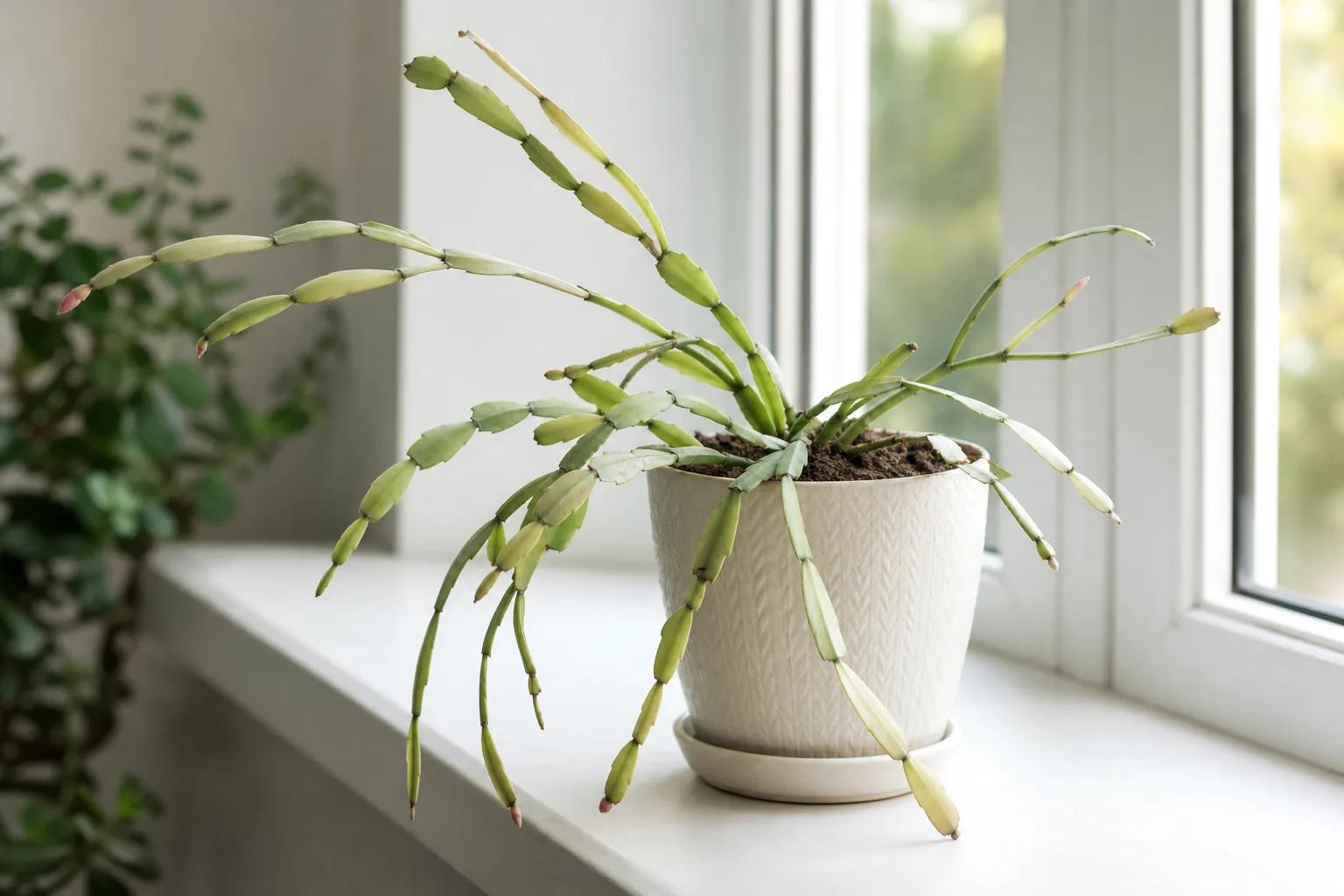
Not Enough Light on Christmas Cactus: Causes, Checks & Fixes
This guide covers not enough light on Christmas Cactus. See also the general Not Enough Light guide, watering, and light pages for this plant.
Not Enough Light on Christmas Cactus: Causes, Checks & Fixes
Quick answer
Christmas Cactus (Schlumbergera × buckleyi) is an epiphytic forest cactus-not a desert species-and it needs Christmas Cactus light guide during the growing season to build compact phylloclades and store energy for winter blooms. In a dim hallway, interior shelf, or north-facing room far from glass, segments stretch toward the brightest direction, new growth slows, and flowering weakens even when fall dark treatment is correct.
First fix: move the pot to the brightest safe spot in your home-typically within 1–3 feet of an east-facing window or a south/west window softened by a sheer curtain. If natural light is insufficient, add a full-spectrum grow light 6–12 inches above the plant for 12–14 hours daily. Do not jump to fertilizer or Christmas Cactus repotting guide until light improves.
What not enough light looks like on Christmas Cactus
On Christmas Cactus overview, low light shows up on the phylloclades-the flat, jointed stem segments that do the plant’s photosynthesis. Watch for these patterns:
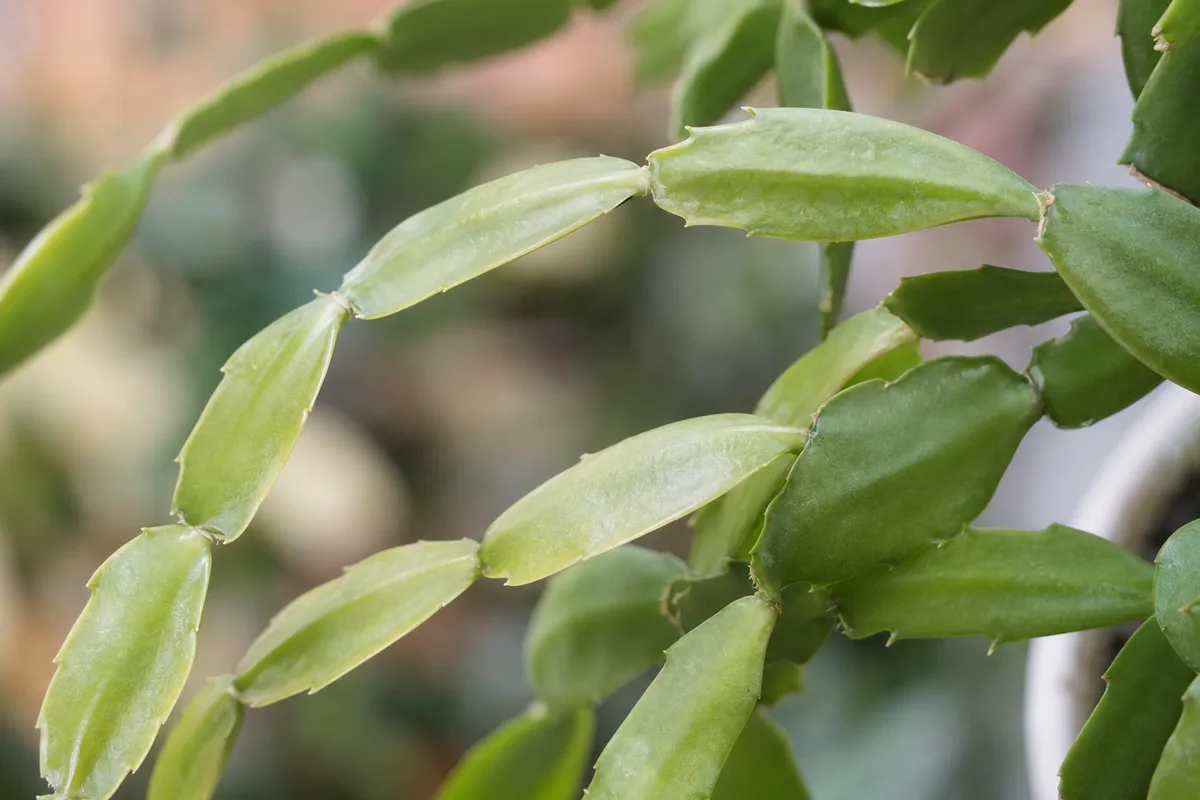
Elongated, pale phylloclade segments with unusually long spaces between joints - compare with plump, compact segments on a well-lit Christmas cactus.
- Elongated, thin segments with unusually long spaces between joints. Healthy Christmas Cactus segments are plump and relatively short; stretched ones look stringy.
- A lean or one-sided growth habit as the plant reaches toward the window or doorway with the most light.
- Pale, washed-out green on new segments instead of the deep green you see on a well-lit plant.
- Slow or sparse new growth during spring and summer, when the plant should be actively adding segments.
- Few or no flower buds even after you provide the cool, long-night treatment in autumn-because weak daytime light limits the energy available for bud formation.
- Soil that stays wet for days after watering, because the plant is not using moisture quickly in dim conditions.
Christmas Cactus does not turn crispy from low light-that pattern usually means too much direct sun or underwatering on Christmas Cactus. Low light produces stretch and dull color, not scorch.
Why Christmas Cactus runs out of light indoors
In the wild, holiday cacti grow as epiphytes on tree branches in Brazilian rain forests-shaded by canopy, but still receiving filtered bright daylight, not deep interior darkness. Indoors, several common placements starve them:
Distance from windows. Light intensity drops sharply as you move away from glass. A spot that looks “bright enough” to your eyes may be too dim for a plant that needs medium-bright indirect light to stay compact.
Seasonal daylight loss. Winter short days reduce what reaches the same windowsill that worked in summer. A Christmas Cactus that looked fine in June can stretch by February without any move.
Decor-first placement. Holiday cacti are often displayed on dining tables, mantels, or bathroom counters away from windows after blooming. Those spots rarely provide enough energy for the next growth cycle.
Blocked or dirty glass. Heavy curtains, tinted film, overhangs, and grimy panes cut usable light more than owners expect.
The light–water trap. Christmas Cactus stores water in its segments and prefers the top 2–3 cm of mix to dry between waterings. In low light, transpiration slows, soil stays wet longer, and the same Christmas Cactus watering guide that worked in a brighter spot can leave roots oxygen-starved. Weak light and chronic wet soil together are a common path to decline.
How to confirm low light is the problem
Work through these checks before changing fertilizer, repotting, or pruning heavily.
Compare placement to your brightest safe spot. Stand where the pot sits and look toward the nearest window. If the plant is more than 4–6 feet from glass, or in a room with no direct outdoor light, treat insufficient light as the leading suspect.
Inspect new segment shape. Photograph the newest joints at the stem tips. Move the plant to a brighter indirect location for two to three weeks. If the next segments emerge shorter and thicker, light was limiting growth.
Rule out watering first when segments are soft. Gently squeeze a lower segment. Firm but slightly flexible is normal. Mushy or translucent segments with sour-smelling soil point to overwatering on Christmas Cactus or root rot on Christmas Cactus-not a light-only issue.
Separate low light from “no flowers” causes. Christmas Cactus needs both adequate daytime light during spring and summer and 14+ hours of uninterrupted darkness each night for about six weeks starting mid-September to set buds. If the plant is compact and green but never blooms, the problem may be interrupted dark periods or warm fall nights rather than daytime light alone. If it is leggy and bloomless, fix light first.
Check for sunburn if you recently moved it. Segments turning red, yellow, or bleached after a sudden move to direct afternoon sun indicate too much light, not too little. Bright sun during summer can make holiday cacti look pale and yellow. Pull back from the glass and diffuse the beam.
The first fix to try
Move the pot to bright indirect light-one change at a time.
Choose a location with several hours of bright, filtered daylight:
- East-facing windows are ideal: gentle morning sun, then bright indirect light the rest of the day.
- North-facing windows can work if the plant sits close to the glass and the room is not otherwise dark, but growth may be slower than on an east sill.
- South- or west-facing windows are fine behind a sheer curtain that softens direct rays-especially in summer when intense sun can bleach foliage.
Keep the plant 1–3 feet from the windowpane, not across the room. Rotate the pot a quarter turn each week so segments grow evenly instead of leaning.
If no window provides enough light, add a full-spectrum LED grow light 6–12 inches above the foliage for 12–14 hours daily. That duration supports photosynthesis without replacing the dark period needed for flowering in autumn.
After moving, pause on extra watering until you learn how fast the mix dries in the new spot. Brighter light usually means faster dry-down; sticking to the old schedule can overwater the plant.
Do not fertilize a stressed, stretched plant until new growth looks normal for two to three weeks.
Step-by-step recovery
Once the plant is in better light, support recovery in this order:
- Hold watering until the top 2–3 cm of mix feels dry. In brighter light this may happen sooner than before-check with your finger, not the calendar.
- Watch the next two flushes of segment growth. Compact new joints confirm the fix is working.
- After the plant finishes blooming-or in late spring if it did not bloom-prune leggy stems by twisting off one to three segments per chain at a joint. This encourages branching from lower nodes and evens out lopsided growth. Do not remove more than one-third of a stem in one session.
- Resume light feeding during active growth (spring through early fall) only after new segments look healthy-half-strength balanced fertilizer monthly is enough.
- Plan autumn bud set separately. Starting mid-September, the plant still needs bright daytime light plus 14+ hours of total darkness each night for six weeks, with night temperatures ideally between 55 and 65°F. Fixing summer light does not replace this fall routine.
Recovery timeline
Expect to see improved segment shape on new growth within two to four weeks after a meaningful light increase. The plant will not transform overnight-each new joint tells you whether conditions are right.
Old stretched phylloclades remain long permanently. Recovery is measured by new segments, not by old ones shrinking.
Flowering may take until the next bloom cycle. Better light during spring and summer builds the reserves needed for autumn bud set. A plant moved from a dark corner in October may not bloom that same year even with correct dark treatment.
If segments stay soft or yellow after four weeks in brighter indirect light, shift diagnosis toward root health, pests, or overwatering rather than light alone.
Lookalike symptoms on Christmas Cactus
| What you see | More likely cause | Quick check |
|---|---|---|
| Wrinkled, shriveled segments | Underwatering or root loss | Pot light when lifted; mix dry deep down |
| Soft, mushy segments; sour soil | Overwatering / root rot | Unpot and inspect root firmness |
| Red or bleached segment pads | Too much direct sun | Recent move to harsh south/west glass |
| Compact plant, no buds in winter | Interrupted dark period or warm fall nights | Streetlights, lamps, or room lights at night |
| Sticky residue, webbing | Pests (mealybugs, spider mites) | Inspect segment joints and undersides |
Low light often overlaps with slow dry-down and overwatering. Fixing placement and adjusting water together resolves both.
Mistakes to avoid
Do not blast the plant with direct afternoon sun to fix legginess. Christmas Cactus scorches easily in harsh summer rays. Increase light gradually through filtered or eastern exposure, not a sudden move to unshaded south glass.
Do not over-fertilize to compensate for dim conditions. Extra nitrogen pushes weak, soft growth when the plant lacks light energy to support it.
Do not repot on day one. A larger pot with unchanged low light slows dry-down further. Repot only when roots are crowded and the plant is stable in adequate light.
Do not assume a “cactus” wants a dark room. Desert cactus stereotypes do not apply. This species needs brighter conditions than snake plants or ZZ plants.
Do not leave the plant in a post-holiday dim display spot through spring and summer-it needs light during the active growing season to bloom again.
How to prevent low-light stress next time
- Keep Christmas Cactus at a permanent bright-indirect station-not a seasonal centerpiece location after blooms fade.
- Supplement in winter when daylight drops; a timer on a grow light removes guesswork.
- Clean windows seasonally and open sheer curtains during daylight hours.
- Rotate the pot weekly for even segment growth.
- Match watering to light level-more light means more frequent checks; less light means slower watering, never a fixed weekly rule.
- Track autumn bud set as a separate step: bright days, long uninterrupted nights, cool nights.
When low light becomes urgent
Low light alone rarely kills Christmas Cactus quickly-it weakens the plant over months. Treat the situation as urgent when:
- Segments collapse and turn mushy while soil stays wet in a dark room (suspect root rot-stop watering and inspect roots).
- The plant loses multiple segment chains rapidly after a move to a much darker spot.
- New growth is absent for an entire growing season and lower segments shrivel despite moist soil (possible root failure).
In those cases, brighter light helps future recovery but does not replace correcting wet soil, removing rotted roots, or treating active pests.
When to use this page vs other Christmas Cactus guides
- Christmas Cactus watering guide - Use for routine moisture checks before assuming not enough light is the main issue.
- Christmas Cactus problems hub - Browse all 21 common issues on this species.
- Leggy Growth on Christmas Cactus - Different entry point when symptoms overlap with not enough light.
- Slow Growth on Christmas Cactus - Different entry point when symptoms overlap with not enough light.
- Yellow Leaves on Christmas Cactus - Different entry point when symptoms overlap with not enough light.