Overwatering on Christmas Cactus: Causes, Checks & Fixes
Quick answer
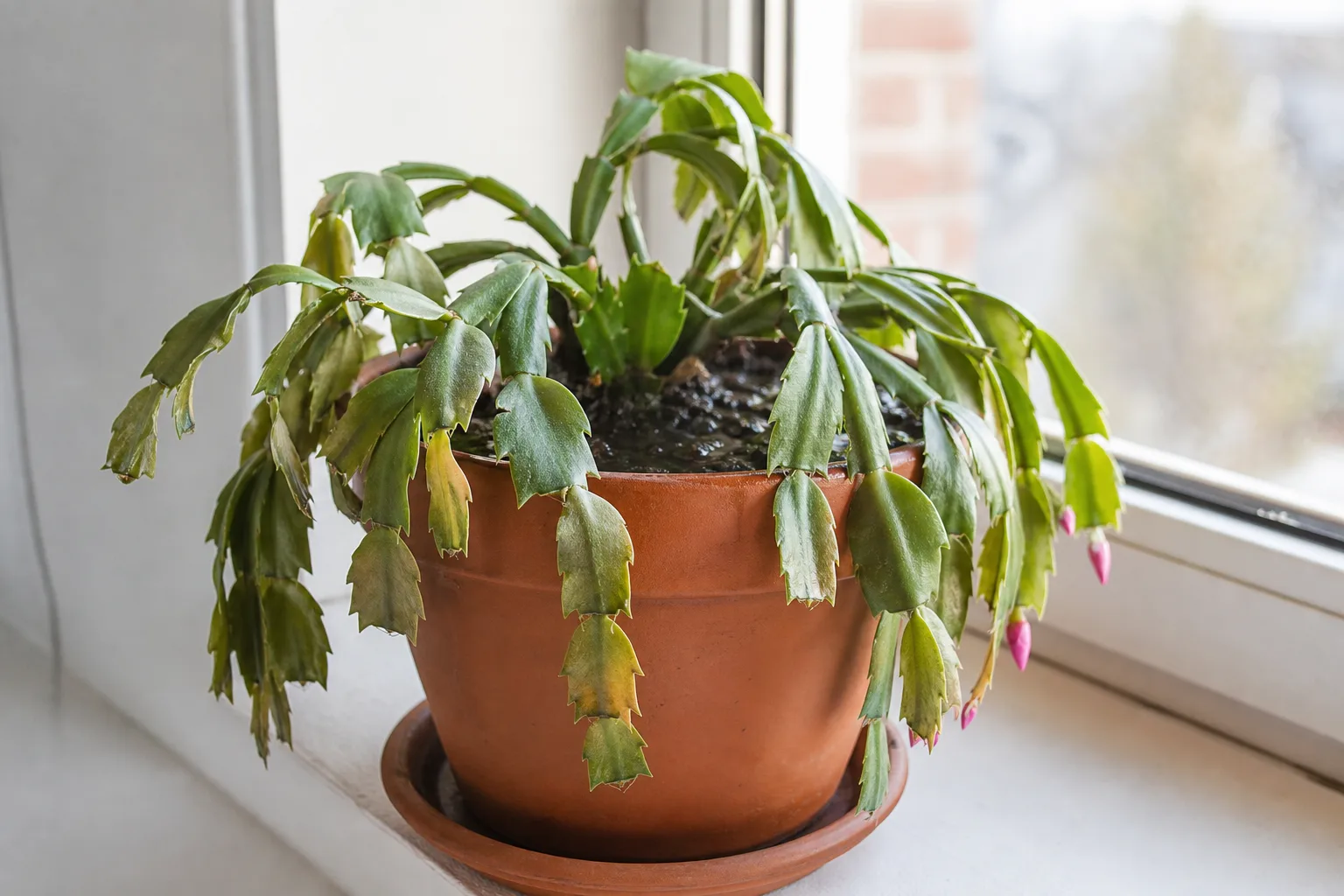
Overwatering on Christmas cactus (*Schlumbergera* × *buckleyi*) shows up as limp phylloclades on wet, heavy soil-especially in cool, dim winter rooms where evaporation slows. First fix: stop watering, empty standing water from saucers or cachepots, and let the top inch of mix dry before you even consider another drink.
Overwatering on Christmas Cactus: Causes, Checks & Fixes
This guide covers overwatering on Christmas Cactus. See also the general Overwatering guide, watering, and light pages for this plant.
Overwatering on Christmas Cactus: Causes, Checks & Fixes
Quick answer
Christmas cactus (Schlumbergera × buckleyi) does not have true leaves. What most owners call “limp leaves” are phylloclades-flat, jointed stem segments that store moisture and photosynthesize. When those segments go soft while the mix stays wet, you are almost certainly dealing with overwatering, not thirst.
The classic indoor trap runs like this: segments look limp in January, the pot still feels heavy, and the instinct is to water again. In a cool, low-light winter room, evaporation slows to a crawl. Clemson HGIC warns not to let holiday cactus soil become waterlogged, especially during the dark days of winter-yet calendar watering on the same schedule you used in summer keeps roots saturated for weeks.
First fix: stop all watering immediately. Empty any saucer or decorative cachepot holding standing water. Let the top inch of mix dry before you reassess. If lower phylloclades keep yellowing after the mix dries, inspect roots before the next cautious soak. Full seasonal rhythm lives on the Christmas cactus watering guide.
What overwatering looks like on Christmas cactus
Healthy phylloclades feel firm and plump with rounded scalloped edges (true Christmas cactus) or slightly pointed teeth (Thanksgiving cactus, S. truncata). Overwatered segments lose that springy turgor.
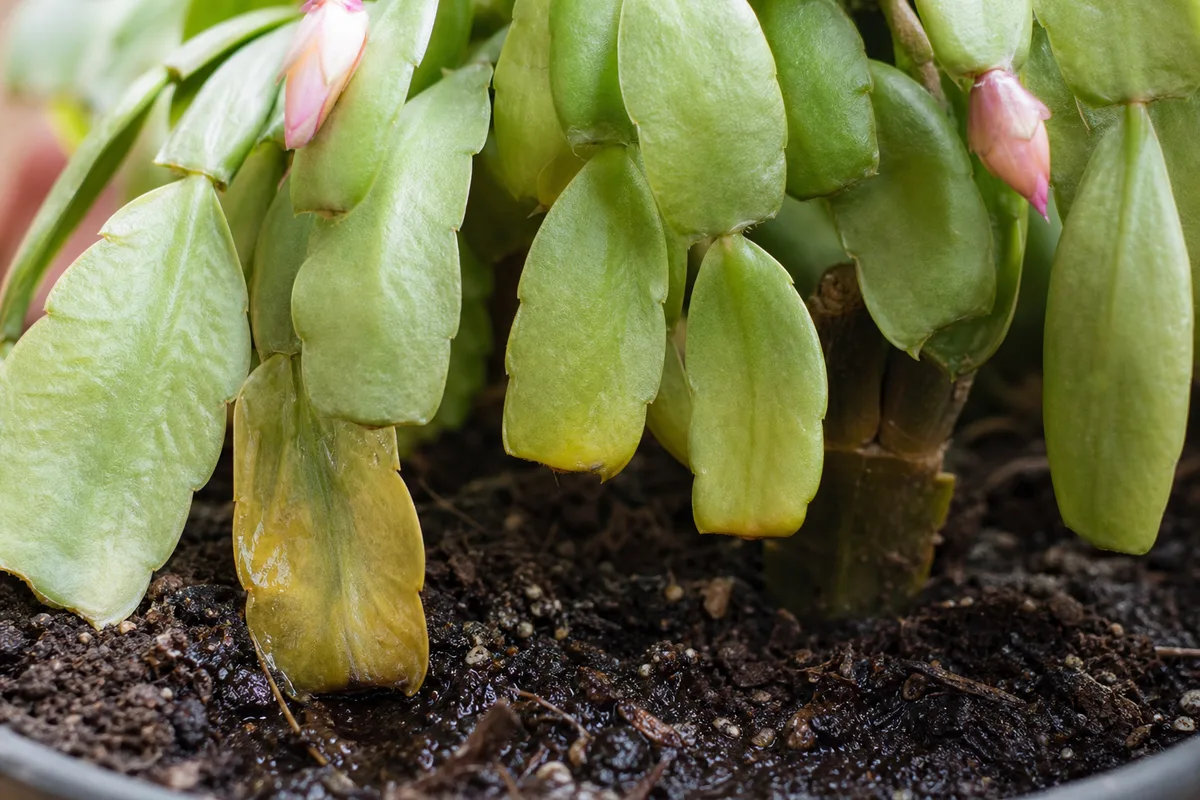
Limp, soft-hanging segments with slight yellowing at the base while the potting mix stays dark and damp - classic overwatering before roots fail.
Early overwatering signs:
- Phylloclades hang limp while the mix stays dark, cool, and damp-not dry
- Lower segments turn yellow or translucent before upper segments follow
- Pot feels noticeably heavier than it did days after the last watering
- White mold or algae may appear on the soil surface after prolonged wetness
- Fungus gnats hover near the pot when soil stays continuously wet
Advanced overwatering signs:
- Mix smells faintly sour at the drain holes
- Segment bases near the soil line feel soft or mushy
- Buds drop during bloom season when wet and drought cycles alternate
- Unpotting reveals brown, black, or slimy roots instead of firm white or tan tissue
What overwatering is not: segments that are limp and slightly wrinkled on a light, dry pot point to underwatering, not excess water. Limp segments on wet soil with damaged roots can look identical to drought-moisture direction is the fork in the road.
Why Christmas cactus gets overwatered
Holiday cacti are epiphytes native to humid Brazilian coastal forests, where they grow on tree bark in filtered light. They need regular moisture during warm months-but their roots still require oxygen between drinks. Unlike desert cacti, they cannot sit in stale, waterlogged mix for weeks without consequence.
The winter wet-soil trap is the leading indoor failure mode. A plant in a bright east window through summer may need water every seven to ten days. The same plant in a dim hallway in January may hold moisture for two weeks or longer. Owners who water every Sunday without checking soil keep the root zone saturated while segments go limp-exactly the pattern that precedes rot.
Calendar watering without soil checks ignores seasonal rhythm. During active spring and summer growth, the top 1–2 inches should dry before the next soak. During pre-bloom rest starting mid-September, a deeper dry-down helps trigger flowering. Once buds appear, the medium must stay evenly moist to prevent flower bud abscission-but evenly moist is not constantly soggy. After flowering, watering reduces again. Watering on a single year-round schedule hits the wrong target in every phase.
Poor drainage setup compounds the problem: heavy peat mix without perlite or bark, pots without drain holes, outer cachepots that trap runoff, and oversized containers that hold wet soil around a small root ball. NC State Extension lists root rot from overwatering among common problems on Schlumbergera. Root rot from overly wet soil is one of the most common causes of death in holiday cacti.
The forest-cactus paradox confuses new owners. Because holiday cacti need more water than desert succulents, people assume wet soil is safe. Iowa State Extension notes that overwatering leads to limp growth and root rot when soil does not dry between waterings-even though the same plant needs consistent moisture while budding and flowering. Season determines which mistake is more dangerous.
Lookalike symptoms to rule out
| Signal | Overwatering | Underwatering | Bud-phase drought | Root rot (advanced) |
|---|---|---|---|---|
| Pot weight | Heavy, cool | Light | Variable | Heavy, cool |
| Top 1–2 inches | Wet or damp | Dry, crumbly | Dry while buds visible | Wet |
| Segment look | Limp, may yellow; not shriveled | Limp and wrinkled | Limp with dry mix during bloom | Limp, translucent, spreading |
| Smell | Sour at drain holes | None | None | Strong sour or foul |
| First action | Stop watering | Thorough soak | Water when top inch dries | Inspect roots; see root rot |
Wilting vs. overwatering intent - Wilting covers the same limp-segment symptom with overlapping causes. This page focuses on wet-soil diagnosis and recovery. If you already confirmed the mix is too wet, stay here; if moisture direction is unclear, start with the wet-vs-dry decision tree on the drooping leaves guide.
Yellow lower segments on wet soil may overlap with the yellow leaves page-on Christmas cactus, yellowing lower phylloclades on chronically damp mix usually trace to root stress from overwatering, not nutrient deficiency.
How to confirm overwatering
Work through these checks in order. One pot-weight comparison beats guessing from limp segments alone.
- Top-inch moisture - Push your finger 1–2 inches into the mix near the pot wall. Damp or wet mix with limp segments confirms oversaturation or failing roots-not thirst.
- Pot weight - Lift the pot after you know what “heavy after watering” feels like. A heavy, cool pot days after the last drink means the mix has not dried enough.
- Skewer test - Insert a wooden skewer to the bottom, wait two minutes, pull it out. Dark mix clinging to the skewer means wet; if segments are limp on wet skewer results, overwatering is likely.
- Segment texture - Mushy, translucent, or yellowing lower phylloclades on wet mix point to rot stress. Thin wrinkled segments on dry mix point away from overwatering.
- Drainage audit - Confirm open drain holes, no standing water in saucers or cachepots, and no blocked holes from compacted mix or roots.
- Seasonal phase - Cool winter rest, active summer growth, pre-bloom dry-down, and bud development each change the correct dry-down target. A summer soak schedule on a January plant in dim light is a common overwatering trigger.
- Root inspection - If limpness persists on wet soil after stopping water for five to seven days, slide the plant from the pot. Healthy holiday cactus roots are firm and white or tan; rotted roots are brown, black, or slimy and may accompany wilt despite wet soil.
| Check | Overwatering confirmed | Look elsewhere |
|---|---|---|
| Wet mix + heavy pot + limp segments | Yes | - |
| Dry mix + light pot + shriveled segments | No | Underwatering |
| Dry mix + visible buds + limp segments | No | Water carefully during bloom |
| Wet mix + firm white roots after dry-down | Borderline-improve drainage | Monitor |
| Wet mix + mushy roots + sour smell | Yes-escalate | Root rot |
First fix for Christmas cactus
Stop watering immediately. That is the single most important action-not Christmas Cactus repotting guide, not fertilizing, not moving the plant into direct sun.
- Empty all standing water from saucers, cachepots, and decorative outer pots.
- Move to brighter indirect light if the plant sits in deep shade-slow evaporation worsens wet soil in winter, but avoid harsh direct sun on stressed segments.
- Let the top inch of mix dry before you even consider another drink.
- If lower phylloclades keep yellowing or the mix smells sour after the surface dries, inspect roots before any soak.
Do not water because segments look limp when the mix is already wet-that is the fastest way to turn reversible stress into root rot.
Step-by-step recovery when roots may be damaged
Tier 1: Dry-down only (firm roots, mild limpness)
Use this path when roots look mostly healthy on inspection and the crown base is still firm.
- Stop all watering until the top inch of mix is dry.
- Confirm drain holes are open and no outer pot is trapping runoff.
- Improve airflow and brighter indirect light if evaporation has been too slow.
- Resume cautious watering only when the top inch dries-one thorough soak, then empty the saucer within 30 minutes.
- Judge success by firm new segment growth at the tips, not by old yellow tissue greening up.
Tier 2: Unpot, trim, and repot (mushy roots, sour smell)
Escalate when roots are brown, slimy, or foul-smelling, or when Tier 1 fails after two weeks.
- Gently remove the plant from the pot and shake away wet mix.
- Trim all mushy, brown, or black roots with clean, sharp shears.
- Remove soft lower phylloclades that will not recover-they harbor rot and drain energy.
- Let cut surfaces air-dry for 24 hours on paper towels.
- Repot into fresh, airy mix with perlite or orchid bark in a pot sized to remaining roots-not a larger container.
- Keep mix barely moist-not wet-while new roots form. Wait two to three weeks before the first light watering if the crown was involved.
- Full root-rot protocol: root rot on Christmas cactus.
Make one major change at a time. Do not stack repotting, heavy pruning, and fertilizing on the same day.
Recovery timeline
Mild overwatering with intact roots often stabilizes within one to two weeks once soil oxygen returns and you stop adding water to wet mix. Segments may not fully re-firm until roots recover; yellow or translucent lower phylloclades rarely green up again.
Moderate root damage after trim and repot typically needs two to four weeks before firm new segment tips appear. Keep mix barely moist during this window.
Severe crown involvement-soft tissue at the base on chronically wet soil-may not be saveable. Act within days, not weeks.
Signs recovery is working: mix dries at an appropriate pace for the season, pot weight drops between waterings, new segment tips emerge firm and green, fungus gnat activity fades.
Signs the problem is worsening: spreading translucency up the stem, sour smell intensifying, whole-plant collapse on wet soil, buds dropping on soggy mix.
Mistakes to avoid
Do not pour more water onto limp phylloclades when the mix is already wet. Do not fertilize a waterlogged plant-roots cannot absorb nutrients when they are failing. Do not repot into a larger pot “to help drying”; that traps more wet soil around roots. Do not use dense garden soil or standard potting mix without drainage amendments. Do not interpret “forest cactus” as “likes wet feet.” Do not withhold all water during visible bud development-that causes bud drop from drought, a different failure mode. Do not move a stressed plant into harsh direct sun to dry it out.
How to prevent overwatering next time
Water the growing medium when it is dry to the touch, but do not let soil become waterlogged in winter. Check before every drink-finger probe, pot weight, or skewer-not a fixed calendar.
- Use well-drained mix with perlite or orchid bark in a pot with open drain holes sized to the root ball
- Empty saucers and cachepots within 30 minutes of every soak
- Match dry-down depth to season: top 1–2 inches dry during active growth; deeper dry only during controlled pre-bloom rest; evenly moist-not soggy-while buds develop
- Avoid decorative pots without drain holes; if you use a cachepot, lift the inner pot to water and drain
- Keep plants above 50 °F and away from cold drafts that slow metabolism without slowing evaporation equally
Full phase-by-phase targets, tables, and the limp-segment FAQ are on the Christmas cactus watering guide. If fungus gnats appear after prolonged wet soil, see fungus gnats on Christmas cactus.
When to worry
Treat overwatering as urgent when the crown base softens, the mix stays wet while the whole plant collapses, or roots are brown and mushy on inspection-simple drying may not be enough and delay risks losing the plant.
Act within days if segments turn translucent and spread upward on wet soil, the mix smells strongly sour, or most roots are decayed when you unpot.
You can observe and dry down if only a few lower phylloclades are limp, the crown is firm, roots look pale and firm, and you have already stopped watering. Improvement shows as firm new segment tips within one to two weeks.
Related Christmas cactus problems
- Watering - seasonal rhythm, dry-down tables, and limp-segment triage
- Root rot - mushy roots, trim-and-repot protocol
- Underwatering - dry mix, light pot, shriveled segments
- Wilting - overlapping limp-segment causes
- Drooping leaves - wet-vs-dry decision tree
- Bud drop - moisture swings during bloom
- Fungus gnats - wet-soil pest follow-on
- Yellow leaves - lower segment yellowing on wet soil
- Christmas cactus overview - species ID and care hub
Conclusion
Limp Christmas cactus segments on wet, heavy soil are almost always a stop-watering problem, not a thirst problem. Confirm moisture with pot weight and a finger probe before you add another drink-especially in cool, dim winter rooms where soil dries slowly. Let the top inch of mix dry, fix drainage, and inspect roots if yellowing spreads. Match your watering rhythm to the season on the watering guide, and escalate to the root rot guide if the crown softens or roots turn mushy.
When to use this page vs other Christmas Cactus guides
- Christmas Cactus watering guide - Use for routine moisture checks before assuming overwatering is the main issue.
- Christmas Cactus problems hub - Browse all 21 common issues on this species.
- Root Rot on Christmas Cactus - Different entry point when symptoms overlap with overwatering.
- Yellow Leaves on Christmas Cactus - Different entry point when symptoms overlap with overwatering.
- Wilting on Christmas Cactus - Different entry point when symptoms overlap with overwatering.
Related Christmas Cactus guides
- Christmas Cactus overview
- Christmas Cactus watering
- Christmas Cactus light
- Christmas Cactus soil
- Root Rot on Christmas Cactus
- Yellow Leaves on Christmas Cactus
- Wilting on Christmas Cactus
- Fungus Gnats on Christmas Cactus
- Mold on Soil on Christmas Cactus
- Drooping Leaves on Christmas Cactus
- Christmas Cactus problems