Yellow Segments on Christmas Cactus: Causes, Checks & Fixes
Quick answer
Yellow segments on Christmas cactus usually trace to a moisture mismatch-soft yellow phylloclades on wet, heavy soil mean overwatering; wrinkled yellow segments on a light, dry pot mean underwatering. First step: feel the top 1–2 inches of mix and lift the pot before you change anything else.
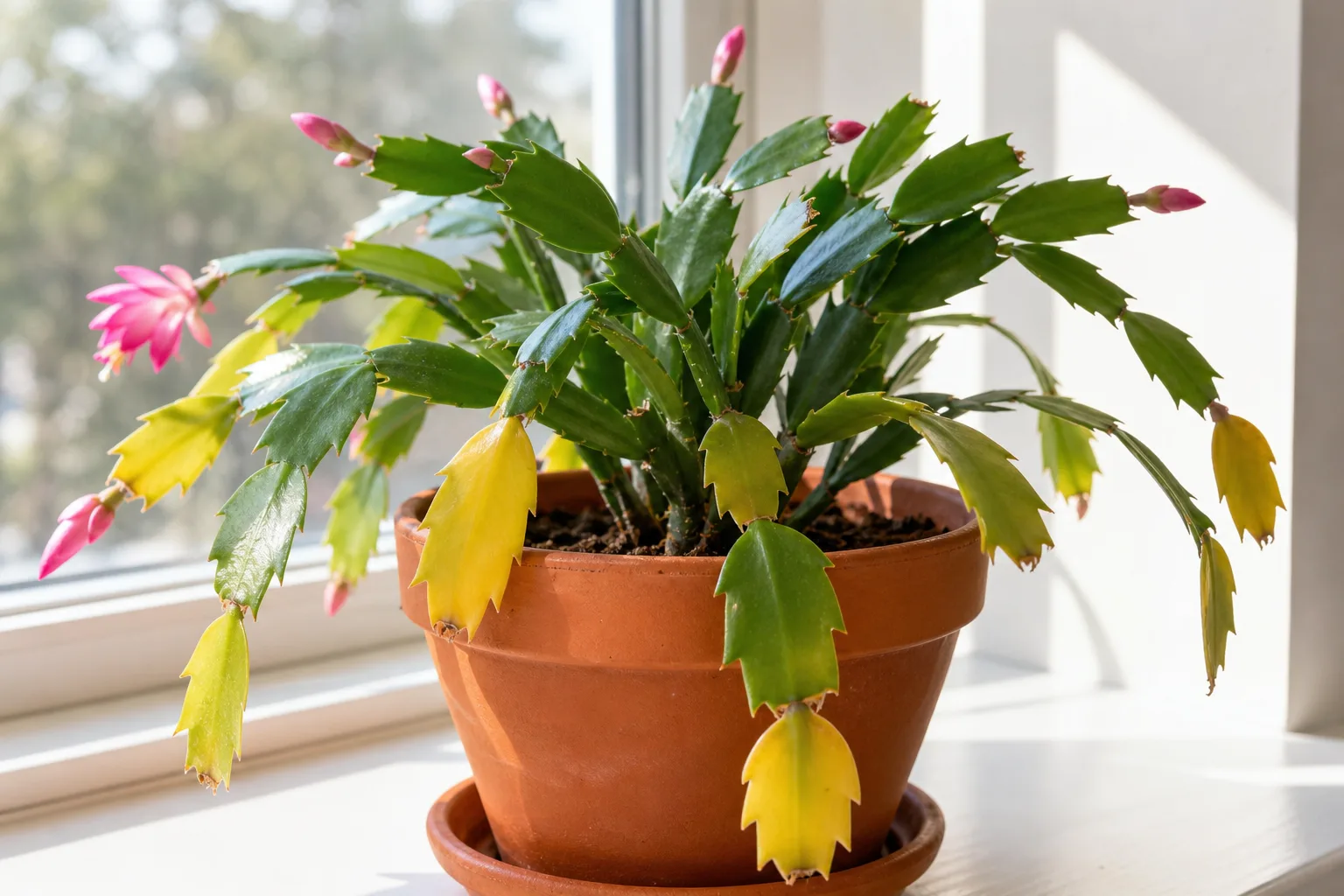
Yellow Leaves on Christmas Cactus: Causes, Checks & Fixes
This guide covers yellow leaves on Christmas Cactus. See also the general Yellow Leaves guide, watering, and light pages for this plant.
Yellow Leaves on Christmas Cactus: Causes, Checks & Fixes
Quick answer
Christmas cactus (Schlumbergera × buckleyi) does not have true leaves. What most owners call “yellow leaves” are phylloclades-flat, jointed stem segments that store water and carry out photosynthesis. Yellowing is a pattern, not a single disease, and the fix depends on whether segments feel soft on wet soil or wrinkled on dry soil.
The three most common patterns indoors:
- Soft, limp yellow segments on heavy, damp mix → overwatering and possible root stress. Common in cool, dim winter rooms where evaporation slows.
- Wrinkled, dull yellow segments on a light, dry pot → underwatering on Christmas Cactus. The plant drew down stored moisture faster than roots replaced it.
- One or two yellow segments at the oldest chain base only → often normal aging as new terminal segments grow from the tip.
First step: feel the top 1–2 inches of mix and lift the pot. Wet and heavy with soft yellow segments → stop watering until that zone dries. Light and dry with wrinkled segments → soak thoroughly, then empty the saucer. Basal-only yellowing on otherwise firm growth → twist off spent segments and keep your normal rhythm. Full seasonal targets live on the Christmas cactus watering guide.
What yellow segments look like on Christmas cactus
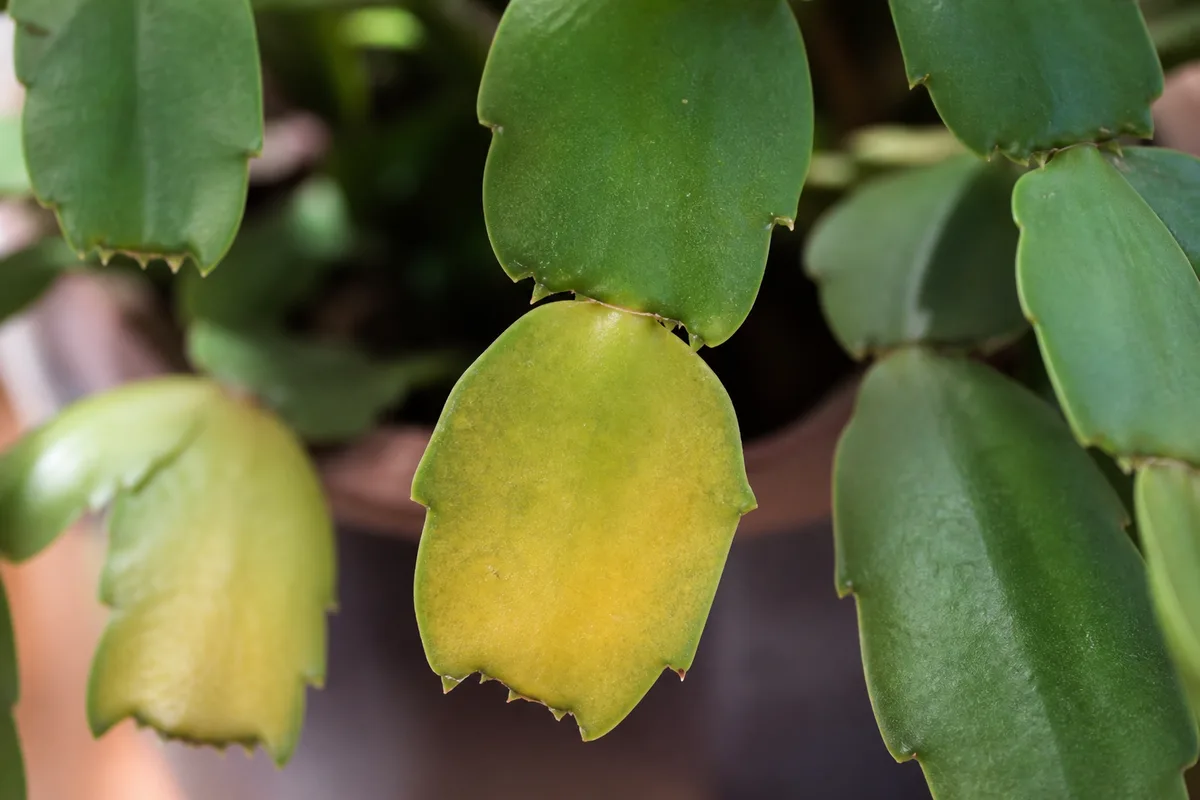
Yellow fading on oldest basal phylloclade segments with scalloped margins - terminal segments stay firm and green on the same chain.
Healthy phylloclades feel firm and plump with rounded, scalloped margins on true Christmas cactus-or slightly pointed teeth on Thanksgiving cactus (S. truncata), which shares nearly identical care. Where yellow appears, what the segment feels like, and what the soil is doing matter more than color alone.
Normal basal aging - The oldest segment chain at the soil line turns yellow from the base upward over weeks or months, then dries and drops while new growth at the terminal end stays green and firm. You may see one segment at a time. Post-bloom, a few basal segments often yellow as the plant redirects energy-this is not a crisis if the rest of the plant looks healthy.
Overwatering - Lower and mid segments turn yellow or translucent, feel soft or limp, and may hang downward while the mix stays dark, cool, and damp for many days. The pot feels heavy. A faint sour smell at drain holes or soft tissue at segment bases near the soil line suggests roots are failing. Clemson HGIC warns not to let holiday cactus soil become waterlogged, especially during the dark days of winter-yet calendar watering on a summer schedule keeps roots saturated for weeks in January.
Underwatering - Segments look thin, wrinkled, or puckered and may take on a dull yellow-green cast on a light pot with dry, crumbly mix. Unlike overwatering, the segment surface feels leathery, not mushy. Holiday cacti store water in phylloclades; repeated drought depletes those reserves before roots can catch up.
Low light - Segments may look pale, washed-out yellow-green with weak, stretched new growth and fewer buds. Low light also slows evaporation, which keeps soil wet longer and compounds overwatering damage even when you water less often.
Sun stress - Direct midday or afternoon sun often turns segments red, purple, or bleached before uniform yellow appears. Clemson HGIC notes that bright sun during summer months can make holiday cacti look pale and yellow-distinct from moisture-related yellowing because the pot weight and soil moisture stay normal.
Nutrient fade - A gradual loss of green on older segments with reduced new growth and fewer blooms may mean depleted mix-especially in plants that have not been repotted in three or more years. Center and terminal segments often stay greener because the plant moves nitrogen toward active growth.
Why Christmas cactus gets yellow segments
Holiday cacti evolved as epiphytes in humid tropical mountain forests of southeastern Brazil, clinging to tree bark in filtered light. They need regular moisture during warm months but their fine roots still require oxygen between drinks. Yellow segments usually mean one of those tolerances is off.
The winter wet-soil trap is the leading indoor cause. A plant in a bright east window through summer may need water every seven to ten days. The same plant in a dim hallway in January may hold moisture for two weeks or longer. Owners who water every Sunday without checking soil keep the root zone saturated while lower phylloclades yellow first-exactly the pattern that precedes overwatering and rot.
Seasonal rhythm matters. During active growth from spring through early autumn, the top 1–2 inches should dry before the next soak. During pre-bloom rest starting mid-September, a deeper dry-down helps trigger flowering. Once buds appear, the medium must stay evenly moist to prevent flower bud abscission-but evenly moist is not constantly soggy. Watering on a single year-round schedule hits the wrong target in every phase.
Natural segment turnover sheds the oldest phylloclades as new ones emerge from terminal growth. NC State Extension lists root rot from overwatering among common problems on Schlumbergera-but a single yellow basal segment on firm roots and appropriate moisture is often harmless aging, not rot.
The forest-cactus paradox confuses new owners. Because holiday cacti need more water than desert succulents, people assume wet soil is safe. Iowa State Extension notes that overwatering leads to limp growth and root rot when soil does not dry between waterings-even though the same plant needs consistent moisture while budding and flowering.
Poor drainage setup compounds moisture stress: heavy peat without perlite or bark, pots without drain holes, cachepots that trap runoff, and oversized containers that hold wet soil around a small root ball. Yellow segments on chronically damp mix usually trace to root oxygen loss, not nutrient deficiency.
How to confirm the cause
Work through these checks in order. You are separating aging, overwatering, underwatering, light stress, and sun scorch before changing multiple variables at once.
- Which segments? Oldest basal chain only, slowly → likely aging or post-bloom shedding. Climbing up multiple chains within days → suspect rot or severe water stress.
- Soil moisture - Push a finger 1–2 inches down near the pot wall. Wet surface for 3+ days → overwatering confirmed enough to act on. Dry, crumbly mix with wrinkled segments → underwatering.
- Pot weight - Lift the pot. Heavy, cool, wet mix plus soft yellow segments strongly supports root stress from excess water. Light as cardboard with wrinkled segments → drought.
- Segment squeeze - Gently press a yellow segment between thumb and finger. Mushy on wet soil → stop watering. Leathery and wrinkled on dry soil → soak. Firm with only basal yellow → aging.
- Smell and base check - Sour odor at drain holes or soft segment bases near the soil line → inspect roots before the next watering.
- Christmas Cactus light guide - South or west window with midday sun on segments → sun stress (red/purple/bleached patches). Dim interior with pale stretched growth → insufficient light.
- Season and recent bloom - Yellowing a few basal segments two to four weeks after flowering often follows normal rest-pair with soil checks, not panic Christmas Cactus repotting guide.
- New terminal growth - Firm, green segments emerging from tips mean the plant is still functioning; focus on the specific stressor. No new growth for months on wet soil → root inspection is urgent.
Confirmed overwatering: wet mix, soft yellow segments, optional sour smell, mushy roots if you unpot.
Confirmed underwatering: dry mix, light pot, wrinkled dull segments, firm roots when checked.
Confirmed aging: one or two basal segments yellowing over weeks, appropriate moisture, healthy terminal growth.
Symptom lookalike comparison
| Signal | Overwatering | Underwatering | Normal aging | Sun stress | Low light |
|---|---|---|---|---|---|
| Pot weight | Heavy, cool | Light | Normal | Normal | Normal to heavy |
| Top 1–2 inches | Wet or damp | Dry, crumbly | Appropriate | Appropriate | Often damp longer |
| Segment feel | Soft, limp; may be translucent | Wrinkled, leathery | Firm except spent basal | Firm; red/purple/bleached patches | Pale, thin, stretched |
| Yellow pattern | Lower chains first, spreads upward | Whole plant dull; newest wrinkle first | Basal chain only, slow | Exposed side of segments | Pale yellow-green throughout |
| First action | Stop watering; see overwatering | Thorough soak | Twist off spent segments | Move to filtered light | Relocate to brighter indirect spot |
Wilting overlap - Wilting and drooping leaves cover the same limp-segment symptom. If moisture direction is unclear, run the wet-vs-dry decision tree here before opening other guides.
First fix by likely cause
If soil is wet and segments are soft: stop all watering immediately. Empty saucers and cachepots. Let the top inch of mix dry before you reassess. Do not fertilize, repot, or prune heavily on day one-that stacks stress onto roots that may already be drowning. If yellowing continues after the mix dries, gently unpot and inspect roots. Trim brown, slimy tissue with clean scissors only if decay is present; otherwise let the existing mix breathe. Full protocol for advanced rot is on the root rot guide.
If soil is dry and segments are wrinkled: water thoroughly until a small amount runs from the drainage hole, then empty the saucer within 30 minutes. Wait for the top inch to dry again before the next drink-do not keep the mix soggy as compensation for drought.
If only basal segments are yellow on firm growth: twist off fully spent phylloclades at the joint with a gentle rotation. Keep your normal seasonal watering rhythm from the watering guide.
If upper segments are bleached or red-purple with good watering: move the plant back from direct sun to bright indirect light-east window, or 2–3 feet back from south or west glass with a sheer curtain.
If segments are pale and stretched in a dim spot: relocate to brighter indirect light without jumping straight to a hot windowsill. Low light slows drying; adjust watering downward after the move.
One correction at a time. Fix water before light, and fix light before fertilizer.
Recovery timeline
Aging segments will not re-green. They drop and are replaced from the terminal end over several weeks-no further action needed if the pattern stays limited to the basal chain.
Mild overwatering often stabilizes within one to two weeks after the wet cycle stops and the mix breathes again, provided terminal segments stayed firm and living roots remain.
Underwatering recovery shows plump segments within 24 to 72 hours after a proper soak if roots are healthy. Repeated drought may leave permanent wrinkles on old segments even after turgor returns.
Light correction needs two to four weeks for new terminal segments to show normal color; bleached or sun-stressed old tissue does not recover.
Nutrient-related fade may take three to six weeks after repotting into fresh mix or resuming half-strength fertilizer during active growth-only after watering and light are already correct.
Judge success by new terminal segment growth, not by old yellow phylloclades turning green. The overview FAQ on yellow segments matches this recovery standard.
What not to do
Do not keep watering because segments look limp when soil is already wet-limp phylloclades on saturated mix often mean roots cannot absorb water, not that the plant is thirsty.
Do not fertilize yellow segments before fixing water and light. Feeding a waterlogged plant accelerates decline and can burn stressed tissue.
Do not repot into a larger container on day one unless roots are clearly rotted. A bigger pot holds wet soil longer and worsens the most common yellow-segment cause.
Do not treat Christmas cactus like a desert cactus and withhold water until every segment shrivels-holiday cacti need consistent moisture during growth and bloom, with dry-down only at the appropriate depth for the season.
Do not pull yellow segments that still attach firmly; wait until they are fully spent, then twist off cleanly at the joint.
Do not move the plant repeatedly between dim corners and sunny windows while diagnosing-pick a stable bright indirect spot and observe for two weeks.
How to prevent yellow segments next time
Match watering to how fast your pot dries, not a calendar. Check the top 1–2 inches before every drink. Use airy mix with perlite or orchid bark, confirm drain holes are open, and empty saucers after every soak so the plant never sits in standing water.
Place the plant in bright indirect light-east window, or filtered west or south exposure. Avoid direct midday sun that bleaches segments. In dim rooms, supplement with a grow light or expect slower dry-down and adjust watering accordingly.
Follow seasonal rhythm: deeper dry-down during pre-bloom rest starting mid-September and post-bloom recovery in late winter; evenly moist (not soggy) mix while buds develop and flowers open. Details and phase targets are on the watering guide.
Remove spent basal segments before they lie against wet soil and trap moisture at the stem base.
Repot every two to three years into fresh, well-drained mix when organic components break down-Clemson HGIC recommends repotting about once every three years in spring. Keep plants slightly pot-bound for best flowering; oversized pots stay wet dangerously long.
When in doubt, read segment texture and pot weight together-that pairing tells you more about Christmas cactus health than any single yellow phylloclade.
When to worry
Escalate beyond routine care adjustments when:
- Multiple segment chains yellow within a week while soil stays wet
- Segment bases feel mushy or the mix smells sour or foul at drain holes
- Terminal growth stops or new segments emerge soft and yellow on damp mix
- Buds drop during bloom season on chronically wet soil
- Unpotting reveals brown, black, or slimy roots instead of firm white or tan tissue
Those patterns suggest active root rot or advanced overwatering-not basal aging. Trim decayed roots, repot into fresh airy mix sized to remaining root mass, and withhold fertilizer until new firm growth appears. If more than half the root system is decayed and terminal segments collapse, recovery may not be realistic-propagation from healthy segment cuttings is sometimes the better path, covered on the propagation guide.
For chronic yellowing after you have corrected water, light, and drainage, consult your local cooperative extension office or a trusted nursery-persistent symptoms on an otherwise well-managed plant may indicate disease or a mix that has broken down beyond what surface checks reveal.
When to use this page vs other Christmas Cactus guides
- Christmas Cactus watering guide - Use for routine moisture checks before assuming yellow leaves is the main issue.
- Christmas Cactus problems hub - Browse all 21 common issues on this species.
- Overwatering on Christmas Cactus - Different entry point when symptoms overlap with yellow leaves.
- Underwatering on Christmas Cactus - Different entry point when symptoms overlap with yellow leaves.
- Not Enough Light on Christmas Cactus - Different entry point when symptoms overlap with yellow leaves.