Drooping Leaves on Christmas Cactus: Causes, Checks & Fixes
Quick answer
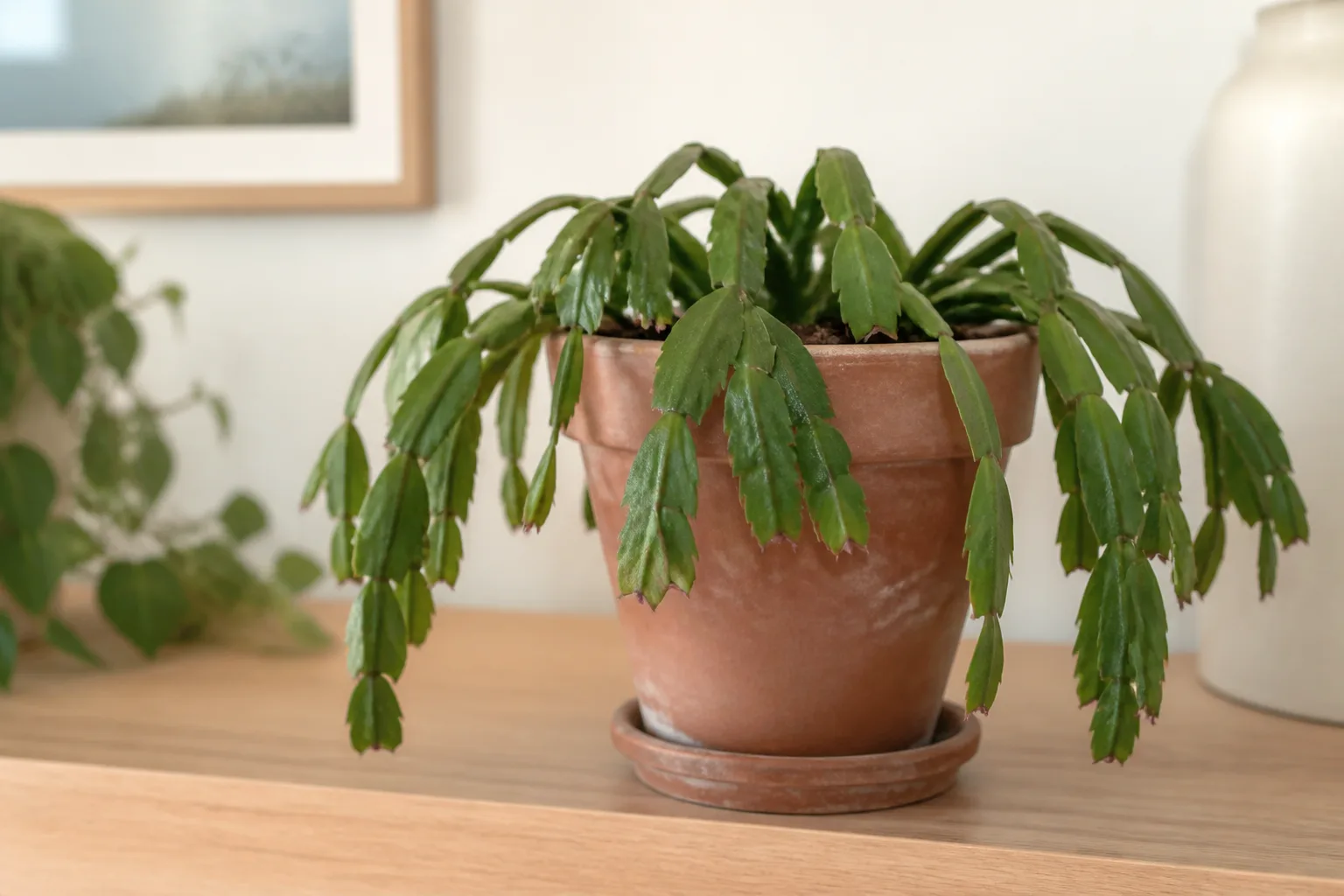
Drooping on Christmas cactus usually means limp phylloclades (stem segments) from a water imbalance-not true leaves. First step: lift the pot and push your finger 1–2 inches into the mix. A heavy, wet pot with limp segments calls for pausing water; a light, dry pot with shriveled segments calls for a thorough soak.
Drooping Leaves on Christmas Cactus: Causes, Checks & Fixes
This guide covers drooping leaves on Christmas Cactus. See also the general Drooping Leaves guide, watering, and light pages for this plant.
Drooping Leaves on Christmas Cactus: Causes, Checks & Fixes
Quick answer
Christmas cactus (Schlumbergera × buckleyi) does not have true leaves. What most owners call “drooping leaves” are phylloclades-flat, jointed stem segments that store moisture and photosynthesize. When those segments go limp, the plant is telling you water is not moving correctly through roots and tissue, but the fix depends entirely on whether the mix is too wet or too dry.
Limp segments with wet, heavy soil usually mean overwatering, poor drainage, or failing roots-not thirst. Limp segments with dry, light soil mean underwatering. Less commonly, sudden limpness follows Christmas Cactus repotting guide, a cold draft, or drought stress while buds are forming.
First step: lift the pot and push your finger 1–2 inches into the mix near the pot wall. A heavy pot with damp mix and limp segments means stop watering and check drainage. A light pot with dry mix and shriveled segments means soak thoroughly until water runs from the drain holes, then empty the saucer. Full species context: Christmas cactus overview.
What drooping leaves look like on Christmas cactus
On a healthy plant, phylloclades sit firm and plump with rounded scalloped edges (true Christmas cactus) or slightly pointed teeth (Thanksgiving cactus, S. truncata). They arch naturally on pendulous stems but should feel springy when you gently press them-not soft and floppy.
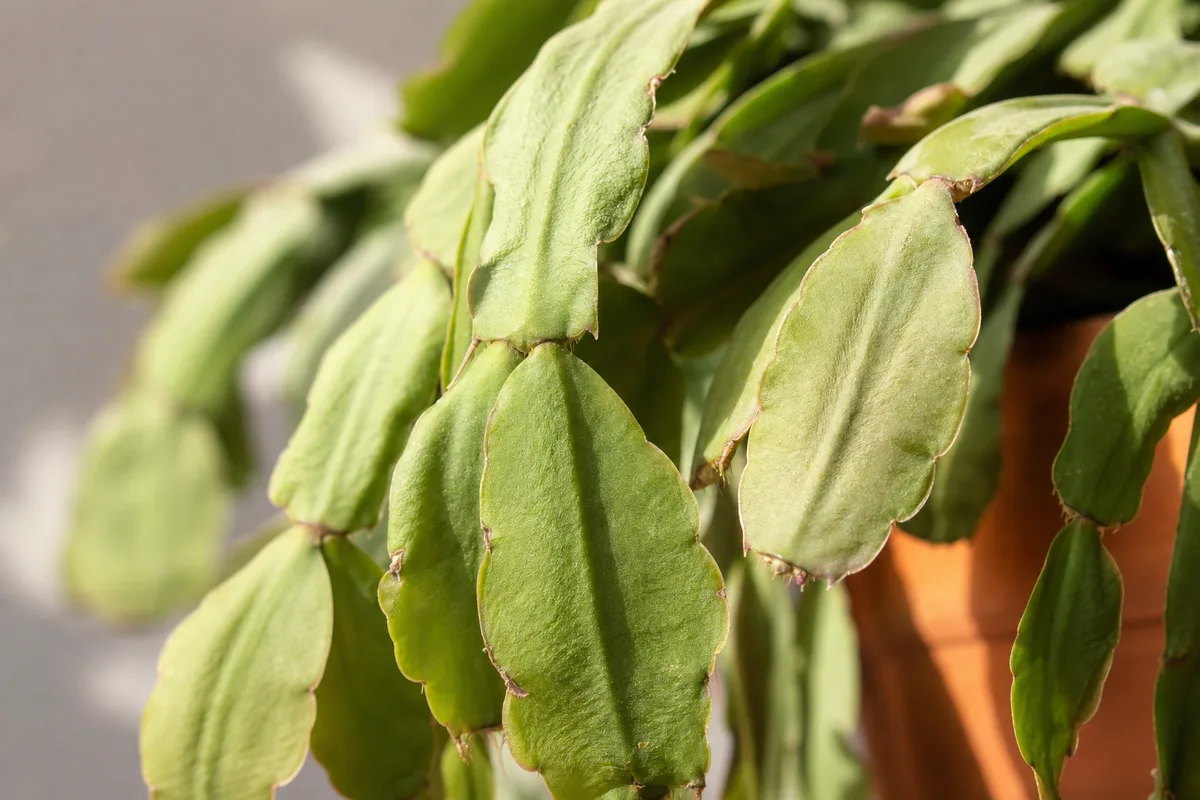
Limp soft phylloclades losing turgor with slightly wrinkled edges - lift the pot and check top-inch soil moisture before watering.
Wet-soil droop (most common indoor misread):
- Segments hang limp while the mix stays dark, cool, and heavy
- Lower phylloclades may turn yellow or translucent before upper segments follow
- Pot feels noticeably heavier than it did days after the last watering
- Mix may smell faintly sour at the drain holes; fungus gnats may hover near the surface
- Buds may drop if drought and overwatering cycles alternate during bloom season
Dry-soil droop:
- Segments look limp and slightly shriveled or wrinkled along the edges
- Pot is light; surface mix is pale and crumbly
- Segments feel thin but not mushy-more deflated than rotted
- Often follows a missed watering, a bright summer window that dried the pot fast, or treating the plant like a desert cactus
Whole-plant flop after repot or draft:
- Limpness appears within a day or two of transplanting or moving near a cold window, AC vent, or frequently opened door
- Mix moisture may be normal; roots were disturbed or chilled rather than drowned or dried
- Segments stay green but lose turgor across the whole plant
Natural arch vs. stress droop:
- Mature holiday cacti naturally weep from hanging baskets-that gentle downward curve on firm, plump segments is normal
- Stress droop feels soft, dull, or wrinkled; healthy arch keeps segments turgid when you pinch them
Why Christmas cactus gets drooping leaves
Holiday cacti evolved as epiphytes in Brazilian coastal rain forests, clinging to tree bark in humid, filtered light. They store water in phylloclades but still need working roots and seasonal rhythm-not desert-style neglect and not constant soggy soil.
Overwatering in cool, low-light conditions is the leading cause of limp segments indoors. Clemson HGIC warns not to let holiday cactus soil become waterlogged, especially during dark winter days when evaporation slows. Roots in saturated mix lose oxygen and function; even wet soil cannot reach limp tissue when roots fail. Calendar watering every Sunday in a dim January room keeps mix wet for weeks-a perfect setup for limp segments that look thirsty but are actually drowning.
Underwatering depletes the moisture reserves stored in phylloclades. Without regular drinks during active spring and summer growth-or during bud development when the medium must stay evenly moist to prevent bud drop-segments deflate and hang limp. Owners who fear root rot sometimes withhold water too long, especially after reading generic “let cacti dry out” advice that does not fit forest epiphytes.
Root rot from chronic overwatering produces the confusing pattern of limp segments on wet soil. Dead roots cannot absorb water, so the plant wilts while sitting in a puddle-thirst and rot look identical until you check mix moisture and root firmness.
Repot shock interrupts uptake when roots are torn, packed in water-repelling dry pockets, or buried in heavy wet nursery mix. NC State Extension notes that overwatering can cause root rot and that sudden environmental changes affect holiday cacti.
Cold drafts and temperature swings below about 50 °F can stress segments quickly. Clemson HGIC recommends not leaving holiday cacti outside when temperatures drop below 50 °F Indoor blasts from AC vents or single-pane winter windows produce similar limpness without either watering extreme.
Bud-stage drought during visible flower bud development causes limp segments and dropped buds. After bud set in fall, evenly moist-not bone dry, not soggy-mix is critical. Drought at that stage is a different branch from simple summer underwatering.
Lookalike symptoms to rule out
Drooping vs. wilting intent - On this site, wilting covers the same limp-segment symptom with overlapping causes. This page focuses on diagnostic depth for drooping phylloclades and the wet-vs-dry decision tree. If you already confirmed moisture direction, see overwatering or underwatering for cause-specific recovery.
Post-bloom fatigue - After heavy flowering, segments may look slightly softer while the plant rests from late January through March. If mix moisture is appropriate and new segment tips stay firm, mild droop during post-bloom rest is lower urgency than limpness on chronically wet soil.
Low humidity alone - Holiday cacti prefer high humidity, but limp segments with correct soil moisture rarely trace to dry air alone. Check water first; add humidity only after you rule out over- and underwatering.
Pest-related limpness - Mealybugs, scale, or root mealybugs weaken vascular flow over weeks. Inspect segment joints and soil line if limpness persists despite correct moisture for two or more weeks.
How to confirm the cause
Work through these checks in order. One pot-weight comparison beats guessing from limp segments alone.
- Top-inch moisture - Push your finger 1–2 inches into the mix near the pot wall. Dry confirms underwatering during active growth. Damp or wet with limp segments suggests root failure or chronic overwatering.
- Pot weight - Lift the pot after you know what “heavy after watering” feels like for your container. Light weight plus limp segments equals dry. Heavy, cool pot plus limp segments equals oversaturated mix or dead roots.
- Skewer test - Insert a wooden skewer to the bottom, wait two minutes, pull it out. Clinging dark mix means wet; clean dry wood means ready to water during growth season.
- Segment texture - Mushy, translucent, or yellowing lower segments on wet mix point to rot. Thin, wrinkled but firm segments on dry mix point to drought.
- Smell and drainage - Sour odor, water standing in saucers for days, or mix that stays wet a week after watering confirms overwatering habitat.
- Seasonal phase - Active growth (April–August), pre-bloom rest (mid-September onward), bud development, or post-bloom recovery each shifts the correct dry-down target. See the watering guide before you change rhythm.
- Recent history - Repotting within two weeks, a vacation dry spell, a move near a cold window, or switching to a much larger pot narrows the cause quickly.
- Root inspection - If wet limpness persists after stopping water for several days, slide the plant from the pot. Healthy holiday cactus roots are firm and white or tan; rotted roots are brown, black, or slimy.
| Signal | Wet-soil droop | Dry-soil droop |
|---|---|---|
| Pot weight | Heavy, cool | Light |
| Top 1–2 inches | Damp or wet | Dry, crumbly |
| Segment look | Limp, may yellow; not shriveled | Limp and wrinkled |
| Skewer | Dark, clinging mix | Clean, dry |
| First action | Stop watering | Thorough soak |
First fix for Christmas cactus
Lift the pot and check top-inch soil moisture before any other action. That single test separates opposite fixes-and watering a limp plant on already wet soil is the fastest way to turn reversible stress into root rot.
If the mix is wet and the pot is heavy: Stop watering immediately. Empty any saucer or cachepot holding standing water. Move to brighter indirect light if the plant sits in deep shade-slow evaporation worsens wet soil in winter. Let the top inch dry before you even consider another drink. If lower segments keep yellowing after the mix dries, inspect roots. Full wet-soil protocol is on the overwatering page.
If the mix is dry and the pot is light: Water thoroughly until a small amount runs from the drainage holes, then discard all runoff within 30 minutes. For severely dry peat that repels water, bottom-water the pot in a bowl for 30–45 minutes, then let it drain fully. Do not flood repeatedly in one hour-one good soak, then reassess segment firmness after 24 hours.
If buds are visible and mix is dry: Water when the top inch dries, but do not let the entire pot go crisp-bud-stage drought causes bud drop as well as limp segments.
If the crown base feels soft or mix smells sour on wet soil: Treat as possible root rot. Stop watering, inspect roots, and see the root rot guide before you soak a rotting plant.
Make one correction, then wait several days before stacking repotting, fertilizing, and heavy pruning.
Step-by-step recovery by cause
Overwatering / root stress path
- Stop all watering. Wick excess moisture with paper towels under the drain holes.
- Confirm the pot has open drainage holes and no standing water in outer cachepots.
- Move to brighter indirect light if evaporation has been too slow in a dim room.
- If roots are mushy when you inspect, trim decayed tissue, repot into fresh airy mix sized to remaining roots, and keep mix barely moist-not wet-while the plant stabilizes.
- Remove soft lower segments that will not recover; they drain energy and harbor rot.
- Wait for firm new segment growth before fertilizing.
Underwatering path
- Soak until water runs from drainage holes; empty saucers completely.
- For hydrophobic dry peat, bottom-water 30–45 minutes, then drain.
- Keep the plant in Christmas Cactus light guide-not hot direct sun-while roots rehydrate.
- Resume normal rhythm when the top 1–2 inches feel dry during active growth; adjust for seasonal rest and bloom phases per the watering guide.
Repot-shock path
If limpness followed repotting and roots look mostly healthy, skip the rot protocol. Keep mix barely moist, maintain stable temperature and light, and wait one to two weeks for new root function. Do not fertilize until new segment tips appear firm.
Cold-draft path
Move the plant away from AC vents, cold windows, and outside doors. Ideal spring and summer growth occurs at 70–80 °F; do not expose holiday cacti below 50 °F Segments often firm within a day or two once warmth returns if roots were healthy.
Bud-stage drought path
Water when the top inch dries while buds are developing-keep evenly moist without waterlogging. Lost buds may not return until the next bloom cycle, but limp segments should firm as moisture stabilizes.
Recovery timeline
Mild underwatering often shows firmer segments within one to three days after a proper soak. Severe drought may take two or three measured watering cycles before all segments recover; older wrinkled tissue may stay slightly dull.
Overwatering with intact roots often stabilizes within one to two weeks once soil oxygen returns and you stop adding water to wet mix. Yellow or translucent lower segments rarely green up; firm new tips are the benchmark.
Root rot recovery spans two to four weeks when the crown is still firm and enough healthy root remains. Soft crown on wet soil may not be saveable-act quickly.
Repot shock commonly resolves within seven to fourteen days with stable care. Cold shock often resolves within 24–48 hours if the crown stayed firm.
What not to do
Do not pour more water onto limp segments when the mix is already wet-that is the most common way owners turn reversible stress into root rot. Do not treat holiday cactus like a desert cactus with weeks of bone-dry soil during active growth or bud development. Do not move a limp plant into harsh direct sun to “perk it up”; bright filtered light is enough. Do not fertilize a stressed plant before you confirm roots are healthy. Do not repot on day one unless root rot, failed mix, or severe compaction is confirmed. Do not stack repotting, pruning, and pesticide on the same day.
How to prevent drooping leaves on Christmas cactus
Check soil before every watering-finger probe, pot weight, or skewer-not a fixed calendar. Water the growing medium when it is dry to the touch, but do not let soil become waterlogged in winter or completely dry out during bud development. Use well-drained mix with perlite or orchid bark in a pot with drain holes sized to the root ball; holiday cacti flower best when kept somewhat pot bound. Empty saucers within 30 minutes of every drink. Match dry-down depth to season: shallower dry during active growth and bloom, deeper dry only during controlled pre-bloom rest-not random neglect. Keep plants above 50 °F and away from cold drafts. Review the full Christmas cactus watering schedule for phase-by-phase targets.
When to worry
Act immediately if the crown base softens, the mix stays wet while the whole plant collapses, or roots are brown and mushy on inspection-those signs mean rot may be reaching the heart of the plant and simple drying may not be enough. Sudden whole-plant collapse on wet soil within a few days is urgent even if upper segments still look green.
You can wait and observe if only a few lower segments are limp, the crown is firm, and you have already corrected a clear dry-wilt or draft mistake. Improvement shows as firm new segment growth at the tips within one to two weeks.
Christmas cactus care cross-check
| Check | Healthy baseline | Drooping red flag |
|---|---|---|
| Top 1–2 inches of mix | Dry before next drink (growth phase) | Wet for 7+ days while segments limp |
| Pot weight | Light when dry, moderate after soak | Stays heavy and cool between waterings |
| Segment feel | Firm, plump, springy | Soft, wrinkled, or translucent |
| Lower segments | Occasional natural aging | Yellow on wet soil, spreading upward |
| Season | Matches watering guide phase | Summer soak schedule on winter-rest plant |
| Temperature | Stable 60–80 °F indoors | Below 50 °F or direct cold draft |
Related Christmas cactus problems
- Watering - primary diagnostic source; limp phylloclade FAQ and seasonal rhythm
- Overwatering - limp segments on wet, heavy soil
- Underwatering - dry mix, light pot, shriveled segments
- Root rot - soft crown, sour smell, mushy roots
- Wilting - overlapping limp-segment intent; compare before treating
- Christmas cactus overview - full care hub
When to use this page vs other Christmas Cactus guides
- Christmas Cactus watering guide - Use for routine moisture checks before assuming drooping leaves is the main issue.
- Christmas Cactus problems hub - Browse all 21 common issues on this species.
- Underwatering on Christmas Cactus - Different entry point when symptoms overlap with drooping leaves.
- Overwatering on Christmas Cactus - Different entry point when symptoms overlap with drooping leaves.
- Root Rot on Christmas Cactus - Different entry point when symptoms overlap with drooping leaves.