Best Soil for Christmas Cactus: Mix & Drainage
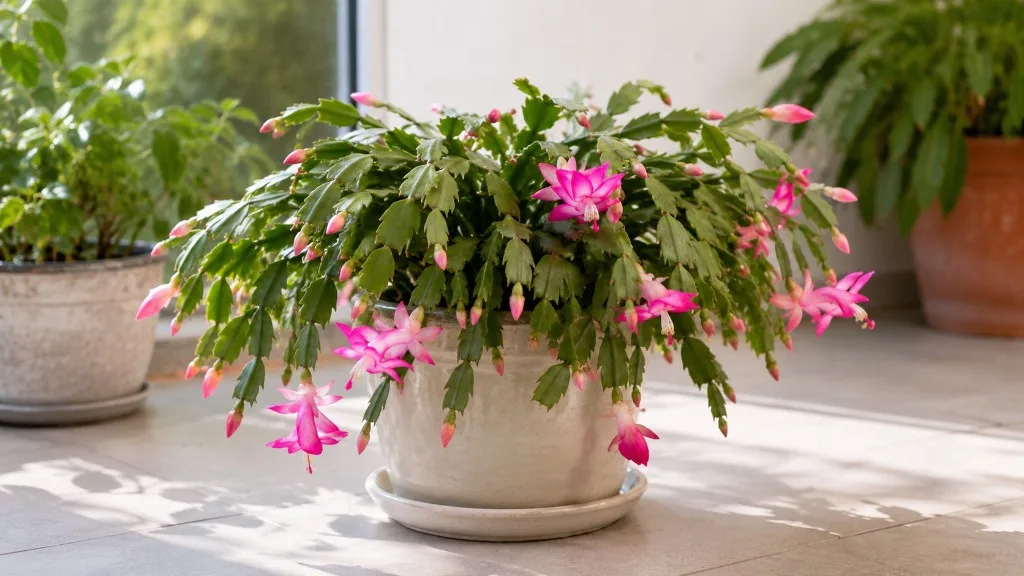
Best Soil for Christmas Cactus: Mix & Drainage
Best Soil for Christmas Cactus: Mix & Drainage
Why Christmas Cactus Soil Is Different from Desert Cactus Mix
Christmas cactus (Schlumbergera × buckleyi) is sold beside spiky desert cacti in many garden centers, which leads to one of the most expensive soil mistakes in houseplant care: treating it like a plant that wants bone-dry, mineral-heavy substrate. It is not. Christmas cactus is an epiphytic tropical cactus from the rainforests of southeastern Brazil, where it grows on tree branches and rock crevices rather than in ground soil. Its roots evolved to grab brief pulses of moisture from leaf litter and decaying bark while staying exposed to moving air - a completely different root-zone profile from a saguaro or barrel cactus sitting in gritty desert sand.
That distinction matters the moment you open a bag of mix. Desert cactus soil is designed to dry almost instantly and hold almost no organic matter. Christmas cactus soil needs to drain quickly but also hold a modest amount of moisture and nutrients between waterings. The Missouri Botanical Garden recommends a well-drained container medium of one part potting soil, two parts peat moss, and one part sharp sand or perlite - a blend that retains more structure and moisture than a straight succulent mix. NC State Extension describes holiday cacti as needing a light, well-drained potting soil and notes they especially resent staying wet, which is the tension every good Christmas cactus mix has to resolve: moist enough for a tropical plant, open enough that roots never sit in stagnant water.
If you are comparing labels at the store, the practical rule is simple. Desert cactus mix alone is usually too lean and fast-drying for long-term Christmas cactus health, especially during fall bud development when the plant cannot tolerate going completely dry. Standard indoor potting soil alone is usually too dense and slow-draining, which pushes the plant toward root rot on Christmas Cactus within a season or two. The best soil for Christmas cactus sits between those extremes: airy, organic, and fast-draining without behaving like a wrung-out sponge for days after every watering.
What Christmas Cactus Needs from Its Root Zone
Soil for Christmas cactus is not really about dirt. It is the system that controls how much oxygen, water, and mineral exchange reach fine epiphytic roots after every watering. When that system works, segments stay plump, new phylloclades (the flattened stem segments often called leaves) form cleanly, and the plant can survive the seasonal shifts between active growth, bud set, and bloom. When the system fails, problems show up at the roots first - soft brown tissue, sour-smelling mix, or segments that shrivel even though you are watering on schedule.
The NC State Extension Gardener Plant Toolbox lists moist, well-drained, airy potting medium with peat moss, sand, and perlite as the ideal cultural condition for Schlumbergera × buckleyi. That single phrase captures the three demands your mix must satisfy at once: enough water retention that the plant is not stressed by constant drought, enough drainage that water does not pool around the root crown, and enough pore space that air can move through the mix even after a thorough soak.
Air, Moisture, and Organic Matter in Balance
Epiphytic roots breathe. In nature, Christmas cactus roots hang in open air between bark and moss; in a pot, you recreate that openness with perlite, pumice, orchid bark, or coarse sand. Those materials create macropores - large air channels - that keep the mix from collapsing into a solid wet block. Organic components like peat moss, coco coir, or quality potting soil supply the smaller pores that hold water and nutrients for a few days. The balance point is a mix that feels light in the hand, crumbles rather than clumps when dry, and darkens evenly when watered instead of shedding water down the sides of a hydrophobic crust.
In a typical indoor home, aim for a mix that lets the top inch dry within five to ten days during active growth and does not stay visibly wet at the bottom of the pot for more than a few hours after a deep watering. If your mix dries in two days, it is probably too gritty for your watering habits or room humidity. If it stays damp for two weeks, it is too compact or the pot is too large - and no amount of careful watering will fully compensate.
How Epiphytic Roots Behave in a Pot
Christmas cactus roots are shallow and fibrous. They spread near the surface of the substrate rather than drilling deep like a taprooted tree. That growth habit explains two practical soil decisions most care guides underemphasize. First, a shallow pot often suits the plant better than a deep one, because a tall column of wet mix at the bottom stays saturated long after the surface feels dry, leaving lower roots in low-oxygen conditions. Second, slight root constriction is normal and even beneficial for flowering. The RHS notes that Christmas cacti like to be snug in their pot, so your soil strategy should support a stable root zone in a modest container rather than constantly upsizing to fresh, wet, empty mix.
When you inspect roots during Christmas Cactus repotting guide, healthy Christmas cactus roots are white to tan, firm, and sparse compared with a fern or pothos. A tight root mat with visible bark-like segments creeping over the mix surface is not automatically a crisis - it is often a sign the plant has found a rhythm. Repot when roots have consumed most of the usable mix or when drainage has clearly slowed, not simply because you see roots at the drainage hole.
Best Soil Mix Recipe for Christmas Cactus
The best Christmas cactus soil mix mimics tree-crotch conditions: loose, organic, and quick to shed excess water. You do not need a laboratory-grade formula. You need a repeatable ratio you can adjust once you learn how fast your pot dries in your kitchen or living room.
The Reliable Three-Part DIY Blend
This is the mix I recommend as a starting point for most indoor growers because it is easy to source, inexpensive, and forgiving:
- 1 part all-purpose potting soil (quality, peat- or coir-based indoor mix without moisture-control crystals)
- 1 part perlite or pumice (coarse grade, not dusty fines)
- 1 part orchid bark (medium fir bark chunks, roughly ¼ to ½ inch)
Combine the dry ingredients in a bucket until the texture is uniform. The finished blend should look speckled - dark organic material threaded with white perlite and tan bark chips. When you squeeze a handful, it should hold together briefly and then fall apart. When you water it, water should penetrate immediately rather than pooling on top.
That equal-parts recipe aligns with widely used home and nursery practice and matches the core principle cited by extension sources: potting soil for structure and nutrients, perlite or sand for drainage and aeration, bark or peat for moisture moderation. If you only have two ingredients on hand, a 50/50 blend of potting soil and perlite is a workable emergency mix, though it dries faster and will need more frequent monitoring than the three-part version.
Alternative Mix Ratios for Different Homes
Homes differ, and the best soil for Christmas cactus in a humid bathroom is not identical to the best mix in an air-conditioned office that hits 25% relative humidity in winter. Use these adjustments after you have observed one full watering cycle in the new mix:
If the pot stays wet longer than ten days after a thorough watering, increase drainage material. Shift toward 2 parts potting soil : 2 parts perlite : 1 part bark, or add an extra handful of pumice per gallon of mix. Also verify the pot is not oversized and that a decorative cachepot is not trapping runoff.
If the mix dries so fast that segments wrinkle within four or five days despite moderate light, increase moisture-holding components slightly. The Missouri Botanical Garden formula - 1 part potting soil, 2 parts peat moss, 1 part perlite - leans more retentive and suits dry rooms or growers who tend to underwater. Replace up to half the peat with coco coir if you prefer a peat-reduced mix; coir rewets more reliably when it does dry out.
If you want a two-ingredient shortcut, mix 2 parts potting soil with 1 part orchid bark or 2 parts potting soil with 1 part perlite. These are less ideal than the three-part blend but still far safer than unamended bagged soil. A 60 to 80 percent potting soil with 20 to 40 percent perlite ratio is another common starting point cited in contemporary care references for tropical epiphytes.
Optional additions that genuinely help in some setups - but are not required - include a tablespoon of horticultural charcoal per gallon of mix to absorb organic acids and odors, and a small portion of compost or worm castings for slow nutrients. Skip garden soil, topsoil, and moisture-control potting mixes entirely; they compact, introduce pathogens, or stay wet far too long for epiphytic roots.
Choosing and Amending Commercial Potting Mix
Not everyone wants to batch-mix substrate. Commercial options can work if you treat them as base ingredients rather than finished products.
When Standard Potting Soil Works (With Amendments)
Yes - you can use regular potting soil for Christmas cactus, but only if you amend it. Straight all-purpose mix out of the bag is too fine-textured for long-term epiphytic cactus care. It settles over repeated waterings, reducing air space around roots. Before potting, cut it with at least 30 to 50 percent perlite, pumice, or bark using the recipes above.
When shopping, read the label critically. Avoid mixes marketed as “moisture control” or heavily loaded with water-absorbing gel crystals. Those products are designed for thirsty foliage plants in hot climates, not for a cactus that rots when the root zone stays saturated. Also skip cheap mixes that are mostly fine peat dust; they look dark and rich but turn into brick after a dry spell, then shed water when you try to rewet them.
If you are refreshing an older Christmas cactus without full repotting, scrape off the top inch or two of degraded crust and replace it with fresh amended mix. That is not a permanent fix for a root-bound plant, but it improves surface aeration and reduces salt crust buildup until you can repot properly.
Cactus Mix vs. Tropical Succulent Blend
Bagged cactus and succulent mix is not automatically correct for Christmas cactus. Many commercial succulent blends skew desert-oriented: extra sand, minimal organic matter, very fast dry-down. Used alone, they can work in humid rooms with attentive watering, but they often force a drought-stress cycle that shows up as wrinkled segments, bud drop in fall, or stunted new growth.
The better commercial choice, when available, is a tropical succulent or epiphyte-oriented blend - products formulated for plants like Christmas cactus, rhipsalis, and epiphytic cacti that want sharp drainage plus organic body. If that is what you have, you may only need 10 to 20 percent extra perlite or bark rather than a full DIY rebuild.
A practical store-bought workflow: buy one bag of quality indoor potting soil and one bag of perlite or orchid bark. Mix at the 1:1:1 ratio at home. It costs less than specialty boutique mixes, stores well, and leaves you with amendment material for other houseplants.
Drainage: The Non-Negotiable Part of Christmas Cactus Soil
Even perfect mix fails if the container system traps water. Drainage is a partnership between soil texture, pot geometry, and watering behavior.
Drainage Holes, Pot Size, and Container Material
Does Christmas cactus need a drainage hole? Yes - without exception for long-term indoor care. A hole at the bottom lets you water thoroughly, flush salts, and confirm that water moves through the entire root zone instead of accumulating in a hidden layer. Growing in a sealed decorative pot without a hole can work only with extreme watering discipline and is not recommended for most growers. If you use a cachepot, water the plant in the sink, let it drain completely, then return it to the outer container - the method NC State Extension recommends for holiday cacti in decorative sleeves.
Pot size follows the one-to-two-inch rule: when repotting, choose a container only 1 to 2 inches (2.5 to 5 cm) wider than the current root ball. An oversized pot holds a large volume of mix that stays wet while roots occupy a small fraction of it, creating the classic slow-death scenario where stems look fine for months while roots rot below. Because Christmas cactus blooms well when slightly snug, resist upsizing until roots have clearly outgrown the current container.
Material changes dry-down speed. Terracotta breathes through porous walls and pulls moisture from the mix, which helps heavy-handed waterers but requires closer attention in dry winter air. Glazed ceramic and plastic retain moisture longer - useful in arid homes if you adjust the mix toward extra perlite. Hanging baskets suit the plant’s pendulous habit well; just verify the liner or basket drains freely and that the mix is light enough that the basket does not stay waterlogged at the center.
One myth worth burying: a layer of gravel at the bottom of the pot does not improve drainage and can create a perched water table where fine soil meets coarse gravel. Proper drainage comes from an airy mix throughout the entire pot and a hole at the base - not from a decorative stone layer.
pH, Minerals, and Long-Term Mix Breakdown
Christmas cactus tolerates a slightly acidic to neutral pH, roughly 5.5 to 7.0, according to botanical and extension references including the NC State Plant Toolbox, which lists acid to neutral soil pH among its cultural conditions. Most quality peat- or coir-based indoor mixes already fall inside that range, so hobbyists rarely need to test or amend pH unless tap water is extremely alkaline or the plant shows chronic micronutrient problems.
What matters more in everyday care is mineral accumulation. Each watering with hard tap water and each dose of fertilizer leaves microscopic salts behind. Over one to two years, those salts can crust on the mix surface, burn segment margins, and alter water movement. If you see white crystalline deposits or leaf-edge browning despite good watering habits, flush the pot by running lukewarm water through the mix for several minutes (with drainage), or refresh the substrate at repotting.
Peat-heavy mixes also decompose and compact with age. Compaction is silent until you notice water running down the inside wall of the pot while the center stays dry, or until the plant wilts shortly after watering because roots have rotted in anaerobic muck. That is why refreshing soil every two to four years - even if the plant is not fully rootbound - is sound practice for long-lived holiday cacti passed down between generations.
How to Tell If Your Christmas Cactus Soil Is Wrong
Soil problems rarely announce themselves with a single obvious leaf. They accumulate through small signals you can learn to read before stems go soft.
Water sits on the surface for more than a minute after watering, or runs straight down between the mix and pot wall without soaking in - these point to hydrophobic, compacted, or overly peat-heavy mix. The pot feels heavy days after watering while the surface looks dry, suggesting poor internal aeration or an oversized container. A sour, swampy smell when you lift the plant or poke the mix means anaerobic breakdown and likely root damage - stop watering, inspect roots, and plan an emergency repot into fresh, airy mix.
Above-ground symptoms tied to soil include mushy segments at the soil line, persistent wilting despite wet mix, yellowing or translucent segments, and bud drop in fall when the plant dries to bone-hardness (which is often a drought response, not strictly a soil recipe flaw, but it tells you the mix may be too fast-draining for your season). Conversely, black or brown soft spots at the base with otherwise firm upper segments usually indicate chronic overwatering on Christmas Cactus in dense soil.
A simple monthly check: insert a finger or dry wooden skewer two inches into the mix. Note how long it takes to dry at that depth compared with the top inch. If the deep layer stays cold and damp while you are watering on a schedule meant for a dry top inch, your soil or pot geometry - not your calendar - needs adjustment.
Repotting Christmas Cactus Into Fresh Soil
Repotting is how you reset a degraded root zone. Done at the right time with the right mix, it adds years to a plant. Done at the wrong time, it costs you the current bloom cycle.
Best Timing and Step-by-Step Repotting
When is the best time to repot Christmas cactus? Late winter through early spring, after flowering finishes and before next fall’s bud-initiation period, is the ideal window. The plant is entering active growth and can repair root disturbance quickly. Avoid repotting in late summer through early fall when bud formation is sensitive to disruption, and avoid winter repotting unless you are addressing active root rot.
How often should you repot? Every two to four years for a healthy plant, or sooner if drainage has collapsed, salts have built up, or roots have filled the pot. Frequent unnecessary repotting diverts energy from blooming - a point many experienced growers emphasize when plants are slightly rootbound.
Step-by-step:
- Water lightly one day before so segments are hydrated but the mix is not soggy.
- Choose a pot one size up with a drainage hole. For shallow-rooted specimens, pick a wider, shallower pot over a deep one when possible.
- Mix fresh substrate using the 1:1:1 recipe or your climate-adjusted variant.
- Remove the plant gently, loosen circling roots with your fingers, and brush away old compacted mix without tearing healthy white roots. Trim only soft, brown, or mushy tissue with clean scissors.
- Set the plant so the base of the segments sits at the same depth as before - burying the stem crown invites rot.
- Backfill with fresh mix, tapping the pot to settle gaps without compacting aggressively. Leave ½ to 1 inch of headspace below the rim for watering.
- Water lightly once to settle the mix, then place the plant in Christmas Cactus light guide away from direct sun for one to two weeks.
- Hold fertilizer for four to six weeks until new growth or firm roots confirm establishment.
Mild pause in growth or slight segment droop for a week is normal. Widespread yellowing, ongoing mush, or segment shriveling beyond two weeks means something in the pot system - usually oversize container, dense mix, or overwatering after repot - still needs correction.
Common Christmas Cactus Soil Mistakes
Even experienced growers slip on a few recurring errors:
Using unamended bagged soil because the label says “indoor plants.” Christmas cactus is an indoor plant with outdoor rainforest root logic. Amend every time.
Repotting into a much larger pot to “give it room to grow.” Extra room holds extra water. One size up only.
Confusing Thanksgiving cactus (S. truncata) and Christmas cactus (S. × buckleyi) care differences with soil differences. Both are epiphytic Schlumbergera species with the same substrate requirements even though bloom timing and segment shape differ.
Bottom gravel layers instead of fixing mix texture. They do not create the air pockets roots need in the root zone itself.
Leaving the plant in a wet saucer after watering. Drainage holes are useless if runoff sits in contact with the bottom of the pot.
Repotting during peak bloom because the pot looks tight. Finish the display, enjoy the flowers, then repot.
Switching to pure desert cactus mix after reading the word “cactus” on the tag. You will spend the next year chasing wrinkled segments and dropped buds.
When stems soften at the base, act on roots and substrate before reaching for fertilizer or more light. Root rot from chronic wet mix shows as brown, mushy roots and sometimes a fermented smell - unpot immediately, cut affected tissue back to firm white material, and repot into fresh, drier-leaning mix in a clean pot sized to the remaining root mass. Chronic drought in overly gritty mix produces wrinkled, limp but still firm segments; increase organic retention slightly rather than adding more sand. Salt damage presents as brown segment tips with crust on the soil - flush the pot or repot with fresh mix. Fungus gnats often signal wet, degraded peat-heavy mix; replace the top layer or full substrate and add extra perlite to speed surface dry-down.
Each of these mistakes is preventable once you treat soil as a living system that must be refreshed, not a one-time fill.
Seasonal Soil and Watering Adjustments
Soil does not exist apart from season. The same mix that dries in six days during bright spring growth may take twelve days in a dim winter window - and Christmas cactus care rhythm shifts with that dry-down speed.
From spring through summer, active growth increases water uptake. Check moisture weekly, water when the top inch is dry, and expect to fertilize monthly only if the plant is clearly growing. Your airy mix should support frequent deep waterings without staying soggy.
From mid-September through bud set, even moisture matters more than ever. The mix still must drain, but letting the plant go completely dry for extended periods during bud formation is a primary cause of bud drop. In practice, that means you may water slightly sooner than in midsummer even though evaporation is slower - because the plant is less forgiving of drought at this stage.
During winter bloom, maintain the same well-drained mix but adjust frequency to prevent both extremes: never bone dry, never sitting in water. Reduced light and cooler room temperatures slow evaporation, so the risk shifts toward overwatering in unchanged soil rather than underwatering on Christmas Cactus.
If you move the plant to a brighter spring location after bloom, expect faster dry-down and revisit whether your mix has enough bark or peat for the new light level. Seasonal adjustment is not about changing the recipe every month; it is about reading dry-down speed and watering to the mix, not the calendar. If problems repeat after repotting into what should be correct mix, look next at light and temperature before rewriting the recipe again - soil is the foundation, but it works in concert with the rest of the care system.
Conclusion
The best soil for Christmas cactus is a fast-draining, airy, organic blend that respects the plant’s epiphytic rainforest origins - not desert grit, not heavy unamended potting soil. Start with equal parts quality potting soil, perlite, and orchid bark, adjust toward more drainage in humid or oversized-pot situations, and lean slightly more retentive only if segments wrinkle between waterings in a dry home. Pair that mix with a pot one to two inches larger at most, a mandatory drainage hole, and repotting after bloom every two to four years when mix compaction or salt buildup demands it.
Get the substrate right and the rest of Christmas cactus care becomes easier to read: watering tracks predictable dry-down, roots stay white and firm, and the plant can spend its energy on the segmented growth and winter flowers you actually wanted. Keep notes on how many days your pot takes to dry at the two-inch depth, treat that interval as your personal care clock, and refresh the mix before it turns sour - your older self, and your older plant, will thank you.
When to use this page vs other Christmas Cactus guides
- Christmas Cactus overview - Start here for whole-plant context before deep-diving this topic.
- Christmas Cactus problems hub - Jump to symptom-specific fix guides when this care topic does not resolve the issue.
- Root Rot on Christmas Cactus - Escalate here when soil adjustments are not enough.
- Mold on Soil on Christmas Cactus - Escalate here when soil adjustments are not enough.
Related Christmas Cactus guides
- Christmas Cactus overview
- Christmas Cactus watering
- Christmas Cactus light
- Christmas Cactus propagation
- Christmas Cactus fertilizer
- Christmas Cactus repotting
- Root Rot on Christmas Cactus
- Mold on Soil on Christmas Cactus
- Christmas Cactus problems
Related tool
Try the Soil Mix Calculator with christmas-cactus pre-selected to estimate needs for your setup.