Christmas Cactus Fertilizer: When, How, and Mistakes
Christmas Cactus Fertilizer: When, How, and Mistakes
Christmas Cactus Fertilizer: When, How, and Mistakes
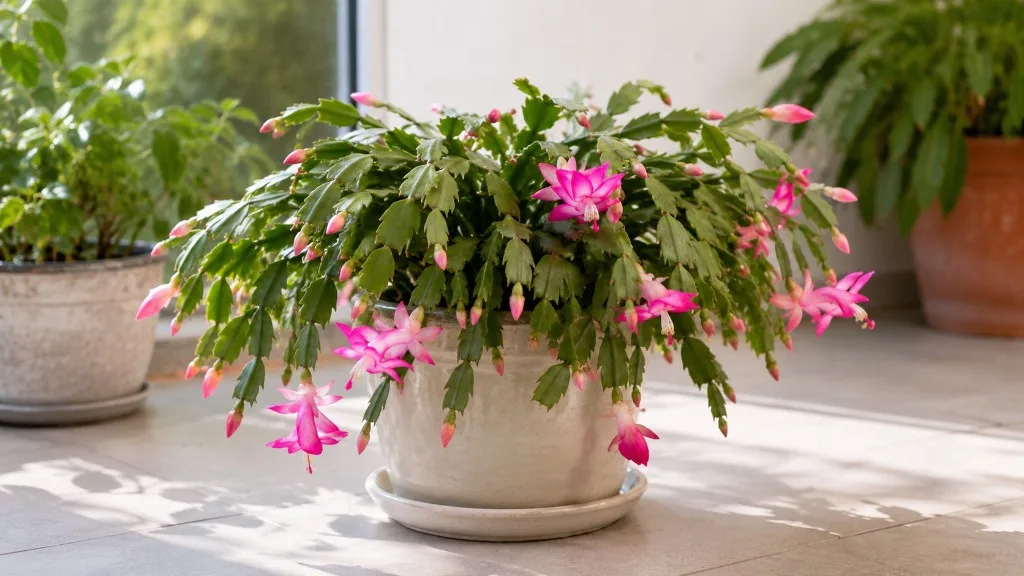
A Christmas cactus that refuses to bloom is rarely starving. More often, it has been fed at the wrong time, at the wrong strength, or through a season when it needed rest instead of nutrients. Schlumbergera species - including the classic Christmas cactus (Schlumbergera bridgesii) and the closely related Thanksgiving cactus (Schlumbergera truncata) - are epiphytic plants from Brazilian rainforests, not desert succulents. They grow on tree bark in filtered light, pull nutrients from decaying leaf litter, and cycle through distinct phases: vegetative growth after flowering, bud induction in response to short days and cool nights, and a bloom display that should not be interrupted by fresh nitrogen.
Fertilizer matters for Christmas cactus, but only within that rhythm. Feed too little during active growth and segments stay thin and pale. Feed too much, or feed into autumn, and you get lush pads, dropped buds, and a white crust on the soil that tells you salts have won. This guide covers what nutrients the plant actually uses, which formulas work, exactly when to start and stop, how to apply without burning the roots, and the mistakes that undo an otherwise healthy holiday display.
Why Christmas Cactus Needs a Seasonal Feeding Strategy
Christmas cactus does not grow year-round at a steady pace. After the winter bloom cycle finishes - usually between late December and February, depending on your plant and conditions - it enters a quiet recovery period. New segment growth typically resumes in late winter or early spring, accelerates through summer, and slows as days shorten in autumn. Michigan State University Extension’s holiday cactus guidance describes this pattern clearly: wait until new growth begins in late winter or spring before applying fertilizer, then reduce feeding in fall as you prepare the plant to rebloom.
That seasonal arc is the entire basis for a feeding calendar. Nutrients support leaf and segment development during the active months. They do not trigger flowering. Bud set depends on photoperiod - roughly 12 to 14 hours of uninterrupted darkness per night for six to eight weeks - combined with cooler night temperatures around 55 to 65°F. Fertilizer applied during bud induction or bloom disrupts that hormonal balance. Michigan State University Extension notes that reducing fertilizer in fall helps prepare holiday cacti to rebloom; active feeding outside the growing phase often produces vigorous foliage at the expense of flowers, and in some cases causes buds to abort entirely.
The practical takeaway is simple. Think of fertilizer as a spring-and-summer tool for building the plant’s structure. Think of autumn and winter as a nutrient rest period that lets the plant redirect energy toward buds and blooms. A calendar-driven approach beats a “feed whenever I water” habit every time.
What Nutrients a Holiday Cactus Actually Uses
Like most houseplants, Christmas cactus needs the three macronutrients listed on every fertilizer label: nitrogen (N) for chlorophyll and new segment growth, phosphorus (P) for root development and energy transfer, and potassium (K) for water regulation, cell-wall strength, and stress tolerance. It also uses micronutrients - especially magnesium, iron, and calcium - in smaller amounts. In its native Atlantic Forest habitat, these arrive slowly through rainwater filtered through canopy debris. In a six-inch pot on your windowsill, they arrive all at once when you pour a concentrated solution over dry soil.
Nitrogen drives the green, segmented pads you want during the growing season. Too much nitrogen late in summer pushes soft, elongated growth instead of the compact structure that supports next year’s bloom sites. Phosphorus and potassium matter for overall vigor, but excess phosphorus from “bloom booster” products does not substitute for the short-day and cool-night signals that actually initiate buds. Extension guidance puts it well: under-fertilizing may limit maximum growth and flowering, but it rarely kills the plant. Over-fertilizing damages the thin, delicate roots that make Christmas Cactus overview so sensitive to salt.
How NPK Ratios Affect Blooms vs. Foliage
The best default for Christmas cactus is a balanced water-soluble formula - something close to 10-10-10 or 20-20-20 designed for houseplants, with micronutrients included. MSU Extension suggests a half-strength balanced 10-10-10 on a monthly basis once new growth appears. Both approaches share the same logic: equal parts N, P, and K support structure without skewing toward leafy growth or misleading “bloom” promises.
A few ratios worth knowing:
- 10-10-10 or 20-20-20 (balanced): The standard recommendation across university extensions and major gardening publications. Safe default at half strength.
- 20-10-20 or 15-5-10: Slightly lower phosphorus versions sometimes used for foliage plants. Acceptable at half strength if balanced formula is unavailable.
- High-nitrogen “grow” formulas (e.g., 24-8-16): Avoid during late summer. The extra nitrogen works against bud induction.
- High-phosphorus “bloom boosters” (e.g., 10-30-20, 0-15-0): Controversial. MSU Extension emphasizes that bud set depends on bright light, 55–65°F nights, and 13+ hours of darkness - not excess phosphorus. The safer path for most growers is to stay balanced and control blooms through light and temperature.
If you remember one rule about NPK for this plant: balanced and diluted beats specialized and strong.
The Best Fertilizer Types for Christmas Cactus
Delivery format matters almost as much as the ratio. Christmas cactus roots are fine, shallow, and adapted to quick drainage - not to a concentrated band of slow-release salts sitting in a small pot.
Balanced Liquid Houseplant Formulas
Water-soluble liquid concentrates are the best choice for Christmas cactus. You measure, dilute, pour over moist soil, and the nutrients are available immediately. Liquids let you adjust strength at the margin - quarter strength if the plant looks stressed, half strength for routine monthly feeds - and they do not keep releasing in autumn when you need to stop.
Any reputable houseplant fertilizer with a balanced NPK and a micronutrient package works. Examples growers commonly reach for include Jack’s Classic 20-20-20, Schultz All Purpose, Miracle-Gro Indoor Plant Food, and Dyna-Gro Grow - always diluted, never at label strength for this species. Organic liquid options like Espoma Organic Indoor Plant Food can work at half strength as well, though nutrient release is gentler and you may see slower response.
What to skip or use carefully:
- Slow-release granules and fertilizer spikes: They release on a timetable you do not control. A spike pushed into the pot in May may still be feeding in October - exactly when you need a nutrient rest for bud set. If you already have granules in the soil, count that as a feeding and avoid adding liquid on top.
- Foliar sprays: Segments can absorb some nutrients through the surface, but the margin for error is tiny. A droplet sitting on a bud or growing tip can burn tissue. Root-zone feeding is simpler and safer.
- Tomato or rose fertilizers: Formulated for fruiting and flowering crops with potassium-heavy profiles. Not calibrated for epiphytic cactus and can skew micronutrient balance.
- Fertilizer-pesticide combos: Never apply systemic products on a plant you are trying to bloom. The stress alone can drop buds.
When to Fertilize Christmas Cactus (Month by Month)
Timing separates a reliable holiday bloomer from a permanently leafy specimen. The growing-season window runs from late winter or early spring through late August. Everything outside that window is either recovery or bloom induction - and fertilizer belongs on the shelf.
| Month | Plant phase | Fertilizer action |
|---|---|---|
| January–February | Blooming or post-bloom rest | None. Let the display finish. |
| March | New growth resumes | Start monthly feeding at half strength |
| April–July | Active vegetative growth | Continue monthly half-strength feeds |
| August | Growth slowing | Final feed of the season (optional light dose) |
| September–October | Bud induction begins | Stop all fertilizer. Cool nights + long nights. |
| November–December | Buds developing / blooming | None. Feeding now risks bud drop. |
Spring and Summer: The Active Growth Window
Start fertilizing when you see fresh segment growth - usually March or April, depending on your climate and how much light the plant receives indoors. MSU Extension advises waiting until new growth begins in late winter or spring, then applying half-strength balanced fertilizer monthly. If your plant finished blooming in January and sits in a bright east window, you may see new tips by late February. A plant in a dimmer room may not wake up until April. Let the plant tell you, not the calendar alone.
Through April, May, June, and July, maintain a once-per-month schedule. Each application should be half strength (or quarter strength if the plant is small, recently repotted, or growing in low light). Water with plain water between feedings. Clemson HGIC and NC State Extension align with university practice: fertilize monthly during the growing season, then stop before autumn bud induction - by late August at the latest - to protect bud set. The more conservative August cutoff is the safer choice for bloom reliability.
If you summer your Christmas cactus outdoors, keep the same monthly rhythm while it is actively growing. Place it in bright shade, not direct afternoon sun, and bring it back inside before nights drop below 60°F. Outdoor rain leaches salts more effectively than indoor watering, but half-strength doses still apply.
Why You Must Stop Feeding Before Bud Set
By September, your Christmas cactus should be on a nutrient rest. Bud induction requires short days (12 to 14 hours of uninterrupted darkness), cooler nights (55 to 65°F), and consistent moisture without waterlogging. MSU Extension notes that long nights should start in late September or October and continue for about eight weeks for winter holiday blooms, and that halting fertilizer after late summer encourages flower bud development as fall approaches.
Feeding during this phase sends a growth signal that conflicts with the bloom signal. Nitrogen in particular promotes vegetative pads when the plant should be partitioning energy toward flower primordia. Growers who report “my cactus is healthy and huge but never blooms” almost always trace the problem to one of three causes: insufficient darkness, wrong temperature at night, or fertilizer applied too late in the season. Sometimes all three.
Do not resume feeding until blooms finish and new spring growth appears. A plant still holding buds in November or flowering in December is not in a growth phase. Wait.
How Often to Feed During the Growing Season
Once per month at half strength is the standard answer for a healthy, established Christmas cactus in a typical indoor container. That frequency balances nutrient replacement with salt management. More frequent feeding - every two weeks at quarter strength - can work for large plants in bright light that are actively pushing multiple new segment chains, but it demands more disciplined leaching and closer attention to soil crust.
Less frequent feeding - every six to eight weeks at half strength - suits plants in low light, small pots, or fresh potting mix that still holds residual nutrients. Underfeeding may produce thinner segments and fewer blooms, but it will not burn roots. Overfeeding produces salt crust, brown segment tips, and dropped buds. When in doubt, stretch the interval rather than increase the dose.
A useful rhythm for most indoor growers:
- March: First feed at half strength, after new growth is visible.
- April through July: Feed once each month at half strength.
- August: Optional final half-strength feed in early month only.
- September through February: No fertilizer.
If you miss a month in June, skip it and resume in July. Do not double the dose to catch up. Christmas cactus tolerates a missed feeding far better than a doubled one.
Step-by-Step: How to Apply Fertilizer Safely
Even the right formula at the right time can damage roots if applied carelessly. The thin root system of Schlumbergera has little buffer against concentrated salts.
The standard procedure:
- Check the calendar and the plant. Confirm you are inside the March–August feeding window and the plant is not budding, blooming, stressed, or recently repotted.
- Water first. The day before feeding - or at least several hours before - water the plant with plain room-temperature water and let it drain fully. Never pour fertilizer onto dry soil. Dry mix wicks salts directly to root surfaces and causes burn.
- Mix the solution separately. Measure fertilizer into a watering can or pitcher according to the half-strength dilution, not the full-strength label rate for houseplants.
- Pour slowly over the soil surface. Distribute evenly around the pot. Avoid drenching the segment joints where water can sit and cause rot.
- Let it drain. Do not leave the pot sitting in a saucer of fertilizer solution.
- Resume plain watering on your normal schedule - typically when the top inch of soil feels dry - until the next monthly feed.
Optional maintenance: Once every two to three months during the feeding season, replace one watering with a plain-water flush - slowly pouring twice the pot’s volume through the soil to leach accumulated salts. This is cheap insurance even when you do not see a white crust yet.
Dilution Ratios: Half Strength vs. Quarter Strength
“Half strength” means mixing at 50 percent of the label dose for houseplants. If the bottle says 1 teaspoon per gallon for indoor plants, use ½ teaspoon per gallon for Christmas cactus. “Quarter strength” means 25 percent - ¼ teaspoon per gallon in that same example.
Half strength is the default for monthly feeding on a healthy plant. Quarter strength is appropriate when:
- The plant is small (under four inches pot diameter) or recently divided.
- It grows in low to medium light and pushes new segments slowly.
- You are feeding more frequently than once per month.
- The plant showed prior signs of salt stress and you are easing back in after recovery.
- The only formula available is a strong balanced product like 20-20-20.
NC State Extension recommends monthly fertilizing during the growing season at moderate rates; for this species, never apply full-strength fertilizer to Christmas cactus. Full-strength doses are calibrated for fast-growing foliage plants in large volumes of soil. A six-inch pot of peat-based mix cannot dilute those salts the way a garden bed can.
One optional supplement worth mentioning: a single light dose of Epsom salt (magnesium sulfate) at roughly 1 teaspoon per gallon, applied once in mid-summer, can help if segments show interveinal yellowing while veins stay green - a possible magnesium deficiency signal. This is supplemental, not a replacement for balanced fertilizer, and unnecessary if your liquid feed already includes magnesium.
Signs Your Christmas Cactus Is Getting Enough (or Too Much)
Healthy feeding produces firm, plump segments in the plant’s natural green (or variegated) color, with new tips emerging steadily during spring and summer. The soil surface stays clean - no white or yellow crust. Buds form in autumn without mass abort, and blooms open fully in winter. The plant does not look leggy unless light is insufficient, and it does not redden at the margins unless exposed to direct sun or extreme temperature swings.
Signs of under-fertilization are subtle and easy to confuse with other problems:
- Pale or yellow-green new growth while older segments stay darker.
- Thin, small new segments that do not match the plant’s established size.
- Very slow spring growth despite good light and proper watering.
- Fewer bloom sites after an otherwise correct autumn induction period.
Before blaming low nutrients, rule out insufficient light, root-bound conditions, and irregular watering. Christmas cactus in a dark corner will look hungry even when the soil is full of unused fertilizer salts.
Signs of over-fertilization are more distinctive:
- White or yellow crust on the soil surface, pot rim, or drainage hole - dried mineral salts.
- Brown, dry segment tips that start at the growing ends and feel brittle, not mushy.
- Uniform yellowing (chlorosis) across segments when salts lock out micronutrients.
- Sudden segment drop on an otherwise healthy-looking plant - the root system hitting salt stress.
- Reddish-purple margins on segments, especially after repeated feeding or bloom-booster use.
- Bud drop during autumn when feeding continued too late.
The combination of soil crust plus brown dry tips is the diagnostic giveaway for fertilizer burn. Mushy brown segments at the base point to overwatering on Christmas Cactus. Papery bleached patches on the sun-facing side point to light burn. Shriveled segments with dry soil point to underwatering on Christmas Cactus.
Common Christmas Cactus Fertilizer Mistakes
Most Christmas cactus fertilizer problems come from enthusiasm, not neglect. The plant looks good in June, so the grower keeps feeding through October and wonders why November brings leaves instead of buds.
Feeding During Bud Formation or Bloom
This is the most consequential mistake. Once long-night treatment begins - typically late September or October - all fertilizer stops. The same rule applies while buds are visible and while flowers are open. A plant in full December bloom does not need a mid-winter boost. Nutrients applied now cannot be used efficiently, and the salts sit in the root zone while the plant focuses on maintaining flowers.
Growers who move plants during bud development often see bud drop from the physical disturbance alone. Adding fertilizer stress on top makes it worse. Leave the pot in place, keep moisture steady, and keep feeding off the table until spring growth returns.
Using Full-Strength Formula or Bloom Boosters
Full-strength application is the fastest route to burned roots on this species. If you have already done it once and the plant looks fine, you got lucky - not proof the plant prefers it. Halve the dose at minimum.
Bloom booster products marketing high phosphorus for “more flowers” are the second trap. Schlumbergera is not a tomato. It does not set buds because you poured extra phosphorus in August. Blooms follow environmental cues. High-phosphorus formulas without balanced nitrogen and potassium can even induce micronutrient imbalances - magnesium and iron displacement shows up as reddish segment margins and interveinal yellowing. Stick with balanced, diluted feeds through July and trust your dark-night routine for blooms.
Other mistakes worth avoiding:
- Feeding a dry, wilted, or recently repotted plant. Roots need moisture and recovery time before they can handle salts.
- Feeding every watering at low dose. Constant micro-dosing still accumulates salts in a closed container system.
- Ignoring the salt crust. White deposits are not cosmetic. They are a warning.
- Chasing blooms with more food. If buds fail, fix light duration and night temperature first.
How to Flush and Recover from Over-Fertilization
Recovery is straightforward if you act before severe root damage sets in. The goal is to stop feeding, leach salts, and wait for new healthy growth.
For mild cases (light crust, a few brown tips, plant otherwise firm):
- Stop all fertilizer for the remainder of the growing season and through the next bloom cycle - at minimum four to six months.
- Scrape off visible salt crust from the soil surface without damaging roots.
- Leach the pot: Slowly pour plain water - room temperature, ideally rainwater or filtered - through the soil at two to three times the pot’s volume. Let it drain completely. Wait ten minutes and repeat once.
- Resume normal plain watering when the top inch of soil dries.
- Trim dry brown tips with clean scissors if they bother you cosmetically. The damaged tissue will not green up again, but new segments should emerge clean in spring.
For moderate cases (multiple dropped segments, persistent crust, yellowing despite moist soil):
- Follow the leaching steps above.
- Unpot and inspect roots if the plant continues to decline after two weeks. Healthy roots are pale and firm. Salt-burned roots are brown, mushy, or papery.
- Trim dead roots, rinse the remaining mass in plain water, and repot in fresh, well-draining mix - typically peat-based potting soil with perlite or orchid bark for epiphytic drainage.
- Wait five to seven days before watering the repotted plant.
- Do not fertilize for at least one full growing season. Let fresh mix and careful watering rebuild the root system.
Going forward, return to monthly half-strength feeds only after you see robust new spring growth. Add a quarterly plain-water flush during the feeding months. If salt crust reappears within a single season, drop to quarter strength or extend the interval to every six weeks.
Special Cases: Repotted, Stressed, and Outdoor Plants
The standard March-through-August monthly schedule assumes a healthy, established plant in Christmas Cactus light guide. Adjust when these conditions apply:
- Recently repotted (within six weeks): Fresh potting mix holds nutrients. Wait until new segment growth is obvious before the first feed. Fertilizing into damaged or settling roots invites burn.
- Recently divided or propagated cuttings: Rootless or rooting cuttings need no fertilizer until they are anchored and pushing new tips - usually six to eight weeks after potting.
- Stressed plants (bud drop, sunburn, cold damage, pest recovery, severe underwatering): Skip all feeds until the plant looks stable and is producing new growth. Fertilizer is not medicine.
- Low-light locations: A Christmas cactus in a north window or far from the glass uses nutrients slowly. Feed every six to eight weeks at quarter to half strength, or skip entirely if growth is minimal.
- Outdoor summer culture (zones 10–11 or seasonal patio growing): Monthly half-strength feeding is appropriate while active growth is visible. Rain provides natural leaching, but do not use that as an excuse for full-strength doses. Bring plants inside and stop feeding before you start the autumn dark treatment.
Thanksgiving cactus (S. truncata) and Easter cactus (Hatiora gaertneri) follow the same seasonal logic with shifted bloom windows. Adjust the feeding stop date to match when your species enters bud induction, not when a calendar says “Christmas.”
How Fertilizer Fits Into the Broader Care Calendar
Fertilizer is one variable in a system. It cannot compensate for wrong light, erratic watering, or a pot with no drainage. Christmas cactus in bright indirect light uses the nutrients you supply efficiently. The same plant in a dim corner builds salts faster than it builds segments. Pair feeding with a consistent Christmas Cactus watering guide - water when the top inch of soil dries, never let the pot sit soggy - and a well-draining epiphytic mix that does not stay waterlogged.
The bloom calendar matters as much as the feed calendar. After the August feeding cutoff, shift attention to long nights and cool temperatures. MSU Extension recommends 13 or more hours of continuous darkness and 55 to 65°F nights starting in late September for eight weeks. Once buds form, increase humidity slightly and avoid moving the plant. Fertilizer is absent from this phase by design.
After flowering ends, the cycle restarts. Remove spent flowers, resume normal light and watering, watch for new spring tips, and begin half-strength monthly feeds when growth returns. A plant that bloomed well and receives light feeding through summer often enters the next autumn induction with more energy reserves - not because you forced blooms with phosphorus, but because you built healthy segments at the right time and then got out of the way.
Conclusion
Christmas cactus fertilizer is not complicated, but it is seasonal and conservative. A balanced water-soluble formula - 10-10-10 or 20-20-20 - diluted to half strength, applied once per month from spring growth through late August, then withheld completely through bud set and bloom, is the entire framework most growers need. Water before you feed, never use full-strength doses, skip slow-release products that bleed into autumn, and treat bloom boosters as optional at best and harmful at worst.
Watch for white soil crust and dry brown segment tips as early warnings. Flush salts and pause feeding at the first sign of trouble rather than pushing through to the holidays. Match feeding to active growth, stop before short-day induction begins, and let photoperiod and cool nights do the bloom work fertilizer cannot do. A plant fed lightly at the right months and left alone at the right months will outperform a heavily fed plant every time - and it will show up at the window when you actually want flowers, not just more pads.
When to use this page vs other Christmas Cactus guides
- Christmas Cactus overview - Start here for whole-plant context before deep-diving this topic.
- Christmas Cactus problems hub - Jump to symptom-specific fix guides when this care topic does not resolve the issue.
- No Flowers on Christmas Cactus - Escalate here when fertilizer adjustments are not enough.
Related Christmas Cactus guides
- Christmas Cactus overview
- Christmas Cactus watering
- Christmas Cactus light
- Christmas Cactus soil
- Christmas Cactus propagation
- Christmas Cactus repotting
- No Flowers on Christmas Cactus
- Christmas Cactus problems
Related tool
Try the Fertilizer Dilution Calculator with christmas-cactus pre-selected to estimate needs for your setup.