Underwatering on Christmas Cactus: Causes, Checks & Fixes
Quick answer
Underwatering on Christmas Cactus shows as wrinkled, thin stem segments and bone-dry mix-not mushy wet soil. First step: check moisture at 2–3 cm depth; if dry throughout, bottom-water until the surface moistens, then drain fully.
Underwatering on Christmas Cactus: Causes, Checks & Fixes
This guide covers underwatering on Christmas Cactus. See also the general Underwatering guide, watering, and light pages for this plant.
Underwatering on Christmas Cactus: Causes, Checks & Fixes
Quick answer
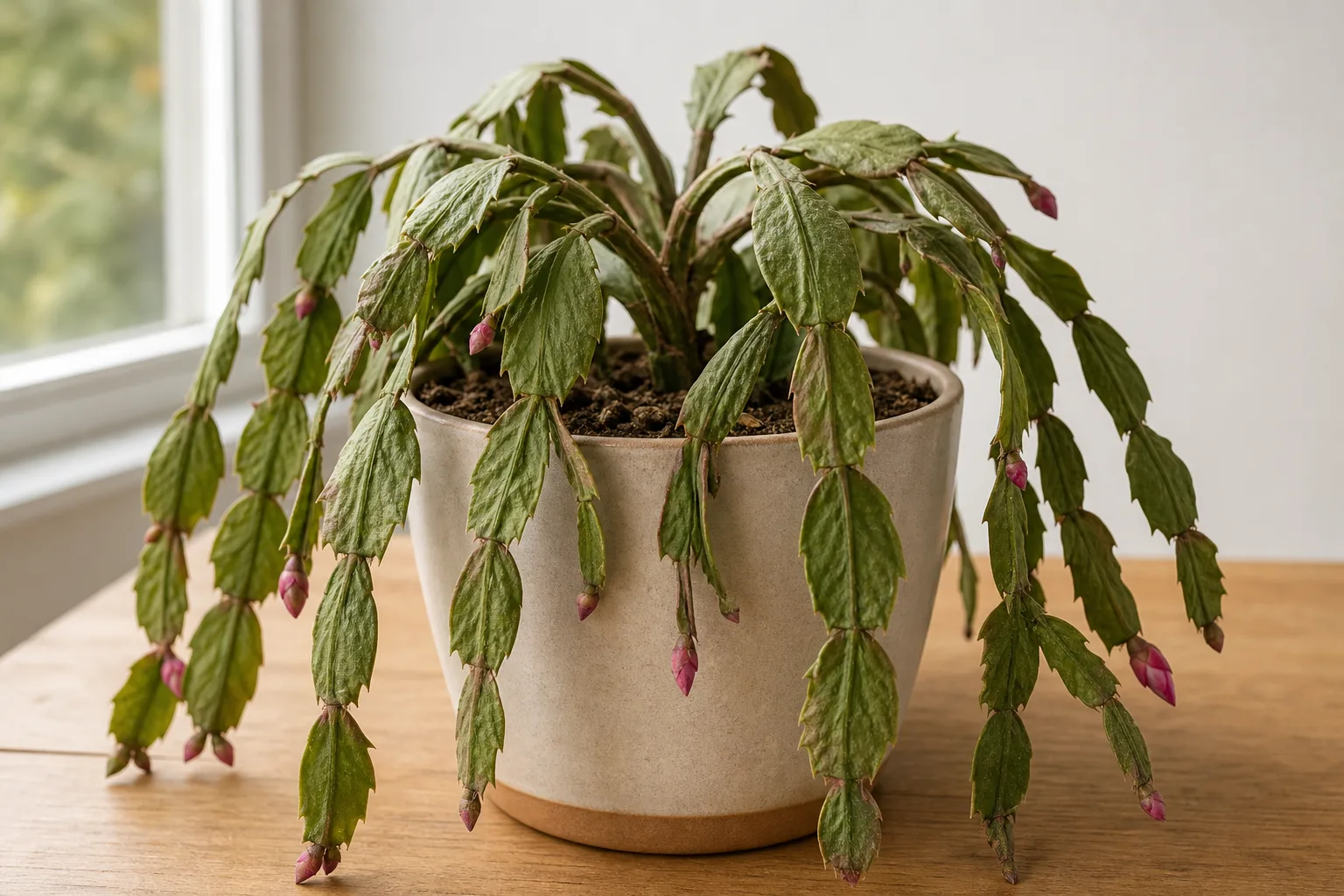
Underwatering on Christmas Cactus (Schlumbergera × buckleyi) shows up as thin, wrinkled stem segments-the flat, jointed “leaves” that are actually cladodes-and a pot that feels feather-light. The mix may pull away from the sides, and whole chains can droop over the rim even though nothing looks rotten.
This is not a desert cactus. Christmas Cactus evolved as a rainforest epiphyte and expects consistent moisture between waterings, not long dry spells. Many owners underwater it on purpose after reading about root rot on Christmas Cactus, or they water too lightly so bark-heavy mix never fully rewets.
First step: check soil moisture at 2–3 cm depth before you pour. If the root zone is dry throughout, give one thorough bottom-water until the surface darkens and moistens, then let the pot drain completely. Do not drip small sips daily-that rarely reaches a dry root ball in an airy orchid-bark mix.
What underwatering looks like on Christmas Cactus
The earliest sign is subtle: individual segments lose their plump, glossy look and start to pucker or wrinkle, especially at the tips of pendant chains. As drought continues, segments feel thin and papery between your fingers instead of firm and succulent. Whole branches may hang limply over the pot edge.
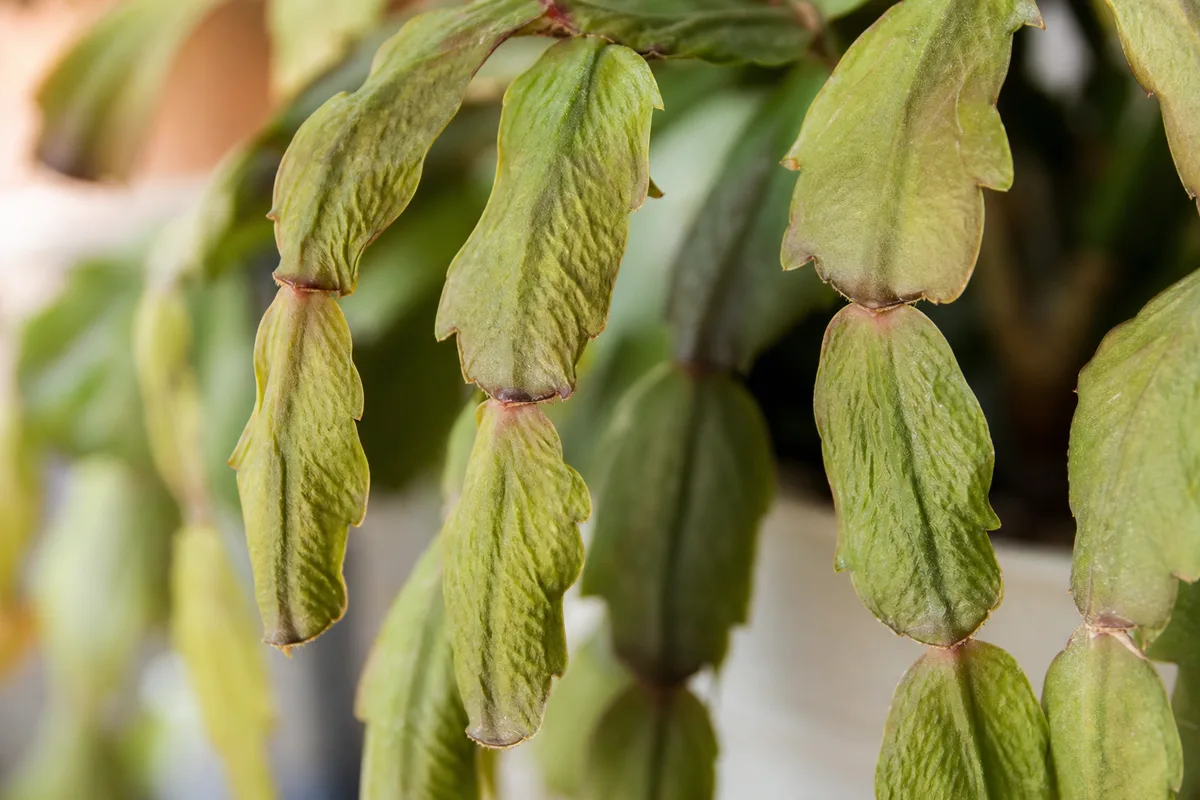
Thin, puckered phylloclade segments at chain tips - compare with plump glossy segments on a well-watered Christmas cactus.
Other clues specific to Christmas Cactus overview:
- Soil pulled away from the inside of the pot, with pale, dusty mix visible at the surface
- Pot feels very light when lifted-much lighter than right after a good soak
- Reddish or purplish flush on segments, a stress response when the plant draws down internal water stores
- Bud or flower drop during bloom season when roots dry out-sudden lack of water can abort buds
- Slow or stalled new segment growth in spring and summer
What underwatering does not look like: black mushy segments, a sour smell from the pot, or limp chains while the mix stays wet and cold for days. That pattern fits overwatering on Christmas Cactus or root rot-adding more water makes it worse.
Christmas Cactus stores water in its cladodes, so it tolerates brief dry spells better than a fern. But once those internal reserves are spent, segments shrivel fast because fine roots in bark mix die back when the medium stays dry too long.
Why Christmas Cactus gets underwatered
The name “cactus” misleads people. Schlumbergera grows on trees and rocks in humid rainforests, not in desert sand. It wants consistent but moderate moisture-soils should not be allowed to dry out completely or stay soggy for weeks.
These are the most common underwatering triggers in home care:
Treating it like a desert cactus. Skipping water for two or three weeks works for some succulents; on Christmas Cactus it thins segments and drops buds. The plant can tolerate slight under-watering, but not chronic drought through an entire growing season.
Fear of root rot after overwatering advice. Root rot is real when mix stays wet, yet swinging to long dry periods creates a different problem. Limp, wrinkled segments with dry soil mean thirst-not rot.
Light watering that never saturates the root ball. Bark-heavy, well-drained mix (the right choice for this epiphyte) can turn hydrophobic when it dries out completely. Water runs down the inside wall of the pot and into the saucer while the center stays dry-especially in hanging baskets where owners pour quickly to avoid drips.
Bright light or heat without adjusting schedule. A plant moved to a south-facing window or near a heating vent uses water faster. The old every-two-weeks calendar no longer matches the pot.
Root-bound or undersized pots. A crowded root ball in a small container can go from moist to bone dry in a few days. Frequent wilting between waterings often means the pot is too small, not that you are “bad at watering.”
Reduced watering at the wrong time. Christmas Cactus needs less water during its pre-flowering rest (roughly late fall), but still not bone-dry soil. Cutting water too aggressively in September-while buds are forming-can drop flowers before they open.
Blooming without extra attention. Flower production pulls moisture. Keeping the plant evenly moist while buds and blooms are present prevents drop that many growers blame on temperature alone.
How to confirm the cause
Work through these checks in order. The goal is to separate dry-soil thirst from wet-soil root failure-both can make segments limp.
-
Pot weight - Lift the container. A light, airy pot with limp segments strongly suggests underwatering. A heavy pot that stays wet for a week suggests the opposite.
-
Soil moisture at depth - Push your finger 2–3 cm (about an inch) into the mix, or use a moisture meter. Surface dustiness can mislead; the root zone tells the truth. Dry throughout confirms drought. Damp or cool deep mix with limp segments means inspect roots before watering again.
-
Segment texture - Pinch a mid-chain segment. Firm and plump is healthy. Thin, wrinkled, or soft-but-not-mushy fits dehydration. Mushy or blackened tissue with wet soil fits rot.
-
Water absorption test - Pour a small amount on the surface. If it races straight to the saucer without darkening the mix, the soil may be hydrophobic-a form of chronic underwatering even if you “water regularly.”
-
Recent care context - Has the plant been in brighter light, a smaller pot, or bloom season? Have you skipped multiple waterings out of caution? Has the hanging basket been getting only splashes?
-
Root check (if unsure) - Slide the plant out of the pot. Healthy underwatered roots are firm, pale, and may be slightly dry-not brown and mushy. If roots look good and mix is dusty, thirst is confirmed.
If soil is wet and segments are still shriveled, do not soak the plant. Wilted tissue with moist soil often means rotting roots cannot take up water-a root-uptake problem, not a simple dry spell.
First fix for Christmas Cactus
Bottom-water until the entire root ball rewets-then drain fully.
This is the single best first action when you have confirmed dry soil and no mushy roots:
- Fill a basin or sink with room-temperature water deep enough to reach the pot’s bottom holes.
- Set the pot in the water and leave it for 20–30 minutes-longer if the mix was extremely dry and repelling water.
- Watch for the surface to darken. That means moisture wicked upward through the whole root zone.
- Remove the pot and let it drain for at least 15–30 minutes. Empty the saucer. Never return a Christmas Cactus to a decorative cache pot sitting in standing water.
- Place it back in Christmas Cactus light guide-not direct sun while stressed.
One deep soak beats a week of teacup pours. After this, wait until the top 2–3 cm of mix dries before watering again during active growth (March through early fall for most homes).
If water ran through instantly on a previous top-watering attempt, the soak step above is essential. For severely hydrophobic mix, poke a few shallow holes in the surface with a chopstick before bottom-watering so water penetrates evenly.
Do not fertilize a drought-stressed plant the same day you soak it. Rehydrate first; resume half-strength feeding only after segments firm up and new growth looks normal.
Recovery timeline and what to expect
Mild dehydration often shows improvement within 24–48 hours after a proper soak. Segments regain turgor, chains stop looking floppy, and the pot weight increases noticeably.
Moderate drought-weeks of dry soil with widespread wrinkling-may take one to two weeks of corrected watering before new growth looks healthy. Old segment tips that went papery thin may stay slightly shrunken; that tissue rarely plumps back to its original thickness.
During bloom season, buds that dropped from drought usually will not return until the next cycle. Focus on stabilizing moisture so remaining buds and flowers stay attached.
Signs recovery is working:
- Segments feel firm when pinched
- New notches at segment tips look plump
- Soil dries at a predictable pace (neither rock-hard in two days nor wet for ten)
- Chains hold their shape without drooping
Signs the problem is worsening or was misdiagnosed:
- Segments turn mushy or black after soaking
- Sour smell from the pot within days of watering
- Continued shriveling despite wet soil-inspect for root rot
- Yellowing lower segments spreading while mix stays damp
Lookalike symptoms to rule out
Overwatering and root rot also cause limp segments. The split is soil moisture: dry mix + wrinkled segments = underwatering; wet mix + limp or mushy segments = too much water or damaged roots. Rot may need drying out, root trimming, and repot-not another soak.
Low humidity alone can crisp segment edges in winter, but whole-chain wrinkling with a light, dry pot still points to root-zone drought. Christmas Cactus prefers roughly 50–60% humidity; misting leaves without soaking dry roots does not fix underwatering.
Normal pre-flowering rest reduces growth and water use in late fall. Slightly less frequent watering is correct then, but segments should not look shriveled. Wrinkling during bud set means the plant is too dry for flowering-not healthy dormancy.
Root-bound stress mimics underwatering because the crowded ball dries in days. If you water on schedule and segments still shrivel between drinks, check whether roots circle the pot bottom.
Mistakes to avoid
- Adding water without checking soil first - Wet-soil wilt plus more water advances rot.
- Daily light sprinkles - Never fully rewets bark mix; creates a chronically dry core.
- Misting instead of watering roots - Epiphytes need moist root zones, not just humid air.
- Soaking and leaving the pot in a full saucer - Standing water invites the rot you were trying to avoid.
- Christmas Cactus repotting guide immediately into a much larger pot - Extra wet soil volume can cause overwatering after a drought fix. Repot only if root-bound, and go one size up.
- Fertilizing a dry plant - Salt in fertilizer burns drought-stressed roots.
- Moving to direct sun to “help recovery” - Bright indirect light is correct; hot direct sun dehydrates recovering segments faster.
How to prevent underwatering next time
Build a rhythm around how the pot dries in your room, not a calendar date.
During active growth (spring through early fall), water when the top 2–3 cm of mix is dry-typically every 7–10 days, but check weekly. In bright indirect light, expect to water more often than in a shaded corner.
During pre-flowering rest (roughly late fall), stretch the interval to about every 14 days, but soils should not be allowed to dry out. Segments should stay firm even with reduced watering.
While buds and flowers are open, keep soil evenly moist-water about every 1 to 2 weeks or when soil is nearly dried out. Letting the plant dry out mid-bloom is a common cause of bud drop that looks like a temperature problem.
For hanging baskets, weigh the pot or check soil every few days-they dry faster and are easy to splash-water without saturating the center.
Use a well-draining epiphytic mix with orchid bark and perlite, but commit to full soak-and-drain cycles so bark never stays permanently dry in the middle. If mix repeatedly repels water, refresh the top third or repot in spring.
When you increase light or move the plant closer to a window, increase checks for the first two weeks. The same Christmas Cactus watering guide rarely works after a placement change.
Conclusion
Wrinkled, limp segments on Christmas Cactus almost always trace back to dry soil in the root zone-often because this rainforest epiphyte is treated like a desert succulent, or because airy bark mix never got a deep soak. Confirm with pot weight and a finger test at 2–3 cm depth, then bottom-water once until the whole root ball rewets and drains freely.
Recovery is usually quick when roots are still healthy. Keep segments firm through bloom season with even moisture, adjust for brighter light, and repot when the root ball dries out in a day or two. If segments stay limp while soil stays wet, stop watering and investigate root rot instead- the fix for that problem is the opposite of a soak.
When to use this page vs other Christmas Cactus guides
- Christmas Cactus watering guide - Use for routine moisture checks before assuming underwatering is the main issue.
- Christmas Cactus problems hub - Browse all 21 common issues on this species.
- Wilting on Christmas Cactus - Different entry point when symptoms overlap with underwatering.
- Brown Tips on Christmas Cactus - Different entry point when symptoms overlap with underwatering.
- Yellow Leaves on Christmas Cactus - Different entry point when symptoms overlap with underwatering.