Brown Tips on Christmas Cactus: Causes, Checks & Fixes
Quick answer
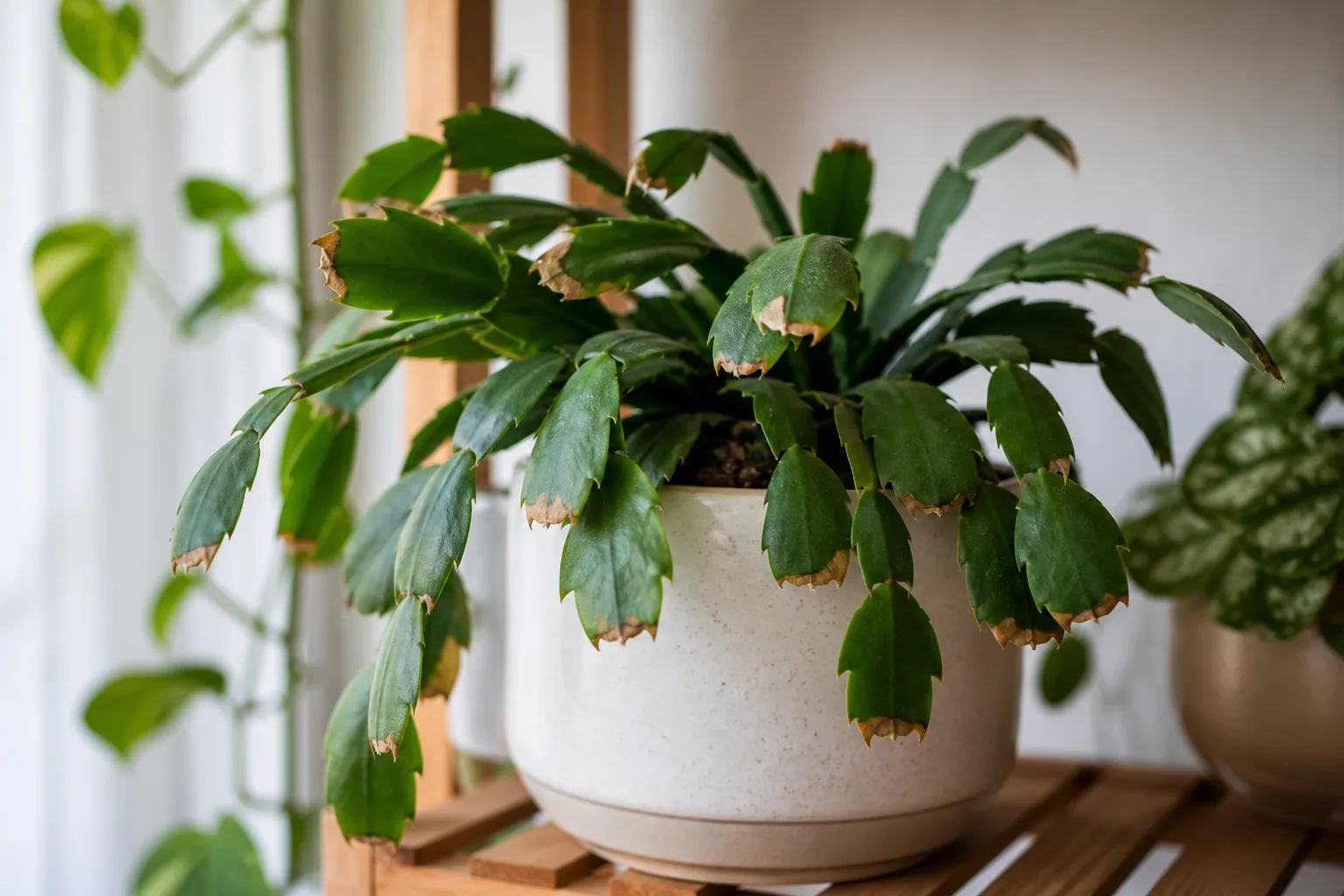
Brown tips on Christmas cactus phylloclades usually trace to underwatering, overwatering, low humidity, direct sun scorch, fertilizer salts, or fungal basal rot at the soil line-not a fertilizer shortage. First step: feel the segments for firmness and check whether the top inch of soil is dry or still damp before you change anything.
Brown Tips on Christmas Cactus: Causes, Checks & Fixes
This guide covers brown tips on Christmas Cactus. See also the general Brown Tips guide, watering, and light pages for this plant.
Brown Tips on Christmas Cactus: Causes, Checks & Fixes
Quick answer
Brown tips on Christmas cactus (Schlumbergera × buckleyi) show up on the flattened phylloclades-jointed stem segments that function as leaves-not on true foliage. Each segment tip is the farthest point from the roots, so margins desiccate first when water delivery, humidity, or light stress goes wrong. Unlike desert cacti, holiday cacti are Brazilian rainforest epiphytes that store moisture in segments and need well-drained but periodically moist soil-not bone-dry neglect.
First step: feel the segments for firmness and check whether the top inch of soil is dry or still damp. Soft, slightly wrinkled phylloclades with a light pot and dry mix point to underwatering or chronic drought. Firm segments with heavy wet soil and brown translucent tissue near the base suggest overwatering or root stress. Brown mushy tissue at the soil line may be Fusarium basal stem rot-an urgent diagnosis, not a humidity fix.
This page focuses on localized brown margins and tips on phylloclades. For whole-segment bleaching after a sunny window move, see sunburn on Christmas cactus. For yellowing segments with wet soil, cross-check overwatering and yellow leaves.
What brown tips look like on Christmas cactus
Holiday cacti have no true leaves. Photosynthesis happens in green phylloclades-flat, jointed segments with rounded marginal notches on Christmas cactus (NC State Extension). “Brown tips” almost always means the distal end or margin of one or more segments is necrotic. Patterns differ by cause:
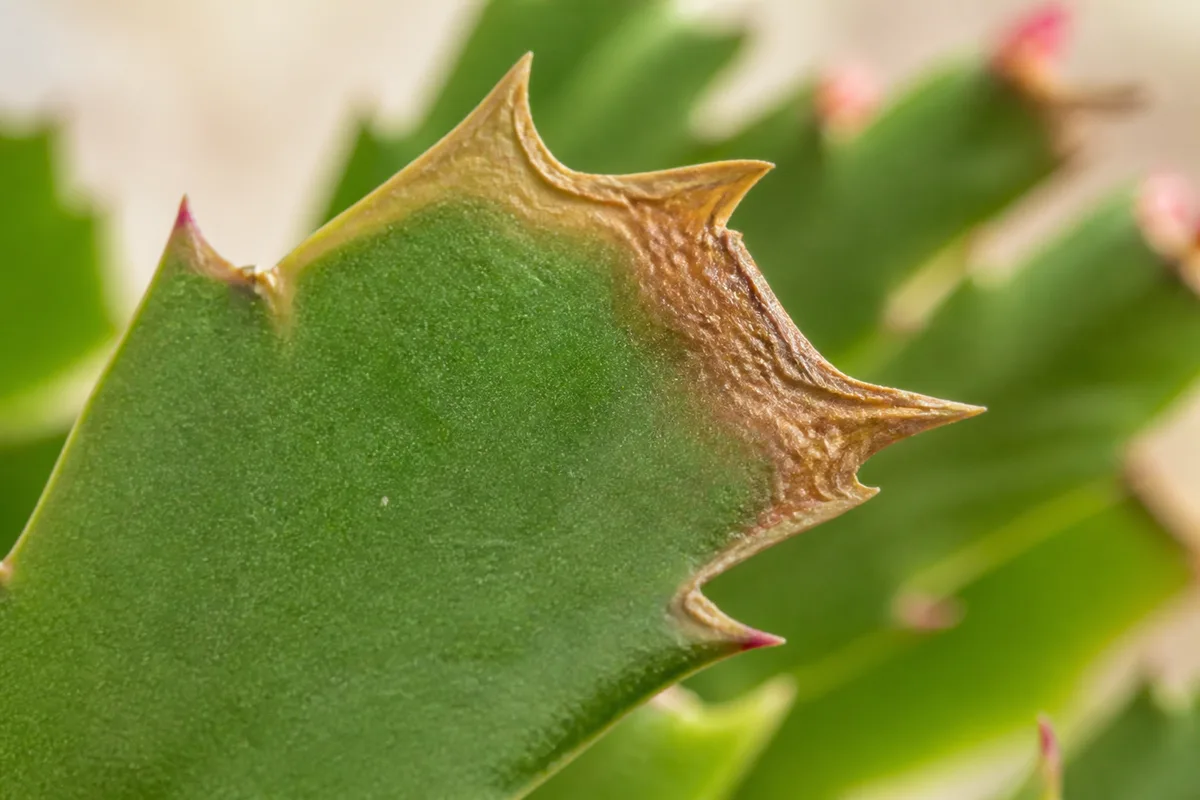
Narrow tan-to-brown papery band at the distal segment tip - dry crispy margins on otherwise green phylloclades often trace to underwatering or low humidity.
Dry crispy margins (underwatering / low humidity):
- Narrow tan-to-brown band at the segment tip or outer edge
- Papery, dry texture on otherwise green phylloclades
- Segments may feel soft or slightly wrinkled when you pinch them gently
- Pot feels light; top inch of mix is dusty-dry
- Often worse in heated winter rooms or near forced-air vents
Brown with wet soil (overwatering / root stress):
- Brown or translucent segments, sometimes starting at the base and creeping outward
- Soil stays damp for days; pot feels heavy
- May pair with yellowing segments and limp arch despite wet mix
- Sour smell or black slimy roots if you inspect the root ball
Sun-scorched patches:
- Bleached, pale, or yellow-green segments on the window-facing side first
- Brown crispy tissue follows exposure to harsh direct summer sun
- Damage appears days after a move closer to south or west glass
- Clemson HGIC notes bright summer sun can make holiday cacti look pale and yellow
Brown at the soil line (basal rot - urgent):
- Tan-to-brown spot where the stem meets the mix; tissue dies and may fall away
- Concentric darker rings on remaining brown tissue per Penn State Extension basal rot guidance
- Segments above may look fine briefly, then wilt and brown progressively
- Often follows overwatering in cool, low-light winter rooms
Salt or fertilizer edge burn:
- Brown tips on newest terminal segments after heavy feeding
- White mineral crust on soil surface or pot rim
- Illinois Extension notes excess fertilizer can burn roots and show on new growth
Diagnostic photos: Side-by-side images of dry crispy segment margins versus sun-bleached-then-brown phylloclades and mushy basal rot at the soil line will be added to this guide in a future update. Until then, use the segment feel test, pot weight, and soil moisture at depth as your primary references.
Why Christmas cactus phylloclades get brown tips
Holiday cacti are not desert succulents. They evolved in humid cloud forests, clinging to tree bark with roots that want air as much as moisture. That biology explains why the same brown tip can mean opposite watering problems-and why generic “check your watering” advice fails without a segment-level read.
Underwatering and low humidity desiccate segment margins first. Segments store water; when roots cannot keep up-because soil went too dry, winter heating dropped humidity below 40%, or drafts pulled moisture from segment tips-the farthest tissue browns while the segment center may still look green. NC State Extension lists high humidity as a preference for Schlumbergera × buckleyi, and UConn’s houseplant tip-burn factsheet ties chronic low humidity to margin necrosis on humidity-sensitive species. Christmas cactus tolerates average home air better than ferns, but outer segments near radiators still crisp in dry winters.
Overwatering and root rot on Christmas Cactus produce a different brown. When soil stays wet in short winter days-especially after sympathy watering while the plant looks “quiet”-roots lose oxygen and begin to fail. Segments may brown or turn translucent even though the mix feels moist, because the vascular pathway is damaged. Clemson HGIC warns that the major disease is root rot, prevented by avoiding excessive watering, particularly when evaporation slows in winter. See the Christmas cactus watering guide for seasonal dry-down targets.
Direct sun scorch burns phylloclades that evolved for filtered forest light. Moving a holiday cactus to harsh south-window sun in late spring or summer often bleaches segments first, then browns them. Clemson recommends light shade during the growing season and notes full sunlight becomes beneficial in fall and winter when intensity drops-so seasonal sun moves matter. Cross-check light placement before you blame drought.
Fertilizer salts and hard water concentrate at segment edges over months. Illinois Extension educator Richard Hentschel links brown terminal growth to too much fertilizer burning roots and impacting new growth. Flushing the pot and easing feed strength often stops new tip burn without Christmas Cactus repotting guide.
Spider mites on new terminal growth can brown the youngest segments. Illinois Extension advises checking whether spider mites are attacking brand-new terminal growth before assuming a watering fault-fine webbing and stippling on segment joints confirm pests.
Fusarium basal stem rot is the serious outlier. A brown spot at the soil line expands, tissue tan and falls away, and the plant may not recover. Penn State Extension describes basal stem rot from Fusarium oxysporum with progressive tissue death from the margin toward the center vein. Isolate affected plants; do not propagate from infected segments.
How to confirm the cause
Work through these checks in order before you trim, repot, fertilize, or relocate:
- Segment feel test - Pinch a mid-stem phylloclade. Firm and slick after a recent watering is normal. Soft and slightly wrinkled with dry soil means thirst. Mushy or translucent means rot or severe overwatering.
- Soil moisture at depth - Push your finger 2–3 cm into the mix near the pot wall. Dry and dusty supports underwatering. Cool, damp, or soggy for days supports overwatering-see underwatering versus overwatering guides for the full wet-vs-dry decision tree.
- Pot weight - Lift the container. Light with crispy tips confirms drought. Heavy with brown translucent segments points to wet-root stress.
- Light exposure - Note which segment side browned. Window-facing bleaching after a recent move suggests scorch. Even browning in a dry room with normal soil suggests humidity or watering rhythm.
- Basal tissue check - Inspect where segments meet the soil. Firm green junctions are reassuring. Tan mushy tissue with concentric brown rings is basal rot-act urgently.
- Salt crust and feed history - White film on soil plus tip burn after fertilizing suggests salt injury. Review whether you fed during post-bloom rest.
- Pest scan - Examine newest segment tips and joints under good light. Webbing, stippling, or moving specks mean spider mites-not margin desiccation alone.
- Seasonal phase - During post-bloom rest (late January–March), reduced watering is correct; dry winter air can still crisp tips without rot. During bud development, drought causes bud drop-different symptom, same moisture sensitivity per the watering guide.
Cause comparison at a glance
| What you see | Likely cause | Differentiating check |
|---|---|---|
| Crispy dry tips; soft segments; light dry pot | Underwatering / low humidity | Top inch dry; segments wrinkle; no mush at base |
| Brown translucent segments; wet heavy soil | Overwatering / root stress | Soil damp days; possible yellowing; sour smell if advanced |
| Bleached then brown on window-facing side | Sun scorch | Follows sunny move; see sunburn guide |
| Brown mushy spot at soil line; spreading wilt | Fusarium basal rot | Tan dead tissue; isolate; may not save plant |
| Brown on newest tips after heavy feed | Salt / fertilizer burn | White crust; flush pot; pause fertilizer |
| Stippling + webbing on new growth | Spider mites | Pests visible; rinse and treat if confirmed |
First fix for Christmas cactus
Run the segment feel test and soil check-then take exactly one corrective action matched to what you found.
- Dry soil + soft segments: Water thoroughly until runoff exits the drainage holes, then empty the saucer within fifteen minutes. Do not water again until the top inch dries-follow the watering guide for your seasonal phase.
- Wet soil + limp or browning segments: Stop watering. Confirm drainage holes are open and saucers are empty. Let the top 2 inches dry before any next soak. Do not repot on day one unless roots are black and mushy.
- Sun-facing bleached segments: Move to bright indirect light per the light guide. Filter harsh summer sun with sheer curtains.
- Mushy brown tissue at soil line: Isolate the plant. Remove affected segments if rot is limited; discard severely infected plants per Penn State guidance. Do not propagate cuttings from diseased tissue.
Do not fertilize a stressed holiday cactus. Do not mist heavily as a substitute for fixing soil moisture. Do not stack repotting, pruning, and pesticide on the same day.
Step-by-step recovery
After the initial matched fix:
- Stabilize watering rhythm - Match frequency to season: roughly every 7–10 days in active growth when the top inch is dry; longer intervals during pre-bloom and post-bloom rest; evenly moist (not soggy) while buds develop. RHS advises regular watering April–September with compost moist but never waterlogged.
- Raise humidity modestly if tips crisp while soil is normal - Target 45–60% with a humidifier or grouped plants. Move away from heating vents and cold window drafts that desiccate segment tips.
- Flush salts if fertilizer burn suspected - Run plain room-temperature water through the pot at two to three times pot volume in the sink. Let drain fully; skip fertilizer for several weeks.
- Inspect and treat spider mites if confirmed - Rinse segment joints, improve airflow, and treat only after you see active pests-not as a default brown-tip response.
- Trim cosmetic damage last - Once new segments emerge clean, snip dead tip tissue with clean scissors. Leave a thin brown edge rather than cutting into healthy green tissue. Existing brown phylloclade tissue will not re-green.
- Repot only for confirmed root rot or failed mix - Use airy orchid-bark blend; never repot a merely thirsty plant on the same day you diagnose tip burn.
Recovery timeline
Mild underwatering tip burn often stabilizes within one to two weeks after a proper soak and corrected rhythm-watch for firm new segments at stem tips. Humidity-related crisping may take two to four weeks to stop on new growth once air moisture and draft exposure improve. Overwatering recovery without rot can take three to six weeks if roots were stressed but still white and firm when inspected.
Basal rot and advanced root rot may not be reversible. Judge success by new phylloclades forming with clean margins, stable pot weight between waterings, and no spreading brown from the soil line upward. Old damaged segments can remain cosmetically brown indefinitely.
Lookalike symptoms to rule out
Brown tips overlap with several sibling problems on Christmas cactus:
- Sunburn - Whole-segment bleaching and scorch on the brightest side after sun exposure; not tip-only desiccation in a dim room. See sunburn-scorched leaves.
- Yellow segments with wet soil - Often precedes or accompanies overwatering browning; see yellow leaves.
- Bud drop - Flower buds fall from drought during bloom phase; segments may look fine while buds abort. Moisture rule changes during flowering per Clemson.
- Age-related wrinkling - Older segments near the soil on long-lived plants can show dry brown lines while upper growth stays healthy; not always a current care error.
- Thanksgiving cactus mislabel - S. truncata has pointed segment serrations but shares the same brown-tip causes; watering and light rules align.
Mistakes to avoid
Do not water on a calendar without checking soil-winter overwatering is the most common rot trigger on holiday cacti. Do not treat a wet heavy pot with more water because segments look “dry.” Do not place Christmas cactus in all-day south summer sun like a desert cactus. Do not fertilize to fix brown tips without confirming salt burn or a clear nutrient deficiency-yellowing usually precedes nutrient-related browning.
Do not repot a stressed plant before you know whether roots are mushy or merely dry. Do not propagate segments from a plant with basal rot. Do not expect trimmed brown tips to turn green; wait for new growth instead.
Christmas cactus care cross-check
Stable holiday cacti combine seasonal watering, bright indirect light, and drainage. A plant in a dim cool room that gets watered weekly on autopilot will brown from rot more often than drought. A plant in dry winter air by a heat vent will brown from humidity stress even when watering is technically correct.
Cross-check the overview, watering, and light guides before stacking fixes. Feed only during active growth at half strength per Clemson HGIC fertilizer guidance; pause during rest and on stressed plants.
How to prevent brown tips next time
Check soil before every watering rather than following a fixed schedule. Keep bright indirect light through spring and summer; filter harsh direct sun. Maintain 45–60% humidity in heated winter rooms. Empty saucers after every soak. Flush salts periodically if you fertilize monthly during growth.
During post-bloom rest, allow a deeper dry-down-but do not let the entire root ball desiccate for weeks. When buds form, keep mix evenly moist without waterlogging. Inspect newest segments weekly during active growth so tip burn is caught before it spreads.
When to worry
Escalate immediately if brown mushy tissue appears at the soil line, segments collapse rapidly, wet soil smells sour, or roots are black and slimy when you unpot. Those patterns fit basal rot or advanced root rot-not cosmetic winter crisping.
Lower urgency: a few dry crispy points on outer segments in dry winter air while new growth stays firm and soil checks are normal. Monitor for two weeks after correcting water or humidity before trimming aggressively.
Conclusion
Brown tips on Christmas cactus are usually fixable once you read segments and soil together-not leaves, and not desert-cactus drought rules. Feel phylloclades for firmness, check whether the top inch of mix is dry or damp, and match one fix: soak if thirsty, pause water if wet, move if scorched, isolate if basal rot is suspected. Recovery shows on new green segments, not on old brown tissue. Prevent recurrence with seasonal watering from the watering guide, bright indirect light from the light guide, and stable winter humidity away from heat vents.
When to use this page vs other Christmas Cactus guides
- Christmas Cactus watering guide - Use for routine moisture checks before assuming brown tips is the main issue.
- Christmas Cactus problems hub - Browse all 21 common issues on this species.
- Low Humidity on Christmas Cactus - Different entry point when symptoms overlap with brown tips.
- Underwatering on Christmas Cactus - Different entry point when symptoms overlap with brown tips.
- Overwatering on Christmas Cactus - Different entry point when symptoms overlap with brown tips.