Low Humidity on Christmas Cactus: Causes, Checks & Fixes
Quick answer
Low humidity on Christmas Cactus shows as thin, wrinkled phylloclades with adequately moist soil, bud abort in heated rooms, or spider mite flare-ups in dry winter air. Target 50–60% RH. First step: move the pot off heating vents and radiators, then check humidity with a hygrometer near the plant.
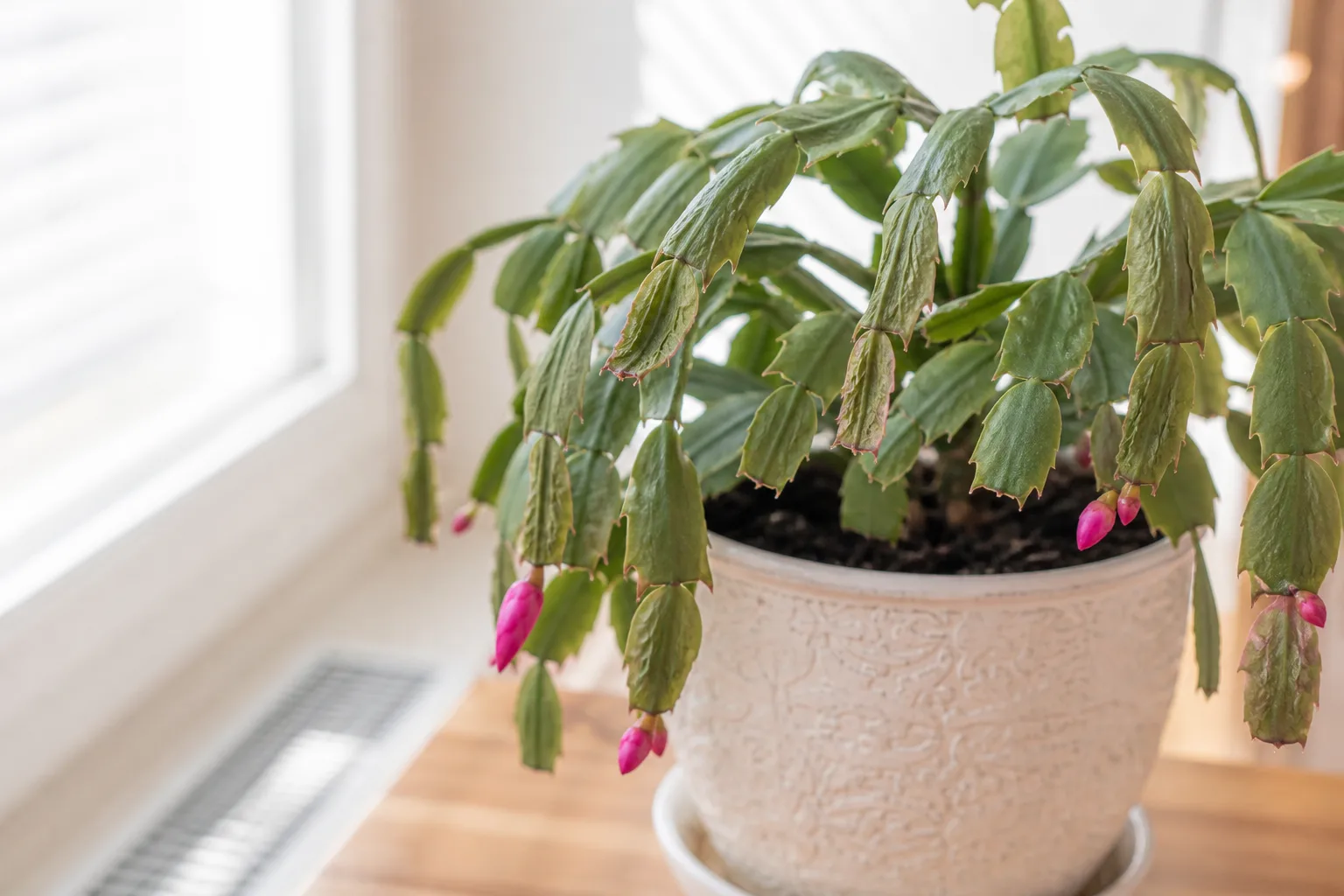
Low Humidity on Christmas Cactus: Causes, Checks & Fixes
This guide covers low humidity on Christmas Cactus. See also the general Low Humidity guide, watering, and light pages for this plant.
Low Humidity on Christmas Cactus: Causes, Checks & Fixes
Quick answer
Low humidity on Christmas Cactus (Schlumbergera × buckleyi) shows up as thin, puckered phylloclades-the flat stem segments often mistaken for leaves-while the potting mix is still appropriately moist. You may also see bud abort during bloom season, crisp segment margins in heated rooms, or a sudden spider mite flare when furnace air runs for weeks.
Unlike desert cacti, Christmas cactus evolved as a tropical rainforest epiphyte in humid, shaded Brazilian forests. It benefits from high humidity and performs best around 50–60% relative humidity (RH)-matching the humid atmosphere these tropical plants enjoy. Most homes tolerate 30–40% RH in winter, but prolonged dryness near radiators, forced-air vents, or sunny winter windows stresses the plant faster than the same air would stress a snake plant or jade.
First step: move the pot off heating vents, radiators, and direct furnace blasts, then measure RH with a hygrometer at plant height. If readings stay below 40% for days, add a pebble tray or small humidifier before misting, Christmas Cactus repotting guide, or changing your watering rhythm.
What low humidity looks like on Christmas Cactus
The earliest sign is subtle loss of turgor in phylloclades-individual segments look less glossy and start to pucker or look thin, especially at the tips of pendant chains. Because these segments store water internally, the change can look similar to thirst at first glance. The difference is often in the root zone: with low humidity, the top 2–3 cm of mix may still be appropriately dry-not bone-dust dry throughout the pot.
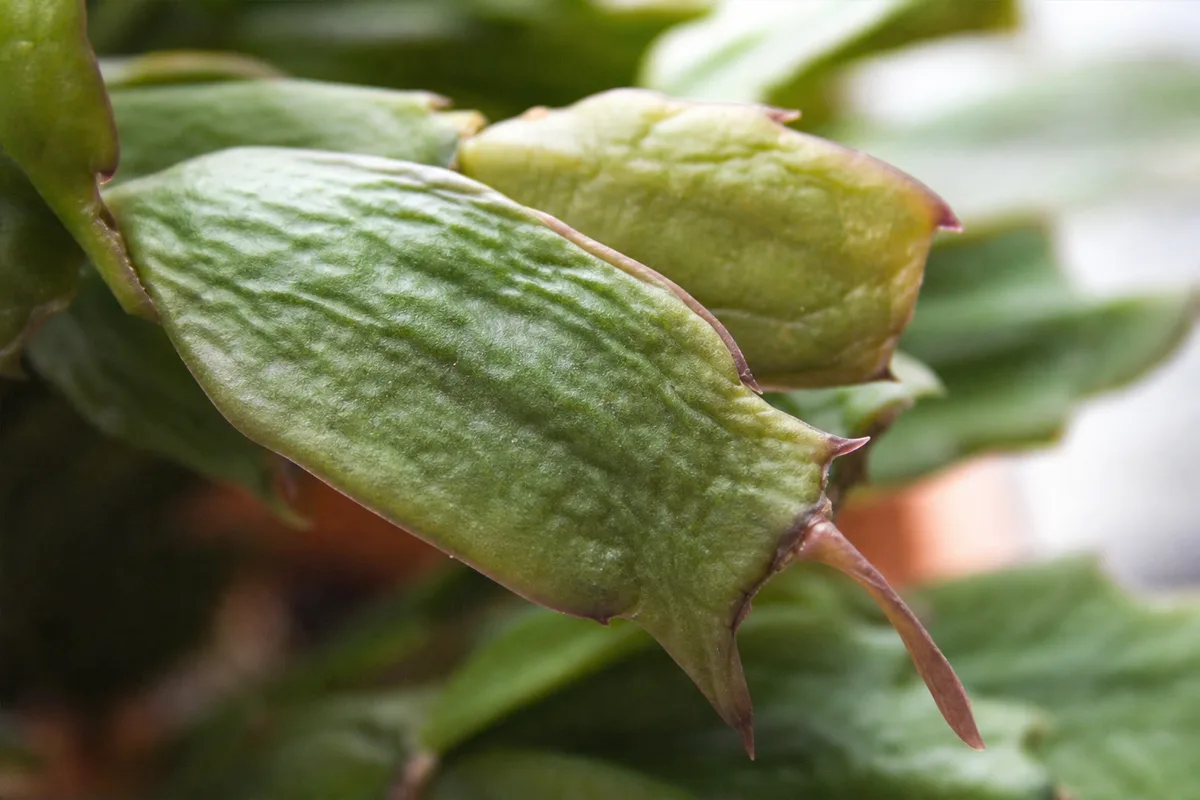
Thin, puckered phylloclade segment tips from dry indoor air - compare with plump glossy segments after humidity reaches 50–60% RH.
Common dry-air patterns on Schlumbergera:
- Segment wrinkling with acceptable soil moisture - chains look limp or thin, but a finger test at 2–3 cm depth shows normal dry-down, not drought
- Crisp or brownish segment margins - especially on segments closest to a hot window or radiator
- Bud drop during initiation or bloom - flower buds may abort when dry heat combines with environmental swings; MSU Extension notes holiday cacti suffer in dry conditions unlike desert succulents
- Spider mite webbing on segment joints in winter - dry air favors spider mites and related pests on holiday cacti
- Slow new segment growth in otherwise well-watered plants during heating season
What low humidity does not look like: yellow, soft segments with wet, sour-smelling mix (see overwatering); a feather-light pot with dusty dry mix throughout (see underwatering); or bleached patches from direct midday sun (see sunburn).
Why Christmas Cactus is more humidity-sensitive than desert cacti
The word “cactus” misleads growers. Schlumbergera grows on tree branches in shady rain forests where humidity stays high and light is filtered-not in arid desert sand. The Royal Horticultural Society describes the natural habitat as warm, humid rainforest in dappled shade, and recommends misting and a gravel tray because these plants enjoy a humid atmosphere.
Indoor winter heating drops RH precisely when many Christmas cacti enter pre-bloom rest or bud development from mid-September onward. Dry forced-air heat plus bloom-stage moisture demands create a common failure combo: segments wrinkle, buds drop, and growers add water to a pot that was already moist-worsening bud drop without fixing the air.
Typical dry-air triggers in homes:
Radiators and furnace vents. A pot on a windowsill above a radiator may sit in 25–35% RH while the rest of the room reads higher. Heat rises; so does desiccation.
Forced-air HVAC. Central heating and air conditioning both strip moisture. Vents that blow directly on hanging baskets dry phylloclades within hours.
Winter sun plus dry air. A south-facing sill heats segment surfaces and accelerates transpiration even when soil moisture is fine-the plant loses water through stems faster than roots replace it.
Grouping with desert succulents. Cacti and euphorbias tolerate 20–30% RH; Christmas cactus does not share that tolerance for months on end.
Mist-only “humidity fixes.” Brief misting does not sustain 50–60% RH. The RHS suggests misting as part of humidity care, but standing water on segments overnight can encourage fungal spotting on epiphytic stems.
Low humidity vs. underwatering vs. overwatering
| Check | Low humidity | Underwatering | Overwatering |
|---|---|---|---|
| Soil at 2–3 cm depth | Normal dry-down | Dusty dry throughout | Wet or cool for days |
| Pot weight | Normal | Very light | Heavy |
| Segment texture | Thin, wrinkled, may crisp at edges | Thin, papery, limp chains | Soft, yellow, or mushy |
| Season/context | Heat running, RH below 40% | Skipped waterings, hydrophobic mix | Saucer standing water, sour smell |
| First fix | Move off vent; raise RH | Bottom-water once | Pause water; inspect roots |
When segments wrinkle, always pair segment texture with soil moisture and a hygrometer reading before changing water habits. Adding water to moist soil in dry air does not raise humidity and can trigger root problems.
How to confirm low humidity is the cause
Work through these checks in order. The goal is to confirm dry air with adequate soil moisture, not root-zone drought or rot.
-
Hygrometer reading at plant height - Place a digital hygrometer 12–18 inches (30–45 cm) from the foliage, away from the window pane. RH below 40% for several days during active growth or bud set strongly supports low humidity. Ideal target: 50–60%.
-
Vent and heat proximity - Can you feel warm or cold air moving across the segments from a register, radiator, or fireplace? Is the pot on a heat-conducting windowsill above a radiator? Either pattern fits dry-air stress.
-
Soil moisture at depth - Push a finger 2–3 cm into the mix. If it is appropriately dry-not parched throughout-and segments still look thin, humidity is a leading suspect. Dusty dry mix throughout points to underwatering instead.
-
Segment pattern - Dry-air damage often starts on outer chains and segment tips exposed to airflow. Whole-plant shriveling with a light pot still suggests thirst.
-
Pest check - Inspect segment joints and undersides with a hand lens. Fine webbing and stippling in dry winter rooms may indicate spider mites favored by low humidity-not humidity alone as the only problem.
-
Recent environmental shift - Did symptoms appear when heat turned on, the plant moved near a new vent, or AC started running? Timing supports an air-humidity diagnosis.
If soil is wet and segments are limp or mushy, stop humidity interventions and investigate overwatering or root rot on Christmas Cactus first.
First fix for Christmas Cactus
Move the pot away from heating vents, radiators, and direct furnace blasts-then recheck RH tomorrow.
This single placement change stops active desiccation without stacking humidifiers, repotting, and watering changes on the same day. Hang baskets away from register lines; pull floor pots at least 3–4 feet (about 1 m) from blowing vents when possible.
After 24 hours, if RH near the plant is still below 40%:
-
Add a pebble tray - Fill a shallow tray with pebbles and water. Set the pot on the pebbles so the drainage holes stay above the water line. The RHS recommends standing the pot on a tray of damp gravel while keeping compost from waterlogging.
-
Run a small humidifier - Set it near the plant (not blasting directly on segments) until RH holds 50–60% during waking hours. This is the most reliable fix for dry winter rooms.
-
Group plants - Clustering raises local humidity modestly; combine with a tray or humidifier for best results.
Do not mist heavily the same day you move the plant unless segments are dusty-epiphytic stems that stay wet overnight invite spotting. Do not increase watering to compensate for dry air; moist soil in 30% RH does not hydrate segments if the plant is losing water to transpiration faster than roots can supply it, but flooding the pot creates a different crisis.
Make one change at a time and watch segments for 7–10 days before adding a second intervention.
Recovery timeline after raising humidity
Mild segment thinning from dry winter air often improves within 7 to 14 days once RH reaches 50–60% and heat blasts are eliminated. New segment notches should look plump and glossy before older wrinkled tips fully recover.
Moderate stress-weeks below 35% RH during bud initiation-may cost you some flower buds even after humidity improves. Buds that dropped from dry heat usually will not return until the next cycle; focus on stabilizing conditions for remaining buds (see bud drop).
Signs recovery is working:
- Segments feel firm when pinched, especially newest growth
- Hygrometer holds 50–60% near the plant during the day
- No new spider mite webbing after a week at higher RH
- Buds that remain attached continue to swell rather than abort
Signs the problem is worsening or was misdiagnosed:
- Segments turn mushy or yellow after you increased watering
- Wrinkling persists despite 55% RH and moist soil-inspect roots
- Crisp margins spread while the plant sits in direct winter sun-move to bright indirect light per the light guide
Old segment tips that went papery thin may stay slightly shrunken permanently; judge success by new growth quality, not perfect reversal of every wrinkled phylloclade.
What not to do
- Misting as the only fix - Raises RH for minutes, not hours; wet segments overnight risk fungal issues on epiphytic stems.
- Watering more because segments look thin - If mix is already appropriately moist, extra water does not replace humid air and can cause overwatering.
- Sitting the pot in the pebble tray water - Roots must stay above the water line; standing water invites rot.
- Stacking repotting, fertilizer, and humidifier setup on day one - Stressed Schlumbergera responds poorly to multiple changes; fix placement and humidity first.
- Placing a humidifier directly against segments - Constant wet foliage differs from ambient humidity; aim for even room air.
- Ignoring spider mites - Dry air invites pests; raising RH helps prevention but does not replace treatment if webbing is present (see spider mites).
How to prevent low humidity next time
Build a seasonal humidity plan tied to when your heat runs, not a one-time winter rescue.
During active growth (spring through early fall), aim for 50–60% RH near the plant. Bathrooms and kitchens with bright windows often run higher naturally if light is adequate-see the overview humidity section for placement ideas.
From mid-September through bloom, when cool rest and bud initiation coincide with furnace startup, check RH weekly. Keep the plant off vents, maintain even soil moisture once buds appear per the watering guide, and run a humidifier in rooms that drop below 40%.
For hanging baskets, verify airflow from ceiling registers; they dry faster than floor pots.
Use a hygrometer year-round. When RH reads below 40% for more than a few days and segments look dull, act before bud drop or mites appear.
If you summer the plant outdoors in shade, acclimate back indoors before heat blasts begin-sudden drops from outdoor humidity to 25% indoor air shock segments and buds alike.
When to worry
Treat dry air as urgent during bud set and bloom if RH stays below 35%, segments are rapidly thinning, or buds are dropping daily. Holiday cacti drop buds from environmental stress including temperature swings and drying growing medium during initiation.
Also escalate if:
- Spider mite webbing spreads despite higher RH-you need pest treatment, not humidity alone
- Segments stay wrinkled with wet soil - likely root uptake failure, not humidity
- Black or mushy tissue appears - stop misting and investigate rot or cold damage
Chronic wrinkling at 55% RH with correct watering suggests root loss, wrong light, or a pot that dries unevenly-not air humidity as the primary limit.
Conclusion
Thin, wrinkled phylloclades on Christmas cactus in heated winter rooms usually trace to dry air, not necessarily dry soil. Schlumbergera is a humid rainforest epiphyte that wants 50–60% RH-far more than desert succulents tolerate. Confirm with a hygrometer and soil moisture at 2–3 cm depth, move the pot off vents first, then add a pebble tray or humidifier until readings stabilize.
Recovery is typically visible within one to two weeks when roots are healthy. Protect bud season by combining stable humidity with even watering and minimal moves once buds form. If segments wrinkle with bone-dry mix, switch to the underwatering workflow; if soil stays wet and segments soften, investigate overwatering instead.
When to use this page vs other Christmas Cactus guides
- Christmas Cactus watering guide - Use for routine moisture checks before assuming low humidity is the main issue.
- Christmas Cactus problems hub - Browse all 21 common issues on this species.
- Brown Tips on Christmas Cactus - Different entry point when symptoms overlap with low humidity.