Bud Drop on Christmas Cactus: Causes, Checks & Fixes
Quick answer
Christmas cactus (*Schlumbergera* × *buckleyi*) drops buds when something disrupts the stable fall routine that set them-most often relocation after buds swell, a night-light leak during the short-day window, or temperatures above 90 °F. First step: leave the pot exactly where it is, audit recent moves and room lights, and keep soil evenly moist without waterlogging.
Bud Drop on Christmas Cactus: Causes, Checks & Fixes
This guide covers bud drop on Christmas Cactus. See also the general Bud Drop guide, watering, and light pages for this plant.
Bud Drop on Christmas Cactus: Causes, Checks & Fixes
Quick answer
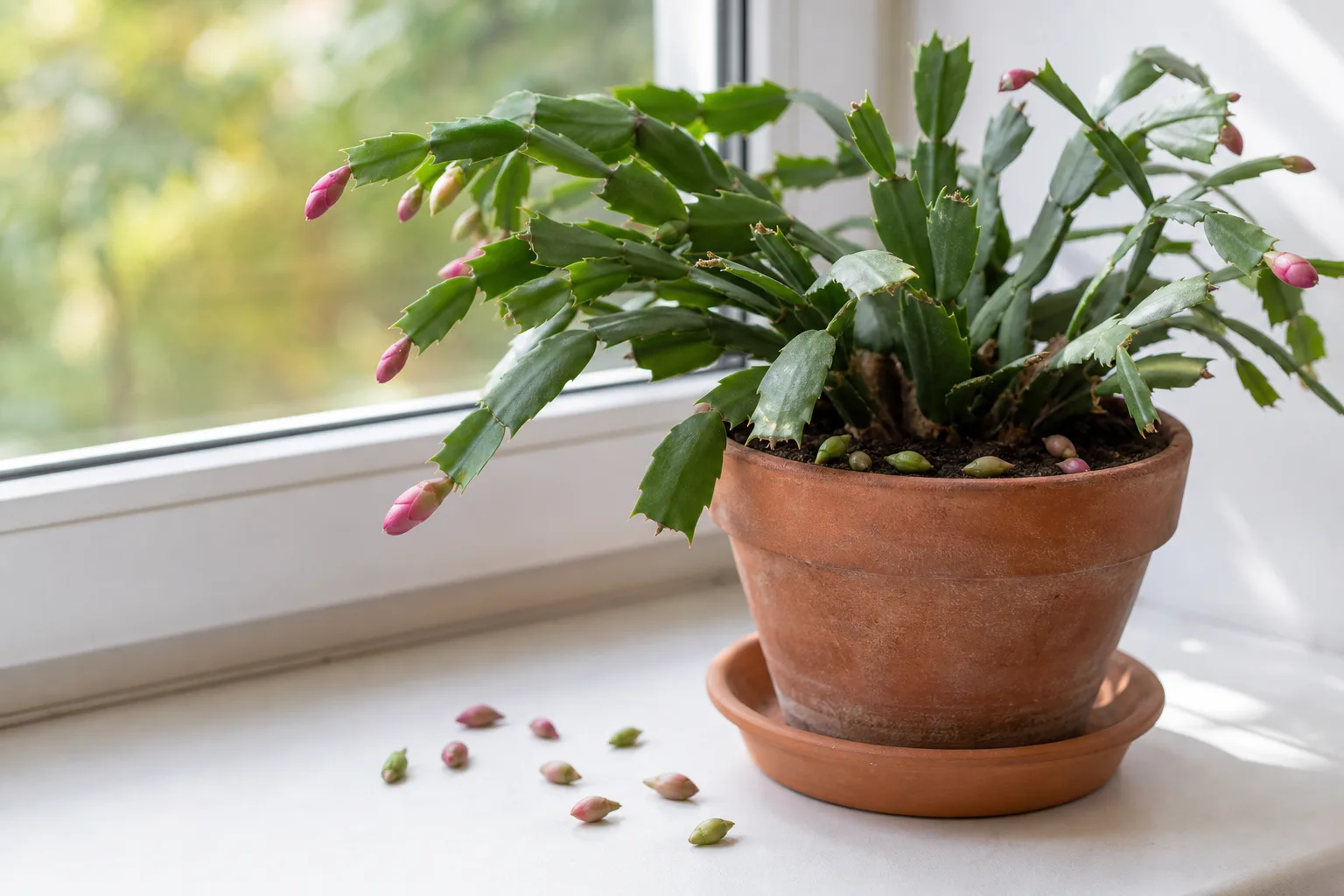
Bud drop on Christmas cactus means unopened flower buds detach from the phylloclade tips and fall off-often after you had a promising cluster for weeks. On Schlumbergera × buckleyi, this is rarely a mystery disease. It is almost always environmental shock during the narrow fall window when buds form and swell: moving the pot after buds appear, interrupting long nights with room lights, heat above 90 °F, cold drafts, or letting the mix swing between dust-dry and soggy.
First step: stop moving the plant. Leave it in the exact spot, same orientation toward the window, and audit what changed in the last seven days-guest-room relocation, a new lamp schedule, a heating vent switched on, or a missed watering during bud swell. Stabilize placement and moisture before you repot, prune, or fertilize.
What bud drop looks like on Christmas cactus
Healthy holiday cactus buds start as tiny bumps at the notched tips of phylloclades. They swell over several weeks into plump, often pink-tipped structures with visible petal folds inside. Bud drop is the sudden loss of those structures before any petal opens.
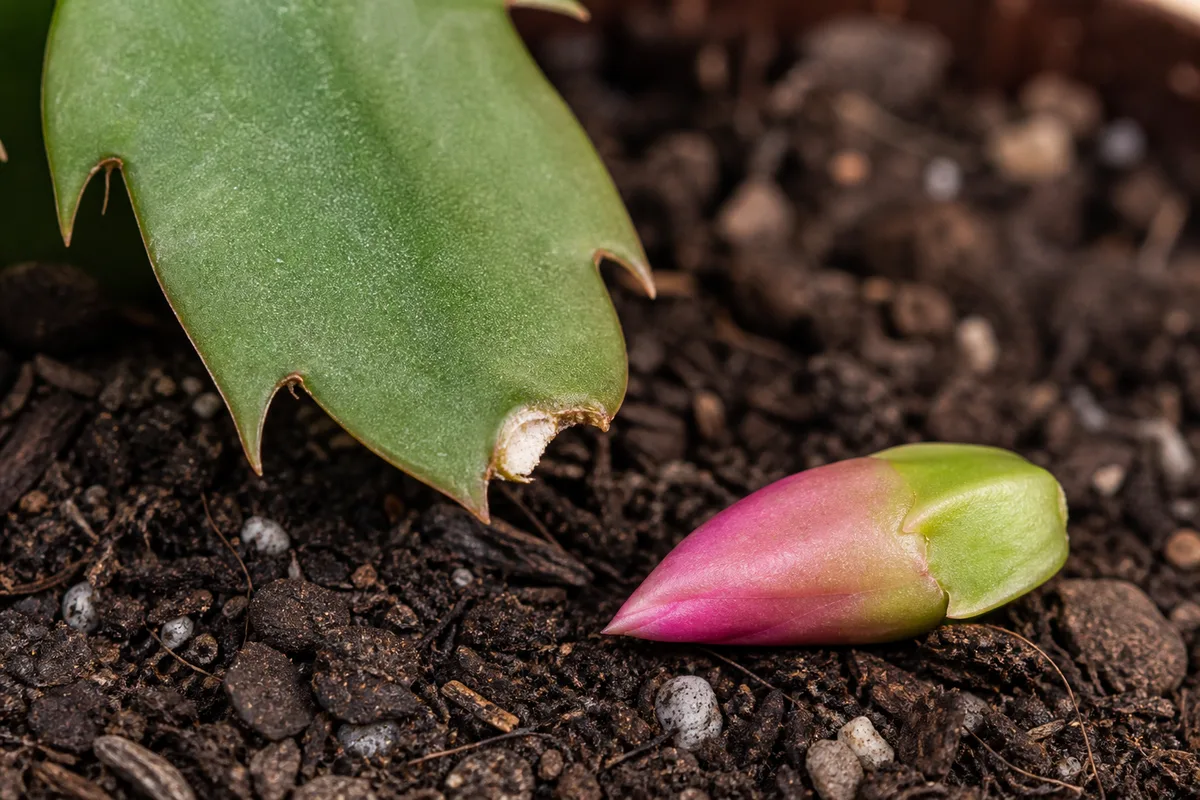
Bare notched segment tip with a clean scar where a bud detached - fallen green or pink unopened buds on the soil confirm abortion before bloom.
You may find:
- Detached buds on the soil or shelf - round to teardrop shapes, still green or pink, with a clean scar at the segment tip
- Bare tips where a cluster was yesterday - no rot, just an empty notch
- A mix of dropped buds and a few survivors - common after partial stress such as one cold night or a brief drought
- Yellowing or limp segments alongside drop - points more toward underwatering or heat stress than simple move shock
This is different from normal post-bloom fade, where open flowers wilt and fall after one to two weeks of display. It is also different from no buds ever forming-that is a photoperiod initiation failure covered on the no flowers page.
Why Christmas cactus drops buds
Holiday cacti are short-day plants. Buds initiate when nights lengthen and temperatures cool in fall. After buds are set, the plant becomes surprisingly brittle-Thanksgiving and Christmas cacti commonly drop unopened flower buds when temperature, light, or moisture shifts suddenly. Here is how each trigger fits this epiphyte.
Relocation or rotation after buds form
The top cause growers report: buds looked perfect until the plant moved. Bringing it to the dining table for guests, shifting it from porch to living room, or even rotating the pot changes light direction on pendulous stems. Iowa State Extension advises not moving holiday cacti until the first flowers open-relocation sooner often aborts the entire bud load.
Greenhouse-grown plants sold in bud are especially sensitive. The trip to your home is already a shock; adding another move days later multiplies the risk.
Interrupted fall darkness (night light leaks)
Before buds exist, interrupted darkness prevents initiation. After buds are visible, photoperiod no longer controls flowering-but sudden light changes still trigger drop. Streetlights through a window, a lamp left on during what had been a dark spare bedroom, or car headlights through a front window can disrupt the stable routine that got buds this far. As little as two hours of interrupted lighting can inhibit bud set on holiday cacti; late-season leaks matter less for initiation but sudden new exposure still stresses a budding plant. See the Christmas cactus light guide for the full six-week darkness protocol.
Temperature stress (heat waves and cold drafts)
Clemson HGIC warns not to let temperatures rise above 90 °F once flower buds are set-continuous warmth causes buds to drop. The flip side is equally real: night temperatures around 50 °F can also promote bud drop even though cooler nights help initiation. Drafts from doors, single-pane glass on freezing nights, and heat vents that blast intermittently all count as sudden swings.
Watering swings during bud development
Schlumbergera tolerates slight dryness in spring and summer, but after bud set in fall the growing medium must stay evenly moist to prevent flower bud abscission. Letting the pot go bone dry while buds swell-or overcompensating with soggy soil-both stress roots on an epiphyte that expects moderate, consistent moisture during bloom development. Cross-check wet versus dry patterns on the overwatering and underwatering pages if soil history is unclear.
Drafts, ethylene, and environmental shock
Penn State Extension notes that dramatic temperature fluctuations and drafty placement near heat registers or air conditioners cause holiday plants to drop buds. Ripening fruit and gas ranges release ethylene, which can trigger flower abscission on sensitive crops-keep budding cacti away from the fruit bowl and stove exhaust. An excessive bud load on a small plant can also self-thin; not every dropped bud signals a care error.
Thanksgiving cactus vs. Christmas cactus note
Most sold “Christmas cacti” are actually Thanksgiving cactus (S. truncata) with pointed segment margins and yellow anthers. True Christmas cactus (S. × buckleyi) has rounder segment edges and purplish-brown anthers. Both species share the same bud-drop triggers; Thanksgiving types often bloom slightly earlier. The fixes below apply to either.
How to confirm the cause
Work through these checks in order. The first match is usually your answer.
- Recent move history - Did the pot change rooms, go outside, rotate toward a new window, or ride in a cold car within two weeks of drop? Move shock is the default diagnosis when history says yes.
- Night light audit - Walk the room at 10 p.m. Are lamps, TV glow, or streetlights hitting the plant? Did someone start using a home office after dark in what had been a dark bedroom?
- Thermometer at plant level - Place a min/max thermometer beside the pot for 48 hours. Readings above 90 °F by day or rapid drops below 50 °F at night confirm temperature abortion.
- Draft and vent scan - Feel for air movement from HVAC registers, fireplace drafts, or a door opened repeatedly to a cold garage.
- Soil moisture pattern - Press a finger into the top inch. Dust-dry with limp segments suggests drought stress during swell. Cool, wet mix that has not dried in a week suggests overwatering-roots may be failing even as buds abort.
- Bud stage when drop started - Pea-sized swell is the highest-risk window for move shock. Drop during initiation with no buds ever visible points to photoperiod or temperature during September darkness-overlap with no flowers.
- Ethylene and fruit proximity - Note ripening apples, bananas, or stove heat within a few feet.
| If you find… | Likely cause | First direction |
|---|---|---|
| Moved or rotated pot last week | Move / light-direction shock | Freeze placement; stabilize |
| New lamp or streetlight exposure | Interrupted darkness routine | Block night light leaks |
| Temps above 90 °F or below 50 °F | Temperature abortion | Cool or warm placement |
| Dry pot weight, limp segments | Underwatering during swell | Even moisture, not flood |
| Wet mix for 10+ days | Root stress / overwatering | Stop watering; inspect roots |
| No buds ever formed | Initiation failure | Fall darkness routine |
First fix for Christmas cactus
Leave the plant exactly where it is-or return it immediately to the spot where buds first formed, same orientation-and commit to stable conditions for two weeks.
That single action stops the most common cascade. Then:
- Water to even moisture - If the top inch is dry, water until a small amount drains, then empty the saucer. If soil is wet and cold, skip watering until the top inch dries.
- Eliminate new light and temperature swings - Turn off lamps that hit the plant at night; move it back from heat vents or freezing glass.
- Do not repot, prune, fertilize, or rotate until existing buds either open or finish dropping.
Make one environmental correction, wait seven days, then reassess. Stacking repotting and fertilizer on a shocked holiday cactus often strips the remaining buds.
Recovery timeline
Same season: If only a few buds dropped and stress stopped quickly, remaining buds may open in two to four weeks. Heavy drop usually ends the current bloom cycle-do not expect a full replacement flush until next fall’s darkness routine.
Plant health: Segments should stay firm and green. Progressive yellowing, mushy bases, or sour soil smell point to root problems, not simple bud abortion.
Next year: Mark mid-September on your calendar for 14+ hours of uninterrupted darkness, cool nights, and a no-move rule once buds swell. Many long-lived specimens bloom reliably for decades once the fall routine is locked in.
Signs of improvement: No new buds detaching for 10+ days, surviving buds enlarging, firm green phylloclades at the tips.
Signs of worsening: Continued daily drop after stabilization, segment yellowing, or wet soil that never dries-escalate to root inspection.
Lookalike symptoms
No flowers vs. bud drop - No flowers means buds never formed, usually from missed fall darkness or warm September nights. Bud drop means buds did form, then aborted.
Faded open flowers - Normal bloom senescence after petals open is expected, not a crisis.
Drooping flat segments without bud loss - Often watering or root stress on the wilting or drooping leaves pages, not bud-specific abortion.
Whole stem collapse - Rare with bud drop alone; suspect root rot on chronically wet soil per root rot.
What not to do
Do not repot during bud swell-holiday cacti flower best when kept somewhat pot bound, and root disturbance aborts buds. Do not fertilize heavily to “save” blooms; high nitrogen after stress pushes leaves, not flowers. Do not move the plant to a brighter spot mid-bud unless it was in near darkness-sudden light increases often worsen drop. Do not overwater a dry-shocked plant repeatedly in one day; one thorough drink, then even rhythm. Do not prune off segments that lost buds until after the bloom window-you may remove secondary bud sites.
How to prevent bud drop next season
- Run the fall darkness routine from mid-September: 14+ hours of uninterrupted night darkness for six weeks, cool nights between 50 and 68 °F, bright indirect days. Details in the light guide.
- Pick a permanent fall location before buds appear-somewhere dark at night and cool, not a high-traffic room you will rearrange for holidays.
- Hold the no-move rule from pea-sized buds until the first flower opens, then display carefully and return to the same spot.
- Keep even moisture through bud swell per the watering guide-neither drought nor saucer water.
- Avoid heat vents, fruit bowls, and ethylene sources during October and November bud development.
- Acclimate gradually when bringing plants indoors from summer shade; do not jump from outdoor porch to overheated living room in one afternoon.
Related Christmas cactus guides
- Light needs and fall bud initiation - photoperiod table, darkness routine, night-light leaks
- No flowers - when buds never form at all
- Overwatering - wet soil and root stress during winter
- Watering rhythm - seasonal moisture targets