How to Prune Christmas Cactus: When, Where, and What to Cut
How to Prune Christmas Cactus: When, Where, and What to Cut
How to Prune Christmas Cactus: When, Where, and What to Cut
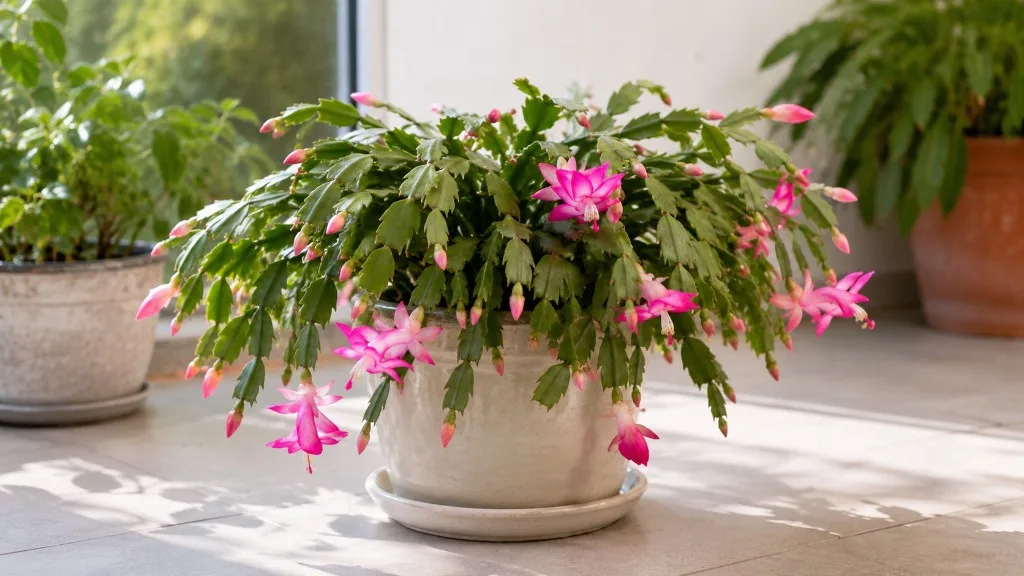
Christmas cactus pruning means removing whole stem segments (cladodes) at the narrow joints where pads connect - not trimming leaf tips like a foliage houseplant. Schlumbergera x buckleyi and related holiday cacti branch from those joints once you break apical dominance at the chain tip. The main shaping window is after the last flowers fade, when the plant moves into active spring growth - not during autumn when short days and cool nights trigger bud formation. Clemson HGIC notes that holiday cacti are short-day plants requiring uninterrupted darkness to initiate blooms; heavy trimming in that phase can reduce next winter’s flower count.
First action: look along each arching chain for soft, brown, or translucent segments - rot or mechanical damage. Twist those off at the nearest healthy joint below the affected pad before any cosmetic shaping. Decay moves segment to segment on chained stems if you leave mushy tissue attached.
Christmas Cactus Segments and Joints - Not Leaves
The flat pads on a holiday cactus are photosynthetic stem segments called cladodes or phylloclades. Each segment joins the next at a slight constriction - the joint - where the plant separates cleanly when twisted. Clemson HGIC describes Schlumbergera species as epiphytic forest cacti from Brazilian rainforests, not desert succulents. Recovery after pruning depends on Christmas Cactus light guide, aerated mix, and moderate moisture - not months of drought.
New branches emerge from joints below a removed terminal segment. Flowers develop from areoles at segment tips and notches. Mature segments lower on a chain often carry more bloom potential than soft new tips, which is why poorly timed hard cuts can temporarily reduce flower count even when the plant survives.
What to Inspect Before You Cut
Walk the plant in good light and note four things:
- Balance - long drooping chains on one side while the center looks bare
- Segment health - shriveled, yellow, sun-scorched, or mushy pads
- Bloom status - flowers finished and falling, or buds still forming
- Soil moisture - wet mix plus soft segments suggests rot; correct watering before aggressive shaping
If blooming just finished and the mix is neither soggy nor drought-cracked, you are in the normal shaping window. If autumn buds are swelling or the pot has stayed wet for weeks, delay cosmetic pruning and address the underlying stress first.
When to Prune Christmas Cactus
Primary window: after flowering through early spring
For Northern Hemisphere indoor growers, late winter through April is the primary pruning season - once the last flowers fade and before summer heat drives rapid extension. University of Minnesota Extension recommends pruning after flowering to encourage branching; each cut typically produces one to two new cladophylls at the joint below. UC ANR Solano County adds that holiday cactus often enters active growth in March or early April, so cuts made just before that push redirect energy into side segments.
Light touch-up in late spring works on vigorous plants. Avoid stacking pruning with Christmas Cactus repotting guide, relocation, and fertilizer on the same week.
Emergency removal: any time
Remove clearly dead, rotting, or mechanically torn segments whenever you find them. Sanitize scissors with 70% isopropyl alcohol if rot is present, cut at the joint below healthy tissue, and let the wound dry before the next overhead watering.
When not to prune heavily
Late summer through autumn is the risky window. Short days and cool nights trigger bud initiation on mature segments. Removing many terminal pads then can reduce bloom count even though the plant looks fine otherwise. Minor cleanup of a single rotten segment is still fine - bulk shaping is not.
Do not prune heavily while the plant is actively blooming unless a branch is clearly failing; wait until flowers finish.
The First Cut to Make
Remove the lowest damaged segment on the worst branch - twist at the joint just below mushy or shriveled tissue. If no damage exists, skip straight to shaping: pick the longest lopsided chain and remove one terminal segment at its tip joint. That single cut confirms how cleanly the plant separates and gives you a balanced reference before continuing around the pot.
How to Prune Christmas Cactus Step by Step
Twist at the joint
Grasp the terminal segment between thumb and finger. Twist sideways at the narrow waist between pads until it pops free. A clean twist leaves a flat basal face on the remaining stem - the surface that heals fastest. UC ANR recommends twisting stems at the narrow joint between leaf segments for routine holiday cactus pruning.
When to use scissors instead
On woody, multi-year chains, use sharp scissors or snips and cut precisely at the joint, not through the flat face of a pad. Mid-segment cuts heal slowly and look ragged.
Work around the plant in quarters: remove one to three terminal segments per long branch for bushiness, then step back and check balance from eye level. Holiday cactus looks best with even, arching tiers rather than one dominant whip.
How Much You Can Safely Remove
A practical annual limit is one-third of total segment count - the guideline UC ANR cites for size reduction without leaving the plant bare for a full season. Conservative shaping often means one or two segments off each leggy tip rather than one hard chop.
Plants headed into a strict short-day bloom cycle in autumn should keep plenty of mature segments; those segments hold much of next season’s flower potential. If you inherited an overgrown specimen, spread major reduction across two post-bloom seasons instead of one aggressive session.
Where to Cut and What to Leave
Cut at: the joint between two cladodes, always preserving the segment below as the new branch tip.
Leave alone:
- Soft new growth at branch tips during active spring extension unless correcting severe lopsidedness - those pads fuel the recovery push
- Heavily budded segments in autumn if you want maximum flowers
- The base where multiple chains emerge from soil - never cut into the crown trying to shorten the whole plant at once
Pruning cannot fix chronic bud drop from warm autumn nights, light interruption, or draft stress. Scissors reshape architecture; culture controls flowering.
Shaping for Bushiness vs Size Control
Bushiness: remove terminal segments on long, non-branching chains. Each cut typically produces one or two new segments at the joint below, as UMN Extension describes for holiday cactus branching.
Size control: shorten the longest arching arms evenly around the pot rather than stripping one side bare. Rotate the plant a quarter turn every few weeks after pruning so new growth fills in evenly.
Leggy, sparse centers often need two light post-bloom trims in consecutive years more than one drastic cut.
Propagation From Pruned Segments
Healthy removed chains of two to four segments root easily. NC State Extension lists stem segment cuttings as the standard propagation method for Schlumbergera. Let cut bases callus one to two days, plant the lowest segment shallowly in airy mix with orchid bark and perlite, and keep lightly moist in bright indirect light. Pruning and propagation pair naturally - you are not wasting tissue you would otherwise discard.
Christmas cactus is non-toxic to cats and dogs per the ASPCA, so trimmings are safer around pets than many houseplants. Segments still snap easily - keep fallen pads off floors where curious animals might chew them.
Aftercare and Recovery Timeline
After a moderate trim:
- Light: bright indirect - avoid sudden moves to direct sun, which scorches fresh cuts
- Water: resume your normal rhythm when the top 2–3 cm of mix dries; do not soak a freshly trimmed plant sitting in heavy, cold soil
- Fertilizer: wait until new spring growth firms up, then feed lightly through summer if the plant is otherwise healthy
- Placement: keep the pot stable through autumn; bud formation is sensitive to light schedule changes
Expect visible new segments at cut joints within three to six weeks during active growth. Cool or dim conditions slow the response without indicating failure. A plant pruned after bloom in spring should look noticeably fuller by midsummer and carry normal bud set that autumn if short-day conditions are met.
Signs Pruning Worked - or Went Too Far
Good signs:
- Two-branched forks appearing below previous cut points
- Brighter green new pads at several joints, not just one whip
- Stable segment texture - firm, not wrinkled from drought or translucent from rot
Warning signs:
- Widespread shriveling two weeks after a heavy cut - often underwatering on Christmas Cactus or root stress, not the trim alone
- Soft brown joints spreading upward - overwatering on Christmas Cactus after pruning; remove affected segments and dry the mix
- No new growth by midsummer after a spring trim - check light level and root health before cutting again
- Few or no buds the following winter after an autumn hard prune - timing issue; adjust next year
Mistakes to Avoid
- Autumn bulk pruning when buds are forming - fewer flowers next season
- Cutting through the flat pad face instead of the joint - slow, ugly healing
- Removing more than one-third in a single year on a weak or recently repotted plant
- Overwatering immediately after trim - joint rot on chained segments
- Treating it like a desert cactus - extended drought after pruning stalls recovery on an epiphytic plant
- Pruning, repotting, and relocating the same week - stacked stress during recovery
Conclusion
Christmas cactus pruning comes down to segment removal at natural joints, timed after bloom for shaping and any time only for damaged tissue. Twist or snip cleanly, stay near the one-third annual limit, and keep major cuts out of the autumn bud-initiation window. Match aftercare to a forest epiphyte - drainage, indirect light, moderate water - and trimmed chains branch into the fuller arching plant most growers want by the next holiday season.
When to use this page vs other Christmas Cactus guides
- Christmas Cactus overview - Start here for whole-plant context before deep-diving this topic.
- Christmas Cactus problems hub - Jump to symptom-specific fix guides when this care topic does not resolve the issue.
- Leggy Growth on Christmas Cactus - Escalate here when pruning adjustments are not enough.
- Slow Growth on Christmas Cactus - Escalate here when pruning adjustments are not enough.
- Brown Tips on Christmas Cactus - Escalate here when pruning adjustments are not enough.