Dry Hydrophobic Soil on Janet Craig Dracaena: Causes
Quick answer
Hydrophobic soil on Janet Craig Dracaena means the peat mix repels water while the root ball stays dry inside-common after a 3–4 week dry-down in a dim office. First step: bottom-soak the pot until the top half of mix feels moist, then drain fully before resuming your normal dry-down rhythm.
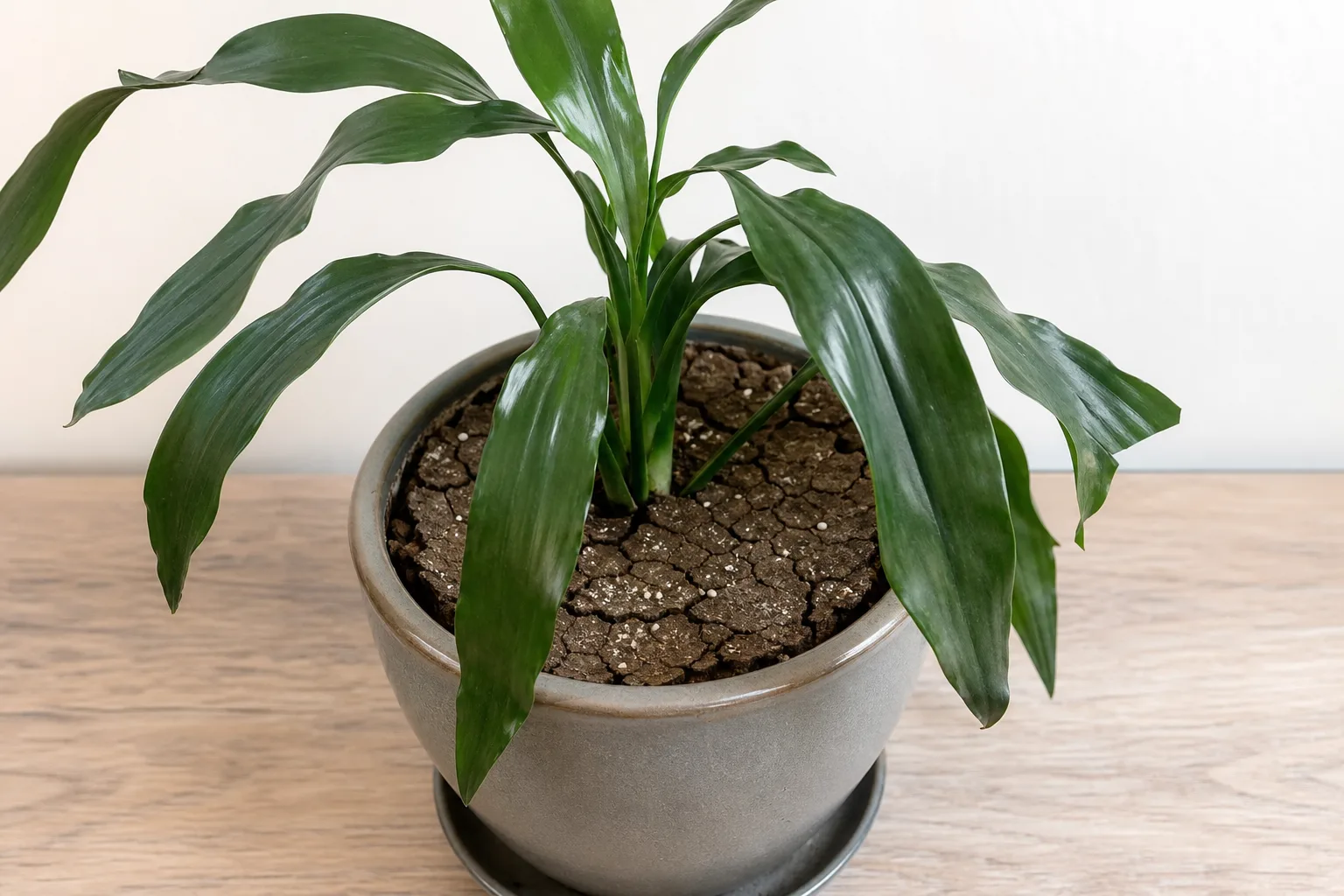
Dry Hydrophobic Soil on Janet Craig Dracaena: Causes, Checks & Fixes
This guide covers dry hydrophobic soil on Janet Craig Dracaena. See also the general Dry Hydrophobic Soil guide, watering, and light pages for this plant.
Dry Hydrophobic Soil on Janet Craig Dracaena: Causes, Checks & Fixes
Quick answer
Dry hydrophobic soil on Janet Craig Dracaena (Dracaena fragrans ‘Janet Craig’) means the potting mix has dried so far that it repels water instead of absorbing it. You pour from the top, water races out the drainage holes, and you assume the cane drank-while the center of the root ball stays dead dry. That mismatch is especially common on Janet Craig because this species transpires slowly in low to moderate filtered light, so owners stretch watering to every 21 to 28 days or longer-and peat in commercial floor-pot mix can cross into water-repellent territory before leaves show obvious wilt.
First step: set the pot in a basin of lukewarm water so the mix wicks up through the drainage holes until the top half feels moist. This bottom watering method slowly re-wets hydrophobic peat. Lift the pot out, let it drain completely for 15 to 30 minutes, and empty the saucer. Do not keep adding top water to crusted mix; it will keep running down the gap between root ball and pot wall.
Full species context: Janet Craig overview. For the complete dry-down rhythm once mix accepts water again, see the Janet Craig watering guide-including its note on bottom watering when mix repels top pours.
What dry hydrophobic soil looks like on Janet Craig
Hydrophobic soil shows up in the pot before every leaf tells the story. On this slow-drinking dracaena, leaf stress often follows a missed dry-down cycle because the plant masks drought longer than fast-growing trailers-but the mix failure is visible if you know what to check.
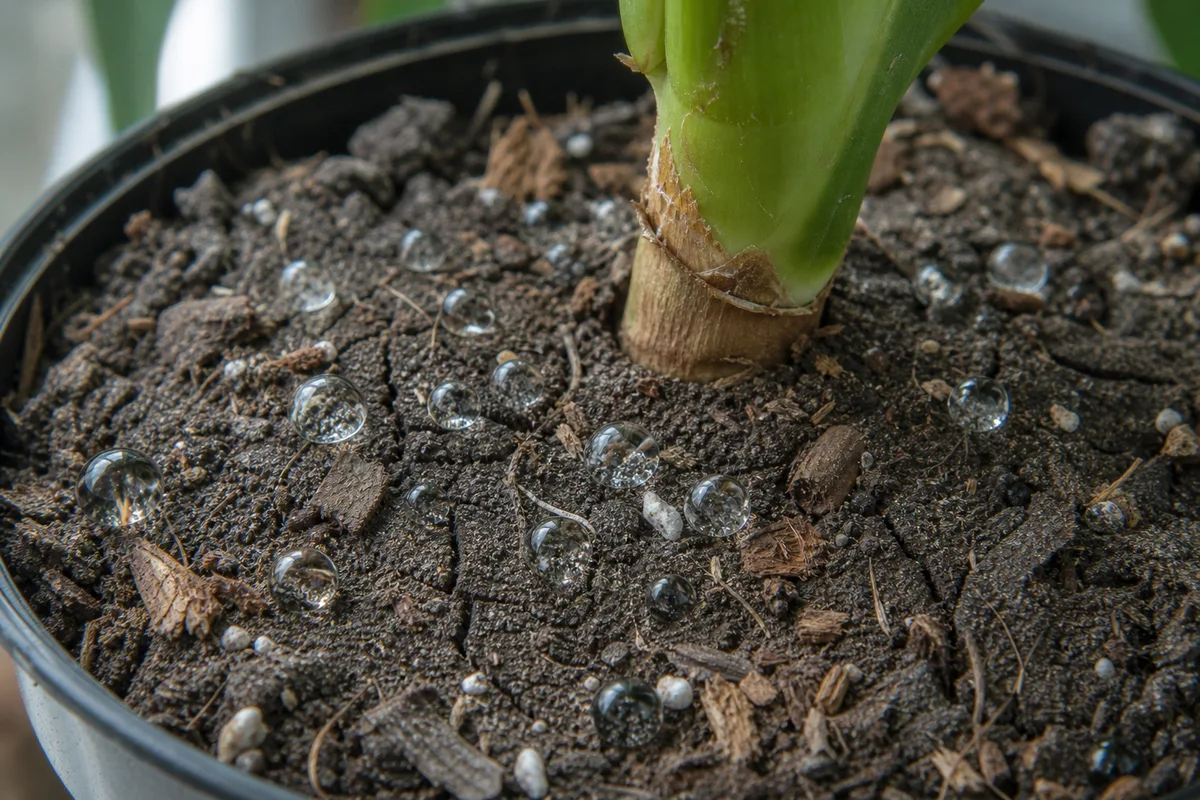
Dry Hydrophobic Soil symptoms on Janet Craig Dracaena - compare with healthy tissue on the same plant.
Pot and mix signs
- Water pools on the surface or races through in under a minute with little absorption
- Dry mix has shrunk and pulled away from the plastic pot wall, leaving a gap where water runs down instead of through the root ball
- Surface looks dusty, pale, or cracked while you have been “watering” on schedule
- Floor pot feels light when lifted despite a recent top-water session and a full saucer
- A skewer or finger at half depth stays dry right after you watered from the top
- White mineral crust on the surface that sheds water droplets
The Janet Craig soil guide describes this pattern directly: water sits on the surface, then runs down the gap between root ball and pot wall-usually hydrophobic peat from drying too hard or peat breakdown.
Leaf and cane signs
- Slight droop or loss of turgor in broad dark-green strap leaves
- Oldest leaves may show increased brown tip margins-overlap with fluoride sensitivity, but hydrophobic cycles also include a light pot and dry half-depth probe
- Slowed new crown leaf emergence after repeated dry cycles
- Cane tissue stays firm at the soil line when hydrophobic drought is the primary issue
The key distinction: with simple underwatering, dry mix still accepts water when you pour slowly. With hydrophobic soil, water does not penetrate the root ball even when you try.
Why Janet Craig mix turns hydrophobic
Janet Craig floor displays usually sit in peat- or coir-based commercial mix with perlite. Peat holds moisture well when evenly damp-but when it dries completely, peat moss is very difficult to re-wet. Bags of potting soil can even dry out on the shelf. Janet Craig tolerates missed waterings better than constant wet feet, but a hard-dry root ball still cuts off water uptake to thick cane roots.
Low-light slow transpiration and extended dry-down
In a north-facing office, interior corridor, or lobby with only fluorescent light, Janet Craig may need water only every 21 to 28 days or longer after a proper soak-and-drain cycle. The plant barely pulls moisture through its thick cane and broad strap leaves. That slow rhythm is an advantage in drilled nursery pots-but it also means owners confidently skip watering until the entire ball goes bone dry, not just the top half. NC State Extension recommends allowing the top half of mix to dry between waterings; in deep shade, the lower half can dry completely while the surface still looks merely cool-damp on a quick finger touch.
Vacation dry-down, a busy month, or backing off water after an overwatering scare can leave peat hard and water-repellent before crown leaves droop obviously.
Old peat breakdown and crust formation
Peat compacts and turns hydrophobic within 12 to 24 months in many indoor mixes-the soil guide flags this as a hidden stress source when the bottom turns dense while the surface looks fine. Root-bound Janet Craigs in the same nursery peat for years are especially prone. Salt and mineral crust from tap water and fertilizer leaves a surface film that sheds water, which can coincide with brown tips that distract from the soil issue.
Fast top pour on crusted mix
A quick pour on hydrophobic crust channels between the root ball and pot wall. You see drainage and think the job is done. Fine roots in the center never get water-exactly why the watering guide warns that superficial watering fails when mix repels top irrigation.
How to confirm the cause
Work through these checks before repotting or changing your whole routine:
- Runoff test - Add one cup of water slowly. If it channels to the sides or exits in under a minute, suspect hydrophobic mix.
- Gap check - Look for daylight between dry mix and the plastic pot wall on floor displays.
- Half-depth probe - After your normal watering, press a skewer 10 to 15 cm (4 to 6 inches) deep. Still dry? The root ball did not hydrate.
- Weight check - A well-watered Janet Craig pot should feel noticeably heavier than a dried-out one. Light weight after “watering” confirms runoff channeling.
- Smell and roots - Sour, swampy odor or black mushy roots mean overwatering or root rot, not drought alone. Firm pale roots support a dry-core diagnosis.
- Cane base firmness - Pinch the cane at soil level. Firm base with limp leaves fits hydrophobic drought. Soft, mushy base with wet mix-do not soak again.
If top watering failed the half-depth probe, hydrophobic soil is confirmed-move to bottom soaking.
Hydrophobic vs underwatering vs root rot
| Signal | Hydrophobic soil | Simple underwatering | Root rot / overwatering |
|---|---|---|---|
| Water on pour | Beads, channels, races out fast | Absorbs when poured slowly | Surface may stay wet days |
| Pot weight after “watering” | Light | Light | Heavy for weeks |
| Half-depth probe after top water | Dry | Dry before soak; moist after | Wet |
| Mix vs pot wall | Gap visible | May shrink when dry | No gap; soggy |
| Smell | Neutral or dusty | Neutral | Sour, musty |
| Cane at soil line | Firm | Firm | Soft, wrinkled |
| Leaf pattern | Drooping straps; tips may brown | Drooping; perks after one soak | Yellow lower leaves; crown stall |
| Urgency | Rehydrate same day, then recheck | Deep soak within 24 hours | Unpot and inspect roots same day; do not bottom-soak |
First fix for Janet Craig
Bottom-soak the pot until the top half of mix feels moist, then drain fully.
This matches the watering guide recommendation: bottom watering works when mix has become hydrophobic and repels top watering-but it is not the default method for healthy mix. One targeted soak fixes repellency; do not switch to permanent tray watering, which risks rot in low light.
Step-by-step bottom-soak recovery
- Choose a basin - Use a sink, tub, or bucket that holds the pot and enough lukewarm water to reach halfway up the pot sides. Large floor pots may only fit a partial soak tray; trickle slowly from a hose on very slow flow if the pot cannot be lifted (UC ANR).
- Set the pot in water - Let mix wick up through drainage holes. The pot may float at first as air escapes-that is normal.
- Soak until half depth is moist - Press the top half of mix and probe at 10 to 15 cm (4 to 6 inches). Often 30 to 90 minutes for a medium floor pot (University of Maryland Extension). Check hourly; do not leave submerged overnight.
- Drain completely - Lift the pot, let excess water run off for 15 to 30 minutes, and empty the saucer. Never return a Janet Craig to a cachepot holding standing water.
- Verify six hours later - Half-depth probe should read cool and slightly moist. If still dry, repeat a shorter bottom soak.
- One slow top pass - After the ball is moist, a gentle top watering helps settle the surface without flooding the crown.
- Surface aeration if needed - Poke a few shallow channels with a chopstick through crusted surface peat so the next watering penetrates-do not stab deep into roots.
- Hold fertilizer - Rehydrate first. Feeding drought-stressed roots can worsen fluoride and salt stress on sensitive Dracaena.
For severely repelling mix in a healthy plant with no sour smell, a full pot submerge until bubbling stops works faster. Acceptable for firm cane and neutral-smelling mix; skip if rot is suspected.
Large immovable floor pots (cachepot or lobby planters)
If your Janet Craig is too heavy to lift, use a slow-trickle rewet instead of forcing repeated fast top pours. Run a very gentle stream onto one zone of the surface for several minutes, pause, then rotate to the next zone so water has time to infiltrate rather than channel. UC ANR notes a slow trickle can re-wet dry media in containers that cannot be submerged (UC ANR). Stop when half-depth probe readings turn slightly moist across multiple points, then drain any reservoir water from the cachepot.
If the same pot repels water again within two weeks, repot into fresh airy mix per the soil guide rather than repeating emergency soaks indefinitely.
Recovery timeline
Leaves often perk within 24 hours once the root ball is truly wet-Janet Craig is drought-tolerant but not immune to repeated dry-core cycles. Crispy brown tips on existing foliage will not re-green; new crown leaves emerge clean over two to four weeks once water rhythm and quality stabilize. Severe dry-down may drop older lower leaves over one to two weeks even after a successful soak, especially if fine roots were damaged.
Improvement signs: firmer strap leaves, new crown growth, mix that accepts water from the top again, and a pot that stays heavier for several days after watering. Worsening signs: cane softening at soil line, sour smell after soaking, or continued wilt with wet surface but light pot-inspect roots for root rot.
Lookalike symptoms
Simple underwatering - Mix is dry and accepts water when poured slowly. Bottom soaking still helps, but runoff channeling is not the main problem. See underwatering on Janet Craig.
Overwatering or root rot - Pot stays heavy for days, soil smells sour, lower leaves yellow while mix is wet at half depth. Clemson HGIC notes Dracaena is sensitive to overwatering, with yellowing and soft stems among results. Hydrophobic soil feels light and repels water-do not bottom-soak a wet heavy pot with sour smell.
Fluoride tip burn alone - Brown margins on older leaves with evenly moist soil at half depth and no runoff channeling. Fix water quality per the watering guide; hydrophobic cycles include a light pot and failed probe after top water.
Wrong soil mix / compaction - Chronic wet bottom with dry surface in low light may be dense degraded peat, not hydrophobic drought. Route to wrong soil mix if the pot stays heavy for weeks while the top inch looks merely cool-damp.
What not to do
- Pouring more top water onto crusted mix and trusting saucer fill level
- Leaving the floor pot in a water basin for a full day-oxygen loss stresses roots in slow-draining low-light conditions
- Bottom-soaking a wet heavy pot with sour smell-that is rot rescue, not hydrophobic rehydration
- Misting leaves instead of rehydrating the root zone
- Assuming drooping means overwatering and withholding water when mix repels every pour
- Using softened tap water or stacking repot, prune, and fertilizer on the same day as recovery soak
- Leaving the plant in standing saucer water after bottom soak-Janet Craig rot risk in low light is real
Dracaena is toxic to cats and dogs-keep pots stable when moving to the sink or basin for soaking.
How to prevent hydrophobic soil next time
- Check moisture at half depth before every drink-the watering guide skewer test catches false dry surfaces
- In deep shade, let the top half dry between soaks, but do not let the entire root ball harden for many weeks during active growth
- Bottom-soak at the first sign of repelling mix rather than after crown leaves collapse
- Refresh tired peat every 12 to 24 months; use well-drained mix with perlite per the soil guide
- Use filtered or low-fluoride water to reduce salt crust that sheds surface water (Clemson HGIC)
- Weigh the pot after a confirmed good watering and again when half depth feels dry-muscle memory beats a calendar in office placements
- After vacations, probe half depth before assuming the plant still holds moisture from a pre-trip soak
When to worry
Repot and inspect roots if mix smells sour after soaking, cane base softens, or rehydration fails twice with continued collapse. Escalate to root rot protocols if roots are brown, black, or slimy when you unpot.
A plant that loses lower leaves but keeps firm cane and healthy crown tissue can recover over several weeks in fresh mix. Discard only when roots are mostly mush and the cane is soft throughout.
Related Janet Craig guides
- Janet Craig overview - Species hub and placement context
- Watering - Dry-down rhythm, bottom-water when mix repels top pours, fluoride-free water
- Soil - Mix recipe, hydrophobic peat signs, refresh timing
- Underwatering - When mix still absorbs but the pot went too dry
- Overwatering - Wet heavy pot lookalike
- Root rot - Sour smell and soft cane escalation
- Wrong soil mix - Chronic wet bottom vs hydrophobic dry core
Use this escalation rule to close the loop: bottom-soak or slow-trickle rewet when the pot is light, neutral-smelling, and dry at half depth; repot when repellency returns quickly; unpot same day when the pot is heavy, sour, or the cane softens. That sequence keeps Janet Craig drought rescue and rot rescue from getting mixed up.