Salt Build Up on Janet Craig Dracaena: Causes, Checks &
Quick answer
Salt build-up on Janet Craig Dracaena shows as white crust on soil or pot rims plus tan crispy margins on strap leaves-usually from tap-water minerals, fertilizer salts, and fluoride accumulating in slow-transpiring office pots. First step: stop fertilizing, scrape surface crust, and flush the pot with plain low-fluoride water at two to three times pot volume.
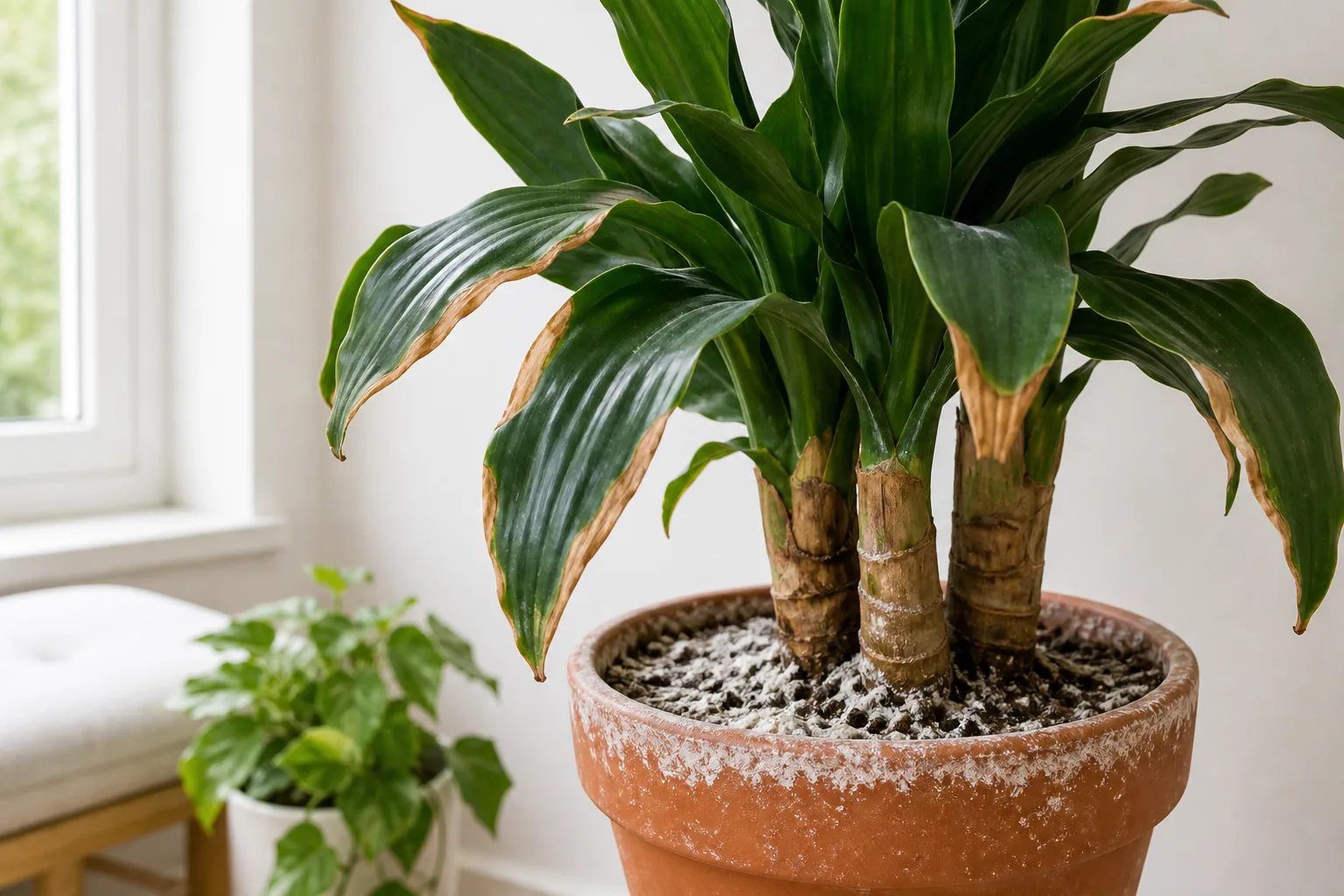
Salt Build Up on Janet Craig Dracaena: Causes, Checks & Fixes
This guide covers salt build-up on Janet Craig Dracaena. See also the general Salt Build-up guide, watering, and light pages for this plant.
Salt Build Up on Janet Craig Dracaena: Causes, Checks & Fixes
Quick answer
Salt build-up on Janet Craig Dracaena (Dracaena deremensis ‘Janet Craig’) shows as white crust on soil or pot rims plus tan crispy margins on broad dark-green strap leaves-usually from tap-water minerals, fertilizer salts, and fluoride accumulating in slow-transpiring office pots. First step: stop fertilizing, scrape surface crust, and flush the pot with plain low-fluoride water at two to three times pot volume.
Janet Craig is among the most fluoride-sensitive houseplants. Municipal water often carries fluorine at about 1 ppm; roots absorb it with every drink and it concentrates at leaf margins over months. Fertilizer salts and hard-water minerals add a second layer. In deep-shade offices the plant transpires slowly, so fewer natural flushes move salts through the mix-crust builds silently until tips brown.
This page covers fertilizer-salt crust and mineral accumulation. For fluoride-only tip burn without heavy crust, see brown tips on Janet Craig. For acute feed overdose, see fertilizer burn.
Salt build-up vs. brown tips on Janet Craig
Both problems share crispy strap-leaf margins on fluoride-sensitive Janet Craig, but they differ in scope and what you see in the pot.
| Signal | Salt build-up (this page) | Brown tips (fluoride focus) |
|---|---|---|
| Soil or pot | White crystalline crust, terra-cotta rim ring | May have light crust but diagnosis centers on water |
| Feed history | Regular fertilizer or hard tap water for months | Tap water alone can trigger tips |
| Leaf pattern | Tan margins, sometimes pale band above damage | Tip-first necrosis on firm green leaves |
| First fix | Stop feed, scrape crust, flush 2–3× pot volume | Switch water source, flush, trim tips |
Many Janet Craig keepers have both-fluoride from tap water and fertilizer salts in the same mix. The flush-and-water-change protocol fixes both; this guide emphasizes crust confirmation and leaching steps brown-tips does not repeat.
What salt build-up looks like on Janet Craig
White crust, pot rings, and margin necrosis
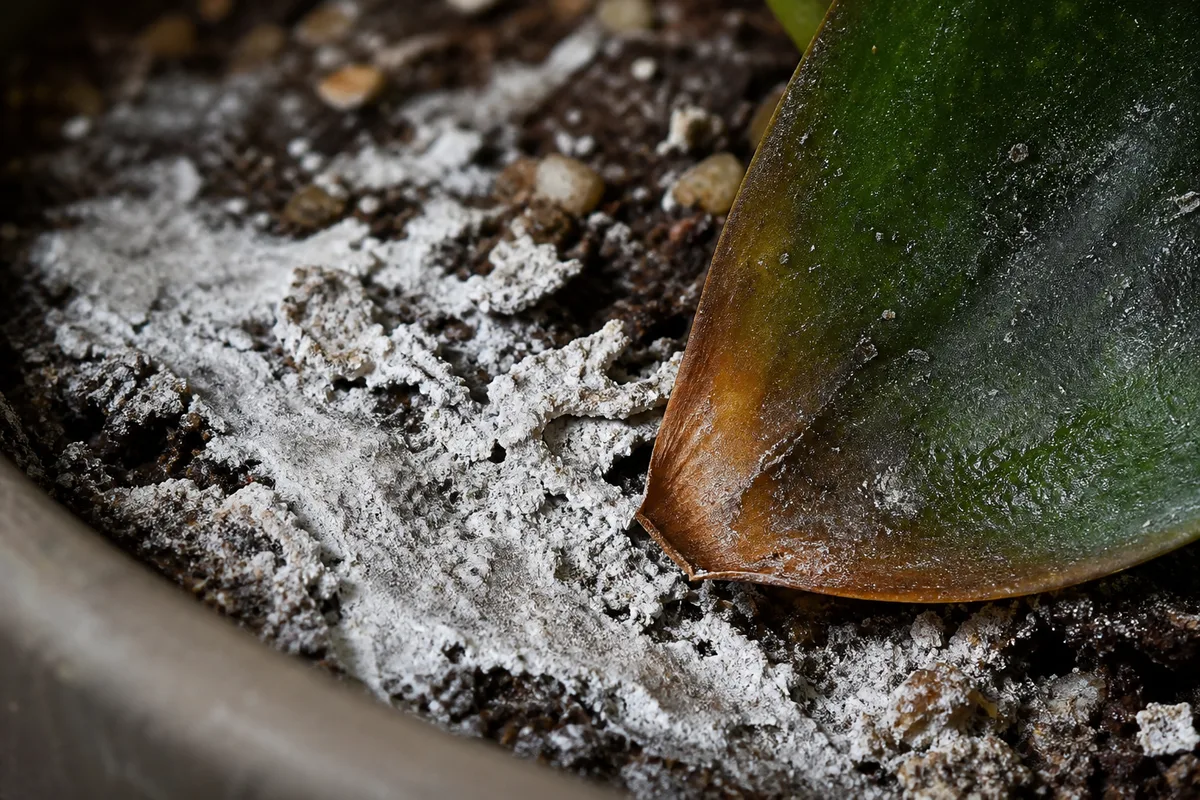
Salt Build-up symptoms on Janet Craig Dracaena - compare with healthy tissue on the same plant.
Typical patterns on Janet Craig strap foliage:
- White or yellowish crystalline crust on the soil surface, drainage hole, or saucer-a classic sign of soluble salt buildup
- White ring on terra-cotta pot exteriors where water evaporated and left mineral deposits behind
- Tan-to-brown crispy margins on otherwise firm, deep-green leaves-not soft yellow lower leaves from rot
- Pale yellow or tan band between brown damage and healthy green tissue-a hallmark of fluoride toxicity on Dracaena
- Browning that worsens after fertilizer even when you water on a reasonable schedule
- No mushiness, sour smell, or cane softening when salts alone are the driver
Janet Craig in fluorescent office light transpires slowly. Salt deposits concentrate at leaf tips and edges as water moves through the blade-the last points to dry. White crust forms when irrigation water evaporates from the top layer, leaving calcium and other minerals behind.
Lookalike symptoms to rule out
- Mealybugs - Waxy white clusters in leaf axils or on stems, often with sticky honeydew-not a uniform soil crust. See mealybugs on Janet Craig.
- Root rot - Soft cane, sour soil, yellow dropping leaves on a heavy wet pot; crust may be present but rot needs drainage fixes first. See root rot.
- Drought - Very light pot, dusty dry mix throughout, crispy tips without white crust or fertilizer history.
- Perlite on soil surface - White specks mixed into mix, not a returning crystalline layer after flush.
Why Janet Craig gets salt build-up
Low-light office biology and slow leaching
Janet Craig earns its lobby reputation because it tolerates dim interiors-but low light means slow transpiration and infrequent watering. That correct dry-down rhythm also means fewer deep rinses through the root zone. Without seasonal leaching, dissolved minerals from every tap drink and light feed stay in the mix and re-enter roots with the next watering.
In deep shade, expect watering only every 21 to 28 days or longer per the Janet Craig watering guide. A pot that drinks slowly can hold the same salt load for months while crust thickens on the surface. Bottom-watering without occasional top flushes can worsen top-layer concentration because evaporation leaves salts at the surface.
Fertilizer salts, hard water, and fluoride compounding
Three inputs stack on Janet Craig:
- Tap-water fluoride and minerals - Municipal fluoridation around 1 ppm accumulates in foliage over time on sensitive Dracaena. Hard water adds calcium and magnesium that crust on soil and pot rims.
- Fertilizer salts - Soluble salts from fertilizer concentrate when water evaporates. Janet Craig is a light feeder; excess nitrogen and potassium salts burn fine root hairs and show up as crispy margins even when watering seems correct.
- Potting media contributors - High-perlite mixes and superphosphate fertilizers can raise fluoride availability. Keep soil pH near 6.0–6.5 when repotting if fluoride toxicity persists.
Fluoride and fertilizer salts share the same recovery path-flush, change water, pause feed-but salt build-up adds visible crust and feed-history confirmation that tip-only fluoride pages treat lightly.
How to confirm the cause
Work through these checks before repotting or stacking treatments:
- Crust test - Scratch the soil surface. White mineral deposits that return after the mix dries confirm accumulation-not perlite flecks alone.
- Pot rim - Terra-cotta or ceramic showing a white band at the soil line supports evaporation concentration.
- Water source - Months of municipal tap or softened water plus any fertilizer strongly support salt build-up. Softened water carries sodium that damages Dracaena roots-draw water before the softener line or use filtered water.
- Feed history - Regular monthly feeding through winter or full-strength doses on a slow-growing office plant accelerates crust.
- Pot weight and half-depth moisture - Firm cane, neutral-smelling soil, and dry tips with crust point to foliar salt injury. Heavy wet pot with yellow lower leaves needs rot assessment first.
- Crown new growth - Cleanest new leaves at the crown tell you whether the current water and flush regimen is working.
Cause comparison at a glance
| Pattern | Salt build-up | Rot | Drought | Mealybugs |
|---|---|---|---|---|
| Soil crust | White crystalline layer | None; wet surface | None | None |
| Pot feel | Normal dry-down | Heavy, stays wet | Very light | Variable |
| Cane | Firm | Soft at base | Firm | Firm |
| Leaf tissue | Dry crispy margins | Yellow soft lower leaves | Crispy, droopy | Waxy clusters |
First fix for Janet Craig
Stop fertilizing immediately. Then leach salts:
- Scrape white crust from the top inch of soil-remove the salt layer, not a deep root excavation.
- Move the pot to a sink or tub. Run lukewarm plain low-fluoride water through the mix until it flows freely from drainage holes-use roughly two to three times the pot volume.
- Let the pot drain completely. Empty the saucer; do not let the plant sit in flush runoff or salts wash back in.
- Repeat the flush once after the first drain finishes.
- Switch ongoing water to rainwater, distilled, reverse-osmosis, or filtered water. Letting tap sit overnight removes chlorine but not fluoride-NC Extension recommends filtered or rain water when tap causes browning on Dracaena.
Trim existing dead margins with clean scissors for appearance only-trimmed tissue will not regrow. Make one major correction at a time: flush and water change before repotting unless crust permeates the entire root ball.
Avoid superphosphate fertilizers when you resume feeding. See the Janet Craig fertilizer guide for half-strength timing.
Step-by-step recovery
- Week 1: Double flush; stop all fertilizer; switch water source; scrape any returning surface crust.
- Weeks 2–8: Water only when the top half of mix is dry for your light level-do not increase frequency to “wash” salts; wet soil in low light risks rot.
- If crust returns within weeks: Repot into fresh well-draining mix without excess perlite if fluoride is suspected; use coarse bark or pumice for drainage instead.
- Resume feeding: Half-strength liquid fertilizer once or twice during active warm months only-never on a stressed plant still showing spread margin burn.
- Maintenance leach: Deep rinse every four to six months in hard-water areas, or every two to three months if you must keep using tap water temporarily.
If two flushes fail: repot or water-source trial?
Use this decision table after you complete the first double flush.
| What you see after 2-4 weeks | Most likely issue | Next move |
|---|---|---|
| New crust returns quickly, pot rim re-whitens, old mix smells neutral | Salt load is still high in old mix | Repot into fresh mix, then continue low-fluoride water |
| Crust is minimal but new tips still brown | Fluoride injury from water source | Keep mix, switch to rain/RO/distilled for 4-8 weeks |
| Pot stays heavy and cane softens | Rot overlap, not simple salt build-up | Pause leaching, inspect roots now, follow root-rot protocol |
| New crown leaves emerge clean | Corrected | Continue light feed and scheduled leaching |
Recovery timeline
Existing brown margins stay brown permanently. New crown leaves should emerge with clean edges within four to eight weeks after water change and flushing if salts drove the damage. Heavy crust cases needing repot may need a full growing season before consistent clean tips. Chronic municipal fluoride may require permanent filtered water-tips can continue slowly browning on tap alone even after one flush.
Judge success by crown growth, not old leaves. A cleared pot rim and soil surface without returning white film within two weeks after flush confirms you removed the worst surface load.
What not to do
- Do not increase watering to leach tips from above-soggy mix in a dark office causes rot faster than salt crust harms roots cosmetically.
- Do not apply more fertilizer to green up burned margins-salts worsen burn.
- Do not confuse chalky salt crust with mealybug wax or perlite on the soil surface.
- Do not leach into a full saucer and leave the plant standing in runoff.
- Do not stack repotting, heavy pruning, and fertilizer on the same day.
- Keep Janet Craig away from pets when handling flush water; Dracaena is toxic to cats and dogs.
How to prevent salt build-up next time
- Make low-fluoride water the default-rainwater, RO, distilled, or filtered.
- Fertilize lightly at half strength during active growth only; skip feed in dim winter offices.
- Leach seasonally with plain water at two to three times pot volume every four to six months.
- Match dry-down to light-deep shade needs longer intervals; see watering.
- Inspect weekly during routine dusting for returning rim rings or soil crust.
- Repot every two to three years to remove bound salts in old mix when crust becomes chronic.
In office installations, decorative cache pots can hide standing runoff. After each flush or routine watering, lift the nursery pot and empty any trapped water so salts are not reabsorbed from the bottom. If your building uses softened water, avoid that line for irrigation; softened water sodium can injure houseplants even when fluoride is low.
Practical checks
Salt crust alone is rarely an emergency. Treat same-day if cane tissue softens, soil smells sour, or yellowing spreads on a heavy wet pot-that is rot overlap, not salt alone. Escalate if growth stalls completely or white deposits cover most of the soil surface despite two flushes.
Best inspection order: crown new leaves → soil crust and pot rim → water source and feed history → pot weight → half-depth moisture → roots only if wet decline persists.
When to worry - wet mix with soft cane or sour soil
White crust plus firm cane and normal dry-down fits salt build-up. White crust plus soft base, sour smell, and perpetually heavy pot fits root failure-flush will not fix that. Pause watering, inspect roots the same day, and follow root rot guidance before another mineral leach.
If new crown leaves keep browning after two flushes and a four-week filtered-water trial, repot into fresh mix or test an alternative water source before assuming another diagnosis.
Related Janet Craig guides
- Janet Craig overview - care hub
- Watering - dry-down by light, fluoride sensitivity
- Fertilizer - half-strength timing
- Brown tips - fluoride-focused tip burn
- Fertilizer burn - acute feed overdose
- Mealybugs - waxy white lookalike
- Root rot - soft cane on wet mix
Conclusion
Use this escalation path if symptoms persist:
- After one double flush, keep low-fluoride water and watch crown leaves for 4-8 weeks.
- If crust returns fast, repot to reset the salt load in old media.
- If there is no crust but tips keep browning, treat it as ongoing fluoride exposure and stay on rain/RO/distilled water.
- If cane softens or soil stays sour and wet, switch to a root-rot diagnosis instead of more leaching.
This keeps salt-build-up focused on visible mineral accumulation while handing off correctly to fluoride-only or rot pathways when needed.