Fertilizer Burn on Janet Craig Dracaena: Causes, Checks &
Quick answer
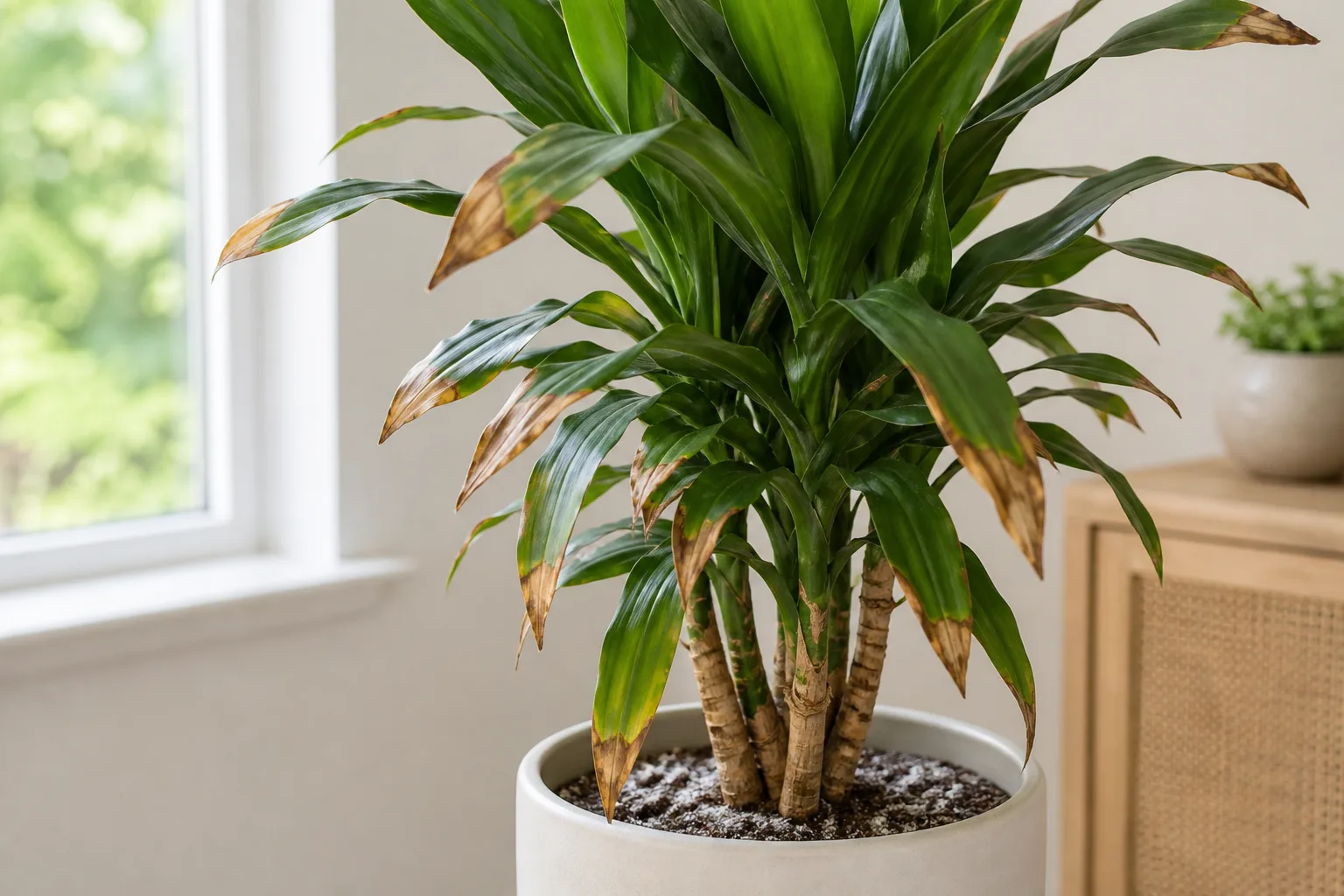
Fertilizer burn on Janet Craig Dracaena shows as crisp brown tips and margins, often with white salt crust on the soil-usually one to three weeks after too much or too-frequent feeding. First step: stop fertilizer and flush the pot two to three times with plain water until it drains freely, then pause feeding four to six weeks.
Fertilizer Burn on Janet Craig Dracaena: Causes, Checks & Fixes
This guide covers fertilizer burn on Janet Craig Dracaena. See also the general Fertilizer Burn guide, watering, and light pages for this plant.
Fertilizer Burn on Janet Craig Dracaena: Causes, Checks & Fixes
Quick answer
Fertilizer burn on Janet Craig Dracaena (Dracaena deremensis ‘Janet Craig’) happens when soluble salts from overfeeding, full-strength doses, winter feeding, or slow-release granule shock accumulate in the root zone. The salts pull water away from roots through osmotic stress-so leaves can wilt even when the mix feels moist. On this slow-growing low-light dracaena, damage usually shows as crisp brown tips and margins, sometimes with white or yellowish crust on the soil surface or pot rim, often one to three weeks after a feed.
First step: stop all fertilizer and flush the pot. Move it to a sink, scrape visible salt crust from the soil surface, then run plain room-temperature water through the mix two to three times until water drains freely from the bottom. Discard saucer runoff. Pause feeding for four to six weeks and judge recovery by clean new crown leaves-not by old burned tissue greening up.
For full feeding schedules and product choices, see the Janet Craig fertilizer guide. For chronic tap-water tip burn without a recent feed, see brown tips.
What fertilizer burn looks like on Janet Craig
Janet Craig carries broad, dark-green strap leaves on upright canes. Fertilizer injury usually appears on the newest foliage or leaf margins first-not as random spots across old lower leaves.
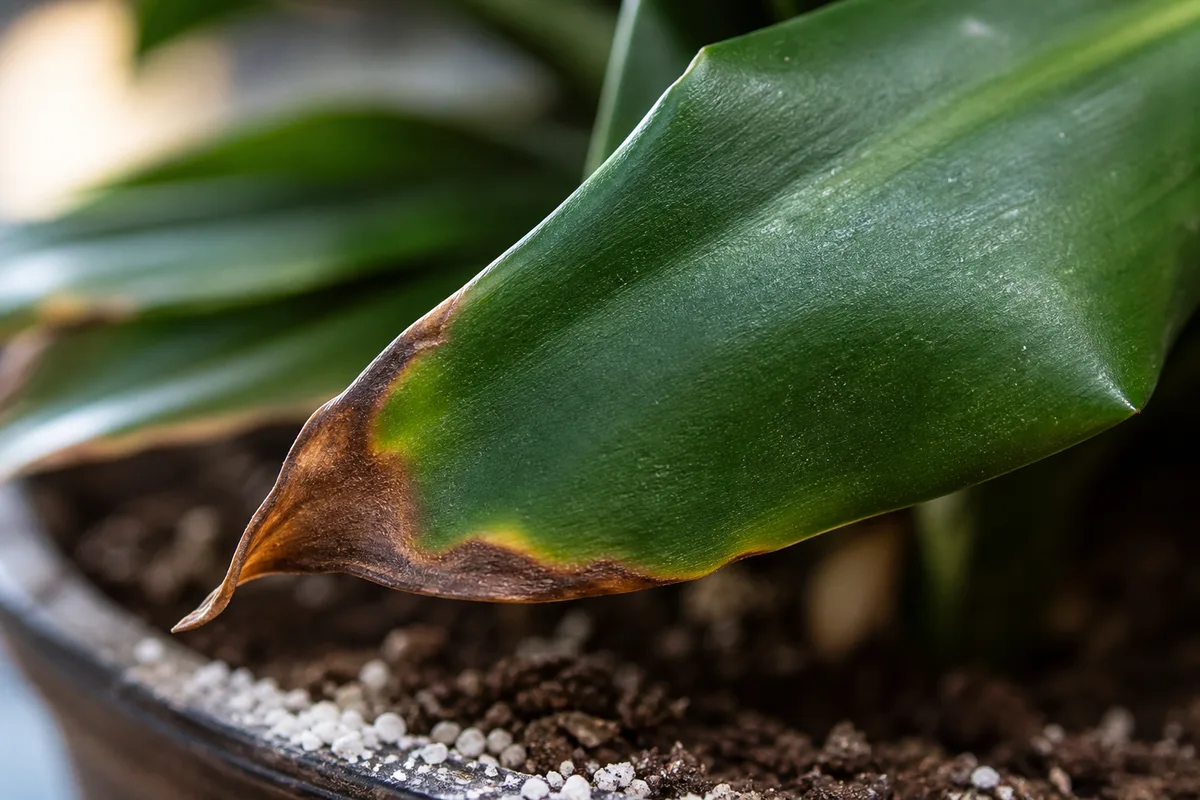
Fertilizer Burn symptoms on Janet Craig Dracaena - compare with healthy tissue on the same plant.
Crisp margins and tips after feeding:
- Tan-to-brown dead tissue at tips or along leaf edges, often appearing within one to three weeks of a liquid feed, slow-release application, or double-feeding mistake
- Affected tissue feels dry and papery while the rest of the leaf stays deep green and firm-unlike yellow soft lower leaves from overwatering
- Smallest unfurling crown leaves may show burnt edges when salts were high at the root surface
White or yellowish salt crust:
- Crystalline residue on the soil surface, pot rim, or drainage holes-especially after bottom watering or when fertilizer was applied to dry soil (white crust on potting media)
- Crust plus recent feeding history strongly points to soluble salt accumulation, not fluoride alone
Wilt on moist soil:
- Leaves droop or drop despite wet mix because damaged roots cannot take up water effectively-wilting despite moist soil from osmotic stress mimics drought
- Pot may feel heavy while foliage looks thirsty; this pattern needs flushing and a feed pause, not more fertilizer
What foliar contact spotting is not:
- Splashing fertilizer solution on leaves can cause localized spotting where droplets sat-but root-zone salt burn from overfeeding is the main “fertilizer burn” problem on Janet Craig. Margin necrosis across multiple crown leaves after a soil feed is almost always salt stress, not splash marks.
Why Janet Craig gets fertilizer burn
Janet Craig is a slow-growing light feeder widely used in low-light offices. That combination makes salt accumulation more likely than on fast-growing tropicals.
Slow transpiration traps salts. In deep shade, Janet Craig transpires slowly and the top half of the mix may stay moist for weeks. Infrequent watering leaches less fertilizer from the root zone, so salts from monthly full-strength feeds or winter applications linger and concentrate.
Common feeding mistakes:
- Monthly full-strength liquid on a plant pushing one or two leaves all summer-Clemson HGIC recommends half-strength balanced liquid once a month during active growth only, not full label rate on container specimens
- Winter feeding when metabolic demand drops-unused nutrients stack as salts in soil that stays wet longer in dim rooms
- Fertilizer on dry soil-salts contact roots directly and burn tissue at the root surface before water dilutes them
- Slow-release granules plus liquid without adjusting schedule-double salt load in a pot that has not been flushed in years
- Superphosphate or high-phosphorus formulas-Janet Craig is very sensitive to fluoride; superphosphate often carries high fluorine that causes margin necrosis overlapping with salt burn
Water quality compounds the load. Hard or fluoridated tap water adds minerals with every watering. Conservative feeding plus never flushing can produce tip burn that looks like fertilizer injury even when dose was modest-see salt build-up when crust persists without a clear feed trigger.
Fertilizer burn vs. brown tips vs. salt build-up vs. overwatering
Use this table before you flush or change water-wrong diagnosis wastes weeks.
| Pattern | Timing | Soil / pot clues | Leaf pattern | First action |
|---|---|---|---|---|
| Fertilizer salt burn | One to three weeks after feed | White crust possible; pot heavy if overwatered too | Crisp margins on newer leaves; wilt on moist soil | Stop feed; flush 2–3×; pause 4–6 weeks |
| Fluoride brown tips | Months of tap watering; no feed link | No white crust; normal dry-down | Tan tips/margins; firm green leaf body | Switch to filtered/distilled water; flush; see brown tips |
| Chronic salt build-up | Gradual over many months | Heavy white crust; slow drainage | Tip/margin burn; stunted new growth | Flush or repot; reduce feed frequency; see salt build-up |
| Overwatering / rot | Wet soil persists | Heavy pot; sour smell; soft cane | Yellow soft lower leaves; not just crisp margins | Stop watering; inspect roots; see overwatering |
Fluoride injury and fertilizer salt burn look similar on Janet Craig-brown dead tips and margins on otherwise green leaves. The differentiator is feeding history and crust: acute scorch after a feed plus white residue points to fertilizer; slow creep on months of municipal tap with no crust points to fluoride.
How to confirm the cause
Work through these checks in order. One honest feeding log beats guessing from leaf photos alone.
- Feeding history - When did you last fertilize? What product and strength? Full label rate, winter feed, or granules on top of liquid strongly support salt burn. No feed in three or more months with only tap water points to fluoride-see brown tips.
- Soil crust - Scrape the surface gently. White or yellowish crystals after feeding confirm soluble salts. No crust does not rule out burn, but it weakens the fertilizer diagnosis.
- Pot weight and moisture - Lift the pot. Heavy wet mix with wilted leaves fits osmotic root stress from salts. Heavy wet mix with yellow soft lower leaves fits overwatering first.
- Water source - Municipal tap, softened water, or filtered? Chronic fluoride load from tap can mimic burn; switching water helps both problems but flush timing differs if you also over-fed.
- Crown new growth - Are the smallest emerging leaves burnt at the edges? That often follows a recent salt spike at the root zone. Older leaves only with clean crown may be legacy fluoride damage.
- Product label - Check for superphosphate or high middle NPK number. Fluorine from those products adds margin burn on Dracaena even at “correct” rates.
Confirmed fertilizer burn when two or more align: recent feed, crisp margins on newer tissue, crust or timing match, and no sour soil or soft cane. Escalate to root assessment when wilt, sour smell, or spreading yellow on wet mix appears-that is rot territory, not cosmetic burn.
First fix for Janet Craig (flush and feed pause)
Stop fertilizing immediately. Do not “balance” burn with more nutrients, repotting, and pruning on the same day.
- Move the pot to a sink, tub, or outdoor spot where drainage is acceptable.
- Scrape visible white crust from the soil surface without damaging roots-remove up to half an inch of top mix if crust is thick.
- Water slowly with plain room-temperature water-filtered or distilled if fluoride has been an issue-until water runs freely from drainage holes. Let the pot drain completely.
- Repeat two to three times over 30 to 60 minutes, allowing full drainage between passes. Aim for roughly two to three pot volumes of water per pass (leach with clear water until it runs from the bottom).
- Discard all saucer runoff; do not let the plant stand in drained water.
- Pause all feeding for four to six weeks. Trim dead tips only for appearance-cosmetic; recovery is judged by new crown leaves.
Do not pour fertilizer onto dry soil during recovery. Match watering to light per the Janet Craig watering guide-allow the top half of mix to dry in bright indirect light, longer in deep office shade.
Step-by-step recovery
After the initial flush:
Week 1–2: Watch for stopped spread of margin necrosis on new unfurling leaves. Keep light stable; do not move to a brighter window and feed in the same week. Water with plain low-mineral water when the top half of mix is dry.
Week 3–4: Inspect for new crown leaves emerging without burnt edges. If crust returns on the soil surface, flush once more before considering any feed.
Week 4–6: If new growth is clean and the plant is firm, you may resume one half-strength balanced liquid feed during active spring or summer growth only-never on dry soil. Mark the date so you do not double-feed.
If damage was severe-heavy crust, wilt, or stunted new leaves for more than six weeks-consider repotting into fresh well-draining mix in spring, holding fertilizer four to six weeks after. See the fertilizer guide for post-repot feeding rules.
Recovery timeline
Old burned tip and margin tissue will not re-green. Success means clean new strap leaves from the crown within two to six weeks after flushing and stopping feed.
| Severity | What you see | Typical recovery |
|---|---|---|
| Mild cosmetic burn | Crisp tips on a few leaves; firm cane; no wilt | New clean crown leaves in 2–4 weeks |
| Moderate salt load | Widespread margin burn; light crust; no root smell | 4–6 weeks to stable new growth after double flush |
| Severe osmotic stress | Wilt on moist soil; soft new growth; heavy crust | 6–8+ weeks; may need repot; some leaves may not recover |
Worsening signs: spreading yellow on wet soil, soft cane, sour smell, or crown collapse-switch to root rot assessment, not repeated flushing alone.
What not to do
- Do not feed again hoping to “fix” yellowing-salts make injury worse.
- Do not apply full label strength after a flush; half strength once per month in active growth is the ceiling for Janet Craig.
- Do not fertilize dry soil-water with plain water first, feed another day if the plant is actively growing.
- Do not use superphosphate or bloom boosters on fluoride-sensitive Janet Craig.
- Do not mist leaves to fix salt burn-leaching happens through the root zone.
- Do not stack repotting, heavy pruning, and fertilizer in the same week on a stressed plant.
- Keep plants and runoff away from pets; Dracaena is toxic to cats and dogs, and concentrated fertilizer solution is not safe for ingestion.
How to prevent fertilizer burn next time
- Feed half-strength balanced liquid (10-10-10 or 20-20-20 diluted) once a month at most during spring and summer active growth-every six to eight weeks in low office light.
- Skip fertilizer entirely from late fall through winter for typical indoor Janet Craig plants.
- Flush the pot seasonally with plain water to leach accumulated salts-especially if you use tap water with minerals.
- Avoid superphosphate and high-phosphorus formulas; read labels before repurposing outdoor fertilizer indoors.
- Water onto moist soil only; never pour fertilizer concentrate onto dry roots.
- Match pot size to root mass and light-oversized pots in shade stay wet and trap salts longer. Baseline culture: Janet Craig overview.
Practical checks
Urgency check
Lower urgency: Cosmetic crisp margins after a known over-feed; firm cane; no wilt; soil smells normal.
Same-day attention: Wilt on moist soil after feeding, soft cane tissue, sour soil smell, or spreading yellow lower leaves on a heavy pot-these suggest root damage beyond tip burn. Inspect roots before another flush cycle.
Best inspection order
Crown new leaves → feeding history and product label → soil crust → pot weight → water source → roots only if wet decline persists.
Related Janet Craig guides
- Janet Craig fertilizer guide - When, how much, and mistakes to avoid
- Brown tips - Fluoride from tap water lookalike
- Salt build-up - Chronic crust without acute feed
- Watering - Dry-down rhythm and pot weight
- Overview - Light, soil, and office placement