Exposed Roots on Janet Craig Dracaena: Causes, Checks &
Quick answer
Exposed roots on Janet Craig Dracaena mean pale feeders sit bare at the pot rim or poke through drainage holes - not normal cane anatomy. Mix erosion, root binding, overwatering washout, or post-repot settling usually caused it. First step: slide the plant partly out and feel root texture; top-dress firm pale roots, repot when circling roots displaced most soil, unpot immediately if tissue is mushy with sour wet mix.
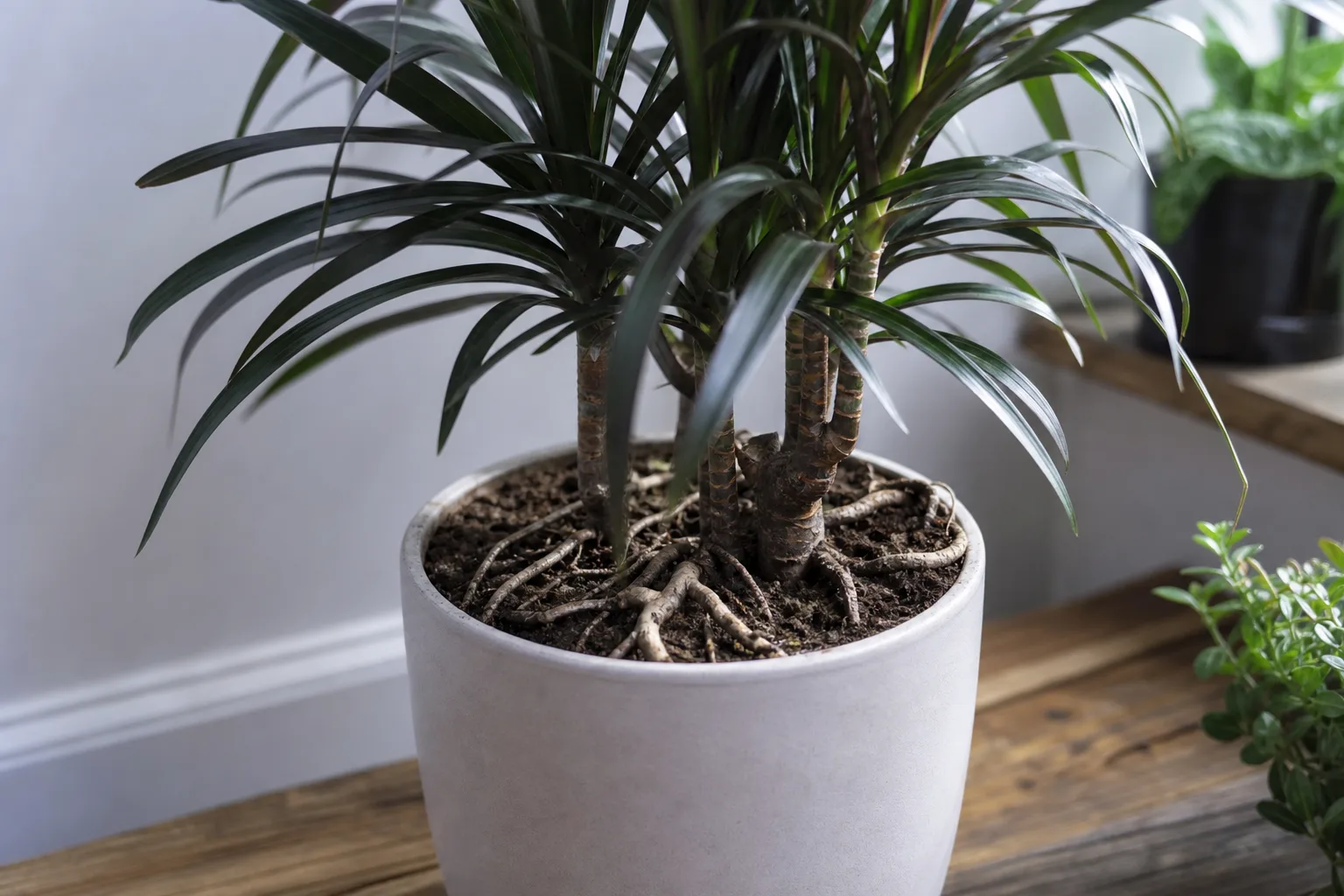
Exposed Roots on Janet Craig Dracaena: Causes, Checks & Fixes
This guide covers exposed roots on Janet Craig Dracaena. See also the general Exposed Roots guide, watering, and light pages for this plant.
Exposed Roots on Janet Craig Dracaena: Causes, Checks & Fixes
Quick answer
Exposed roots on Janet Craig Dracaena (Dracaena fragrans ‘Janet Craig’, widely sold as Dracaena deremensis ‘Janet Craig’) mean underground feeders sit visible at the pot rim, through drainage holes, or above where mix used to be - not the thick cane above soil, which does not produce pothos-style aerial roots.
The usual causes are mix erosion and settling, root binding displacing soil, chronic overwatering washout as peat collapses, or post-repot settling when fresh top-dress was skipped. Slow office growth can hide binding until surface feeders dry out or white roots crowd drain holes.
First step: slide the plant partly out and feel root texture before changing anything. Firm pale or tan roots at the edge get a light top-dress of dry airy mix. A solid circling root ball with little soil left needs repotting one to two inches wider per the Janet Craig repotting guide. Mushy brown tissue with sour wet mix needs same-day unpotting - see root rot and damaged roots.
Exposed roots vs. root bound on Janet Craig
These pages overlap but answer different questions.
Exposed roots = feeders visible above the current soil line or at drain holes because mix left, settled, washed away, or roots pushed soil aside. The plant may still be manageable with top-dress or a modest repot.
Root bound = the root mass has consumed most pot volume - circling densely, channeling water, stalling crown growth. Severe binding often shows as exposed roots, but the fix is usually full repot, not surface cover alone. Full crowding diagnostics live on root bound on Janet Craig.
| You are mostly dealing with… | Visible pattern | Root feel | Pot behavior | First fix |
|---|---|---|---|---|
| Surface erosion / settling | Pale roots at rim; mix sunk below cane base | Firm white or tan | Light; dries evenly | Top-dress 3–5 cm fresh mix |
| Root binding | White roots through holes; pot-shaped ball | Firm; dense circling | Fast channeling dry-down | Repot one size up in spring |
| Overwatering washout / rot | Bare roots + mush at soil line | Brown, slimy sections | Heavy, wet, sour smell | Stop water; unpot; trim rot |
| Post-repot gap | Roots high right after transplant | Firm if healthy | Normal weight | Top-dress to prior soil line |
What exposed roots look like on Janet Craig
Janet Craig is an upright cane plant with broad dark-green strap leaves - no normal aerial roots along the stem. When owners say “exposed roots,” they mean the root zone at the pot edge, not cane anatomy.
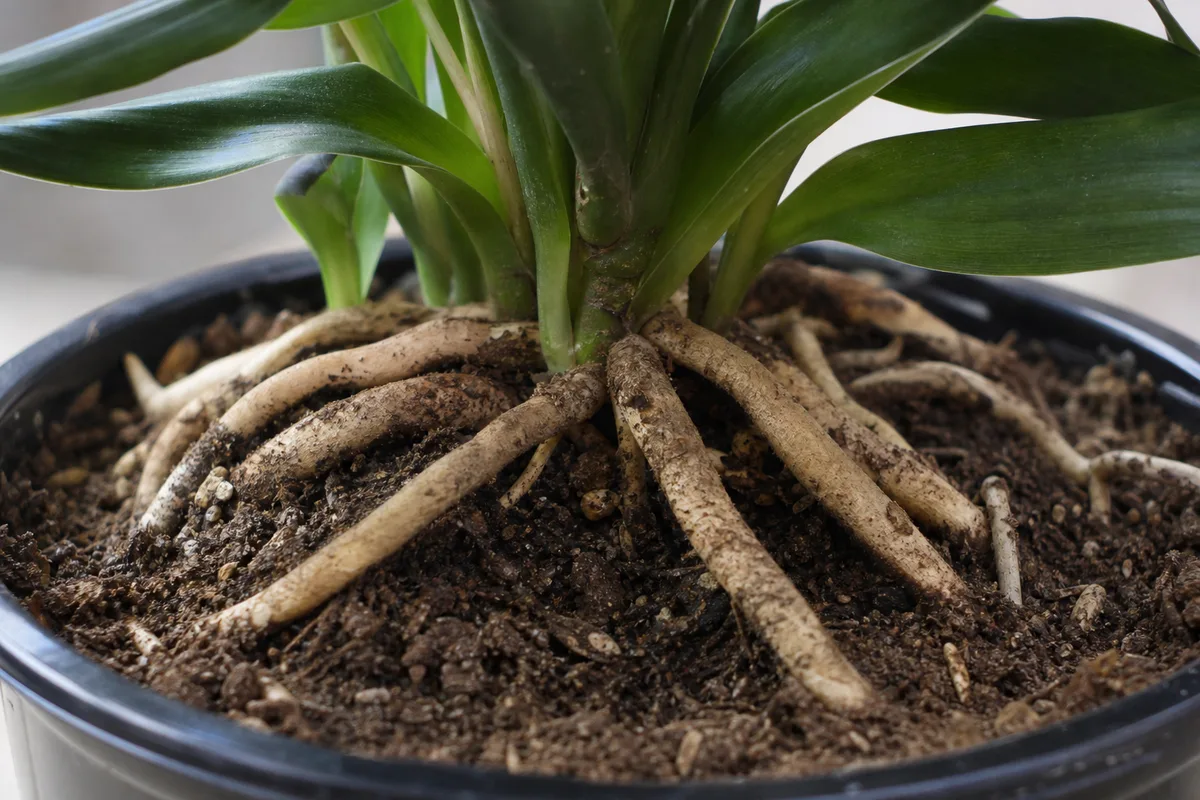
Exposed Roots symptoms on Janet Craig Dracaena - compare with healthy tissue on the same plant.
Firm pale feeders at the soil rim. White or tan root tips circle the inside wall or sit in a shallow trench where peat eroded. The cane stays firm at the soil line. Mix may look sunken 1–3 cm below the plastic rim after seasons of top-watering. This is common on plants that have not been repotted in two or more years.
Roots stiffening through drainage holes. NC State Extension advises repotting Janet Craig when roots emerge from drainage holes or the plant starts to lift out of the pot - binding has outpaced available mix. Roots feel firm, not slimy.
Washout hollow around the cane base. After repeated heavy watering in a shallow office pot, fine particles wash toward holes and leave a dry gap. Upper roots desiccate in air while the center may still stay wet in low light - a pattern that overlaps poor drainage and overwatering.
Unhealthy exposure after rot. Brown, translucent, or mushy roots at the surface; sour smell on lift; yellow lower leaves on heavy wet mix while feeders sit bare because failed substrate collapsed. Clemson HGIC notes root rot on dracaenas follows soil that does not drain quickly or overly frequent watering.
Post-repot settling. Fresh transplant without top-dress leaves feeders sitting higher than before - normal for a week if tissue is firm. Add mix to restore the previous soil line rather than burying the cane deeper.
Why Janet Craig roots become exposed
Slow growth masking binding in office low light
Janet Craig adds height slowly - often only a few inches per year indoors - so the same pot can look “fine” for two to three seasons while roots quietly fill the volume. NC State describes Janet Craig as suited to deep shade with slow transpiration, which means wet cores linger while you water on a conservative rhythm. Binding and erosion progress unnoticed until drain-hole roots appear or rim feeders dry out.
Mix erosion and peat breakdown
Peat- and coir-based mixes compress and break down over two to three years. Perlite floats toward drain holes when you water from above. The result is a sunken surface, exposed upper roots, and sometimes a hydrophobic dry rim around a still-damp center - see dry hydrophobic soil when water races down the sides.
Root binding displacing soil
As white roots circle the pot wall, they push soil aside until only a thin layer covers the mass. Water runs through without hydrating the ball - the pot feels light again within hours. That is binding showing as exposure, not just evaporation at the surface.
Chronic overwatering collapsing substrate
In dim offices, growers sometimes compensate for droopy strap leaves with extra water while transpiration is low. Anaerobic wet mix rots fine roots; repeated soaking washes away what’s left. Bare mushy tissue at the soil line with a heavy pot is rot washout - opposite fix from firm erosion.
How to confirm the cause
Work through these checks before repotting, flooding, or stacking treatments:
- Location - Rim or drain-hole roots only (not cane tissue). Post-repot high roots within two weeks of transplant?
- Texture - Firm white or tan vs. brown mush that slips off when touched.
- Pot weight and smell - Light pot with firm bare roots suggests erosion or binding. Heavy wet pot with sour odor suggests rot.
- Dry-down pattern - Fast channeling after watering points to binding or compacted mix. Surface dry while center wet fits office low-light overwatering.
- Cane firmness - Squeeze at the soil line. Firm cane with dry rim roots ≠ soft mushy base on wet mix.
- Crown growth - No new top leaves through a full warm season plus drain-hole roots strongly supports binding - see slow growth.
- Repot history - Years without upgrade vs. fresh repot without top-dress.
Confirmation decision table
| Firm roots at rim only | Mix sunk; cane firm; no sour smell | Top-dress | | Firm roots through holes + pot-shaped ball | Water channels; stalled crown | Repot spring, one size up | | Mushy roots + wet heavy pot | Soft cane possible; yellow on wet mix | Stop water; unpot same day | | High roots 1–2 weeks after repot | Firm tissue; no rot smell | Top-dress to prior line |
First fix for Janet Craig (by likely cause)
Slide the plant partly out and classify root texture before any other change - one diagnostic move, not repot plus prune plus fertilizer the same day.
For firm pale roots at the soil surface (erosion or settling): gently top-dress with fresh dry airy mix - commercial indoor soil with extra perlite or bark - restoring cover to 3–5 cm without burying the cane deeper than it grew before. Water once lightly to settle, then return to dry-down watering when the top half of mix is dry.
For circling firm roots through drain holes with little soil in the ball: repot in spring or early summer into a container only one to two inches wider with drainage holes and fresh well-draining blend. Tease outer circling roots; keep the crown at the same depth. Follow the step-by-step repotting guide.
For mushy exposed roots on sour wet mix: stop watering, unpot, trim brown tissue back to firm white or tan roots, air-dry cuts, and repot into fresh mix - not a top-dress over rot. Escalate using root rot and damaged roots workflows.
Do not jump to an oversized pot when only the surface eroded - extra wet volume around slow Janet Craig roots invites the rot that exposes feeders in the first place.
Recovery timeline
Firm roots covered before they desiccate often stabilize within a few days once mix is reset and watering follows dry-down rhythm. Top-dress for erosion may show new firm crown leaves within three to six weeks in warm bright indirect light - slower than pothos, normal for this species.
Repot for binding commonly brings mild limpness one to two weeks, then steady top growth within four to eight weeks when roots colonize fresh mix. Rot-trimmed plants need longer - judge by firm new crown leaves, not re-greening old strap margins.
Crispy dried feeder tips rarely regrow; success means stable root color, normal pot weight after watering, and clean new foliage at the crown.
What not to do
Do not repot into a much larger pot when only rim mix eroded - top-dress first. Do not cover mushy rot without trimming. Do not keep watering because leaves droop when soil is already wet and sour. Do not bury the cane deeper to hide bare roots - stem burial invites basal rot on dracaenas. Do not stack repotting, heavy pruning, and fertilizer on one day on a stressed plant.
Wear gloves when handling cut tissue; Dracaena is toxic to cats and dogs if chewed. Keep discarded mix and trimmings away from pets during repot or top-dress work.
How to prevent exposed roots next time
Lift and inspect every two to three years - check drain holes and soil level against the rim. Top-dress when mix settles before feeders dry in air. Repot on signals, not calendar autopilot: roots through holes, lift-out resistance, or a full warm season without crown growth.
Water at the soil line with controlled flow so perlite does not wash away; allow the top half of mix to dry between waterings in typical indoor placements. Use pots with drainage holes and empty saucers - cachepots without drainage mimic washout and rot. Match pot size to root mass: one size up per repot, not a dramatic jump.
For fluoride-sensitive Janet Craig, filtered or non-fluoridated water reduces tip burn but does not replace substrate maintenance - see brown tips when margins fail separately from root exposure.
Practical checks
Urgency check
Same day: mushy bare roots, soft cane at soil line, sour smell on heavy wet mix, or yellow leaves spreading while mix stays saturated.
Schedule soon (spring preferred): firm roots through drain holes, pot-shaped root ball, water channeling - binding, not emergency if cane is firm.
Lower urgency: slight rim erosion on firm plant; top-dress before the next warm growth push.
Best inspection order
Drain holes and soil rim → pot weight → half-depth moisture skewer → cane squeeze at soil line → partial unpot for texture → full unpot only if mushy, sour, or wet decline persists.
When to worry
Treat as urgent when bare roots are black and slimy, the cane softens at the soil line, or leaves yellow in clusters on a heavy wet pot - that is rot overlap, not cosmetic erosion.
Stable firm exposure on an upright cane in winter can often wait for top-dress or spring repot if you restore cover before feeders desiccate. Binding through holes on a firm plant is a planning signal, not a panic repot in cold dim conditions unless drainage is fully blocked.
Related Janet Craig guides
- Janet Craig overview - care hub and troubleshooting index
- Repotting - when to upgrade, mix, and step-by-step procedure
- Watering - dry-down by light level
- Root bound - severe crowding diagnostics
- Damaged roots - mechanical vs. rot damage
- Poor drainage - when washout follows blocked holes or cachepots
Conclusion
Exposed roots on Janet Craig Dracaena usually mean substrate loss or crowding around the cane base - not a mystery of root anatomy. Confirm location and texture, top-dress firm rim roots, repot when binding displaced mix, and unpot immediately when mush and sour wet mix say rot. Slow office growth makes erosion easy to miss; a twice-yearly rim check costs less than rescuing a cane from collapsed wet substrate.