Root Bound on Janet Craig Dracaena: Causes, Checks & Fixes
Quick answer
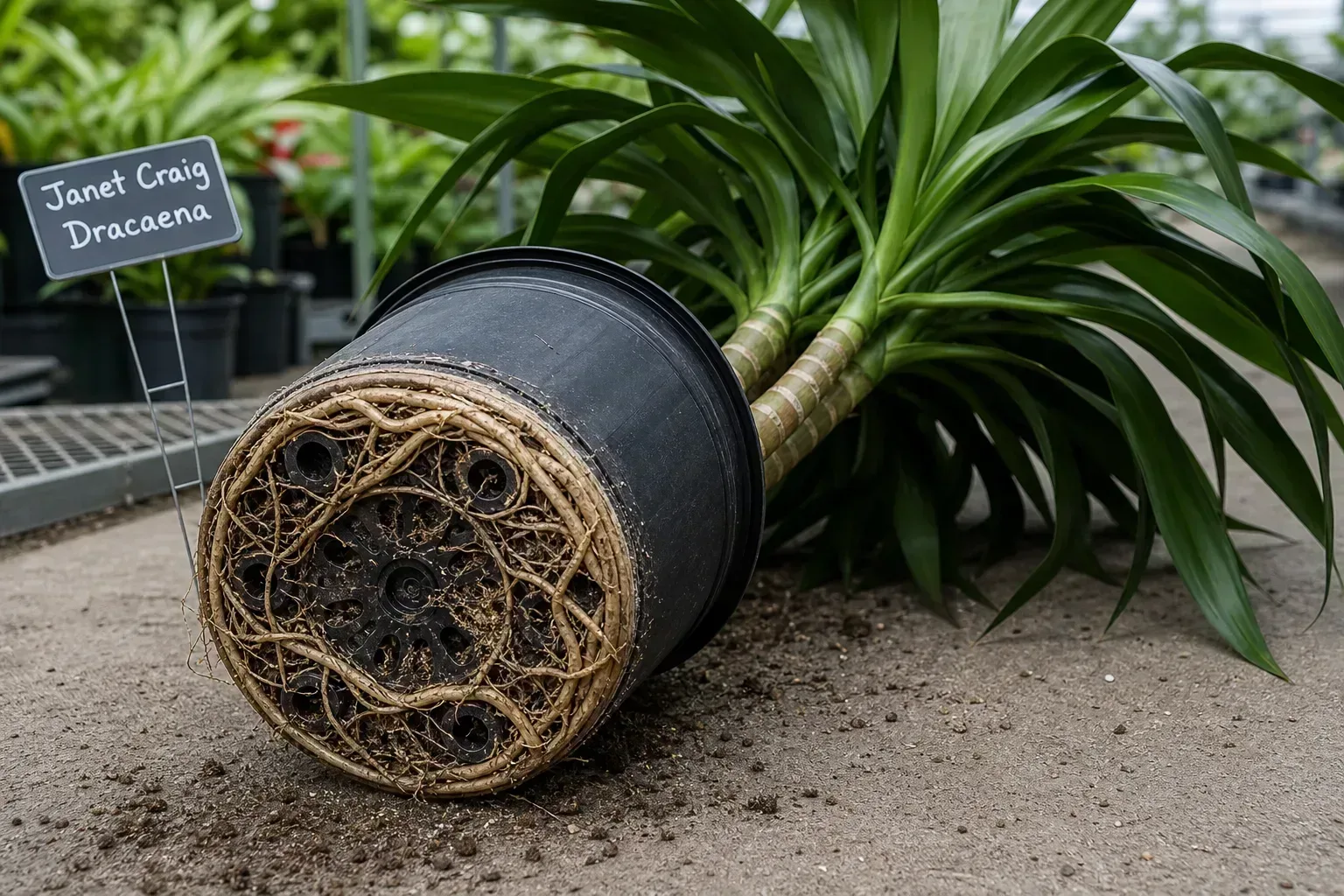
A root-bound Janet Craig Dracaena has circling roots filling the pot - after years without repot, water channels through without wetting the mass and crown growth stalls. First step: slide the plant out and confirm a pot-shaped root ball with minimal visible mix; if binding is severe, repot in spring one to two inches wider using the full procedure in the Janet Craig repotting guide.
Root Bound on Janet Craig Dracaena: Causes, Checks & Fixes
This guide covers root bound on Janet Craig Dracaena. See also the general Root Bound guide, watering, and light pages for this plant.
Root Bound on Janet Craig Dracaena: Causes, Checks & Fixes
Quick answer
A root-bound Janet Craig Dracaena has circling roots filling the pot - after years without repot, water channels through without wetting the mass and crown growth stalls. First step: slide the plant out and confirm a pot-shaped root ball with minimal visible mix; if binding is severe, repot in spring one to two inches wider using the full procedure in the Janet Craig repotting guide.
Janet Craig (Dracaena fragrans ‘Janet Craig’) grows slowly indoors and tolerates the same pot longer than fast herbs - often two to three years between upgrades. Severe binding becomes a problem when there is no soil left to hold moisture and roots cannot support new crown growth, not merely because roots touch the pot walls.
Why Janet Craig gets root bound
Slow vertical growth keeps Janet Craig in the same container for years. Office specimens may sit in a nursery pot for two or three seasons before roots demand more space - a pace that matches NC State Extension guidance to repot slow growers every two to three years when signals appear, not on a rigid calendar.
Fine roots outpace available mix volume. Janet Craig spreads through a relatively shallow, dense root mat around the cane base. When that mat displaces soil, water runs through channels without hydrating the center - the pot feels oddly light within hours even though leaves still look thirsty. That uneven dry-down is an early binding signal before roots exit drainage holes.
Thick cane hides crowding. The architectural stem stays firm while roots circle below. Pot weight and dry-down pattern change before leaf margins show stress - unlike fluoride tip burn, which appears on foliage while roots may still be healthy. Binding is a root-zone problem that masquerades as watering inconsistency.
Single-cane plants lack offset relief. Without pups sharing the pot, one Janet Craig consumes the entire root volume alone. A floor plant that looked comfortable in a 25 cm container three years ago may be severely bound once the crown stops pushing new leaves.
What root bound looks like on Janet Craig
Signs that crowding - not disease - is limiting the plant:
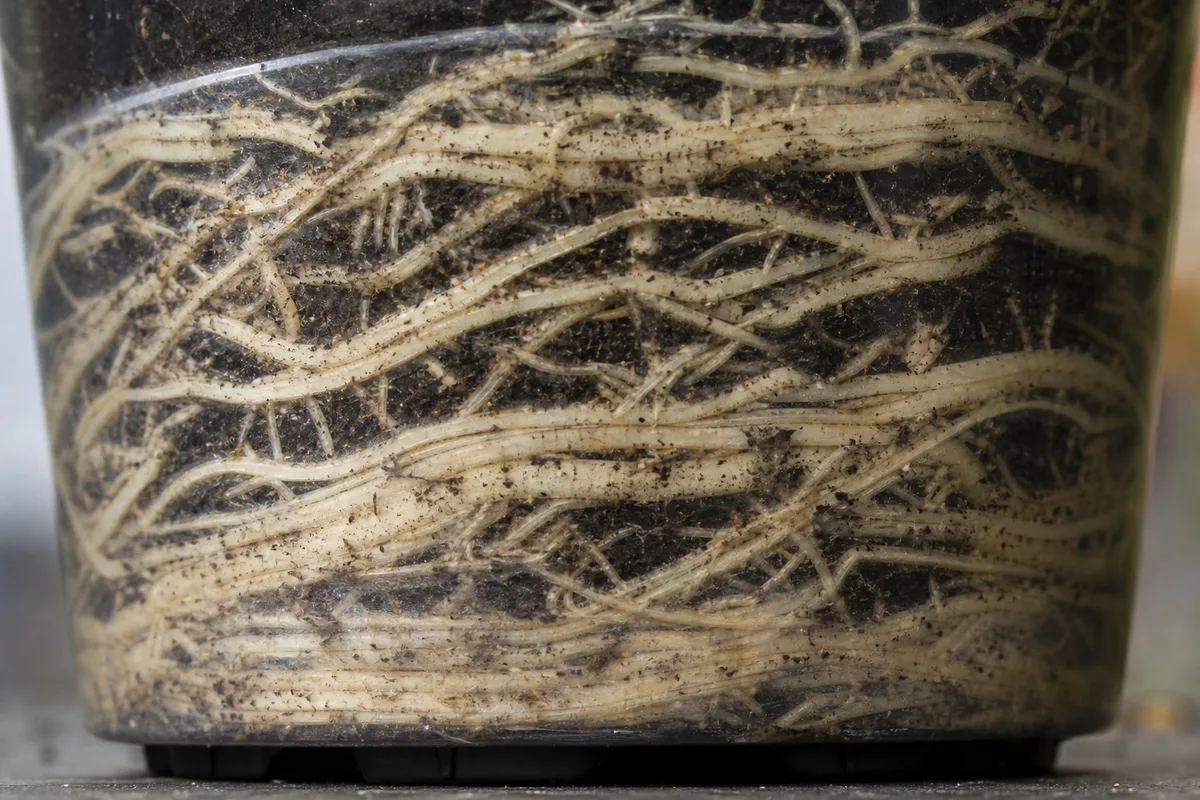
Root Bound symptoms on Janet Craig Dracaena - compare with healthy tissue on the same plant.
- Roots visible at drainage holes or circling when you slide the plant partway out
- Water runs straight through to the saucer seconds after pouring, without wetting the full mass
- Top half of mix dries fast while the center stays damp, or the reverse - uneven moisture layers
- No new crown leaves through an entire warm season despite stable light and appropriate watering rhythm
- Pot-shaped root ball on unpot with little loose mix visible on the sides
- Plant topples easily because foliage mass outweighs the root anchor
- Growth stalls even in brighter indirect light
Healthy slight crowding shows slow but steady occasional crown leaves, firm cane, and soil that still dries on a normal multi-week indoor rhythm in low light. Severe binding adds rapid channeling dry-down and a full warm season without new top growth.
Root bound vs. compacted mix vs. overwatering vs. fluoride tips
| Signal | Root bound | Compacted degraded mix | Overwatering | Fluoride tip burn |
|---|---|---|---|---|
| Pot weight after watering | Light again within hours | Light again within hours | Stays heavy for weeks | Normal for light level |
| Root appearance on unpot | Dense circling mat, firm roots | Roots OK, mix like brick | Mushy brown roots possible | Firm roots, salt crust on surface |
| Crown growth | Stalled full warm season | Stalled or pale new leaves | Stalled, yellow lower leaves | New leaves may be clean; tips brown on older leaves |
| First fix | Spring repot, modest upsize | Repot or refresh mix | Stop watering, inspect roots | Filtered water, flush; repot if salts built up |
Confirm by unpotting. Binding and compacted mix both channel water, but binding shows a root mat holding pot shape; overwatering shows wet heavy pot with possible rot; fluoride burn shows tip necrosis with roots still firm.
How to confirm the cause
- Drainage hole check - Root tips escaping holes strongly suggest binding. NC State Extension lists roots through drainage holes and the plant lifting out of the pot as repot triggers.
- Dry-down speed - Water thoroughly, then track days until the pot feels light. Consistent fast channeling under one week points to insufficient soil volume or spent mix.
- Growth history - Zero new crown leaves through spring and summer with adequate light supports repot need after ruling out low light alone.
- Gentle unpot - Slide the plant out supporting the cane base. Dense circling mat with minimal mix confirms binding; Illinois Extension notes roots filling the soil mass as a repot indicator.
- Root health - Firm white or tan roots mean crowding alone; mushy black tissue with sour smell means root rot - a different fix.
When slight crowding is OK vs. when to repot
Janet Craig tolerates moderate root contact with pot walls better than fast growers - Clemson HGIC notes some houseplants thrive when slightly potbound. Wait if the plant still produces occasional crown leaves and watering rhythm is predictable.
Repot when two or more binding signals appear together: roots at holes, channeling dry-down, stalled crown through a warm season, or pot-shaped root ball on inspection. Penn State Extension advises repotting when roots circle densely enough that little potting mix is visible in the bottom third of the root ball.
First fix for Janet Craig
Confirm binding with a gentle unpot before changing anything else. If the root ball is pot-shaped with circling roots and firm tissue, schedule a spring repot - March through early summer when active growth resumes.
Do not repot on day one into a much larger pot. Janet Craig’s first fix is a modest upgrade: one to two inches wider in diameter, fresh well-draining soil mix, and teased outer circling roots. The complete step-by-step - pot sizing, fluoride-aware mix, root inspection, first watering, and recovery markers - lives in the Janet Craig repotting guide.
During repot overview:
- Water lightly 24 hours before if the mix is very dry
- Choose a pot only 1–2 inches larger with drainage holes
- Tease outer circling roots; trim only mushy rot, not healthy circling tissue
- Keep the cane at the same soil line - do not bury the stem deeper
- Use filtered or rainwater for the first month if tap fluoride has caused tip burn
- Hold fertilizer at least four to six weeks after repot
Avoid stacking repot, heavy pruning, and fertilizer on the same day on fluoride-sensitive Janet Craig.
Step-by-step recovery
- Unpot and inspect - Support the cane; trim only mushy rot with clean scissors.
- Repot with fresh mix - Follow the repotting guide for mix ratios and depth.
- Bright indirect light - Keep out of direct sun for 10–14 days after transplant.
- Resume dry-down checks - Allow the top half of mix to dry before the next thorough soak; rhythm may shift slightly in fresh mix.
- Watch the crown - New firm leaves at the top mean roots have colonized the new volume.
If repot reveals extensive rot, switch to root rot salvage before assuming binding was the only issue.
Recovery timeline
After a spring repot, many Janet Craig plants show the first new crown leaf within three to six weeks in warm, bright conditions - slower than pothos, steady for this species. Mild limpness for one to two weeks is normal. Full root re-establishment often takes four to eight weeks. Winter repots recover slower; prefer spring unless roots block drainage or rot is active.
Old strap leaves rarely re-green; judge recovery on new top growth and more even moisture retention after watering.
What not to do
- Do not repot into a much larger pot - spare wet soil raises overwatering and rot risk after binding correction.
- Do not bare-root or aggressively wash the entire ball - Janet Craig relies on fine root hairs; stripping them extends recovery on a slow grower.
- Do not fertilize immediately after repot - wait until new crown growth confirms roots have settled.
- Do not assume binding requires division - single-cane Janet Craig specimens repot as one plant.
- Do not repot in winter unless urgent - severe binding with repeated wilting, active rot, or blocked drainage warrants action; otherwise wait for spring.
- Keep repot debris away from pets - Dracaena is toxic to cats and dogs.
How to prevent root bound next time
Plan a root inspection every two to three years - lift the plant or peek at drainage holes rather than waiting for obvious distress. Repot in spring when multiple signals align. Refresh compacted mix even if pot diameter stays the same; top-dressing alone will not fix circling roots at the bottom.
Use modest upsizing, well-draining mix, and filtered water if fluoride tips have been a problem. Slight crowding is acceptable until growth and moisture retention suffer.
When to worry
Root bound alone is low severity on Janet Craig. Escalate if unpotting reveals mushy roots, sour smell, or soft cane tissue at the soil line - rot may have developed in the depleted, compacted center. Immediate repot into fresh airy mix and lighter watering are then required.
Roots blocking drainage holes or repeated wilting despite thorough watering warrant timely repot even if leaves look fine - delay increases drought-stress cycles on the root mass.
Related Janet Craig guides
- Janet Craig repotting guide - full procedure, pot sizing, and root-bound signals
- Soil mix for Janet Craig - blend to use at repot
- Watering Janet Craig - dry-down rhythm after repot
- Slow growth on Janet Craig - stalling overlap
- Overwatering on Janet Craig - wet heavy pot lookalike
- Root rot on Janet Craig - sour smell escalation
- Janet Craig care overview
Related tool
Use the Plant Problem Diagnosis Tool to narrow causes for root bound on this plant before changing multiple variables at once.