Damaged Roots on Janet Craig Dracaena: Causes, Checks &
Quick answer
Damaged roots on Janet Craig Dracaena usually come from rough repotting, root-bound tearing, chronic overwatering in low light, or transplant shock - not one disease. First step: lift the plant, check cane firmness and pot weight, then unpot only if mix is wet and heavy or you repotted within two weeks. Firm whitish-tan roots with dry mix need a watering pause; brown mushy roots need the root-rot trim protocol.
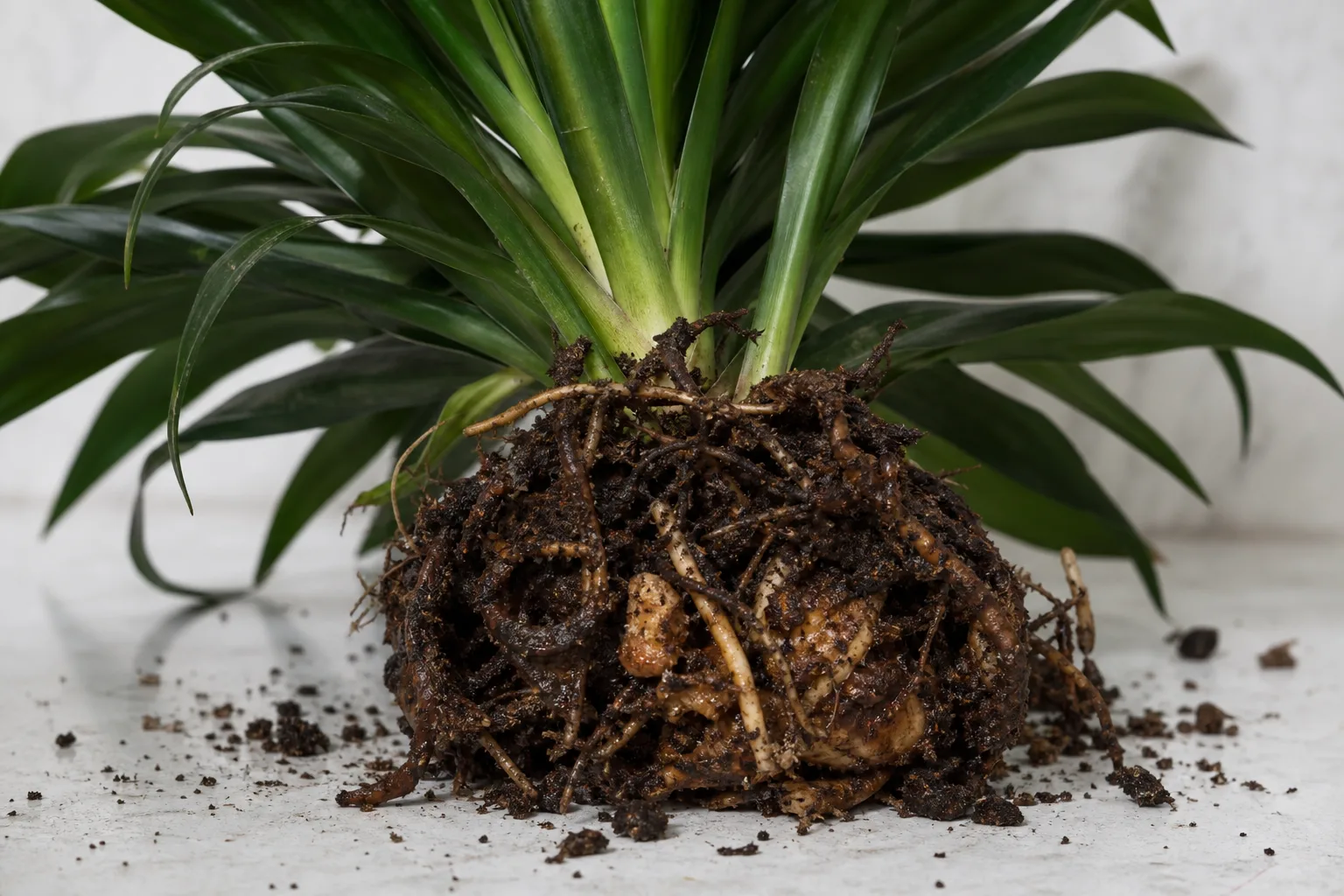
Damaged Roots on Janet Craig Dracaena: Causes, Checks & Fixes
This guide covers damaged roots on Janet Craig Dracaena. See also the general Damaged Roots guide, watering, and light pages for this plant.
Damaged Roots on Janet Craig Dracaena: Causes, Checks & Fixes
Quick answer
Damaged roots on Janet Craig Dracaena (Dracaena fragrans ‘Janet Craig’) means the underground system is injured - by rough repotting, root-bound tearing, chronic wet soil in low light, or transplant shock - not a single disease you spray away. The thick cane above soil can look fine for weeks while fine roots fail, which is why pot weight and root texture beat leaf color as early signals.
First step: squeeze the cane at the soil line and lift the pot. Firm cane with a light, dry pot after a recent repot usually means mechanical damage or transplant shock - pause watering and wait. Firm cane with a heavy, sour-smelling wet pot in a dim office points to rot from overwatering - stop watering and unpot the same day. Full rot rescue steps live on root rot on Janet Craig; this page covers how to tell damage types apart and which first fix fits each.
Species context: Janet Craig overview.
Damaged roots vs root rot vs exposed roots on Janet Craig
These Janet Craig problem pages overlap in symptoms but target different failures:
| Pattern | Root texture | Cane at soil line | Mix / pot | Typical cause | First fix |
|---|---|---|---|---|---|
| Mechanical damage | Broken white or tan tips; firm main roots | Firm | Dry to evenly moist; often post-repot | Rough unpot, teasing tight ball too hard | Pause watering 7–14 days; no re-repot |
| Root-bound tearing | Snapped circling roots; some stubs dry | Firm | Often dry on outside, wet in core | Years without repot; forced pull from pot | Gentle repot + modest pot; see repotting guide |
| Overwatering rot | Brown, mushy, hollow; sour odor | Softens in advanced cases | Heavy, wet for weeks | Calendar watering in low light | Stop water; trim mush; follow root rot protocol |
| Transplant shock | Mostly firm; disturbed, fewer fine hairs | Firm | Fresh mix, recently repotted | Root-hair loss during repot | Dim light, stable placement; light moisture only |
| Exposed roots at soil line | Visible circling above mix | Usually firm | Surface dry fast | Long time same pot | Repot to cover; see exposed roots |
If more than a third of roots are mushy and mix smells bad, treat as root rot - not a wait-and-see damaged-roots case. If leaves yellow on a heavy wet pot without recent repot, start with overwatering triage before assuming mechanical damage.
What damaged roots look like on Janet Craig
You cannot diagnose root damage from leaves alone on this species. Janet Craig holds water in its thick cane, so strap leaves may stay green while roots fail. Unpotting is the definitive check - but above-soil clues help you decide when to disturb the plant.
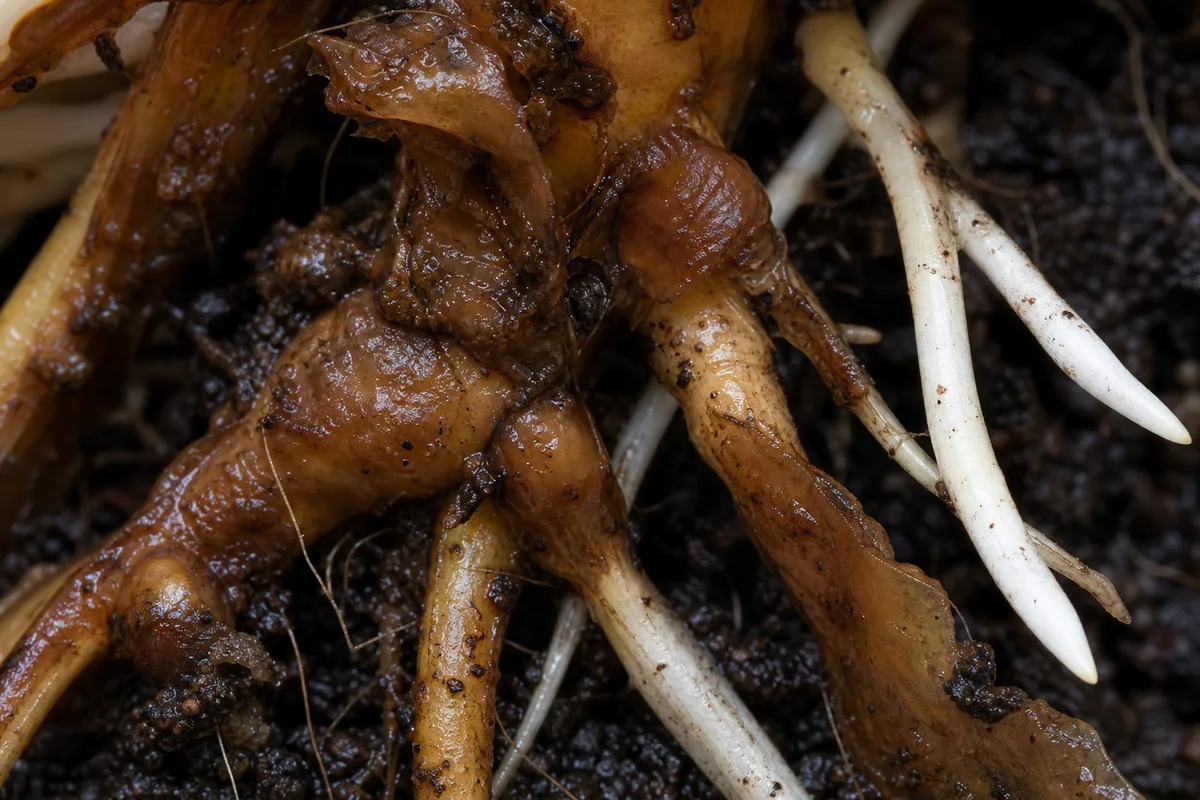
Damaged Roots symptoms on Janet Craig Dracaena - compare with healthy tissue on the same plant.
Above soil (early warnings):
- Crown growth stalls for months despite warm room temperatures
- Lower leaves yellow and drop while soil stays damp - damaged roots cannot supply water, mimicking thirst
- Plant wobbles in the pot or lifts out with little resistance when root mass has decayed
- Musty or sour smell from drainage holes
- Fungus gnats after weeks of wet surface soil
- Sudden limpness one to two weeks after repotting with otherwise firm cane
Below soil (what you are looking for):
- Healthy: firm, whitish to tan roots; no odor; mix smells neutral
- Mechanical breakage: clean breaks on white tips; some dry stubs; no widespread mush; often tied to recent repot
- Root-bound damage: dense circling mat; snapped outer roots; dry channels through center of ball
- Rot: brown, black, slimy, or hollow roots; sour anaerobic smell - see root rot for the five-step rescue
Fluoride tip burn on Janet Craig produces brown leaf margins with firm roots and appropriate dry-down - not mush. Dracaena is sensitive to fluorides; chronic wet soil concentrates fluoride at the root zone and can compound stress, but tip necrosis without wet heavy pots is usually water quality, not root breakage. See brown tips when margins brown but roots stay firm.
Why Janet Craig roots get damaged
Janet Craig is widely sold as a low-light-tolerant interior plant with slow vertical growth and a thick woody cane. That architecture hides root problems: the stem stores reserves, so fine root loss lags behind what you see on faster-growing houseplants.
Office low-light overwatering and fine-root failure
In deep shade or fluorescent-only offices, transpiration drops sharply. Soil that would dry in ten days under a bright window can stay wet for three to four weeks in a dim corner. Clemson HGIC notes root rot usually results from soil that does not drain quickly or overly frequent watering on dracaena. Janet Craig in those placements needs every three to four weeks minimum between thorough soaks - not the weekly rhythm that works for pothos in the same room. Chronic saturation suffocates fine roots before the cane softens enough to alarm you.
Rough repot and root-bound displacement
Janet Craig is repotted only every two to three years when healthy, but waiting too long produces a dense circling root ball. Pulling that mass aggressively - prying with tools, stripping all old mix at once, or upsizing to a much larger pot - snaps roots and tears microscopic root hairs that handle most water uptake. The plant wilts even when main roots look white because the drinking surface area collapsed. Oversized pots keep outer soil wet for weeks after repot, turning mechanical wounds into rot.
Gentle technique matters: slide the plant out, loosen only the outer inch of circling roots, trim dead tissue, and move up only one to two inches in pot diameter. Full step-by-step guidance is on the Janet Craig repotting guide.
Transplant shock with intact roots
Even careful repotting disturbs root hairs. Janet Craig may look limp for one to two weeks with firm cane and neutral-smelling fresh mix - normal shock, not necessarily rot. Flooding new soil to “help” a wilting plant after repot is a common mistake; excess water fills air pockets and suffocates healing tissue.
How to confirm the cause
Work through checks in order. One unpot tells you more than a week of guessing from leaves.
- Cane firmness - Pinch the stem at the soil line. Soft, wet tissue means decay is climbing from roots; firm tissue keeps more options open.
- Pot weight - Heavy days after you last watered, with a cool wet skewer at half depth, supports rot or severe overwatering. Light pot with limp leaves after repot fits shock or mechanical damage.
- Smell - Sour or fermented odor from drainage holes confirms anaerobic root-zone failure. Neutral smell fits shock or drought.
- Repot history - Repotted within 14 days with firm cane and broken white tips? Mechanical damage or shock first. No repot in years with roots circling the pot wall? Root-bound tearing likely.
- Unpot and rinse - Knock the plant out gently. Rinse roots under lukewarm water to see color and texture without tearing more tissue. Allow soil to dry between waterings is NC State’s baseline for dracaena - use that rhythm after you classify damage.
Confirmation decision guide
- Firm cane + dry mix + broken tips + repotted recently → mechanical damage or shock; do not trim healthy white roots
- Firm cane + heavy wet mix + yellow lower leaves + no recent repot → overwatering root damage; see overwatering
- Soft cane base + mushy roots + sour smell → advanced rot; use root rot trim-and-repot protocol immediately
- Firm roots + brown leaf tips only + appropriate dry-down → fluoride or salt stress, not structural root damage
First fix for Janet Craig (by likely cause)
Pick one primary action based on confirmation - do not repot, prune heavily, and fertilize the same day.
Mechanical breakage or transplant shock (firm cane, recent repot)
First fix: stop watering and hold placement stable for 7–14 days. Keep the plant in Janet Craig Dracaena light guide - not a dark corner where fresh mix will not dry predictably. Let cut root surfaces callus. Resume one light soak only when half-depth checks show genuine dry-down. Do not yank the plant out again to “check” roots; each inspection tears more hairs.
Root-bound tearing (firm cane, circling roots, no mush)
First fix: gentle repot into a pot only 2–5 cm (1–2 inches) wider with fresh well-draining mix. Trim only clearly dead or circling outer roots - not healthy white tips. Water lightly once to settle soil, then return to dry-down watering matched to light.
Confirmed rot (mushy roots, sour smell, wet heavy pot)
First fix: stop all watering and unpot today. Trim mushy roots to firm tissue, air-dry 24–48 hours, repot into a downsized pot with drainage, and wait at least a week before the first cautious drink. Follow the full sequence on root rot on Janet Craig - that page owns pathogenic rescue; this page gets you to the right branch.
Overwatering without full rot yet (wet mix, firm roots, early yellowing)
First fix: stop watering immediately and let mix dry an extra 7–14 days in low light. Empty saucers. If cane base softens during the dry spell, escalate to unpot inspection.
Step-by-step recovery for trimmed root damage
When you have removed mushy tissue or significant mechanical breaks:
- Sterilize scissors between cuts; remove only soft, brown, or smelly roots.
- Air-dry the trimmed root ball in bright indirect light for 24–48 hours if rot was moderate.
- Repot at the same depth as before into fresh mix with perlite - pot sized to trimmed root mass, not canopy height.
- Water lightly one week later only if mix is dry at half depth; use fluoride-aware water if tips have browned before.
- Track recovery by new crown leaves and firm cane - not old yellow straps, which will not re-green.
If the cane base is mushy throughout after trimming, salvage firm cane sections above the rot for propagation - detailed on root rot.
Recovery timeline
Mechanical damage or shock: limpness often resolves in one to three weeks once watering stabilizes; new white root tips may show in three to six weeks.
Moderate rot trim: expect cleaner crown growth in four to eight weeks in warm, bright conditions - longer in low-light offices.
Severe root loss: three to six months with downsized pot and conservative watering; canopy may stay smaller until root mass rebuilds.
Old damaged leaf tissue does not recover - judge success by firm cane, neutral-smelling mix, and new leaves emerging from the crown.
What not to do
- Do not water wilting leaves when soil is already wet - that deepens rot on a species that needs dry-down between soaks.
- Do not assume all root damage is rot; trimming firm white roots after mechanical breaks slows recovery unnecessarily.
- Do not repot into a much larger container “to give roots room” - excess wet soil kills Janet Craig in dim rooms.
- Do not fertilize during recovery; roots are not ready to process salts.
- Do not stack repotting, heavy leaf pruning, and fertilizer on the same day - pick one stress at a time.
- Wear gloves when handling cut tissue - Dracaena is toxic to cats and dogs; keep plants and soil away from pets during unpotting.
How to prevent damaged roots next time
Match watering to light per the watering guide - calendar reminders to check, not to irrigate. In deep shade, expect 21–28 days or longer between soaks. Repot on a two-to-three-year signal basis before roots crush the pot wall. Use modest pot increases, drainage holes, and empty saucers every time.
During routine dusting or watering checks, lift the pot occasionally. Light weight after appropriate time since last water confirms roots still function; unexplained heaviness in a dim office warrants a half-depth moisture probe before the next pour.
Practical checks
Urgency check
Same day: soft cane at soil line, sour smell on wet mix, yellow leaves dropping in clusters on a heavy pot, or more than half mushy roots on inspection.
Monitor 1–2 weeks: firm cane, recent repot limpness, broken tips without odor, or root-bound signs without rot smell.
Best inspection order
Crown growth rate → cane squeeze at soil line → pot weight → half-depth moisture skewer → repot history → unpot only if wet decline persists or rot is suspected.
Related Janet Craig problems
- Root rot - mushy roots, sour soil, five-step rescue
- Overwatering - early wet-soil triage before roots collapse
- Root-bound - circling roots before tearing on repot
- Exposed roots - circling visible at soil surface
- Repotting - gentle technique and pot sizing
- Watering - dry-down tiers for low-light offices
When to use this page vs other Janet Craig Dracaena guides
- Janet Craig Dracaena watering guide - Use for routine moisture checks before assuming damaged roots is the main issue.
- Janet Craig Dracaena problems hub - Browse all 50 common issues on this species.