Distorted Leaves on Janet Craig Dracaena: Causes, Checks &
Quick answer
Distorted leaves on Janet Craig Dracaena usually mean wavy or puckered crown foliage from chronic fluoride in tap water, silvery twisted new leaves from thrips, a permanent crease on one mature strap from physical contact, or weak misshapen crown flush on a heavy wet pot in low light. First step: inspect the newest crown leaves under good light-check for silver stippling and frass before switching water or pruning.
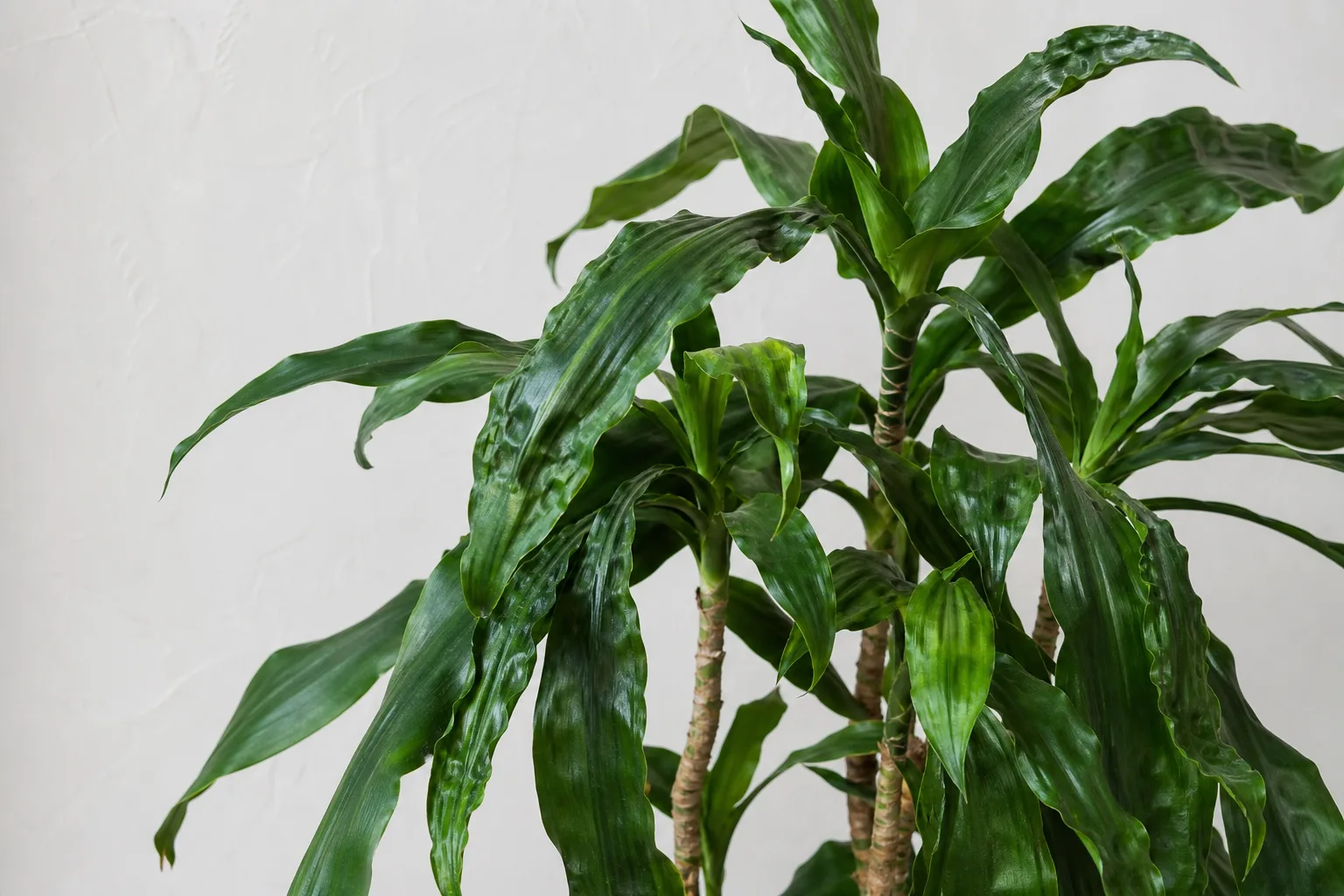
Distorted Leaves on Janet Craig Dracaena: Causes, Checks & Fixes
This guide covers distorted leaves on Janet Craig Dracaena. See also the general Distorted Leaves guide, watering, and light pages for this plant.
Distorted Leaves on Janet Craig Dracaena: Causes, Checks & Fixes
Quick answer
Distorted leaves on Janet Craig Dracaena (Dracaena deremensis ‘Janet Craig’) means the strap foliage loses its normal flat, arching shape-wavy margins, puckered midribs, twisted asymmetric crown leaves, or a sharp permanent crease on one mature blade. This is not the same as simple brown tips (brown tips guide) or uniform margin curl (curling leaves).
The four causes you should triage first:
- Fluoride crown malformation - months of municipal tap water on this fluoride-sensitive cultivar, with wavy or puckered new crown leaves and often brown tip margins on the same plant.
- Thrips feeding - irregular silvery streaks, black frass specks, and twisted or scarred new growth at the shoot apex (thrips guide).
- Mechanical creasing - one or two older strap leaves with a straight fold or crush mark from moving, stacking pots, or tight door clearance; crown growth stays clean.
- Weak crown flush on wet mix - pale, thin, misshapen new leaves on a heavy pot in deep office shade when roots stay anaerobic too long.
First step: inspect the newest crown leaves under good light. Look for silver stippling and frass before you switch water, repot, or spray. Thrips and fluoride both hit emerging tissue first; mechanical damage usually spares the crown if only one lower leaf was crushed.
Full culture baseline: Janet Craig overview.
What distorted leaves look like on Janet Craig
Janet Craig carries broad, dark-green strap leaves on thick cane stems. Distortion shows up in four recognizable patterns-each points to a different cause.
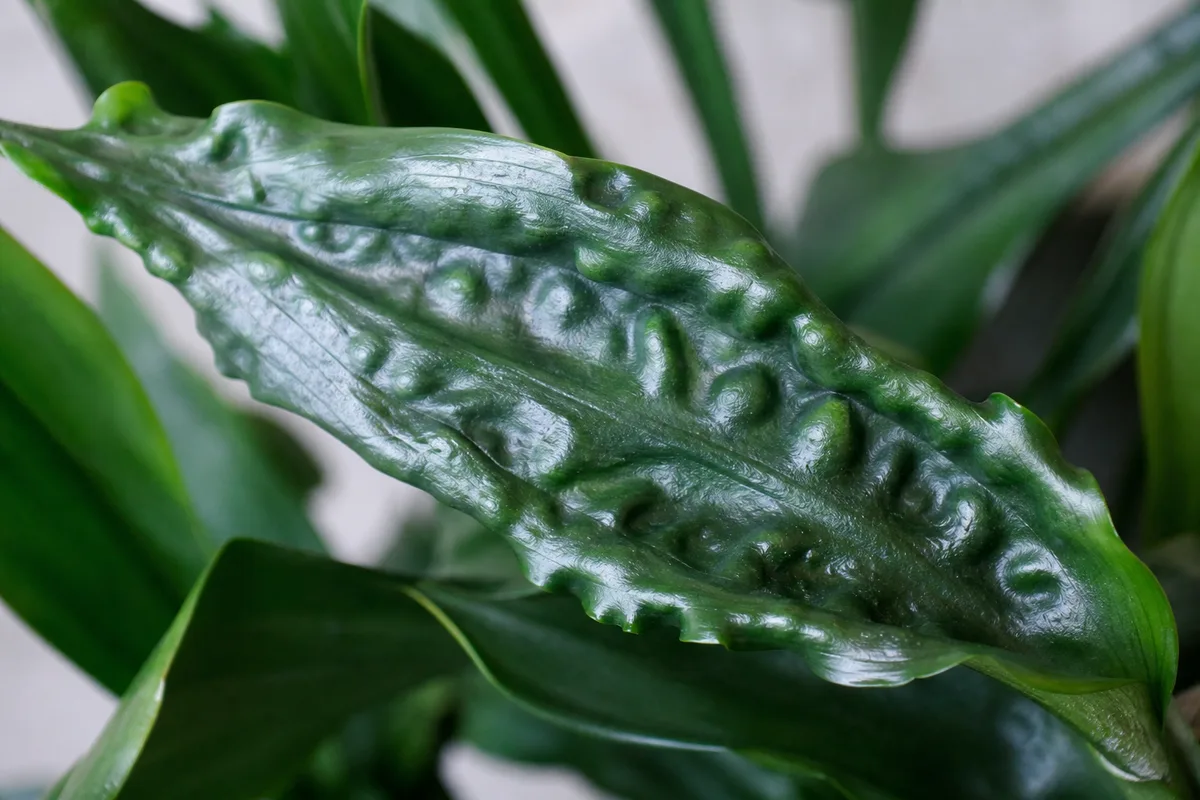
Distorted Leaves symptoms on Janet Craig Dracaena - compare with healthy tissue on the same plant.
Wavy or puckered crown margins (fluoride)
New leaves emerging from the crown may unfurl with undulating edges, a puckered midrib, or slightly asymmetric blade width instead of smooth arches. Penn State Extension notes yellow or dead tips on ‘Janet Craig’ under fluoride toxicity, and chronic exposure can deform tissue as it expands-not just burn finished tips. Older lower leaves may look normal while the crown shows the problem, because fluoride accumulates at margins over repeated tap-water irrigations.
Silvery twisted new leaves (thrips)
Thrips feed in the whorl of immature crown leaves and on strap undersides. On Dracaena, feeding causes discoloration, silvering, and squiggled scars near the petiole end of unfurling leaves (University of Hawaii thrips research on Dracaena). New crown straps may emerge smaller, scarred, or twisted with tiny black frass dots on undersides-unlike the crisp brown margins of fluoride alone.
Permanent creases on mature straps (mechanical)
A single lower or mid-cane leaf may show a straight fold, crush line, or kink from physical contact-moving the plant, a door swing, or another pot leaning against it. The creased tissue stays bent; surrounding leaves and new crown growth remain normal. This is cosmetic unless the fold tore the blade or exposed tissue to infection.
Thin, weak, misshapen crown flush (overwatering in low light)
In deep shade, Janet Craig transpires slowly and wet mix lingers for weeks. Chronic soggy roots produce pale, thin, oddly shaped new leaves that lack gloss-sometimes described as distorted but often closer to stunted flush than wavy margins. Pair this pattern with a heavy pot, soft lower yellow leaves, or sour soil smell; see deformed new growth when the whole crown fails repeatedly.
Why Janet Craig gets distorted leaves
Fluoride-sensitive cultivar biology
Janet Craig is among the most fluoride-sensitive interior dracaenas. Municipal water often carries fluorine at about 1 ppm; Penn State recommends avoiding irrigation above that level for Dracaena. Unlike chlorine, fluoride does not evaporate when tap water sits overnight. It moves into roots with every watering and concentrates at leaf margins and tips-eventually affecting developing crown tissue so new leaves expand with wavy or puckered geometry, not just brown necrosis at the point.
Office Janet Craig specimens often receive tap water for years because the plant “looks fine” from across the room. Distortion appears at the crown first because that is where new tissue forms under current fluoride load in the root zone.
Thrips, mechanical damage, and weak crown growth
Thrips are not caused by watering mistakes. They arrive on new plants, cut flowers, or outdoor summer stints, then hide in crown whorls and leaf crotches where sprays miss them. Colorado State Extension describes silvery feeding scars with dark excrement spots-on slow Janet Craig, that scarring persists on strap leaves long after pests are gone.
Mechanical damage is immediate and local. Janet Craig’s wide straps catch edges on furniture and cart handles in commercial interiors; one creased leaf does not mean an active cultural problem if the crown is clean.
Wet mix in low light weakens root function. The plant still tries to push crown leaves, but emerging tissue emerges thin and misshapen. This overlaps overwatering and root decline-do not increase watering when crown leaves look distorted from fluoride; wet soil in dim offices compounds both problems.
Distortion vs. curling vs. deformed new growth
Use this page when leaf shape is wrong-wavy, puckered, twisted, or creased. Use sibling guides when the pattern fits better elsewhere.
| Pattern | Likely cause | Read next |
|---|---|---|
| Wavy or puckered new crown leaves; brown tips on same plant; months of tap water | Fluoride malformation | Brown tips for water switch and flush protocol |
| Silvery stippling, frass, moving insects; twisted new crown straps | Thrips | Thrips for isolate-and-rinse first fix |
| Margins roll inward on many leaves; blade shape still flat | Curl, not distortion | Curling leaves |
| Single crease on one mature strap; crown clean | Mechanical (permanent) | Stay here-accept cosmetic crease; protect crown from future crush |
| Whole crown flush stunted, pale, bunched, or aborting | Rot, severe stress, repeated apex damage | Deformed new growth |
| Heavy wet pot, soft cane, sour soil, yellow neighbors | Root decline | Root rot |
How to confirm the cause
Work through these checks in order. One clear crown inspection beats guessing from a single warped lower leaf.
- Crown first, under good light - Hold a phone light along the newest unfurling straps. Silver streaks, black specks, or slender running insects point to thrips. Wavy margins without silver or frass point to fluoride or past mechanical stress on that specific leaf.
- Water source history - Months of municipal tap with recurring tip burn strongly supports fluoride. NC Extension recommends filtered or rain water for Dracaena when tap causes marginal injury.
- Pot weight and half-depth moisture - Lift the pot. Heavy, cold mix with pale twisted crown flush suggests wet-root stress, not fluoride alone. Bone-dry mix with curl elsewhere suggests drought overlap-see watering guide.
- Mechanical history - Was the plant moved, shipped, or squeezed against a wall recently? A crease on one older leaf with clean crown growth fits physical damage.
- Thrips shake test - Tap a suspect crown leaf over white paper. Quick tan insects confirm active thrips before you leach fluoride salts.
Confirmation decision table
| If you see… | And pot/soil… | And water/pests… | Most likely cause | First action |
|---|---|---|---|---|
| Wavy crown margins, brown tips | Normal weight; dry-down OK | Tap water for months | Fluoride | Switch to low-fluoride water |
| Twisted crown + silver + frass | Any moisture | Insects on shake test | Thrips | Isolate and rinse crown |
| One creased lower strap | Any | Crown clean; no silver | Mechanical | Accept; protect placement |
| Pale thin crown; yellow lower leaves | Heavy; sour smell | Often overwatered in low light | Wet-root weak flush | Stop watering; assess roots if decline spreads |
First fix for Janet Craig (by likely cause)
Apply one primary fix based on what the crown inspection showed-do not stack Janet Craig Dracaena repotting guide, pruning, fluoride flush, and insecticide on the same day.
If fluoride is most likely: Switch immediately to rainwater, distilled, or reverse-osmosis water. Water once thoroughly with the new source, then let the top half of the mix dry before the next drink. Flush the pot with two to three pot volumes of low-fluoride water to leach accumulated salts. Avoid superphosphate fertilizers, which can carry high fluorine levels. Trim only dead tip tissue for appearance-focus on undamaged new crown leaves.
If thrips are confirmed: Isolate the plant and rinse every leaf surface-crown, cane crotches, undersides-with lukewarm water before any spray. Follow the weekly contact-spray cycle in the thrips guide. Do not blame fluoride and delay pest treatment when frass and silver streaks are present.
If mechanical crease only: No treatment required. Do not prune healthy tissue trying to “straighten” the leaf-the fold is permanent. Reposition the plant so crown growth clears doors and neighboring pots.
If wet mix weak flush: Stop scheduled watering until the pot lightens and the top half of mix is dry. Empty saucers. Only inspect roots if soft cane, sour smell, or spreading yellow continues-see root rot. Do not increase watering because crown leaves look odd.
Recovery timeline
Recovery is judged by new crown leaves, not by old warped straps flattening.
| Cause | What old leaves do | What improvement looks like | Typical timeline |
|---|---|---|---|
| Fluoride | Wavy or burned margins stay | New crown straps emerge smoother and wider | Two to six weeks after water switch and flush |
| Thrips | Silver scars persist | No new stippling; clean unfurling crown leaves | Four to eight weeks with weekly treatment |
| Mechanical | Crease permanent | New crown leaves normal shape | Immediate once placement fixed |
| Wet-root stress | Pale distorted flush may brown | Firm new growth after correct dry-down | Two to four weeks if roots intact |
Janet Craig replaces crown foliage slowly in office light. A single clean new leaf is a valid success marker.
What not to do
Do not increase watering when crown leaves distort from fluoride-wet soil in low light invites rot separate from margin injury. Do not mist leaves to fix fluoride or thrips distortion; misting does not leach fluoride from tissue and leaves wet foliage in stagnant office air. Do not use water from a home softener-sodium damages Dracaena roots. Do not apply fertilizer to a stressed plant hoping to “fill out” warped leaves. Do not stack repotting, heavy pruning, and pesticide on one day.
Keep treatments away from pets; Dracaena is toxic to cats and dogs.
How to prevent distorted leaves next time
Make low-fluoride water the default for every Janet Craig watering-the same prevention logic as the brown tips guide. Match dry-down to light per the watering guide: bright indirect dries faster; deep office shade needs far longer intervals.
Inspect the crown weekly during routine dusting or watering checks for thrips silvering before distortion spreads across the flush. Quarantine new floor plants and cut flowers near Janet Craig specimens. Leave clearance around wide strap leaves when moving or staging pots so mature blades do not crease.
Practical checks
Urgency check
Same-day attention if cane tissue softens, soil smells sour, yellowing spreads on a heavy wet pot, or thrips stippling jumps to multiple crown leaves in one week. Lower urgency if one older strap shows a mechanical crease and crown growth is clean, or if wavy margins appear slowly after months of tap water without soft cane.
Best inspection order
Newest crown leaves (shape, silver, frass) → water source and fertilizer history → pot weight and half-depth moisture → lower straps for isolated creases → shake test for thrips → roots only if wet decline persists.
Conclusion
Distorted leaves on Janet Craig Dracaena are a shape problem at the crown, not a generic “stress” label. Wavy puckered new straps after tap water point to fluoride; silvery twisted crown tissue with frass points to thrips; one folded mature leaf points to mechanical damage you can ignore if new growth is clean; pale weak flush on a heavy pot points to wet roots in low light. Inspect the crown first, apply one matched fix, and judge success by the next clean strap leaf-not by old warped tissue straightening.
Related Janet Craig guides:
- Janet Craig overview - Light, watering, and culture baseline
- Brown tips - Fluoride mechanism and leaching detail
- Thrips - Isolate-and-rinse protocol when silver streaks confirm pests
- Curling leaves - Margin roll without blade distortion
- Deformed new growth - Whole crown flush failure
- Watering - Dry-down rhythm in office low light
When to use this page vs other Janet Craig Dracaena guides
- Janet Craig Dracaena watering guide - Use for routine moisture checks before assuming distorted leaves is the main issue.
- Janet Craig Dracaena problems hub - Browse all 50 common issues on this species.