Deformed New Growth on Janet Craig Dracaena: Causes, Checks
Quick answer
Deformed new growth on Janet Craig Dracaena usually shows at the crown rosette-narrow or chlorotic emerging strap leaves from fluoride, twisted newest leaves after cold below ~55°F, waxy pest damage at the terminal bud, thin pale leaves in deep shade, or a stalled crown on wet mix with soft cane. First step: inspect the newest leaves, note your water source and recent temperature history, then match the pattern before changing water, light, or watering rhythm.
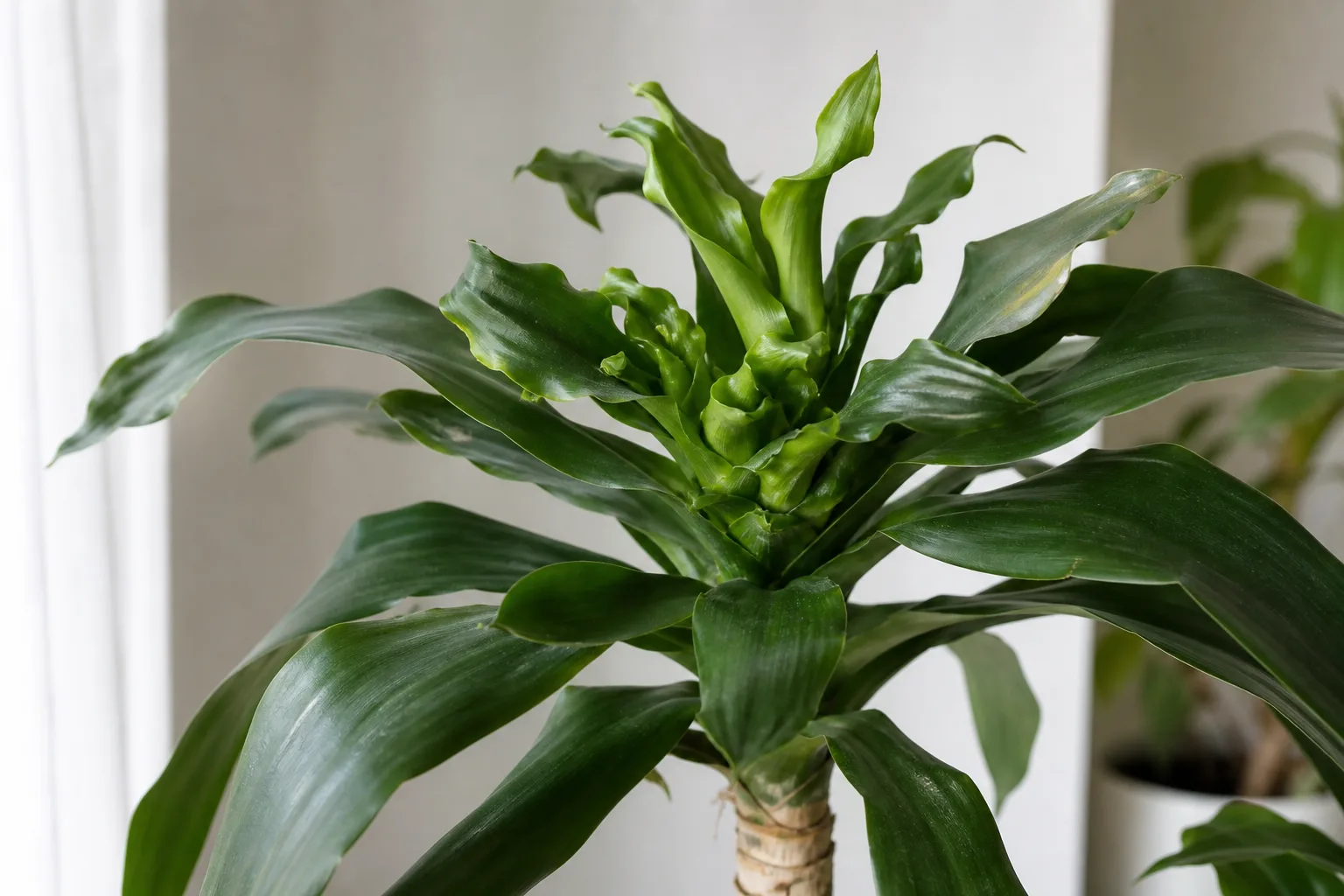
Deformed New Growth on Janet Craig Dracaena: Causes, Checks & Fixes
This guide covers deformed new growth on Janet Craig Dracaena. See also the general Deformed New Growth guide, watering, and light pages for this plant.
Deformed New Growth on Janet Craig Dracaena: Causes, Checks & Fixes
Quick answer
Janet Craig Dracaena (Dracaena deremensis ‘Janet Craig’) pushes new strap leaves from a tight crown rosette. When only the newest leaves look wrong-narrow, twisted, pale, cupped, or slow to unfurl-the problem is usually localized to water quality, temperature, light, pests, or root stress rather than normal aging of lower foliage.
The five patterns Janet Craig growers see most often:
- Fluoride crown narrowing - emerging leaves stay thin, sometimes chlorotic at the base, after months of tap water on fluoride-sensitive Dracaena
- Cold-twisted rosette - newest leaves curl or kink after a cold night below about 55°F (13°C) near a vent or window
- Pest distortion at the terminal bud - mealybugs, scale, or thrips at the crown leave sticky residue, stunted unfurling, or asymmetric new blades
- Etiolation in deep shade - thin, pale, weak new leaves reaching for light in dim office placements
- Rot-associated crown suppression - deformed or absent new growth on a heavy wet pot with soft cane and sour-smelling mix
First step: look at the newest crown leaves, then check water source, pot weight, and whether the plant sat in a cold draft in the last week. Match the pattern before you change water, light, or watering frequency-stacking fixes on the same day makes diagnosis harder on slow-growing Janet Craig.
Full species context: Janet Craig overview. For mature leaf margin damage only, see brown tips. For whole-plant slow height gain, see stunted growth and distorted mature leaves.
Deformed new growth vs. stunted growth vs. distorted leaves
These Janet Craig problem pages overlap in search results but answer different questions:
| What you see | Scope | Likely guide |
|---|---|---|
| Newest crown leaves narrow, twisted, or pale; cane firm | Terminal bud / emerging rosette only | This page |
| Plant adds little height or few leaves for months; crown may be quiet | Whole plant growth rate | Stunted growth |
| Older, fully expanded leaves cup, curl, or show margin burn | Mature foliage | Distorted leaves |
| No crown activity at all for many weeks | Growth pause | No new growth |
| Crown collapse with soft cane and wet mix | Root failure | Root rot |
Deformed new growth means the plant is trying to grow-the emerging leaf is just malformed. Stunted growth means output is slow across the whole specimen. Distorted leaves usually involve tissue that already expanded weeks ago.
What deformed new growth looks like on Janet Craig
Janet Craig crown leaves normally emerge as wide, dark green straps that arch gracefully as they harden. Deformation shows in the youngest one to three leaves still furled or recently opened at the rosette.
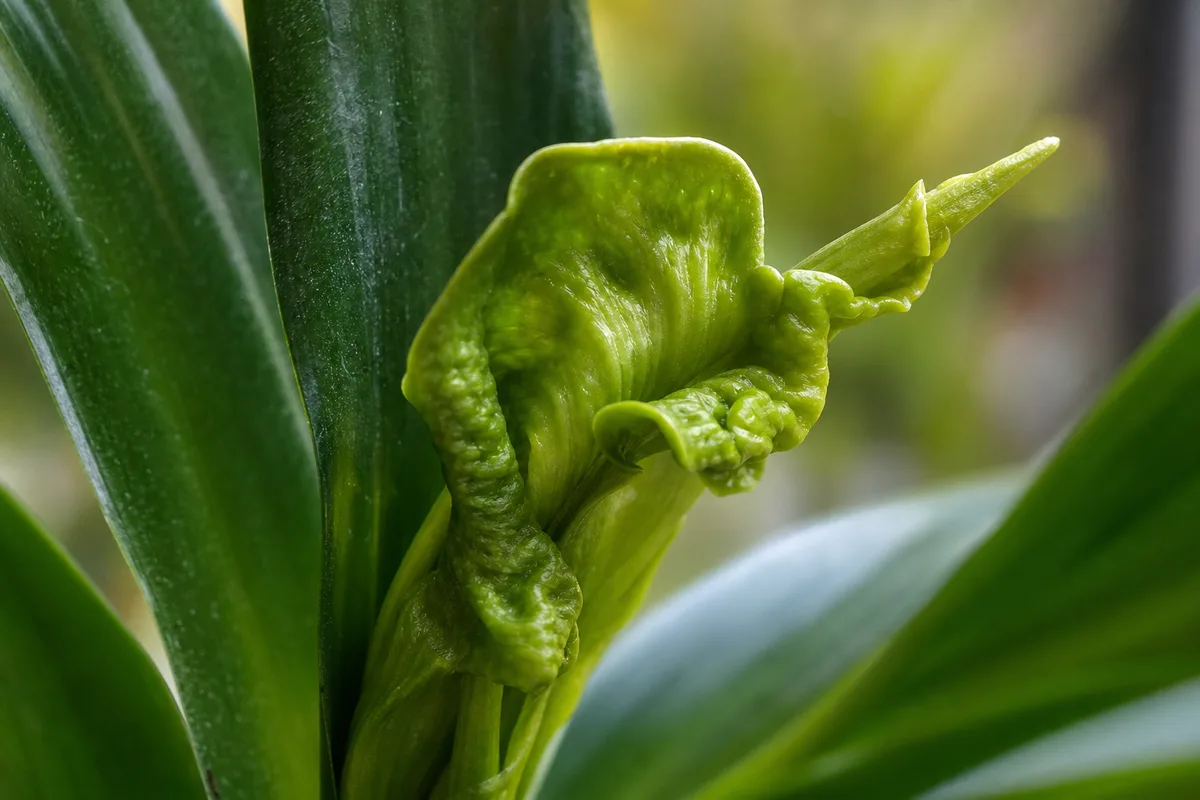
Deformed New Growth symptoms on Janet Craig Dracaena - compare with healthy tissue on the same plant.
Fluoride crown narrowing
Municipal tap water often carries fluorine at about 1 ppm; Dracaena roots absorb it and it accumulates in leaf margins and tips. On the crown, fluoride can appear before widespread tip burn on older leaves:
- New leaves emerge narrower than older straps below them
- Base of the emerging leaf may look pale or yellow-green while the cane stays firm
- Pattern worsens with every tap watering; often paired with brown tips on mature leaves-see brown tips
- Pot weight and moisture rhythm may be normal-this is not fixed by watering more
Cold-twisted rosette
Janet Craig drops leaves and stalls growth below about 55°F (13°C). A short cold exposure can deform only the newest flush:
- Newest rosette leaves twist, kink, or fail to unfurl symmetrically after a cold night
- Damage appears suddenly after AC blast, winter window contact, or a door left open
- Older expanded leaves often look unchanged; cane remains firm
- Improves when warmth stabilizes and the next crown leaf opens-previous twisted tissue rarely reshapes
Pest distortion at the growing tip
Mealybugs and scale cluster in Janet Craig crown axils where new leaves emerge. Thrips scar unfurling tissue:
- New leaves emerge crinkled, stunted, or stuck partially furled
- Waxy cottony patches, sticky honeydew, or fine stippling at the crown
- Asymmetric growth on one side of the rosette
- Firm cane unless a secondary rot has started from chronic wetness plus pest stress
Etiolation in deep shade
Janet Craig survives low light but new growth reflects the deficit:
- Thin, pale, elongated new leaves with weak gloss
- Internodes may stretch slightly on the crown stem
- Plant is otherwise stable-pot dries slowly, no sour soil
- Differs from fluoride narrowing: etiolated leaves are pale overall, not chlorotic at the base on an otherwise deep-green plant
Rot-associated crown suppression
When roots fail, the crown cannot support normal leaf expansion:
- New growth absent, brown, or mushy at the center
- Soft cane at the base, heavy pot, sour or musty mix
- Lower yellow leaves on wet soil-urgent overlap with overwatering and root rot
- Deformation here is secondary; root assessment comes first
Why Janet Craig gets deformed new growth
Crown emergence concentrates stress signals
Janet Craig adds height slowly from a single terminal rosette on each cane. The youngest leaves have the highest transpiration demand and the least developed tissue-so fluoride, cold, pests, and low light show up there before mature strap leaves look obviously wrong. That is why crown inspection beats staring at lower foliage when you notice something odd on new growth.
Fluoride sensitivity on emerging leaves
Janet Craig is among the most fluoride-sensitive houseplants in commercial interiors. Unlike chlorine, fluoride does not dissipate when water sits overnight. It accumulates in the root zone and moves with the transpiration stream into developing crown tissue. Superphosphate fertilizers and high-perlite mixes can add fluorine-avoid both when crown leaves narrow.
Low-light office biology
In fluorescent-only placements, Janet Craig transpires slowly and the mix can stay wet for weeks-but the crown still needs light to build normal leaf width. Deep shade produces weak new blades even when watering is conservative. Match dry-down to light: allow the top half of mix to dry in brighter spots; let most of the pot dry in dim offices-often every three to four weeks or longer. See Janet Craig watering and light guide.
Cold drafts and terminal-bud damage
Tropical African understory ancestry means Janet Craig expects stable warmth between roughly 65 and 80°F (18 and 27°C). Brief cold does not always drop mature leaves immediately-it can distort the leaf forming at the bud during the exposure. AC vents and winter sills are the usual indoor culprits.
How to confirm the cause
Work through these checks in order. One clear match beats changing four variables at once.
- Crown leaf shape - Narrow or chlorotic base with firm cane and tap water history → fluoride. Sudden twist on only the newest leaves after cold → draft injury. Crinkle with waxy residue → pests. Thin and pale in dim corner → etiolation. Mushy center on wet pot → rot.
- Water source - Months of municipal tap without filtering strongly supports fluoride when crown leaves narrow. NC Extension recommends filtered or rain water for Dracaena when fluoride symptoms appear.
- Temperature history - Did the plant sit near an AC vent, open window, or cold delivery route in the last 48 hours? Cold twist fits a sudden event; fluoride fits chronic tap watering.
- Pest inspection - Use a flashlight at the crown. Mealybugs look like cotton clusters; scale like brown bumps; thrips leave silvery scarring on unfurling leaves.
- Pot weight and half-depth moisture - Lift the pot. Heavy, damp core with soft cane → rot before fluoride flush. Light, dry pot with narrow new leaves → fluoride or drought less often deformation-check underwatering if leaves also droop.
- Light level - If new leaves are thin and pale but the plant has been in the same dim office for months with stable moisture, brighter indirect light is the lever-not more water.
Confirmation decision table
| Pattern | Cane | Pot / mix | Water | Temp / pests | Likely cause |
|---|---|---|---|---|---|
| Narrow chlorotic emerging straps | Firm | Normal dry-down | Tap long-term | No pests | Fluoride |
| Twisted newest rosette only | Firm | Normal | Any | Recent cold draft | Cold injury |
| Crinkled unfurling, sticky crown | Firm | Normal | Any | Mealybugs / scale / thrips | Pests |
| Thin pale weak new blades | Firm | Slow dry-down | Any | Deep shade | Etiolation |
| Stalled or mushy crown | Softening | Heavy, wet, sour | Any | May be absent | Root rot |
First fix for Janet Craig (by likely cause)
Pick one primary fix from the row that matches your table result.
Fluoride crown narrowing (most common indoors): Switch to rainwater, distilled, or reverse-osmosis water immediately. Water once thoroughly with the new source, then let the top half of mix dry before the next drink. Flush the pot with plain low-fluoride water at two to three times pot volume to leach salts. Do not increase watering frequency-wet soil in low light causes separate crown problems.
Cold-twisted rosette: Move Janet Craig away from AC vents, winter glass, and exterior doors. Hold watering until the normal dry-down for your light level returns. Wait for the next crown leaf-do not prune the twisted leaf unless tissue turns brown.
Pest distortion: Isolate the plant. Dab visible mealybugs with alcohol on a cotton swab; scrape soft scale gently. Rinse the crown with lukewarm water to dislodge pests, then monitor new unfurling for a week before considering horticultural soap on a small test leaf. Avoid stacking repotting and heavy pruning the same day.
Etiolation: Move to brighter indirect light-east window or several feet back from filtered south or west glass-or add a full-spectrum grow light 12–18 inches above the crown for 10–12 hours daily. Do not compensate with extra water in the same dim spot.
Rot-associated crown suppression: Stop watering. Inspect roots the same day if cane is soft or mix smells sour. Trim mushy roots, repot into fresh well-draining mix, and resume conservative dry-down-see root rot. Fluoride water changes do not fix rot.
Recovery timeline
Janet Craig recovers slowly. Set expectations by cause:
- Fluoride: Next one to two crown leaves should emerge wider and greener within two to four weeks after water switch and flush. Older deformed leaves keep their shape-trim cosmetically if needed.
- Cold twist: The following crown flush after stable warmth often opens normally; twisted tissue rarely straightens.
- Pests: New leaves unfurl cleanly within one to three weeks after crown is pest-free; heavy infestations may need repeated checks.
- Etiolation: Gradual improvement over four to eight weeks as new leaves form in better light; avoid sun shock by acclimating over one to two weeks.
- Rot: Recovery depends on root mass remaining-weeks to months; some crowns never resume if rot reached the stem.
Judge success by firm new crown leaves, not by old deformed tissue re-greening.
What not to do
Do not increase watering when crown leaves are narrow from fluoride alone-wet mix in low light invites rot. Do not mist to fix fluoride crown injury; it does not leach fluorine from tissue. Do not assume every narrow new leaf means rot; firm cane and normal pot weight with tap water history point to fluoride or cold, not roots. Do not use water from a home softener-sodium damages Dracaena roots. Do not stack repotting, fluoride flush, fertilizer, and pruning on the same day-recovery markers are clean new crown leaves after one change at a time.
Keep Janet Craig away from pets during treatment; Dracaena is toxic to cats and dogs. Contact your veterinarian if ingestion is suspected.
How to prevent deformed new growth next time
Make low-fluoride water the default for every watering-filtered, distilled, rainwater, or RO. Match dry-down to light per the watering guide: deeper dry-down in office dim, shallower in bright indirect. Keep temperatures above 55°F (13°C) and away from HVAC vents. Inspect the crown weekly during routine dusting. Give enough light that new leaves stay wide and glossy-survival in deep shade is not the same as healthy crown expansion. Flush the pot seasonally with plain low-fluoride water to limit salt buildup. Avoid superphosphate fertilizers on fluoride-sensitive Janet Craig.
Practical checks
Urgency check
Same-day action if cane tissue softens, soil smells sour, yellowing spreads on a heavy wet pot, or the crown center is mushy-that is rot, not cosmetic deformation. This week if pests are active at the crown or cold exposure just occurred. Routine if narrow new leaves developed slowly over months on tap water with firm cane-fluoride flush can proceed on your normal watering day.
Best inspection order
Crown leaves (shape, color, pests) → recent temperature / draft exposure → water source history → pot weight → half-depth moisture → roots only if wet decline or soft cane persists.
Related Janet Craig guides
- Janet Craig overview - full care and troubleshooting hub
- Watering - dry-down by light level
- Light - office vs. window placement
- Brown tips - mature margin fluoride burn
- Distorted leaves - cupping on expanded foliage
- Stunted growth - slow overall height gain
- Root rot - soft cane and wet mix
- Overwatering - heavy pot in low light