Stunted Growth on Janet Craig Dracaena: Causes, Checks &
Quick answer
Stunted growth on Janet Craig Dracaena means the crown stops pushing new strap leaves through an entire warm season despite adequate light - not the near-stasis normal in dim offices. First step: confirm whether light is truly bright indirect; if yes, check pot weight and half-depth moisture before assuming the plant is just slow.
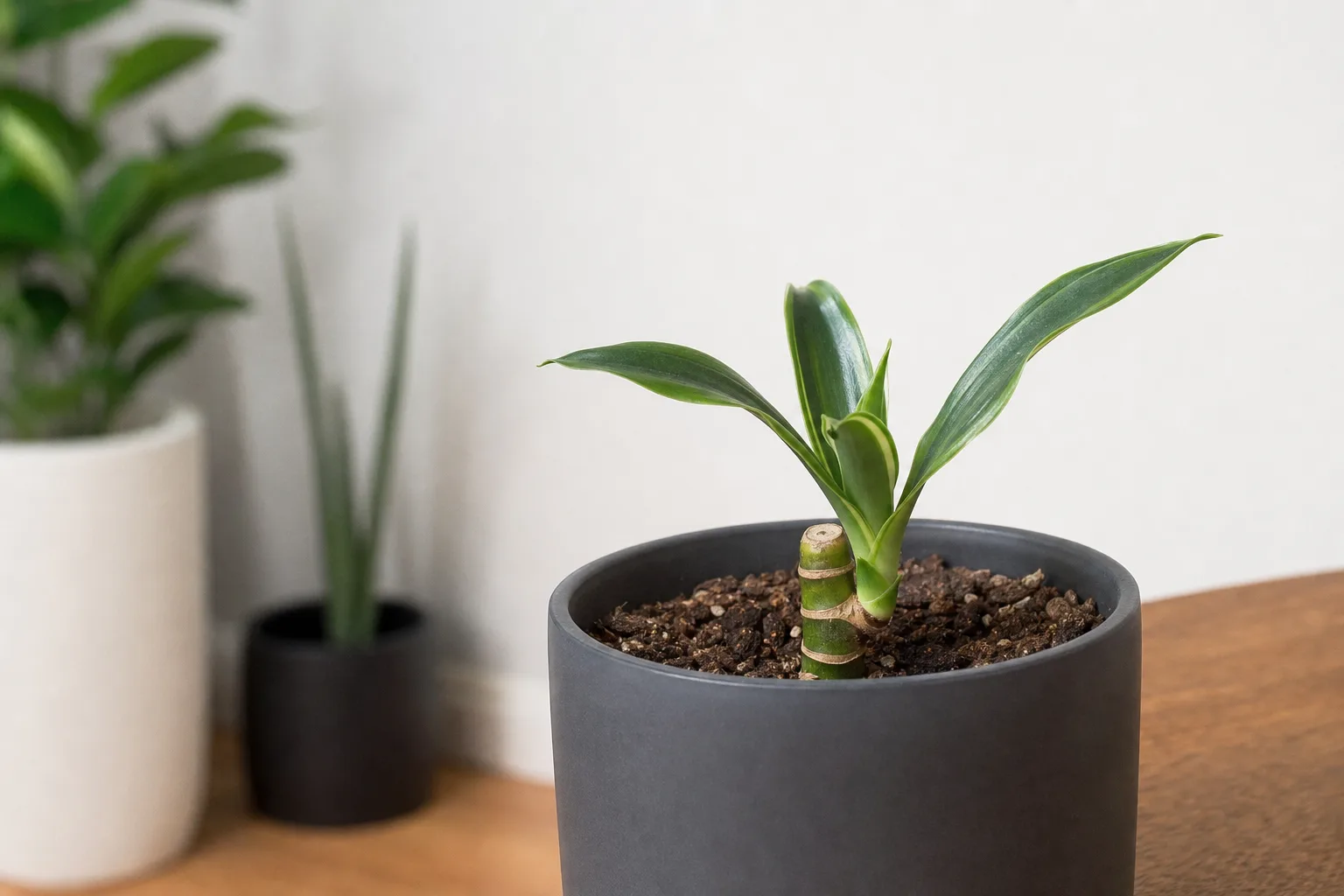
Stunted Growth on Janet Craig Dracaena: Causes, Checks & Fixes
This guide covers stunted growth on Janet Craig Dracaena. See also the general Stunted Growth guide, watering, and light pages for this plant.
Stunted Growth on Janet Craig Dracaena: Causes, Checks & Fixes
Quick answer
Stunted growth on Janet Craig Dracaena (Dracaena fragrans ‘Janet Craig’) is not the same as slow growth. Janet Craig is a slow-growing foliage plant that may add only occasional crown leaves in dim offices - that near-stasis is often healthy. Stunting means the crown fails to push new strap leaves through an entire warm season despite bright indirect light, or new leaves emerge pale, undersized, and slow to unfurl while the cane stays firm.
First step: confirm your light level. If the plant sits in a genuinely bright indirect spot and still produced zero crown leaves last summer, check pot weight and half-depth moisture before repotting or fertilizing. Chronic wet mix in low light stalls metabolism even when leaves still look green. For the normal slow pace in shade, see slow growth on Janet Craig.
Normal slow growth vs. true stunting on Janet Craig
Janet Craig was bred for office durability, not speed. In low light or deep shade, photosynthesis drops and the plant enters maintenance mode - alive, glossy, but barely gaining height. One new crown leaf every few months in a dim hallway is species-appropriate, not a crisis.
True stunting shows a different pattern:
- Zero crown pushes through spring and summer in a bright east window or well-lit office zone
- Pale or undersized new leaves at the crown while older foliage stays deep green
- Compressed internodes - the cane adds little vertical length year over year despite warm temperatures
- Growth resumes only after you fix a brake - light increase, dry-down correction, repot, or filtered water - not on its own
If your plant matches the first bullet list in deep shade only, read slow growth before treating stunting. If bright light and appropriate watering still produce no crown activity, work through the five causes below.
Why Janet Craig growth stalls
Five brakes account for most indoor stunting on this cultivar. Each fits Janet Craig’s biology: thick cane, crown-emerging strap leaves, fluoride sensitivity, and tolerance of wet mix only when light supports transpiration.
Cause 1: Insufficient light for crown pushes
Janet Craig survives low light but does not grow vigorously there. Clemson HGIC notes that dracaenas moved from dim spots to brighter exposure produce thicker, stronger new leaves and increased growth rate. In very dim placements, the plant allocates energy to existing foliage and sheds lower leaves over time rather than adding height. A plant that has not gained a crown leaf in two years under fluorescent ceiling light alone may be light-starved - not stunted by disease.
Cause 2: Chronic overwatering in low light
The most common hidden brake in offices. In deep shade, Janet Craig transpires slowly; wet mix lingers for weeks. Roots lose oxygen, metabolism drops, and crown pushes stop even when leaves still look green. NC State Extension links yellowing leaves and root problems to overwatering on Dracaena. The trap: watering on a bright-room schedule in a dim corner.
Cause 3: Root-bound pot limiting new growth
Slow vertical growth keeps Janet Craig in the same pot for years. When fine roots displace soil, water channels through without hydrating the mass and nutrients cannot support new crown tissue. Purdue Extension lists pot-bound roots among causes of small leaves and stunted growth on houseplants. Binding often overlaps with stalled crown growth in bright light - see root bound on Janet Craig.
Cause 4: Fluoride stress stalling clean crown leaves
Janet Craig is notably sensitive to fluoride in tap water and some fertilizers. Injury accumulates at leaf margins; new crown leaves may emerge with tip burn, stay small, or fail to unfurl cleanly. Fluoride can masquerade as unrelated stress - crown stall without obvious widespread browning is common early. Cross-check brown tips on Janet Craig when margins show necrosis.
Cause 5: Cool temperatures or post-repot shock
Janet Craig thrives at warm temperatures between 60 and 75°F and slows sharply below about 65°F (18°C) for extended periods. Winter drafts beside exterior doors, cold window glass, or AC blasts can pause crown activity for months. Fresh repots in winter or stacked treatments (repot plus prune plus feed same week) also stall growth for several weeks on this slow species - normal pause, not permanent stunting, if the cane stays firm.
What stunted growth looks like on Janet Craig
Stunting shows at the crown - where new strap leaves emerge in a tight rosette - not only at old leaf margins.
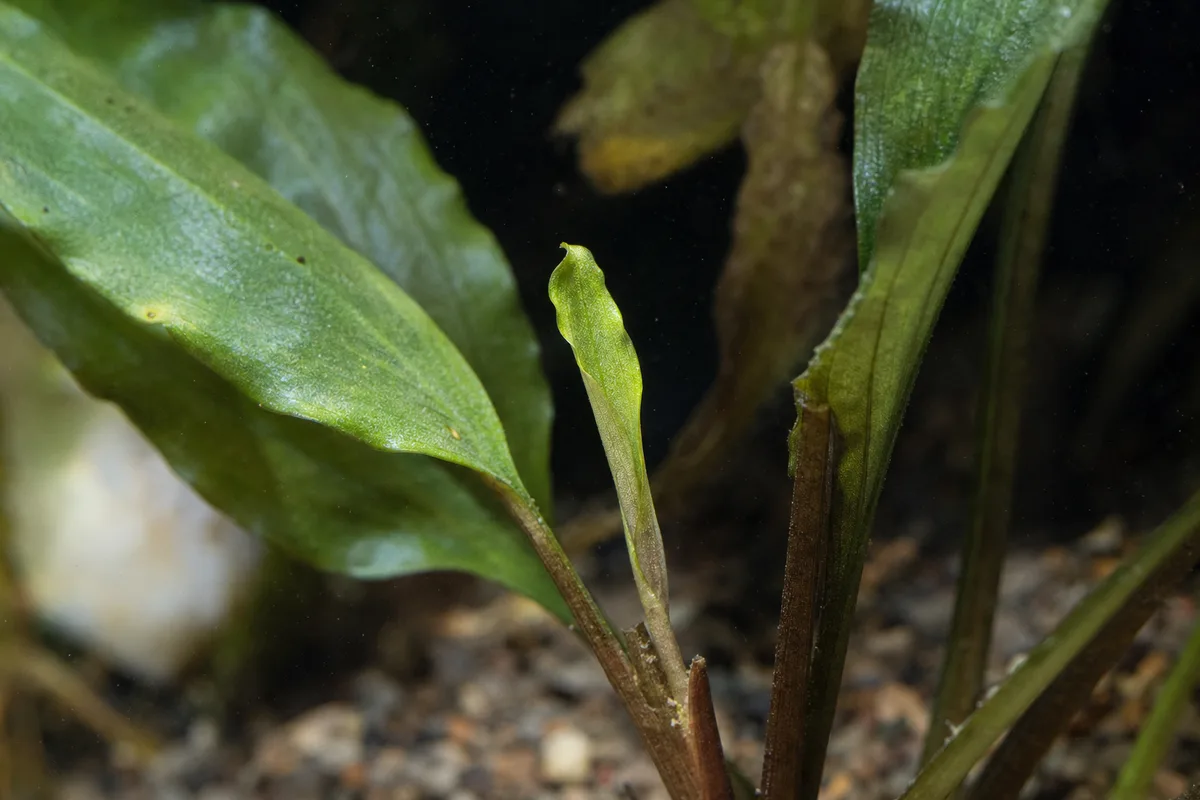
Stunted Growth symptoms on Janet Craig Dracaena - compare with healthy tissue on the same plant.
Crown stall (most common stunting signal):
- No new strap leaf unfurled through an entire warm season in adequate light
- Crown rosette looks static; cane height unchanged year over year
- Existing leaves remain firm and deep green while top growth absent
Undersized or pale new crown leaves:
- Newest leaf half the length of mature straps or lighter green
- Slow unfurling - leaf stays rolled at the crown for weeks
- Often pairs with fluoride stress or root-zone limitation
Secondary signs that help confirm a brake:
- Pot stays heavy for weeks in low light while crown is static (overwatering)
- Water runs through to saucer seconds after pouring (root-bound or compacted mix)
- Minor tip necrosis on newest crown leaves only (fluoride)
- Lower leaf drop in very dim spots without crown replacement (light starvation)
What stunting is not: Soft cane at the soil line, sour smell, and spreading yellow on wet mix point to root rot - escalate that pattern before debating growth pace.
Stunted growth vs. slow growth vs. root rot
| Pattern | Likely cause | Key check | First direction |
|---|---|---|---|
| One leaf every few months; firm cane; dim office | Normal slow growth | Light level below bright indirect | Accept pace or increase light - see slow growth |
| Zero crown leaves all summer; bright window; firm cane | Light, binding, fluoride, or wet-soil stall | Pot weight, unpot, water source | Work through causes 1–4 below |
| Pale small crown leaves; minor tip burn on new growth | Fluoride stress | Tap water history | Filtered water; see brown tips |
| Yellow lower leaves; heavy wet pot; soft cane base | Root rot / overwatering | Root firmness, soil smell | Stop watering; inspect roots - not a growth-pace issue |
| Water channels through; roots at drainage holes | Root bound | Gentle unpot | Spring repot per root-bound guide |
How to confirm the cause
Work through these checks in order. Change one variable at a time on fluoride-sensitive Janet Craig - do not stack repot, prune, and fertilizer on the same day.
- Light audit - Compare placement to Janet Craig light requirements. Bright indirect (east window or several feet from filtered south/west) should produce occasional summer crown leaves. Deep shade alone explains static height without stunting pathology.
- Pot weight and half-depth moisture - Lift the pot after watering and again one week later. A pot that stays heavy for three or more weeks in dim light while the crown is static supports overwatering. Bone-dry mix with limp leaves suggests drought - see underwatering.
- Water source review - Months of municipal tap with any crown tip burn or pale new leaves points to fluoride. NC State recommends filtered or rain water when Dracaena leaves brown.
- Gentle unpot - Slide the plant out supporting the cane. Dense circling roots with minimal mix confirm binding; mushy tissue confirms rot.
- Temperature scan - Note proximity to AC vents, single-pane winter glass, and whether the room stays below 65°F (18°C) overnight.
You have confirmed stunting (not normal slow growth) when light is genuinely adequate, moisture rhythm matches that light level, and the crown still produced zero healthy new leaves through the last warm season - or new leaves emerged pale and undersized.
First fix for Janet Craig (by cause)
Match the first fix to the confirmed brake. One change, then wait two to four weeks for crown response before stacking treatments.
If light is the brake: Move to brighter indirect exposure - east window or several feet inside a filtered south window. Do not jump to direct afternoon sun; Janet Craig scorches easily. Growth rate should increase within weeks as Clemson HGIC describes for dracaenas moved to brighter spots. Do not repot a healthy dim-office plant expecting faster growth without a light upgrade.
If overwatering in low light is the brake: Stop scheduled watering. Let the top half of mix dry - longer in shade, shorter in bright light per the watering guide. Resume only when a finger or skewer at half depth reads dry. Crown pushes may resume once roots regain oxygen.
If root-bound is the brake: Confirm with unpot, then repot in spring one to two inches wider following the repotting guide. Hold fertilizer four to six weeks after transplant.
If fluoride is the brake: Switch immediately to rainwater, distilled, or reverse-osmosis water. Flush the pot with two to three volumes of plain low-fluoride water. Judge recovery on the next clean crown leaf, not old tip tissue.
If cold or post-repot shock is the brake: Move away from drafts and cold glass. Keep temperatures in the 60–75°F range. Wait four to eight weeks after repot before expecting new crown growth - avoid stacking stress.
Recovery timeline
Janet Craig recovers slowly. After the correct single fix:
- Water rhythm or fluoride correction: First clean crown leaf often appears within two to four weeks in warm, bright conditions
- Light increase: Occasional new leaves within three to six weeks; height gain remains gradual
- Spring repot for binding: First crown push within three to six weeks; full root colonization four to eight weeks
- Winter or cool-room stall: Growth may pause until temperatures stabilize above 65°F (18°C)
Old strap leaves and burned tips do not re-green. Judge success on firm new crown leaves and resumed vertical inch-gain over a season - not cosmetic repair of lower foliage.
What not to do
- Do not fertilize a stalled plant hoping to force growth - without fixing light, water, or roots, fertilizer can burn margins on fluoride-sensitive Dracaena.
- Do not repot into a much larger pot on day one - excess wet soil raises rot risk after binding or overwatering correction.
- Do not use untreated tap water if crown leaves show tip damage - fluoride does not evaporate when water sits overnight.
- Do not water on a calendar in a dark office - match dry-down to transpiration rate, not the schedule you use for a bright-window pothos.
- Do not assume stunting means disease - firm cane and appropriate moisture with zero crown leaves in deep shade is often normal; see slow growth.
- Keep treatment debris away from pets - Dracaena is toxic to cats and dogs.
How to prevent stunted growth next time
Match expectations to placement: dim offices get near-stasis; bright rooms get occasional crown leaves. Use filtered water as default for every Janet Craig. Inspect pot weight weekly and adjust watering to light per the watering guide. Plan a root inspection every two to three years - repot in spring when binding signals stack. Avoid cold drafts below 65°F (18°C) for extended periods. Feed lightly only when crown growth is already active, not as a stall cure.
Related Janet Craig guides
- Slow growth on Janet Craig - normal office stasis vs. problem stall
- Not enough light on Janet Craig - crown failure in dim spots
- Root bound on Janet Craig - circling roots and channeling dry-down
- Brown tips on Janet Craig - fluoride crown injury
- Watering Janet Craig - dry-down rhythm by light level
- Light requirements for Janet Craig - bright indirect vs. deep shade
- Janet Craig care overview
Practical checks
Urgency check
Stalling alone with firm cane is low urgency - diagnose before acting. Same-day escalation when cane tissue softens at the base, soil smells sour, or yellow leaves spread on a heavy wet pot in low light - that is likely root rot, not growth pace. Roots blocking drainage holes with repeated wilting despite watering warrant timely repot even if foliage looks fine.
Best inspection order
Crown leaves (size, color, last push date) → light placement vs. light guide → pot weight → half-depth moisture skewer → water source (tap vs. filtered) → gentle unpot only if bright light, correct moisture, and crown still stalled
Related tool
Use the Plant Problem Diagnosis Tool to narrow causes for stunted growth on this plant before changing multiple variables at once.