Flowers Turning Brown on Janet Craig Dracaena: Causes
Quick answer
Brown Janet Craig flowers on a tall panicle stalk after a fragrant bloom are usually normal post-bloom senescence-not a care crisis. First step: confirm you are seeing spent florets on a flower stalk, not brown leaf margins; if it is a real panicle, remove the spent stalk at the base once browning spreads.
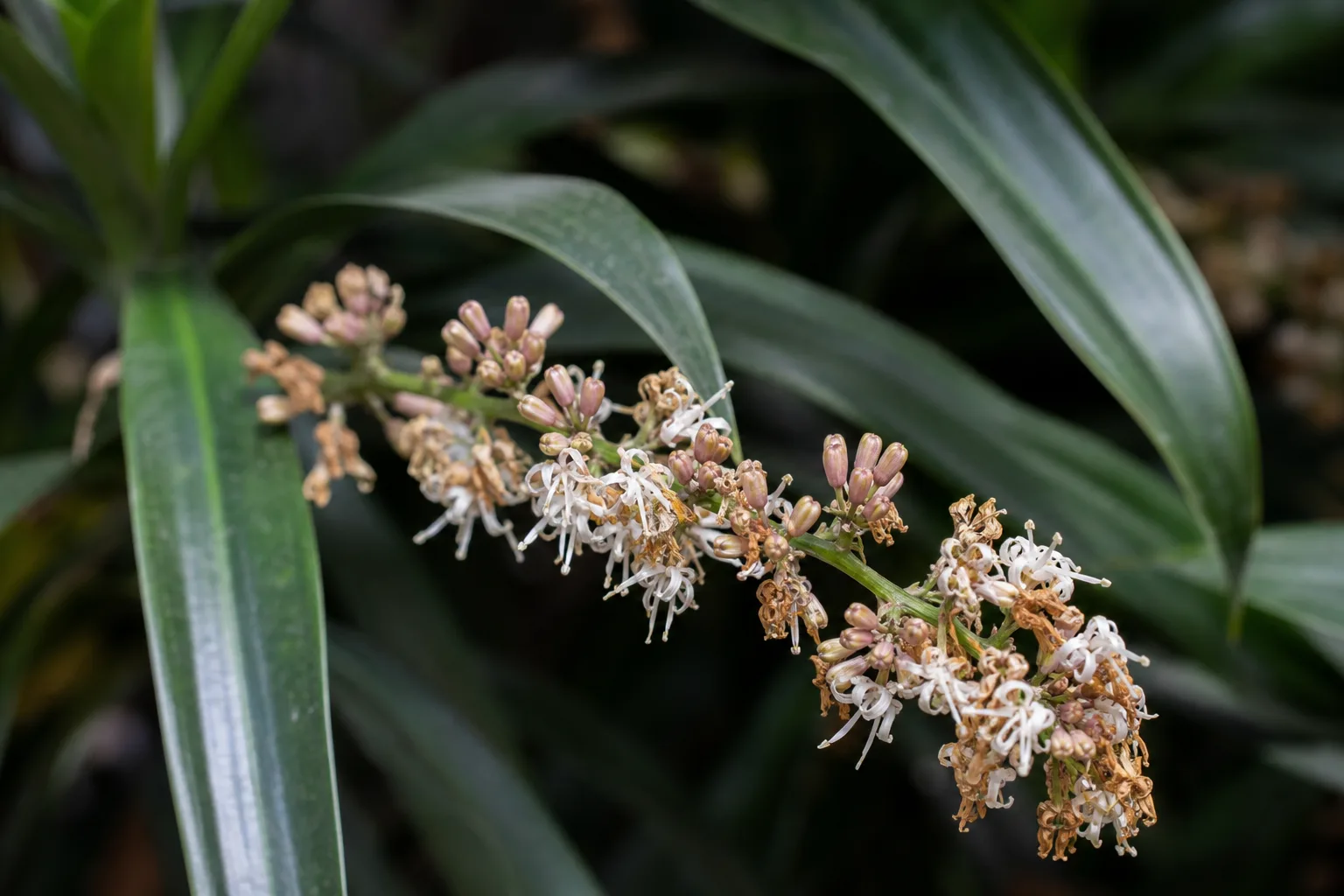
Flowers Turning Brown on Janet Craig Dracaena: Causes, Checks & Fixes
This guide covers flowers turning brown on Janet Craig Dracaena. See also the general Flowers Turning Brown guide, watering, and light pages for this plant.
Flowers Turning Brown on Janet Craig Dracaena: Causes, Checks & Fixes
Quick answer
Brown flowers on Janet Craig Dracaena (Dracaena fragrans ‘Janet Craig’) almost always mean one of three things: normal post-bloom senescence on a rare indoor panicle, stress-related bud failure before flowers fully open, or-you are actually looking at brown leaf tips and not flowers at all.
Most office Janet Craigs never bloom indoors. NC State Extension notes that flowers are infrequently produced but announce themselves with very strong nocturnal fragrance when they do appear. If you recently enjoyed that scent and now see brown, dry florets clustered on a long stalk above the leaf rosette, the plant is finishing a normal bloom cycle-not dying.
First step: locate a flower stalk. A panicle rises from the crown on its own stem, separate from the strap leaves. Brown tissue on that stalk after white or pink flowers opened is expected fade. Brown only at leaf margins year-round, with no stalk, is a different problem-use the brown tips guide instead.
Does Janet Craig even flower indoors?
Janet Craig is grown for deep green foliage, not flowers. Missouri Botanical Garden states that flowers and berries rarely appear on indoor plants for Dracaena fragrans, though mature specimens in Janet Craig Dracaena light guide with stable care occasionally produce them.
When bloom happens, it is a milestone-not a monthly event. Mature plants with consistent temperature, appropriate watering, and enough light may send up a single tall stalk bearing hundreds of tiny florets. If your Janet Craig has never flowered and you only see brown at leaf edges, you are not dealing with spent blooms-read no flowers on Janet Craig for rarity context, then brown tips for the symptom you actually have.
What Janet Craig flowers look like before they brown
Understanding the bloom stage prevents panic when color shifts.
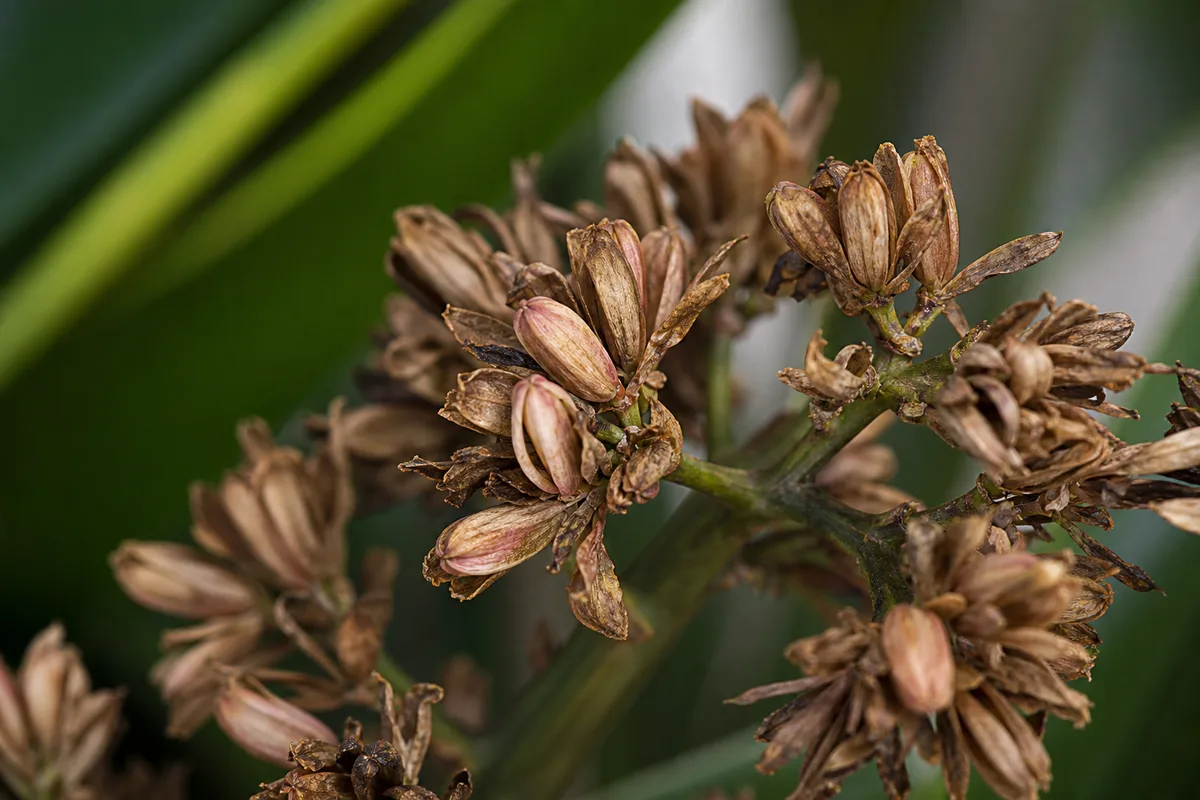
Flowers Turning Brown symptoms on Janet Craig Dracaena - compare with healthy tissue on the same plant.
Janet Craig flowers appear in panicles 6 to 60 inches long on a dedicated stalk, according to NC State’s D. fragrans profile. Individual florets are about one inch across with a six-lobed, star-shaped corolla. Buds often start pink, open white, and show a fine red or purple central line on each lobe. The cluster is highly fragrant at night-many owners notice the scent before they spot the stalk.
During active bloom, florets may drip sticky nectar onto leaves, floors, or furniture below. That stickiness is normal for the species epithet fragrans-the flowers are built to attract pollinators in tropical Africa, not to stay pristine on a lobby carpet.
Before browning, expect:
- A vertical stalk emerging from the crown, not damage embedded in leaf tissue
- Open white (or still pink) florets in clusters along the panicle
- Strong sweet fragrance strongest after dark
- Optional sticky residue beneath the panicle
When senescence begins, individual florets tan, then brown and crisp while neighboring florets may still be white. The browning travels along the panicle over roughly one to two weeks rather than appearing overnight on every leaf tip.
Flowers turning brown vs. brown leaf tips (misidentification)
This is the most common routing error on Janet Craig “flower” searches. Fluoride-sensitive dracaenas develop chronic brown tips and margins on strap leaves from tap water-Janet Craig’s signature indoor problem-while true flowers exist only on a separate stalk.
| What you see | Likely diagnosis | Next step |
|---|---|---|
| Brown open florets on a long stalk after fragrance | Normal post-bloom senescence | Remove spent stalk (below) |
| Brown buds that never opened on a new stalk | Stress bud abort | See bud drop |
| Brown leaf margins/tips, no stalk, year-round | Fluoride or salt injury | See brown tips |
| Yellow soft leaves, sour wet soil, no bloom history | Overwatering / rot | See overwatering or root rot |
Clemson HGIC lists fluoride sensitivity as a primary dracaena issue-tip and margin burn-not floral disease. If you cannot find a flower stalk, this page is the wrong guide; the brown tips article matches your symptom.
Normal post-bloom senescence on Janet Craig
Once Janet Craig finishes its rare display, browning florets are the final act, not a new crisis. Petals and corolla tissue do not re-open or re-green; they dry in place until the entire panicle looks spent.
The timeline usually runs:
- Peak bloom - white florets, strong night scent, possible nectar drip
- Early fade - individual florets tan at the edges while others remain open
- Mid senescence - most florets brown and papery; fragrance drops sharply
- Spent panicle - entire cluster dry brown on a stiff stalk
The cane and foliage should stay firm and deep green throughout. New crown leaves may continue emerging slowly-that is a healthy sign. Senescence affects only the inflorescence, not the architectural leaves Janet Craig is sold for.
Do not interpret brown flowers as a signal to repot, fertilize heavily, or change watering on the same day. The plant just completed an energy-intensive reproductive phase. Stability matters more than aggressive intervention.
Stress-related bud browning before flowers open
Not every brown floret is normal fade. When buds brown and drop before opening, or a new stalk aborts while still green, environmental stress-not senescence-is the likely cause.
Common triggers on Janet Craig include:
- Sudden light change after a stalk formed (moving a blooming plant to a dimmer office)
- Dry soil swings during bud development-see watering guidance
- Cold drafts below about 55°F (13°C) (keep above 50°F) or hot dry air from vents
- Recent repot or relocation while a stalk was developing
Premature bud browning differs from post-bloom fade because flowers never fully opened white, fragrance was weak or absent, and the stalk may wilt or yellow rather than stiffen with dry brown florets. Route that pattern to bud drop on Janet Craig and stabilize one variable-usually water rhythm matched to light-before cutting anything.
How to confirm what you are seeing
Work through this order before you cut or treat:
- Find the stalk - trace brown tissue upward. Does it sit on a panicle stem separate from leaves?
- Recall fragrance - did the plant smell strongly sweet at night in recent weeks?
- Check floret history - did white or pink stars open first, or did buds fail closed?
- Inspect foliage - are strap leaves firm and green except optional unrelated tip burn?
- Feel the cane - soft, mushy base with sour soil overrides bloom questions; inspect roots
- Review water source - chronic margin burn without any stalk points to fluoride, not flowers
If steps 1–2 confirm an opened panicle now browning, you have senescence. If no stalk exists, switch to brown tips. If buds never opened, use bud drop.
First fix for Janet Craig
If post-bloom senescence is confirmed: remove the spent flower stalk.
Wait until most florets have browned and scent has faded-cutting too early wastes the show but cutting late only prolongs nectar mess. Use clean, sharp pruners and slice the stalk at its base where it emerges from the crown. Do not tear or snap-it can damage adjacent leaf sheaths.
Collect the removed panicle in a bag if sticky nectar coated nearby surfaces. Wipe leaves and floor with a damp cloth; plain water is enough. Do not mist hoping to revive brown florets-they are spent tissue.
After removal, return to normal Janet Craig care: dry-down watering matched to light per the watering guide, fluoride-free water for foliage health, and no fertilizer until the plant shows steady new crown growth if you paused feeding during bloom.
If you misidentified leaf tips: your first fix is not stalk removal-it is switching water source and following the brown tips guide.
Post-bloom stalk removal and nectar cleanup
Removing the panicle is both cosmetic and practical. Spent stalks do not rebloom from the same cut point; Janet Craig would need to produce a new inflorescence from the crown, which may not happen again for years indoors.
When cutting:
- Sterilize blades if you recently trimmed diseased tissue elsewhere
- Cut once, cleanly, slightly angled if sap drips
- Avoid leaving a short stub that dies back slowly and invites pests
- Check the crown for hidden nectar in leaf axils and wipe dry
Expect a small energy pause after removal-the plant may not push new leaves for several weeks. That is normal recovery, not decline, as long as cane tissue stays firm.
Recovery timeline
| Phase | What to expect |
|---|---|
| Days 1–3 after stalk cut | Sap may bead at cut; wipe dry. No new bloom. |
| Weeks 1–2 | Crown returns to foliage-only appearance. Fragrance gone. |
| Weeks 3–8 | Occasional new leaf may emerge in bright conditions. |
| Months to years | Rebloom possible but unpredictable indoors-do not chase it with bloom fertilizer |
Brown leaf tip tissue from fluoride never re-greens; that is unrelated to flower senescence. Judge foliage health by new crown leaves staying clean after you fix water quality.
What not to do
Do not water heavily because flowers browned-wet mix in low light causes rot unrelated to bloom fade. Do not apply high-phosphorus bloom booster after senescence; Janet Craig is a foliage plant and Clemson HGIC warns that excess fertilizer can burn leaf margins.
Do not confuse spent blooms with fluoride tips and only trim leaves while ignoring a dripping panicle stub. Do not compost sticky panicles indoors without a bag-they can attract ants.
Keep plants away from pets during cleanup; dracaena is toxic to cats and dogs if ingested. Contact your veterinarian if a pet chews stalk or leaves.
How to prevent confusion next time
When Janet Craig blooms again-if it ever does-photograph the panicle at peak white so future brown florets are easy to compare. Note the stalk location so household members do not mistake leaf tip burn for “dying flowers.”
Place a saucer or cloth under the pot during active bloom to catch nectar. After senescence, remove the stalk promptly before brown tissue sheds onto carpet.
For the far more common brown leaf margin problem, make filtered or rainwater the default and review the Janet Craig overview for light-and-water pairing-prevention lives there, not in bloom care.
Related Janet Craig problems
- Janet Craig overview - Rare bloom context, light, and watering baseline
- Brown tips - Primary misidentification when no flower stalk exists
- No flowers - Why most indoor Janet Craigs never bloom
- Bud drop - Buds brown before opening, not after full bloom
- Watering Janet Craig - Dry-down rhythm during and after bloom
Conclusion
Brown flowers on Janet Craig Dracaena are usually normal when they appear on a fragrant panicle stalk after white florets opened. Cut the spent stalk, wipe sticky nectar, and return to steady foliage care. When no stalk is present, brown tissue on leaf margins is not a floral problem-use the brown tips guide. When buds fail before opening, stabilize environment via bud drop guidance instead of treating senescence.
When to use this page vs other Janet Craig Dracaena guides
- Janet Craig Dracaena watering guide - Use for routine moisture checks before assuming flowers turning brown is the main issue.
- Janet Craig Dracaena problems hub - Browse all 50 common issues on this species.