Bud Drop on Janet Craig Dracaena: Causes, Checks & Fixes
Quick answer
Bud drop on Janet Craig Dracaena usually means one of three things: rare floral buds aborting on a panicle stalk after stress, crown new leaves stalling or shriveling before they unfurl, or-most often-whole yellow leaves dropping that owners call buds. First step: identify which pattern you have, then stabilize temperature away from drafts below about 55°F before repotting or changing water rhythm.
Bud Drop on Janet Craig Dracaena: Causes, Checks & Fixes
This guide covers bud drop on Janet Craig Dracaena. See also the general Bud Drop guide, watering, and light pages for this plant.
Bud Drop on Janet Craig Dracaena: Causes, Checks & Fixes
Quick answer
Bud drop on Janet Craig Dracaena (Dracaena fragrans ‘Janet Craig’) is a search term that covers three different problems-and getting the category wrong sends you to the wrong fix.
- Floral bud abortion - Pink buds on a rare panicle stalk shrivel before opening white (true bud drop on a blooming plant).
- Crown new-leaf failure - Tiny rolled leaves at the center stall, brown, or fall before unfurling (growers often call these “buds”).
- Leaf drop mislabeled as buds - Whole yellow strap leaves fall from lower cane positions after cold drafts or overwatering-not floral tissue at all.
Most indoor Janet Craigs never bloom. NC State Extension states flowers are infrequently produced indoors but make their presence known with very strong nocturnal fragrance when they do appear. If you have never seen a flower stalk and only lose lower leaves, start with yellow leaves on Janet Craig-not this page.
First step: name what is dropping. Look at the crown. A vertical flower stalk separate from foliage means floral bud drop. Rolled new leaves stuck at the center mean crown emergence failure. Mature strap leaves yellowing and falling from lower nodes mean leaf loss-see the yellow-leaves guide. Once categorized, move the plant away from cold drafts and AC vents and hold placement steady for two weeks before Janet Craig Dracaena repotting guide or stacking other treatments.
Full species context: Janet Craig overview.
Bud drop vs. leaf drop on Janet Craig
Janet Craig vocabulary confuses owners because the plant produces growth from one crown-and both new leaves and rare flower stalks emerge from that same point.
Floral buds develop on a dedicated panicle stalk that rises above the leaf rosette. NC State’s D. fragrans profile describes panicles 6 to 60 inches long with star-shaped florets that start pink and open white. Bud drop here means those florets abort before opening, or the entire stalk wilts while still green.
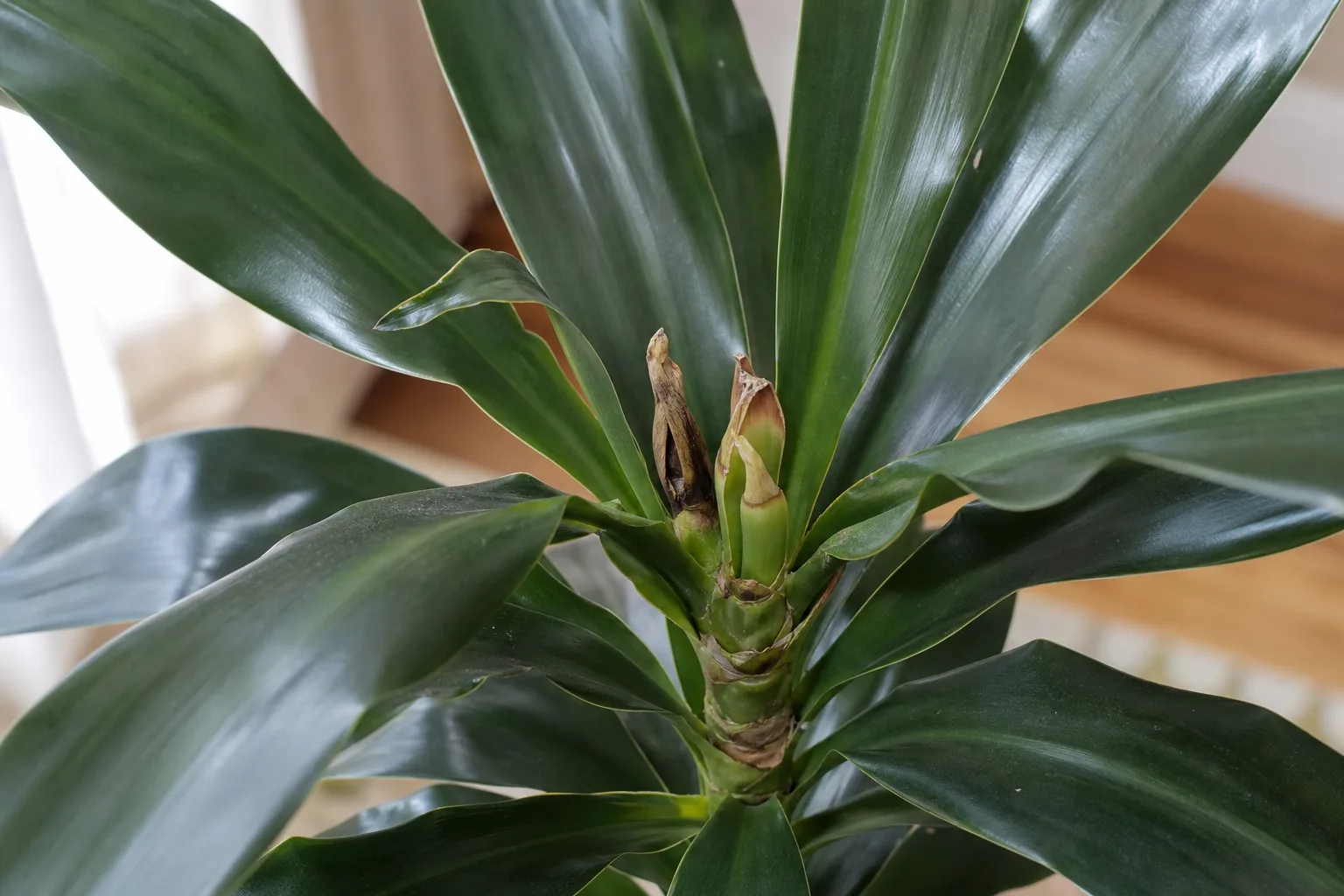
Crown “buds” are actually immature strap leaves-tight rolled cylinders that should slowly unfurl into the glossy dark-green foliage Janet Craig is sold for. When these fail, owners report “buds dropping” even though no flower is involved.
Leaf drop is different tissue entirely: mature lower leaves yellow, then fall as the cane elongates-a normal aging pattern on Dracaena-or drop rapidly after cold exposure below about 55°F (13°C) and chronic overwatering in low light.
If your symptom is brown tips on leaf margins with no stalk, that is not bud drop-use brown tips. If open flowers are browning after a fragrant bloom, that is usually normal senescence-see flowers turning brown.
What bud drop looks like on Janet Craig
Floral panicle buds
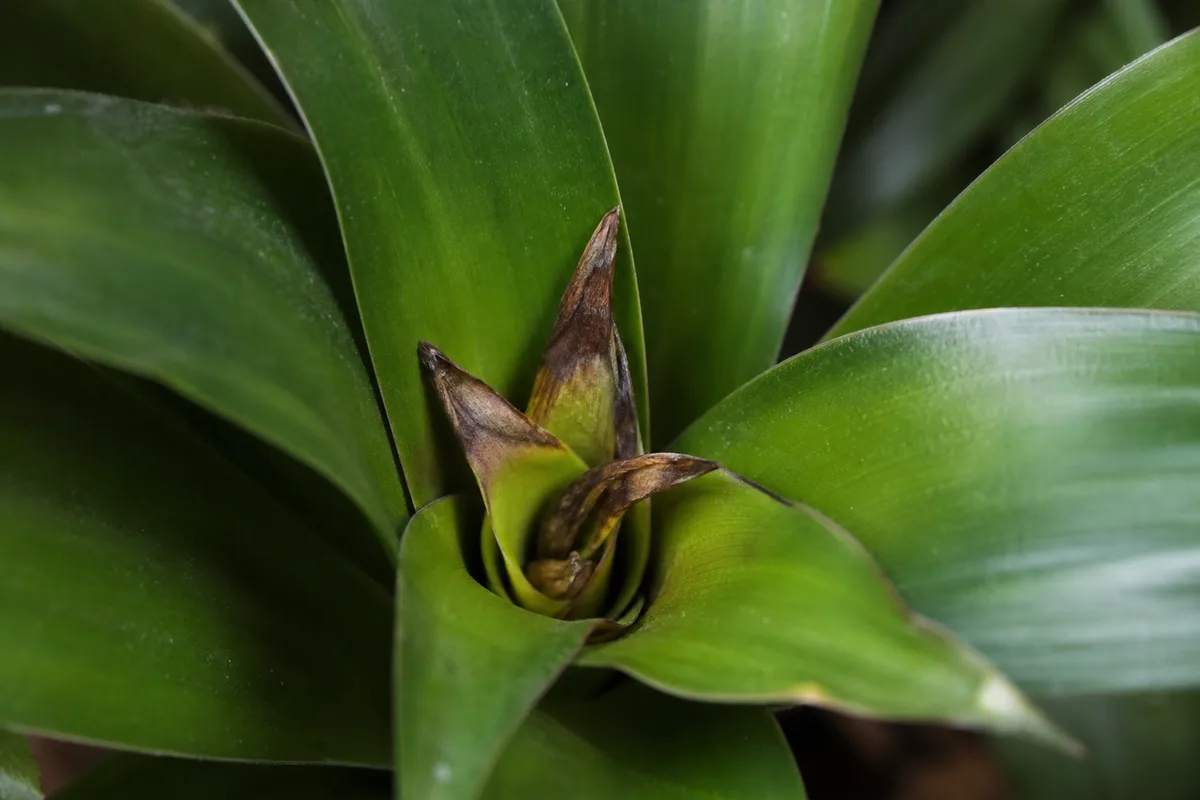
Bud Drop symptoms on Janet Craig Dracaena - compare with healthy tissue on the same plant.
On the rare Janet Craig that blooms indoors, bud failure shows on the flower stalk only:
- A new vertical stalk emerges from the crown while existing strap leaves stay deep green
- Pink or white buds cluster along the panicle, then shrivel, brown, or fall before fully opening
- Fragrance is weak or absent compared with a successful bloom
- The stalk may yellow or wilt while still short-unlike stiff dry brown of spent post-bloom florets
- Cane remains firm; soil moisture pattern unchanged from pre-bloom routine
Successful blooms open white, release strong night scent, and only brown after opening-documented on the flowers turning brown guide.
Crown new-leaf rosettes
Crown failure is more common than floral bud drop in offices:
- Tiny rolled leaves at the center stay small for weeks while outer foliage looks normal
- New growth browns at the tip while still furled, then dries and drops
- No separate flower stalk is present
- Often follows winter window placement, AC vent exposure, or sudden move from a bright greenhouse to a dim lobby
- Cane is usually firm unless overwatering rot is also present
Leaf loss mistaken for bud drop
When owners say “buds” but mean whole leaves:
- Lower strap leaves turn yellow-green, then drop-sometimes while still partially green
- Loss may be one leaf at a time (normal senescence) or several at once (cold draft or water stress)
- No panicle stalk; dropped tissue is full-size mature leaf, not a furled cylinder
- Cold-draft pattern often shows yellowing on the side facing the vent first
Route this pattern to yellow leaves for the full cause hierarchy.
Why Janet Craig drops buds
Indoor flowering rarity and environmental triggers
Janet Craig is a foliage plant in commercial interiors. Missouri Botanical Garden notes that flowers and berries rarely appear on indoor plants. Bloom typically requires a mature specimen, bright indirect light, and years of stable care-context in no flowers on Janet Craig.
When a plant finally initiates a panicle, it is vulnerable. Dracaenas evolved in tropical African understory where temperature and moisture stay relatively steady. Indoor relocations, repots, or HVAC swings during stalk development commonly abort the inflorescence before florets open.
Stress during bud formation (move, repot, cold drafts)
The triggers differ slightly by bud type but overlap:
Cold and drafts. NC State recommends keeping temperature above 50°F for corn plant relatives, with best growth at 70 to 80°F. Sustained exposure below about 55°F (13°C)-common on winter window sills and AC registers-stalls crown new leaves and can abort floral buds mid-development.
Recent move or repot. Janet Craig adjusts slowly to new light and root disturbance. Moving a plant while a flower stalk or crown flush is forming often drops that growth flush entirely. Hold off repotting during visible panicle development if you want to keep a rare bloom.
Water rhythm swings. In low-light placements, Janet Craig uses water slowly-often every 21 to 28 days or longer between thorough soaks. A drought spell during crown emergence, or chronic wet mix from calendar watering, both stress new tissue. Match rhythm to light per the watering guide.
Fluoride during new growth. Clemson HGIC lists fluoride sensitivity as a primary dracaena issue. New crown leaves and bud margins are especially vulnerable-tip burn on emerging tissue can look like bud failure. Fluorine toxicity references document margin necrosis on dracaena from fluoridated water and superphosphate fertilizers.
Bud drop vs. yellow leaf drop
Yellow leaf drop and bud drop share cold-draft and watering triggers but produce different tissue loss:
| Pattern | What drops | Cane | Soil | Likely cause | First direction |
|---|---|---|---|---|---|
| Floral buds shrivel on stalk, never opened white | Panicle florets | Firm | Normal for season | Move/repot/draft during bloom | Stabilize placement; see below |
| Rolled crown leaves brown and abort | New leaf cylinders | Firm (usually) | Check half-depth moisture | Cold draft, fluoride on new growth, drought | Shield from vents; filtered water |
| Lower yellow leaves drop one by one | Mature strap leaves | Firm | Dry to appropriate depth | Normal senescence | Monitor; no crisis |
| Many yellow leaves at once, draft side first | Mature leaves | Firm | Variable | Cold below ~55°F | Relocate; link yellow-leaves |
| Yellow clusters, heavy wet pot, soft base | Lower + crown stall | Soft at soil line | Wet, may smell sour | Overwatering / rot | Stop water; see root rot |
Cold-draft yellowing is covered in depth on yellow leaves-do not duplicate that diagnostic here if whole leaves are the only symptom.
How to confirm the cause
Work through these checks in order. One stable week of observation beats same-day repotting.
- Stalk present? Vertical panicle stem above leaves → floral bud drop track. No stalk → crown or leaf track.
- Tissue type - Furled cylinder at crown center (new leaf) vs. full strap leaf from lower node (leaf drop).
- Temperature map - Note distance to AC vents, winter windows, and frequently opened doors. Draft paths explain many crown failures.
- Pot weight and half-depth moisture - Heavy wet pot with crown stall suggests rot overlap, not pure bud stress. Light dry pot with aborted crown leaves suggests drought during flush.
- Cane firmness - Firm throughout: environmental bud or leaf issue. Soft at soil line: escalate to root inspection.
- Recent changes - Move, repot, fertilizer, or light shift in the last two weeks strongly implicates stress abortion on floral or crown buds.
- Water source - Chronic tip burn on older leaves plus crown abortion points to fluoride-switch to filtered water before other fixes.
You have confirmed floral bud drop when a panicle stalk was developing, buds shriveled before opening white, cane stays firm, and a recent environmental change preceded failure.
You have confirmed crown new-leaf failure when rolled center leaves stall or abort without any flower stalk, cane is firm, and draft or fluoride exposure fits the timeline.
You have confirmed misrouted leaf drop when mature lower leaves yellow and fall with no crown furled cylinders and no panicle-use yellow-leaves.
First fix for Janet Craig (by likely cause)
Apply one change at a time on fluoride-sensitive Janet Craig. Do not stack repot, prune, and fertilizer on the same day.
Floral buds aborting on a stalk: Move the plant to a stable spot away from vents and cold glass-bright to moderate filtered light without direct sun burn. Hold water rhythm steady per light level. Do not repot while a replacement stalk might form. Wait two to four weeks for a new crown flush or a second bloom attempt on mature plants.
Crown new leaves stalling: Relocate off the draft path first-this single step resolves many winter window failures. If soil is appropriately dry, one thorough soak with filtered water may help a drought-stalled flush. If mix has been wet for weeks in low light, skip watering an extra week instead-see overwatering.
Leaf drop you mislabeled as buds: Route to yellow-leaves and fix moisture before crown-focused treatments.
Fluoride on emerging tissue: Switch to filtered or distilled water for the next several cycles. Clemson HGIC recommends non-fluoridated water when margins brown.
Recovery timeline
Floral bud abortion - The lost panicle does not re-open. A mature plant may send another stalk next season if care stays stable-many indoor specimens never retry. Foliage recovery is the realistic goal.
Crown new-leaf failure - Once drafts and water rhythm stabilize, expect a clean new rolled leaf to emerge within two to four weeks in warm months; slower in winter low light. Old aborted cylinders do not re-green.
Leaf senescence - Single lower leaf loss needs no recovery clock. Mass yellowing from cold may take several weeks for crown growth to resume after relocation.
Judge success by firm cane and new crown tissue emerging without tip burn-not by old dropped leaves returning.
What not to do
Do not repot or heavily prune during visible floral bud formation if you want to keep a rare bloom cycle.
Do not increase watering because crown growth stalled in a dim room-wet mix in low light rots roots while crown looks dormant.
Do not assume every dropped cylinder is a flower bud-most are new leaves.
Do not use untreated tap water if margins brown repeatedly on new and old foliage.
Do not ignore soft cane and sour soil while focusing on bud placement-that is root rot urgency.
Dracaena is toxic to cats and dogs-dispose of dropped leaves safely and keep plants out of reach of chewing pets.
How to prevent bud drop next time
Match watering to light - In deep shade, let most of the pot dry between soaks; in brighter spots, top half dry. Details in the watering guide and light guide.
Shield from drafts - Keep Janet Craig away from heating and cooling vents and winter window sills where air drops below 55°F (13°C).
Use filtered water - Reduces fluoride injury on emerging crown tissue.
Minimize moves during flushes - If a panicle stalk or heavy crown flush appears, avoid relocation until it finishes or clearly aborts.
Accept indoor bloom rarity - Foliage health is the realistic success metric for most Janet Craigs; see no flowers for expectations.
Practical checks
Urgency check
Same-day attention when cane tissue softens at the base, soil smells sour, or yellowing spreads on a heavy wet pot in low light-that is rot risk, not cosmetic bud loss.
This week when crown flush has stalled more than three weeks in warm indoor temperatures, or many leaves drop at once after a cold event.
Monitor when one lower leaf yellows on a firm cane-likely normal aging.
Best inspection order
Crown center (furled leaves or stalk) → draft and temperature placement → pot weight → half-depth moisture → water source (fluoride history) → cane firmness at soil line → roots only if wet decline persists
Related Janet Craig problems
- Janet Craig overview - Cold drafts, fluoride, troubleshooting hub
- Watering - Dry-down rhythm matched to office low light
- Light - Survive vs. thrive light levels
- Yellow leaves - Cold-draft and overwatering leaf drop
- Brown tips - Fluoride margins vs. bud tissue
- Root rot - Soft cane when wet mix persists
- No flowers - Indoor bloom rarity
- Flowers turning brown - Post-bloom senescence vs. bud abort
When to use this page vs other Janet Craig Dracaena guides
- Janet Craig Dracaena watering guide - Use for routine moisture checks before assuming bud drop is the main issue.
- Janet Craig Dracaena problems hub - Browse all 50 common issues on this species.