No Flowers on Janet Craig Dracaena: Causes, Checks & Fixes
Quick answer
No flowers on Janet Craig Dracaena is usually normal indoors, not a care failure. Most office and low-light specimens never bloom because foliage maintenance-not reproduction-is the plant's priority in dim conditions. First step: confirm your plant is healthy foliage-only (firm cane, occasional crown leaves, deep green straps) before trying to chase blooms.
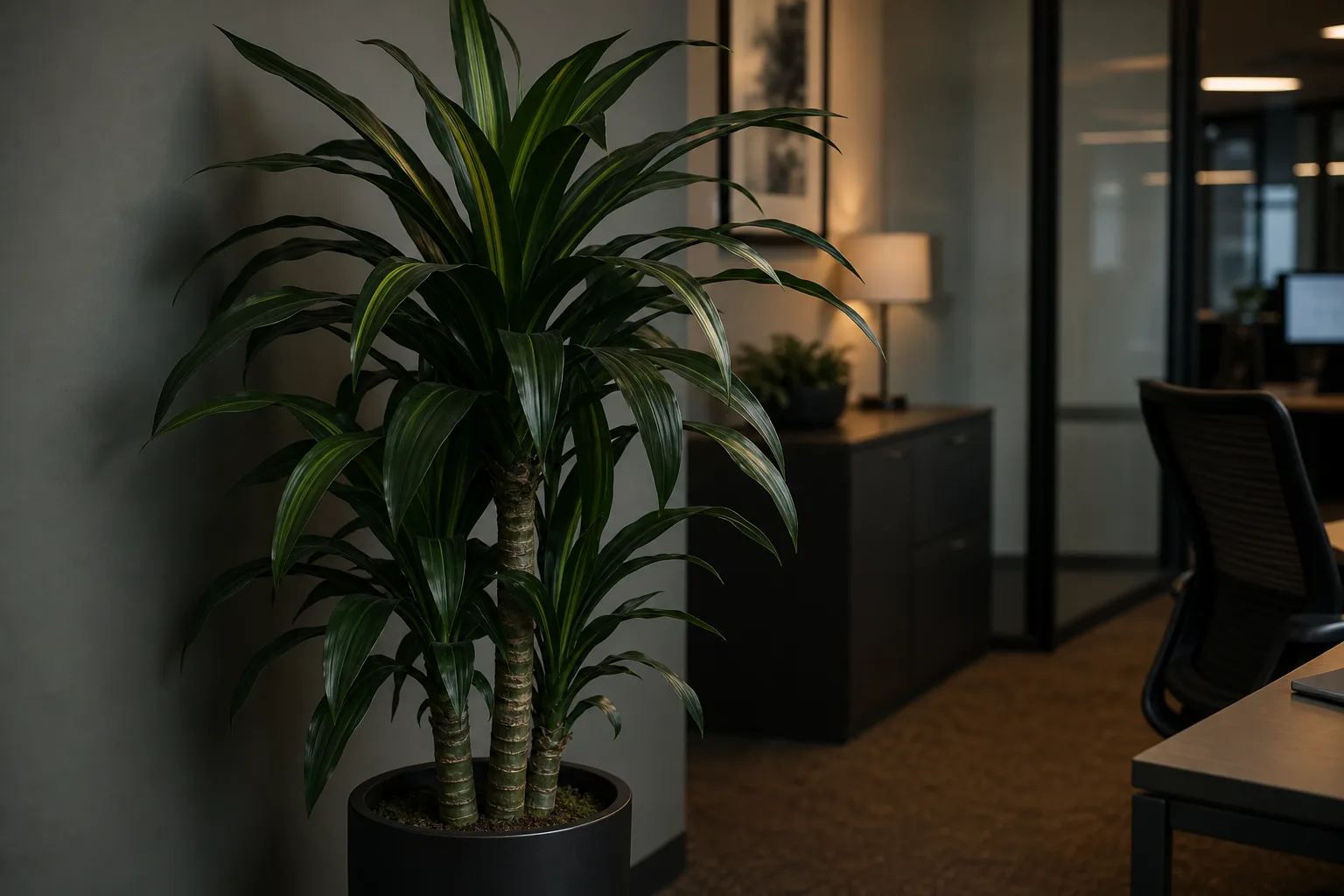
No Flowers on Janet Craig Dracaena: Causes, Checks & Fixes
This guide covers no flowers on Janet Craig Dracaena. See also the general No Flowers guide, watering, and light pages for this plant.
No Flowers on Janet Craig Dracaena: Causes, Checks & Fixes
Quick answer
No flowers on Janet Craig Dracaena is usually normal indoors-not a defect. Janet Craig (Dracaena deremensis ‘Janet Craig’, often sold under Dracaena fragrans group labels) is bred and placed for deep green architectural foliage, not seasonal blooms. Most office, lobby, and low-light home specimens never produce a flower stalk across their entire life indoors, and that outcome does not mean the plant is unhealthy.
First step: confirm you have a healthy foliage-only plant before chasing blooms. Check that the cane is firm, existing strap leaves stay deep green, and new crown leaves appear occasionally in warm months-especially if light is brighter than a typical dim office. If those markers are positive and no panicle stalk rises from the crown, accept foliage success. If crown growth has stalled all warm season in bright light, you may have slow growth instead of a flowering problem.
Is no bloom normal on indoor Janet Craig?
Yes-for the vast majority of indoor Janet Craigs, absence of flowers is the expected outcome, not a warning sign.
Janet Craig earned its reputation as an office and interiorscape plant because it tolerates low light and irregular attention while holding glossy green leaves. That same placement logic works against flowering. Reproductive growth demands more light, maturity, and environmental stability than foliage maintenance in a shady corner. Commercial Janet Craigs in lobbies and cubicle zones are selected to look polished without blooms, and they deliver exactly that.
NC State Extension describes corn plant flowers as infrequently produced indoors, though their very strong nocturnal fragrance makes bloom unmistakable when it finally happens. Missouri Botanical Garden states plainly that flowers and berries rarely appear on indoor plants for Dracaena fragrans. If your Janet Craig has never flowered after years in a dim office, it is following the same pattern as millions of healthy specimens-not hiding a secret care error.
The honest reframing: “no flowers” is only a problem page title because people search it. Horticulturally, a foliage-only Janet Craig in low light is succeeding at its job.
Why Janet Craig rarely flowers indoors
Indoor Janet Craig flowering fails-or never starts-for reasons tied directly to how this cultivar is grown, not because you forgot bloom fertilizer.
Maturity and slow growth timeline
Janet Craig is a deliberately slow-growing floor plant. Indoors it typically reaches 4 to 6 feet over many years, developing a visible cane as lower leaves shed. Bloom initiation requires reproductive maturity: a plant that has accumulated enough stored energy and stem height to support an inflorescence. That timeline commonly stretches to many years indoors-often a decade or more before bloom is even physiologically possible, and maturity alone still does not guarantee flowers.
Young or recently repotted Janet Craigs almost always prioritize crown foliage over panicles. If your plant is still adding height slowly and has been repotted frequently, lack of flowers is predictable. Compare with the Janet Craig overview for realistic growth pacing-Janet Craig is not a fast houseplant that blooms on a two-year schedule like some gesneriads.
Low-light foliage tolerance vs. bloom-initiation light
Janet Craig survives low light better than most large foliage plants. It flowers only under brighter conditions.
In deep shade or standard office fluorescent lighting, photosynthesis drops enough that the plant enters maintenance mode: existing leaves persist, crown pushes are occasional, and reproductive hormones stay suppressed. Bright indirect light-roughly the exposure described in the Janet Craig light guide-supports stronger metabolism and is the minimum realistic starting point if you want to attempt bloom. Direct hot sun scorches Janet Craig leaves; the target is bright ambient daylight without harsh midday sun.
Most searchers asking “why won’t my Janet Craig bloom?” keep the plant where it looks best as foliage-and that placement correctly prioritizes appearance over flowers.
Temperature, humidity, and environmental stability
Corn plants and Janet Craig cultivars prefer stable warm indoor temperatures, typically 65 to 80°F (18 to 27°C) during active growth, with NC State noting that they thrive around 70 to 80°F. Cold drafts below about 55°F (13°C) stall crown growth and abort developing inflorescences-relevant if a bloom stalk ever forms near a winter window or AC vent.
Moderate humidity helps but is secondary to light and stability. Janet Craig handles average household humidity; extremely dry winter air stresses foliage margins before it blocks flowering. More importantly, sudden environmental swings-moving a plant mid-cycle, repotting when a stalk is forming, or changing watering rhythm sharply-divert energy away from bloom initiation. Stability matters more than misting alone.
Some experienced growers report that slight root-bound stress on a mature, bright-window specimen occasionally precedes a rare panicle. That is anecdotal, not a guarantee-and chronic overwatering in a bound pot causes rot, not flowers. Never leave a Janet Craig waterlogged hoping to force bloom.
What Janet Craig flowers look like when they do appear
Knowing the real bloom helps you stop misidentifying leaf problems as “missing flowers.”
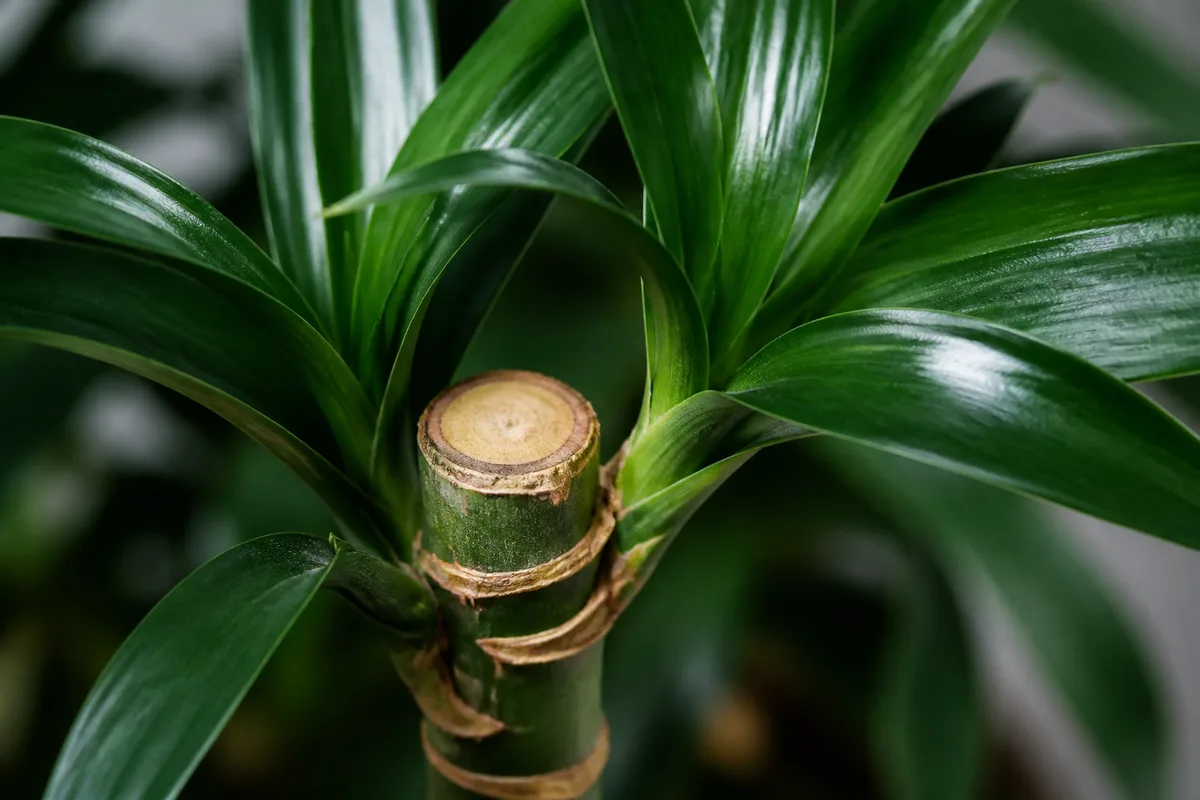
No Flowers symptoms on Janet Craig Dracaena - compare with healthy tissue on the same plant.
When Janet Craig finally flowers, it sends up a dedicated stalk separate from the strap leaves. NC State’s D. fragrans profile describes panicles 6 to 60 inches long bearing hundreds of small florets. Individual flowers are about one inch across with a six-lobed, star-shaped corolla. Buds often start pink, open white, and show a fine red or purple central line on each lobe. The cluster is highly fragrant at night-many owners smell bloom before they see the stalk.
Scent, sticky nectar, and post-bloom stalk care
Active Janet Craig bloom is sensory and messy, which is why interiorscapers rarely pursue it.
The fragrance is sweet and intense, especially after dark-noticeable across a room in small spaces. Florets may drip sticky nectar onto leaves, floors, and furniture below. That nectar is normal pollination biology, not disease. After bloom, florets brown and dry on the stalk over one to two weeks-a normal senescence covered in the flowers turning brown guide. Remove the spent stalk at its base once browning spreads; the plant redirects energy to foliage.
If you have never seen a stalk and only notice brown at leaf margins year-round, you do not have missing flowers-you have brown tips from fluoride or salt injury.
No flowers vs. other problems (lookalikes)
Misrouting is common because Janet Craig problem searches overlap. Use this table before changing care to “force bloom.”
| What you see | Likely meaning | Where to go |
|---|---|---|
| No panicle stalk ever, firm cane, deep green leaves, dim office | Normal foliage-only Janet Craig | Stay on this page; accept or adjust light if pursuing bloom |
| No new crown leaves all warm season in bright window | Stalled growth-not flowering issue | Slow growth |
| Brown leaf margins/tips, no stalk, chronic tap water | Fluoride or salt injury | Brown tips |
| Buds on new stalk brown before opening white | Stress abort during rare bloom attempt | Bud drop |
| Yellow soft leaves, sour wet soil, no bloom history | Overwatering / rot | Root rot or overwatering |
| White florets opened, now browning on stalk | Normal post-bloom fade | Flowers turning brown |
Increasing water, fertilizer, or repotting will not produce flowers on a dim office Janet Craig with healthy foliage. Those interventions address different problems-and can cause rot in low light.
How to confirm your plant is healthy without blooms
Before treating “no flowers” as a crisis, run a crown-health checklist, not a bloom checklist.
- Locate the crown - new leaves should emerge from the top rosette on a firm cane.
- Feel the cane - woody stem should be solid, not soft or mushy near the base.
- Check leaf color - deep green straps; widespread yellow on wet soil suggests rot, not missing blooms.
- Assess light honestly - dim office placement predicts no flowers; bright indirect with still no stalk is normal too, just less surprising.
- Review watering rhythm - dry-down matched to light per watering guidance; soggy mix in low light is the real risk.
- Confirm no stalk - absence of any inflorescence stem means you are foliage-only, not mid-bloom.
If steps 1–5 pass and no panicle exists, your Janet Craig is healthy without flowers. Celebrate glossy leaves and stable form-the outcomes this cultivar is chosen for.
Can you encourage Janet Craig to bloom?
You can improve odds slightly on a mature plant; you cannot guarantee indoor bloom.
Realistic first action if you want to try: move a healthy, mature Janet Craig to bright indirect light for several warm seasons without repotting mid-attempt. Keep stable temperatures in the 65–80°F range, water with fluoride-aware practices so foliage stays clean, and avoid stacking stressors (relocation, heavy prune, repot) in the same month.
Optional secondary steps after a year of stability in brighter light:
- Maintain moderate humidity if winter air is very dry, but prioritize light first.
- Allow slight root crowding only if the plant is otherwise healthy-never at the expense of drainage.
- Do not apply high-phosphorus “bloom booster” fertilizers; Janet Craig is a foliage plant and excess fertilizer burns leaf margins.
Even with ideal care, rebloom may never come indoors. Treat any panicle as a rare bonus, not a maintenance target. If your space cannot offer brighter light, accept foliage-only success-that is what Janet Craig does best in commercial interiors.
What not to do
Do not repot or heavily prune when a floral stalk is visible if you are trying to keep a bloom cycle going-stress aborts buds. See bud drop if buds fail.
Do not chase flowers with more water or fertilizer in a low-light office. Wet mix without matching transpiration causes root rot while leaving you flowerless.
Do not mistake brown leaf tips for missing blooms. No stalk means this page applies; chronic margin burn means brown tips.
Do not expect fragrance without a stalk-if you smell intense night scent, look upward for a panicle you may have overlooked, then read flowers turning brown when florets fade.
Pet safety: Janet Craig is toxic to cats and dogs. Keep plants away from chewing pets regardless of bloom status.
How to set expectations next time
Choose Janet Craig for low-light foliage architecture, not dependable indoor flowers. If blooms matter to you, species like peace lilies or hoyas fit that goal better in typical home conditions.
When you bring Janet Craig home-or inherit one from an office-assume foliage-only unless you can offer bright indirect light, years of maturity, and stable care. Photograph the crown twice a year so you notice real growth changes versus static deep green presence.
If a panicle ever appears, place a towel or saucer under the pot for nectar drip, warn household members about night fragrance in small rooms, and plan to remove the spent stalk after bloom. Then return to normal care on the overview page without chasing immediate rebloom.
Practical checks
Urgency check (crown health, not missing flowers)
Missing flowers is not urgent. Urgent signs are soft cane, sour wet soil, spreading yellow leaves on a heavy pot, or crown collapse-those indicate rot or severe water stress, not a bloom deficit. Same-day root assessment applies there; see root rot.
Best inspection order
Crown new-growth status → cane firmness → leaf color pattern → light level honesty → pot weight and moisture → confirm no panicle stalk → route to lookalike guides if margins brown or growth stalls.
Related Janet Craig guides
- Janet Craig overview - Baseline care, light-water pairing, and growth expectations
- Light requirements - Survive vs. thrive exposure for foliage and optional bloom attempts
- Slow growth - When no new crown leaves signal a real problem
- Brown tips - Primary misidentification when no flower stalk exists
- Bud drop - Rare bloom stalk fails before opening
- Flowers turning brown - Normal senescence after a successful panicle
- Root rot - Overwatering urgency unrelated to flowering
Conclusion
No flowers on Janet Craig Dracaena is usually normal indoors, especially in low-light offices where the plant excels at foliage maintenance. Confirm firm cane, healthy crown leaves, and absence of a panicle stalk before changing care. If you want to nudge odds on a mature specimen, bright indirect light and multi-year stability are the only realistic levers- not extra fertilizer or water in dim conditions. When brown margins or stalled crown growth appear, switch to the lookalike guides above; those problems matter more than missing blooms ever will.