No Drainage Hole on Janet Craig Dracaena: Causes, Checks &
Quick answer
A Janet Craig Dracaena planted directly in a holeless decorative pot traps runoff at the bottom - and in low-light offices the plant uses water so slowly that anaerobic rot develops before the surface feels wet. First step: lift the inner nursery pot out, pour off all standing water, and confirm the outer container is empty before returning the plant.
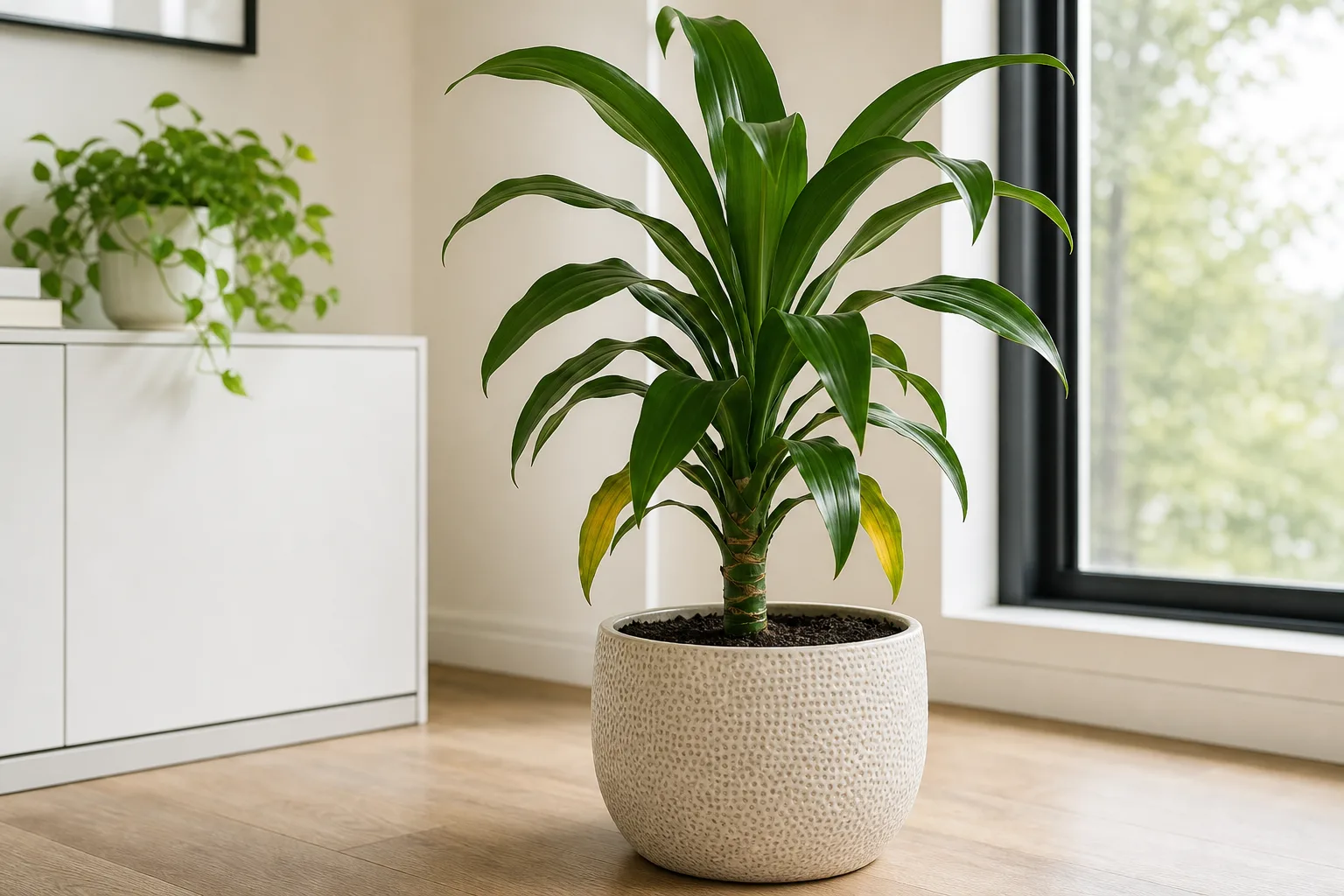
No Drainage Hole on Janet Craig Dracaena: Causes, Checks & Fixes
This guide covers no drainage hole on Janet Craig Dracaena. See also the general No Drainage Hole guide, watering, and light pages for this plant.
No Drainage Hole on Janet Craig Dracaena: Causes, Checks & Fixes
Quick answer
A Janet Craig Dracaena planted directly in a holeless decorative pot traps runoff at the bottom - and in low-light offices the plant uses water so slowly that anaerobic rot develops before the surface feels wet. First step: lift the inner nursery pot out, pour off all standing water, and confirm the outer container is empty before returning the plant.
Janet Craig (Dracaena fragrans ‘Janet Craig’) is built for dim lobbies and interior corridors where it transpires far less than sun-loving houseplants. That slow water use is an advantage in drilled nursery pots - but it becomes a liability when excess water has nowhere to exit. NC State Extension recommends commercial potting soil in a pot with drainage holes for Janet Craig, with dry-down between waterings. A sealed floor planter breaks that requirement from day one.
If your Janet Craig arrived glued into a decorative container with no inner pot, treat the situation as urgent container failure - not a fluoride or calendar-watering puzzle. Full species context: Janet Craig overview. For the complete watering rhythm this species needs once drainage is restored, see the Janet Craig watering guide.
Why a holeless pot is risky for Janet Craig
Janet Craig earned its office reputation because it survives low light better than most large foliage plants. That same biology makes sealed containers especially dangerous.
Slow transpiration in deep shade. In a north-facing office or interior corridor, Janet Craig may need water only every 21 to 28 days or longer after a proper soak-and-drain cycle. The plant barely pulls moisture through its thick cane and broad strap leaves. When you pour into a pot with no exit hole, every excess milliliter stays in the mix. In a drilled pot, that excess drains away within minutes. In a sealed decorative planter, it accumulates at the bottom while the top half still feels merely cool-damp on a finger test - exactly the false signal that keeps owners watering on schedule instead of checking depth.
Trapped bottom water before surface symptoms. Dracaena roots need oxygen between waterings. Clemson HGIC notes Dracaena is sensitive to overwatering and poor drainage, with yellowing leaves and soft stems among the results. On Janet Craig in a holeless pot, the lower root zone can turn anaerobic and sour while crown leaves still look firm. By the time yellow lower leaves appear, bottom rot may already be advanced - especially when fluoride brown tips on older foliage distract from the real container problem.
Cache pots fail silently. Many Janet Craig floor displays use a plastic nursery pot slipped inside a heavier outer planter. That setup works only when you lift the inner pot to the sink for every watering and empty the saucer afterward. If water pools in the decorative base - or if someone waters directly into the outer pot - the cache-pot advantage disappears. NC State Extension’s container handbook describes double-potting as the correct method when a decorative container lacks holes; the inner plant must drain freely and the outer vessel must never hold standing water.
Gravel layers do not fix sealed pots. Adding rocks or gravel at the bottom of a holeless planter does not create drainage - gravel in the bottom keeps potting mix saturated above it rather than improving exit flow. The Janet Craig soil guide covers why gravel myths fail; on a sealed container the myth is worse because water cannot exit at all.
What failure looks like in a holeless planter
Holeless-pot stress on Janet Craig looks different from fluoride tip burn or simple calendar overwatering in a drilled nursery pot.
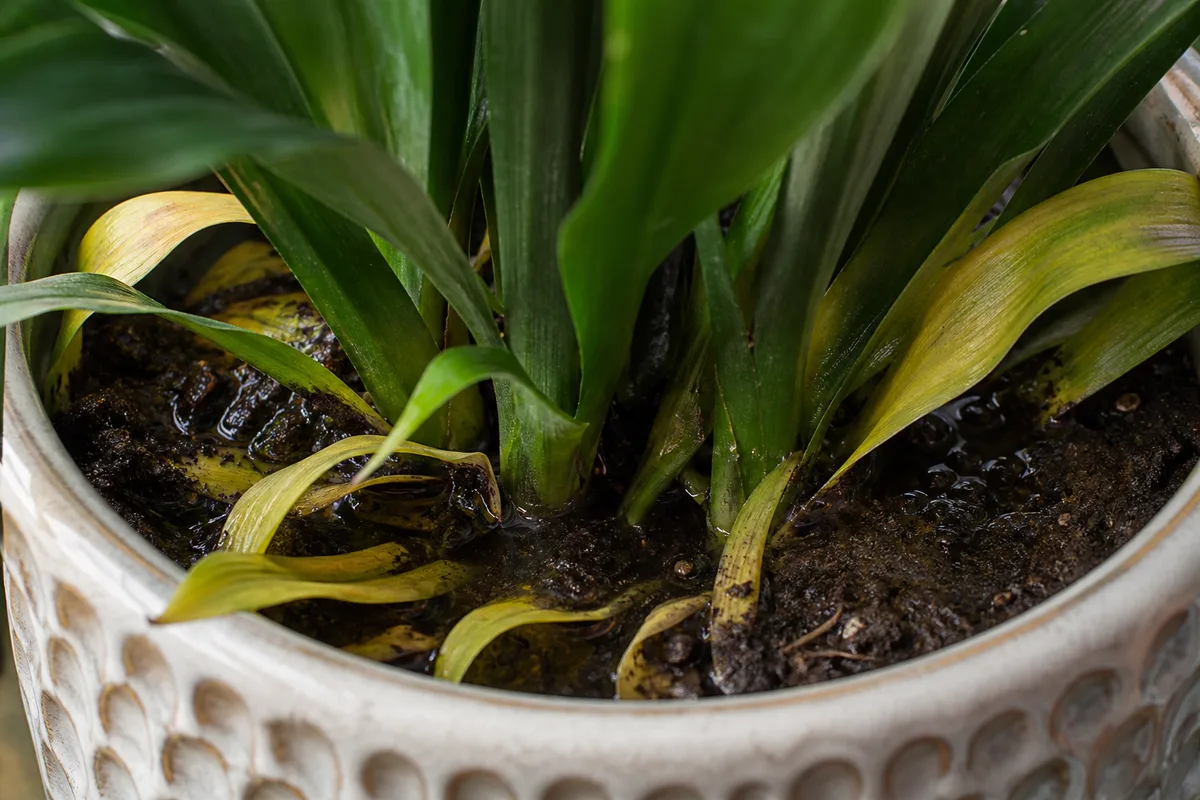
No Drainage Hole symptoms on Janet Craig Dracaena - compare with healthy tissue on the same plant.
Heavy pot for weeks after one watering. You watered two or three weeks ago, yet the container still feels substantially heavy when lifted. The top inch may look dry or cool-damp, but the bottom has never dried because runoff is trapped. In a properly draining nursery pot, the same Janet Craig in low light would lighten noticeably over two to three weeks.
Sour or musty smell at the container base. Lift the plant from the decorative outer pot and sniff near the drainage area. Anaerobic mix smells sour, musty, or like wet cardboard. Healthy Janet Craig mix smells neutral or lightly earthy. This check takes ten seconds and confirms trapped water faster than studying leaf tips.
Soft cane at soil line while crown leaves look OK. The architectural stem feels firm along most of its length but spongy or wrinkled where it meets the mix. That pattern - firm upper cane, soft base, heavy wet pot - strongly suggests bottom rot from standing water. See root rot on Janet Craig if unpotting confirms mushy roots.
Yellow lower leaves on a chronically heavy pot. Janet Craig naturally sheds older lower leaves as the cane grows taller. Abnormal yellowing clusters on a pot that never lightens, especially with no new crown growth, point to root-zone failure from sealed drainage - not natural senescence alone.
Fungus gnats at the soil surface. Gnat larvae feed in constantly moist organic matter. A Janet Craig in a holeless office planter that stays wet at depth for weeks is prime habitat. Gnats plus heavy pot weight beat fluoride as the primary diagnosis when the container has no exit hole.
Fluoride brown tips without fixing the real problem. Janet Craig is highly sensitive to fluoride in tap water - brown crispy margins on strap leaves are a documented pattern. But fluoride tips on an otherwise firm plant in a drilled pot are a water-quality fix. The same tip burn on a plant in a sealed floor planter may coexist with bottom rot you cannot see. Do not switch to filtered water and call the job done if the outer pot still holds water.
Holeless pot vs. poor soil mix vs. overwatering - how to tell
| Signal | Holeless sealed pot | Poor dense soil mix | Overwatering in drilled pot |
|---|---|---|---|
| Container type | No holes, or cache pot holding runoff | Drilled pot, but mix stays wet for weeks | Drilled pot, calendar watering in low light |
| Pot weight pattern | Heavy for weeks; bottom never dries | Heavy for weeks; bottom never dries | Heavy for days after each pour |
| Base smell on lift | Often sour at decorative pot floor | Sour if anaerobic; neutral if merely dense | Musty when chronic |
| First fix | Lift, drain, cache-pot workflow or repot | Repot into airier mix per soil guide | Stop watering; confirm half-depth dry-down |
| Fluoride tips alone | Possible but do not rule out bottom rot | Common with tap water | Common with tap water |
This page covers containers with no drainage exit - a different problem from poor drainage on Janet Craig caused by dense soil in an otherwise drilled pot, or from overwatering when the pot drains but the schedule is too aggressive. All three can yellow lower leaves; the container type tells you which guide to follow first.
How to confirm the cause
Work through these checks in order. One lift-and-smell test beats guessing from leaf photos.
- Identify the container setup - Is Janet Craig planted directly in a sealed decorative pot, or in a nursery pot inside a cache pot? Direct planting in a holeless container is an immediate diagnosis. Cache-pot setups fail when the outer base holds water.
- Lift test - Remove the plant from the decorative outer container. Pour off any standing water in the base. Weigh or heft the inner pot - if it stays heavy two or more weeks after watering in low light, trapped moisture is likely.
- Base smell check - Sniff the floor of the decorative pot and the bottom of the root ball after lifting. Sour odor confirms anaerobic conditions from standing water.
- Skewer from below if accessible - If the plant sits in a nursery pot inside a cache pot, probe through the inner drainage holes with a dry skewer. Wet stain at the tip after 30 seconds means the bottom mix has not dried down - even when the surface feels ready.
- Crown growth cross-check - No new firm leaves at the crown through a warm season on a heavy wet pot supports root-zone failure, not fluoride alone. Clean new crown growth after fixing drainage confirms recovery is underway.
Confirmation decision table
| Finding | Likely cause | Next step |
|---|---|---|
| Water pools in decorative base after every watering | Cache-pot failure | Empty base; water only at sink until inner pot drains |
| Plant glued directly into holeless ceramic | Sealed container rot risk | Emergency repot into drilled nursery pot |
| Firm roots, no sour smell, tips only | Fluoride or drought | Filtered water; check watering guide |
| Mushy roots, sour smell, soft cane | Active root rot | Trim rot, repot per repotting guide |
First fix for Janet Craig (by situation)
The first fix depends on how the plant is potted - not on fertilizer, pruning, or repotting everything at once.
Cache pot with nursery pot (preferred setup)
If Janet Craig already sits in a plastic nursery pot inside a decorative outer planter, lift the inner pot out and pour off all standing water from the base before doing anything else. Carry the nursery pot to a sink. Water until runoff exits the inner holes, let it drain 15 to 20 minutes, then return it to the display container only when the saucer or cache base is completely empty.
This is the double-pot method NC State Extension recommends for decorative containers without holes. Reduce pour volume by roughly one-third compared to what you would use if the decorative pot were drilled - there is no runoff buffer in the outer vessel, and Janet Craig in low light cannot consume excess water quickly.
Make lift-and-drain part of every watering session. Weekly, peek under the inner pot even between waterings to confirm the decorative base stayed dry.
Drilling holes in decorative ceramic
If Janet Craig is planted directly in a glazed ceramic floor pot you own and can modify, drilling drainage holes is a permanent fix. Illinois Extension advises making a hole at the bottom of any container used long-term so water drains freely and air reaches roots. Use a ceramic or masonry bit on a variable-speed drill, place holes ¼ to ½ inch from the bottom edge, and set the pot on feet or a saucer you empty after every watering.
Do not drill as a first step if the cane base is already soft or the mix smells sour - drilling does not remove anaerobic soil already in the root zone. Repot first, then drill the decorative container for future use.
Emergency repot if cane is softening
When lift-and-smell checks reveal sour mix and soft tissue at the cane base, repot into a drilled nursery pot one to two inches wider with fresh well-draining mix before trying to salvage the decorative container. Trim mushy roots back to firm white or tan tissue, keep the cane at the same soil line, and water lightly with filtered or rainwater.
Hold fertilizer at least four to six weeks. The step-by-step rescue - mix ratios, root inspection, recovery markers - is in the Janet Craig repotting guide. Do not stack repot, heavy pruning, and fertilizer on the same day on fluoride-sensitive Janet Craig.
Recovery timeline
Janet Craig recovers slowly from container-drainage stress because it is a slow-growing cane plant, not a fast herb.
After fixing cache-pot drainage only (firm roots, no sour smell): Expect the pot to start lightening on a normal multi-week dry-down rhythm within one to two watering cycles. New firm crown leaves may appear within three to six weeks in warm, Janet Craig Dracaena light guide - longer in a dim office.
After emergency repot from a sealed container (soft cane trimmed, fresh mix): Mild limpness for one to two weeks is normal. Full root re-establishment often takes four to eight weeks. Judge success on new clean crown leaves, not re-greening of old yellow or brown-tipped strap foliage - damaged margins rarely recover.
When recovery stalls: If the pot stays heavy, sour smell returns, or yellowing spreads after four weeks with corrected drainage, unpot again and inspect roots. Persistent rot may require a second trim and a smaller pot to reduce wet soil volume around slow roots.
What not to do
Do not add a gravel layer to “create drainage” in a holeless pot. Gravel at the bottom does not improve drainage in container science tests - it creates a saturated zone just above the gravel while water has nowhere to exit the sealed floor. The Janet Craig soil guide explains the perched-water effect in detail.
Do not soak holeless planters the same volume as drilled pots. Soak-to-runoff works only when runoff can leave the container. In a sealed decorative planter, every extra ounce stays in the mix. Reduce volume and confirm half-depth dryness per the watering guide.
Do not assume brown tips mean fluoride when the plant sits in a sealed container. Fluoride injury is real on Janet Craig, but tip burn on a plant in a holeless floor planter may mask bottom rot. Fix drainage and empty standing water before chasing water-quality changes alone.
Do not water on a calendar in a dark office. A weekly pour into a sealed cache pot in low light guarantees chronic wet feet. Check half-depth moisture and pot weight instead.
Do not leave the plant in standing saucer water overnight. Roots should never sit in pooled runoff - Missouri Botanical Garden notes soils that are too moist cause leaf browning on corn-plant dracaenas.
Keep treatments away from pets. Dracaena is toxic to cats and dogs if chewed; that is separate from drainage recovery but matters when handling soggy soil during repot.
How to prevent problems in decorative planters
Never plant Janet Craig directly into a sealed decorative pot. Use a nursery pot with drainage holes inside the display container, or drill the decorative pot before planting.
Empty the cache base after every watering. Lift, drain at the sink, return only when dry. A five-second check under the inner pot each week catches pooled water before roots notice.
Size the inner pot to the root mass. An oversized nursery pot inside a large decorative floor planter leaves a wet soil reservoir Janet Craig’s slow roots cannot use in low light. Match inner pot diameter to the root ball per the repotting guide’s one-size-up rule.
Choose well-draining mix in the inner pot. Even perfect cache-pot technique fails if the nursery pot holds dense peat that never dries at depth. The Janet Craig soil guide 3:1 potting-soil-to-perlite ratio is the baseline for office placements.
Audit floor planters seasonally. Heating layouts, moved furniture, and new coworkers watering on rotation all change how fast sealed containers accumulate runoff. Lift and inspect quarterly even when foliage looks fine.
Practical checks
Urgency check
Same-day action warranted when:
- Cane tissue softens at the soil line on a chronically heavy pot
- Mix smells sour when you lift the plant from the decorative base
- Yellowing spreads on lower leaves while the container has not lightened in three or more weeks
- The plant sits directly in a sealed holeless pot with no inner nursery liner
Lower urgency - but still fix within the week - when the cache base occasionally holds water but roots are still firm and crown growth continues.
Best inspection order
- Container type - sealed direct planting vs. cache pot vs. drilled pot
- Lift and base smell - standing water and sour odor at the decorative floor
- Pot weight - heavy weeks after watering in low light
- Half-depth skewer - wet bottom while top feels merely cool-damp
- Crown new growth - stalled vs. firm emerging leaves
- Root inspection on unpot - only if decline continues after drainage fix
Related Janet Craig problems
- Janet Craig watering - dry-down rhythm, soak-and-drain technique, cache-pot watering at the sink
- Janet Craig soil - mix recipe, gravel myth, one-minute drainage check
- Janet Craig repotting - cache pot only, drilling requirements, emergency rescue
- Root rot on Janet Craig - when soft cane and sour mix mean rot, not fluoride
- Overwatering on Janet Craig - calendar watering in drilled pots with good drainage
- Poor drainage on Janet Craig - dense mix problems in pots that already have holes
When to use this page vs other Janet Craig Dracaena guides
- Janet Craig Dracaena watering guide - Use for routine moisture checks before assuming no drainage hole is the main issue.
- Janet Craig Dracaena problems hub - Browse all 50 common issues on this species.