Wind Damage on Janet Craig Dracaena: Causes, Checks & Fixes
Quick answer
Indoor wind damage on Janet Craig Dracaena usually means HVAC supply blasts, cold window drafts, or delivery gusts-not outdoor wind. First step: move the pot several feet off the direct air path before you change watering or water quality.
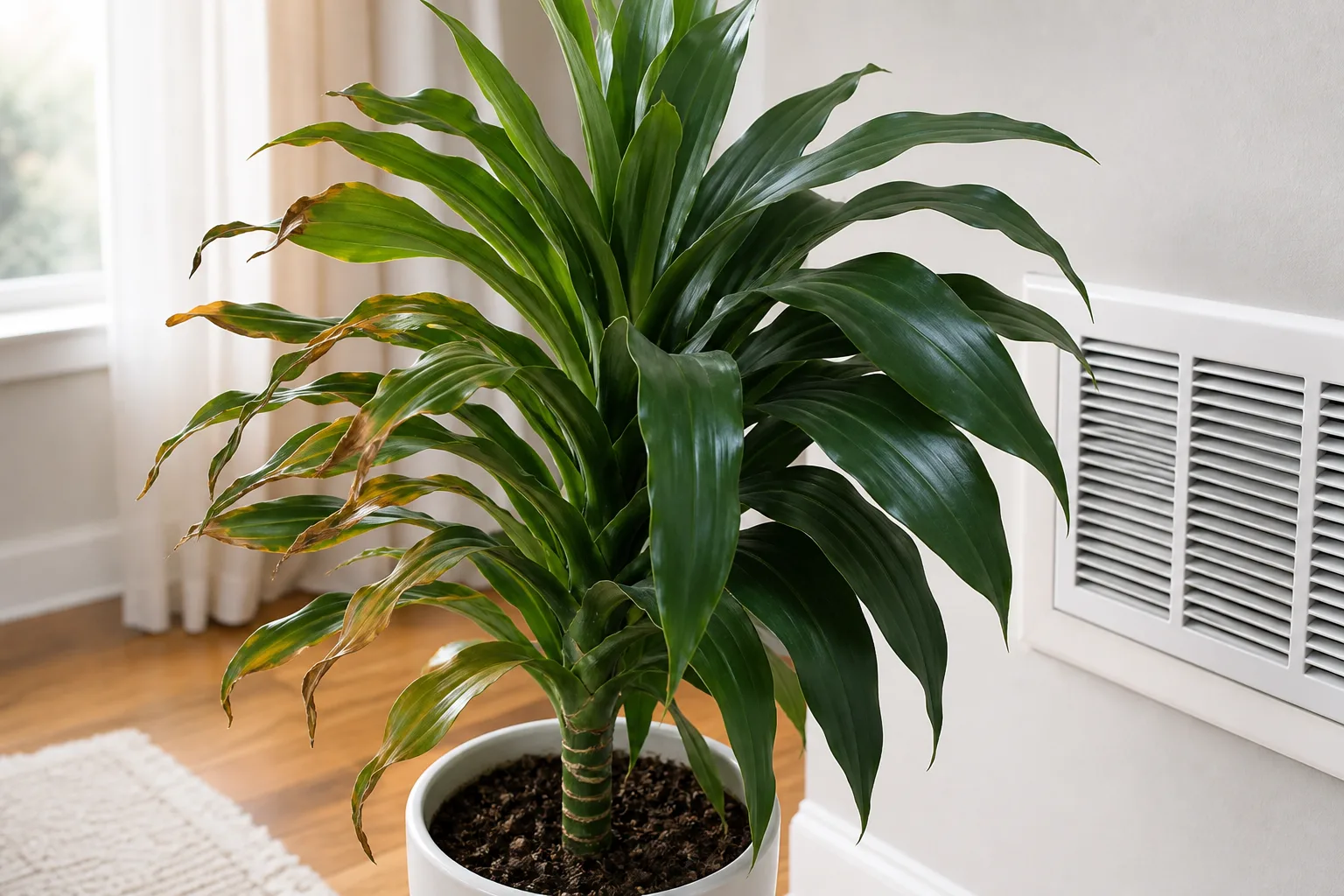
Wind Damage on Janet Craig Dracaena: Causes, Checks & Fixes
This guide covers wind damage on Janet Craig Dracaena. See also the general Wind Damage guide, watering, and light pages for this plant.
Wind Damage on Janet Craig Dracaena: Causes, Checks & Fixes
Quick answer
For Janet Craig Dracaena (Dracaena fragrans ‘Compacta’, formerly D. deremensis ‘Janet Craig’), “wind damage” indoors almost always means mechanical airflow-HVAC supply or return blasts, cold window drafts, or a tipped pot after delivery-not gusts from a garden. Tall floor specimens catch forced air at cane height while the room thermostat still reads comfortable.
Typical signs are one-sided: leaves on the vent-facing cluster curl, crisp at the margins, or yellow while the opposite side stays deep green. Soil moisture often reads normal because the problem is leaf desiccation and temperature shock, not thirst.
First step: move the pot several feet off the direct air path-or redirect the vent with a deflector-before you change Janet Craig Dracaena watering guide, switch to filtered water, or fertilize. Extension sources advise keeping indoor plants away from heat and AC sources without naming an exact clearance; several feet is a practical home minimum, not a published extension mandate. Janet Craig is slow-growing and fluoride-sensitive, but those facts matter after you stop the blast hitting the foliage.
What wind and draft damage looks like on Janet Craig
Janet Craig carries dense whorls of glossy, dark green strap leaves on a thick upright cane-ideal for offices, but the wide leaf surface loses water fast when forced air hits one side repeatedly.
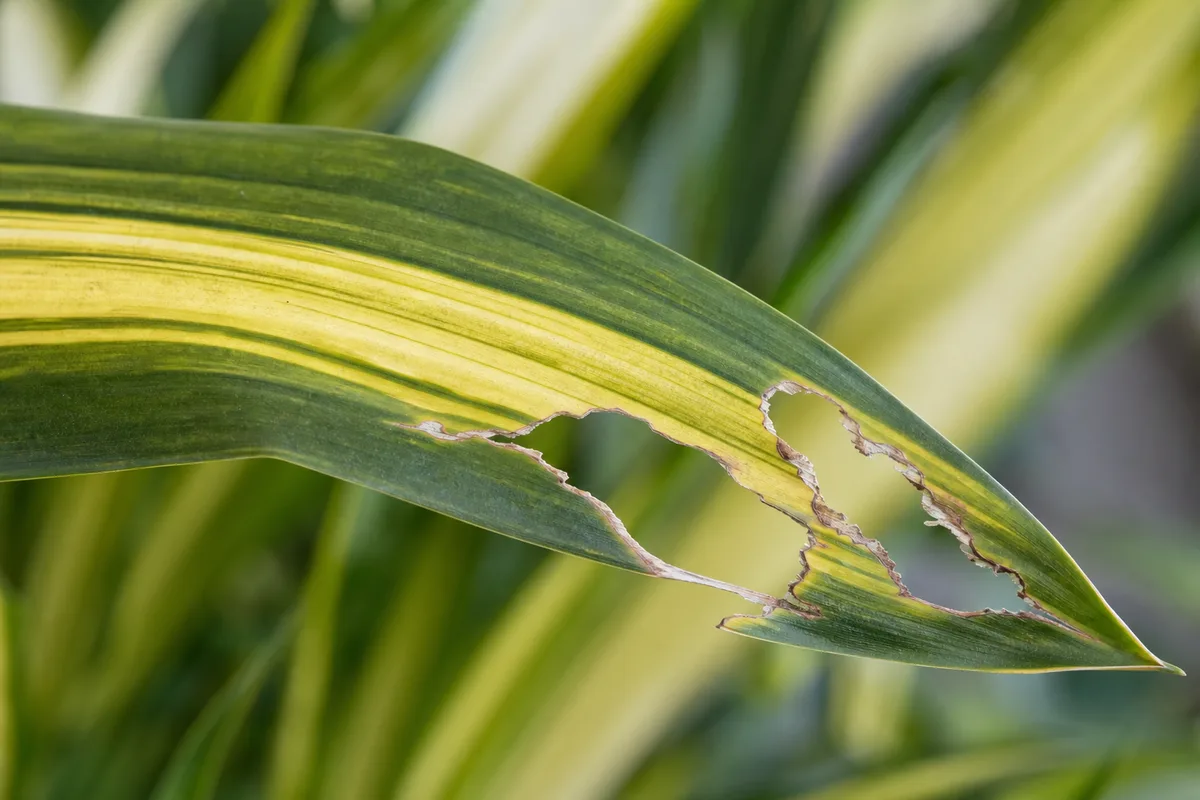
Wind Damage symptoms on Janet Craig Dracaena - compare with healthy tissue on the same plant.
Diagnostic photos: Compare one-sided leaf curl on the vent-facing whorl while the sheltered side stays glossy, crisp brown margins concentrated on the air-exposed strap leaves, and cold-window translucence where foliage pressed against winter glass. Original symptom photos will be added to this guide in a future update.
Mechanical airflow injury on this cultivar usually shows as:
- One-sided leaf curl or droop - The cluster facing the vent or cold glass curls inward or hangs while leaves on the sheltered side stay firm and glossy.
- Crisp brown or yellow margins on the exposed side - Often the outermost leaves of the whorl dry first; damage rarely starts uniformly on every leaf tip at once.
- Draft wilt with normal pot weight - Leaves look limp after an AC cycle or cold snap, but the pot feels neither bone-dry nor soggy-heavy and the cane stays firm at the base. This matches the draft-wilt pattern on the wilting guide-different from underwatering or root rot.
- Sudden leaf drop on one side - Yellow or dropped leaves concentrated on the air-exposed face, especially after heating or cooling season starts.
- Cold-window contact patches - Leaves pressed against winter glass may show pale or translucent spots on the pane-facing surface while the rest of the plant looks fine.
- Transit mechanical damage - A tipped delivery pot can crease or tear outer strap leaves and loosen surface soil without any HVAC involved.
What this is not: uniform brown tips on all leaves after months of tap water (fluoride), circular pest spots, sticky residue, sour-smelling wet soil with soft cane (overwatering on Janet Craig Dracaena), bleached papery patches on sun-facing leaves (sun scorch), or whole-room dry air without a vent-side pattern (low humidity is rarely the primary cause on this cultivar).
Why Janet Craig catches HVAC blasts and cold drafts indoors
Janet Craig is built for tropical African understory-warm, humid, still air-not for the microclimates modern buildings create. Clemson HGIC notes that a sudden loss of many leaves can follow changes in temperature and drafts, alongside watering mistakes. That fits Janet Craig’s common lobby and cubicle placements described in the Janet Craig overview vent and temperature sections.
Floor-level cane in the vent line - Supply registers often sit low on walls or in floors. A four- to six-foot Janet Craig puts its crown directly in the air stream while the wall thermostat shows 72°F (22°C). The leaves experience colder, drier, or hotter air than the sensor reads.
Broad strap leaves transpire fast under blast - Each whorl presents a wide surface area. Forced air strips moisture from the vent-facing side faster than roots replace it-especially in dim offices where Janet Craig already transpires slowly and owners water infrequently.
Cold drafts below comfort range - NC State recommends keeping corn plants above 50°F (10°C); sustained cold below about 55°F (13°C) commonly triggers leaf drop on tropical dracaenas-the threshold the overview uses for cold-draft urgency. Winter window sills and frequently opened exterior doors expose cane and crown tissue to brief cold that the room average hides.
Heating vents compound dry air - Winter heat lowers humidity. Janet Craig tolerates average household humidity better than a calathea, but a crown sitting in a hot dry register stream still burns margins. University of Maryland Extension advises not locating indoor plants near heat or air conditioning sources because sudden temperature shifts cause foliage damage and leaf drop.
Low-light metabolism mismatch - In deep shade, Janet Craig uses water slowly. Owners see curled, dry-looking leaves and add water-exactly the wrong response when the plant still sits in the vent line. Wet soil plus ongoing airflow stress invites root problems without fixing the curl.
How to confirm the cause
Work through placement before you treat water quality or repot.
Five-step placement and airflow checklist
- Map the air path - Stand at the crown and feel for moving air from supply vents, return grilles, desk-level fan slots, and exterior doors used often.
- Check directionality - Is damage mostly on one side of the whorl? One-sided patterns strongly support draft injury over fluoride or uniform drought.
- Read the pot - Lift it. Light and dry suggests drought; heavy and wet suggests overwatering. Draft wilt often pairs with normal moisture and a firm cane-the same fork covered on wilting on Janet Craig.
- Note the calendar - Did symptoms appear within days of AC startup, first winter heat, or an office move-not gradually over months?
- Scan for lookalikes - Uniform tip burn on all leaves points to fluoride sensitivity and the brown-tips guide; sour wet soil points to rot; bleached sun-side patches point to too much direct glass light; vent-side crisping without whole-room dryness points to local desiccation rather than low humidity.
If only the Janet Craig in the vent line looks stressed while a sheltered neighbor is fine, airflow is the leading diagnosis.
Wind and draft vs. fluoride vs. drought vs. overwatering
| Pattern | Likely cause | Quick check |
|---|---|---|
| One-sided curl, crisp margins, vent or window nearby | HVAC or cold draft | Hand test at crown height; move several feet off blast |
| Uniform brown tips on oldest leaves, all sides | Fluoride / salts | Tap water history; tips on many whorls; see brown-tips guide |
| Whole plant limp, very light pot | Underwatering | Dry skewer at half depth |
| Yellow lower leaves, heavy wet pot, soft base | Overwatering / root issue | Smell soil; inspect roots if decline continues |
| Firm cane wilt after AC blast, normal moisture | Draft wilt | Relocate; recheck in 24–48 hours; see wilting guide |
First fix: relocate off the air path before changing water
Move the pot out of the direct airflow today-several feet from supply and return paths when you can, off the cold window sill, and away from the door gust zone. Extension guidance says avoid heat and AC sources; the exact distance is a practical judgment call based on how strong the blast feels at crown height. If you cannot move it, redirect the register with an adjustable deflector so air does not hit the crown-do not block return grilles in ways that violate building HVAC rules.
Steps in order:
- Slide or carry the pot to a stable spot with similar filtered light-not a dark closet. Janet Craig still needs bright to moderate indirect light; draft shelter is not the same as shade exile.
- Right a tipped pot from delivery and firm soil back around any lifted edge without burying the cane deeper.
- Wait 48 hours before changing watering rhythm. Watch whether leaves on the sheltered side perk or new crown growth looks less curled.
- Adjust water only after placement is fixed - If the mix is genuinely dry, water thoroughly with room-temperature filtered water and drain the saucer. Do not increase frequency to “compensate” for desiccated leaves still in a vent.
Change one variable at a time. Relocation first; water quality second if uniform tip burn persists after airflow is resolved.
What not to do the same day
- Do not water heavily because leaves look dry while the plant remains in the vent path-that accelerates root stress.
- Do not mist repeatedly onto glossy leaves in a dim corner; surface wetting without airflow improvement can invite fungal spotting.
- Do not fertilize a stressed specimen.
- Do not prune the whole crown unless leaves are physically torn and unsightly; remove only clearly damaged outer straps.
- Keep treatments away from pets-Dracaena is toxic to cats and dogs if chewed.
Recovery timeline
Damaged leaf tissue-crisp margins, yellowed straps, cold-window translucence-will not re-green. Judge success by new crown leaves emerging cleaner, less curled, and glossy within two to four weeks after airflow stress stops.
Draft wilt on a firm cane often shows partial perk within 24 to 48 hours of relocation without any watering change-the recovery window described for draft wilt on the wilting guide. If the plant still declines after two weeks in a stable spot, inspect for root rot, fluorine injury, or pests rather than assuming the HVAC is still at fault.
Cold-draft leaf drop may leave a thinner whorl until new growth fills in-normal for a slow-growing cultivar in low light.
How to prevent wind and draft damage next time
- Audit vents each season - When AC or heat first cycles on, walk the room at crown height and move any floor dracaena out of the line per the overview placement guidance.
- Keep several feet from direct register blast when possible; sensitive specimens may need more distance if you still feel moving air at crown height.
- Elevate winter window plans - Pull Janet Craig back from glass when outdoor nights drop below 50°F (10°C); use curtains as a buffer before sustained exposure below 55°F (13°C) triggers leaf drop.
- Stabilize delivery and office moves - Set the pot upright immediately; do not leave a tipped specimen overnight in a loading dock draft.
- Pair placement with watering discipline - Allow soil to dry between waterings; in deep shade that can mean weeks, not days.
- Avoid softened or fluoride-heavy tap for routine care, but treat that as separate from one-sided vent damage-see brown tips on Janet Craig when margins brown uniformly.
Practical checks
Urgency check
Same-day action when:
- A floor plant tipped with exposed roots and softening cane base
- Rapid one-sided yellowing and leaf drop started after a cold window night or new AC blast
- Draft wilt pairs with a heavy wet pot and sour smell-relocate and stop watering; roots may already be failing
Can wait 24 hours when:
- One-sided curl appeared after the first AC day of summer and the cane is firm
- Only outer leaf margins are crisp while crown tissue is green
Best inspection order
Air path at crown → direction of damage → pot weight → half-depth moisture → light level at new spot → roots only if wet decline continues after relocation
When to use this page vs other Janet Craig Dracaena guides
- Janet Craig Dracaena watering guide - Use for routine moisture checks before assuming wind damage is the main issue.
- Janet Craig Dracaena problems hub - Browse all 50 common issues on this species.
Related Janet Craig Dracaena guides
- Janet Craig Dracaena overview
- Janet Craig Dracaena watering
- Janet Craig Dracaena light
- Janet Craig Dracaena soil
- Janet Craig Dracaena problems
- Ants on Plant on Janet Craig Dracaena
- Bacterial Wilt on Janet Craig Dracaena
- Black Spots on Janet Craig Dracaena
Conclusion
Wind damage on Janet Craig Dracaena indoors is a placement problem-HVAC blasts, cold drafts, and transit tipping-not outdoor wind and usually not fluoride on the first pass. Confirm it with one-sided curl or crisp margins, a vent or cold window nearby, and often normal soil moisture on a firm cane. Move off the air path first, then watch new crown leaves over two to four weeks. Chasing water quality or extra watering while the register still hits the whorl is the most common mistake on this low-light floor plant.
Related tool
Use the Plant Problem Diagnosis Tool to narrow causes for wind damage on this plant before changing multiple variables at once.