Seedlings Falling Over on Janet Craig Dracaena: Causes
Quick answer
Janet Craig is propagated by stem cuttings, not seed-so floppy 'seedlings' are almost always tip cuttings or cane segments with weak roots, wet rot, or leggy stretch in dim light. First step: press the stem base where it meets water, perlite, or soil; mushy tissue means discard and dry the tray today, not more watering.
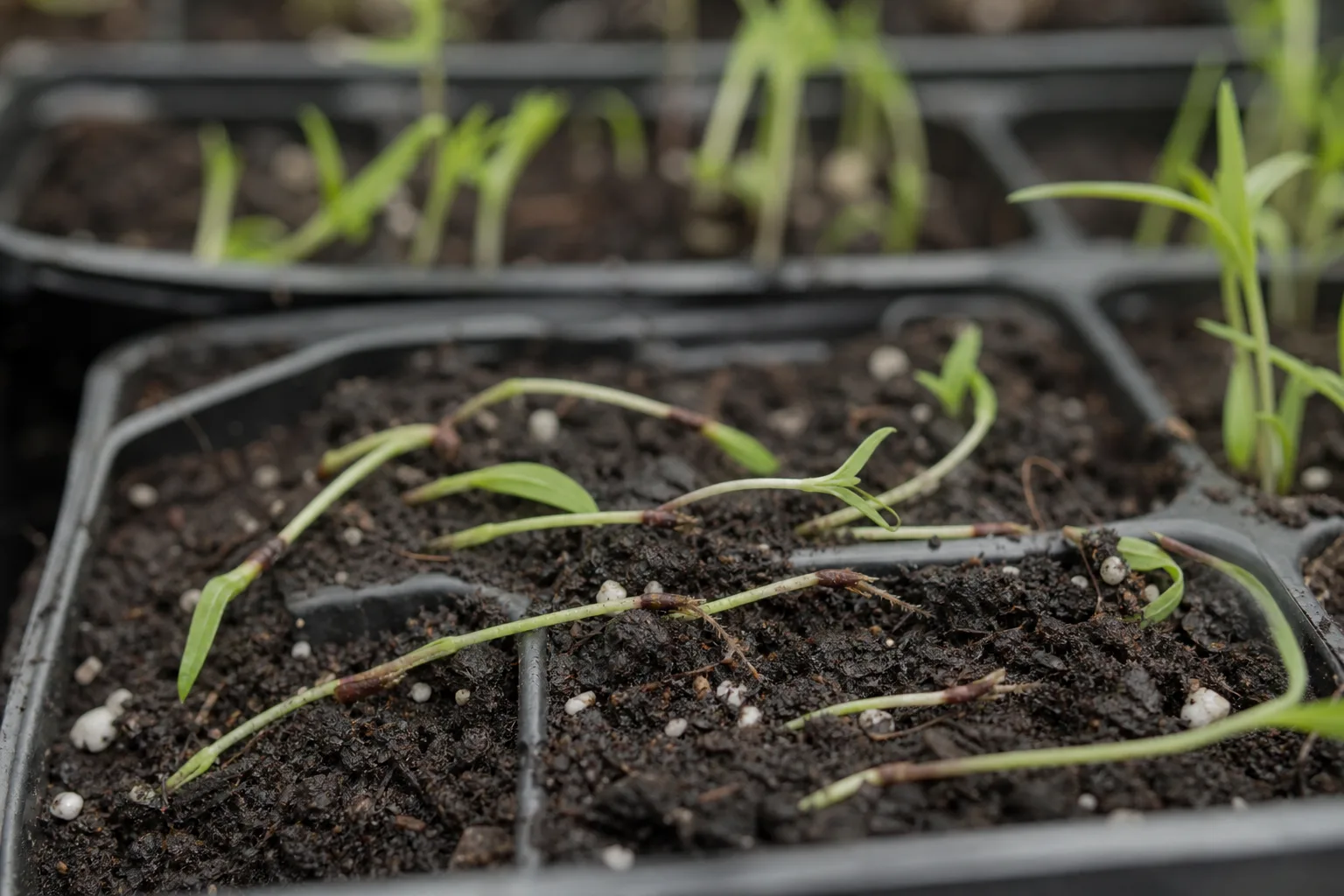
Seedlings Falling Over on Janet Craig Dracaena: Causes, Checks & Fixes
This guide covers seedlings falling over on Janet Craig Dracaena. See also the general Seedlings Falling Over guide, watering, and light pages for this plant.
Seedlings Falling Over on Janet Craig Dracaena: Causes, Checks & Fixes
Quick answer
When Janet Craig Dracaena (Dracaena fragrans ‘Janet Craig’) “seedlings” fall over, you are almost always troubleshooting young propagation starts-not plants grown from seed. NC State Extension lists stem cuttings as the standard way to propagate Dracaena indoors, and home growers usually have a leafy tip cutting in water, a cane segment in perlite, or a newly potted cutting that has not anchored yet.
Those starts flop for four common reasons: weak water roots at soil transplant, mushy cane base in wet perlite, leggy pale stretch in insufficient light, or-on an established specimen-mature cane lean that belongs on a different troubleshooting page.
First step: press the stem base where it meets water, perlite, or potting mix. Mushy, black, or sour-smelling tissue means rot-remove that cutting and stop keeping the medium saturated. Firm tan-green tissue with a limp crown points to weak roots, leggy stretch, or transplant shock instead; fix light and potting depth before you add more water.
For full cutting methods and orientation marks, start with the Janet Craig propagation guide. This page focuses on why fresh starts topple and which fix to apply first.
Janet Craig “seedlings” are usually cuttings - not seed
Janet Craig is a cane dracaena-an upright woody stem with a crown of broad dark-green strap leaves. Nurseries and interiorscape growers multiply it by topping leggy plants and rooting the leafy tip plus cane segments cut from the bare middle stem. You will not find reliable Janet Craig seed packets for indoor growing; what people label “seedlings” are propagation material.
Typical setups where collapse happens:
- A 4–6 inch leafy tip in a clear water jar on a windowsill
- 3–4 inch leafless cane sections buried vertically in moist perlite - the standard approach for thick-stemmed dracaena canes
- A tip just moved from water to soil with visible but short roots
- A soil-rooted tip in a small pot still within the first month after rooting
If your plant is a mature floor specimen with a thick woody trunk and months of growth in one container, falling behavior may overlap with plant leaning on Janet Craig or overwatering collapse-not the propagation-tray patterns below.
What falling propagation starts look like on Janet Craig
Janet Craig cuttings carry a heavy crown of broad leaves on a relatively thin semi-woody stem. Unlike trailing pothos, the architecture is top-heavy from day one, and slow rooting keeps the shoot unstable longer than fast-rooting houseplants.
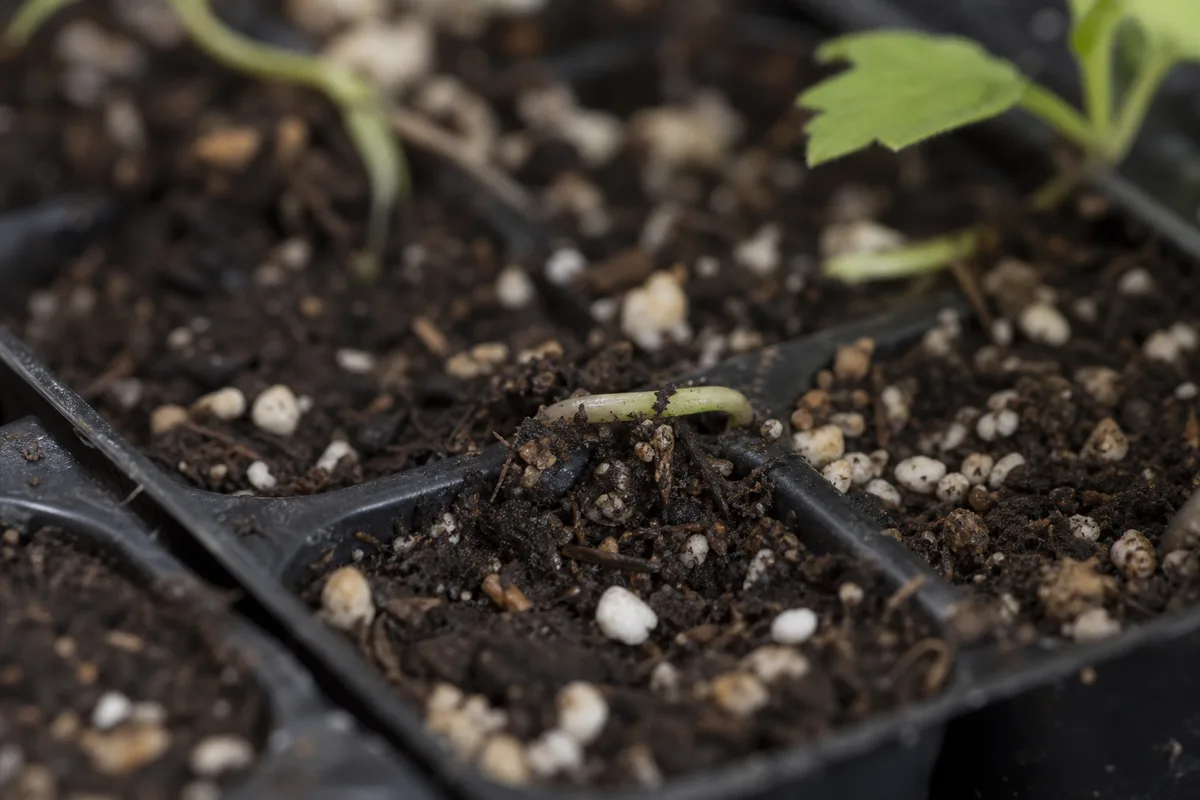
Seedlings Falling Over symptoms on Janet Craig Dracaena - compare with healthy tissue on the same plant.
Water-rooted tip flop (transplant shock):
- Roots looked healthy in the jar-white and several centimeters long
- Within days of potting, the crown hangs sideways while the stem base still feels firm
- Mix may be too wet, too dense, or the pot too large for the root mass
- Often follows potting before roots were long enough to grip soil
Water jar lean before potting:
- Tip cutting stands in water but leans against the glass toward the brightest side
- Stem above water is pale or elongated; roots may be present but the shoot lacks stiffness
- Leaves stay turgid; base is not mushy-this is usually light stretch, not rot
Cane segment collapse in perlite:
- Leafless segment was planted base-down with at least one buried node
- Segment topples or sinks in the pot; buried end turns brown, soft, or hollow
- Perlite or mix smells sour; surface stays dark and wet for days
- May follow reversed orientation (segment planted upside down) or cool dim rooms where roots form slowly while rot wins
Leggy stretch during rooting:
- Tip or young crown shows long gaps between leaf clusters and pale new foliage
- Stem is thin but firm when pressed; plant reaches toward a distant window
- Common when propagation sits in the same low-light corner where a mature Janet Craig might survive but a cutting cannot build strength
Mature lean lookalike (not a propagation start):
- Thick woody cane in a large established pot tilts toward one window
- Trunk is hard; collapse is gradual tilt, not sudden tray flop days after a fresh cut
- See plant leaning and leggy growth on finished plants
Do not confuse propagation flop with brown tip margins from fluoride on a rooted plant-that is mature foliage stress (brown tips), not a cutting falling from weak anchorage.
Why Janet Craig starts fall over
Slow semi-woody rooting and top-heavy crowns
Janet Craig is a slow grower with semi-woody cane tissue. NC State notes dracaenas are propagated by cuttings rather than seed, and rooting takes longer than soft herbaceous plants like pothos or coleus. Adventitious roots must form from nodes while the leafy tip still transpires through its crown-creating a long window where the shoot is physically top-heavy without underground anchorage.
A tip cutting with a full whorl of broad Janet Craig leaves can look healthy in water for weeks while the stem cannot support its own weight after potting if roots are still short. Cane segments are worse for visible stability: no leaves means no photosynthesis until a new crown pushes, so the segment relies entirely on stored stem energy and early roots-easy to knock over in loose perlite.
Wet perlite and cane segment rot
Cane cuttings root from nodes when buried in moist medium, but Janet Craig segments fail when perlite stays saturated and cool. Anaerobic conditions at the buried base soften cane tissue before roots anchor. Common triggers:
- Watering overhead into a tray that never drains freely
- Heavy peat mix without enough perlite holding water around buried nodes
- Segments planted upside down, delaying root formation at the true base
- Domes or bags left sealed after the medium should breathe
- Reused perlite from a previous rotted batch carrying pathogens
Even though mature Janet Craig tolerates infrequent watering in low office light, unrooted cane tissue rots quickly when the propagation medium never dries slightly at the surface.
Insufficient light during propagation
Janet Craig cuttings root faster in Janet Craig Dracaena light guide than in the dim corner where a finished plant might linger. Clemson HGIC recommends bright light for dracaena propagation during active growth. Weak light produces pale, elongated stems that bend toward the nearest window. Water jars on north windowsills in winter are a frequent setup: roots appear, but the stem never stiffens.
Variegated dracaena cousins show stretch faster; Janet Craig is solid green but still etiolates when light is too weak for the crown load it carries.
Water-to-soil transplant timing
Water roots are structurally different from soil roots-adapted to oxygen-rich water, fragile when buried in dense wet mix. Potting a Janet Craig tip before roots reach roughly 2.5 cm (1 inch) often produces immediate flop with a firm base. Potting too late into an oversized decorative container keeps the small root ball drowning in saturated mix.
The first soil pot should be small with drainage-about 10–12 cm (4–5 inches) for a single tip-filled with perlite-amended houseplant mix, not straight heavy peat.
Reversed or shallow cane segments
NC State cane-cutting guidance stresses correct orientation: the end that was closer to the parent roots goes into the medium. Reversed segments may callus but fail to root at the buried end, leaving a loose stick that topples. Shallow planting that leaves no node in contact with moist perlite produces the same instability.
How to confirm the cause
Work through these checks in order before you fertilize, repot again, or discard the whole batch:
- Stem-base press test - Pinch the lowest firm part of the cane where it meets water, perlite, or soil. Mushy, hollow, or black tissue confirms rot. Firm tan-green tissue points to weak roots, leggy stretch, or transplant shock.
- Propagation stage - Still in water only? Lean with white roots usually means light correction before potting. Just potted from water within the last two weeks? Flop with firm base often means roots too short or mix too wet.
- Orientation check (cane segments) - Did you mark top versus bottom before cutting? Compare ends: the base is often slightly thicker or closer to where you removed the tip. Replant correctly only if tissue is still firm.
- Root length in water - Hold the jar to the light. Roots shorter than about 2.5 cm (1 inch) suggest waiting before soil-or potting into very airy mix with minimal watering.
- Medium moisture - Scratch the perlite or soil surface. If it never lightens between waterings and smells sour, rot risk is high. Propagation medium should stay evenly damp like a wrung sponge, not mud.
- Light distance - Measure how far the cutting sits from the brightest window or lamp. Dim rooms with only ambient office light support leggy flop on Janet Craig faster than rot.
- Scope check - Woody trunk thicker than a finger in a long-owned pot? Redirect to plant leaning rather than propagation fixes.
| What you see | Likely cause | Key difference |
|---|---|---|
| Flop days after potting from water, firm base | Transplant shock / weak roots | Timing follows soil move; jar roots were visible but short |
| Mushy buried end, sour perlite | Cane segment rot | Base tissue rotten, not just bent |
| Tall pale lean toward window, firm base | Leggy low light | Stretch before or during rooting; no black base |
| Segment loose in pot, no roots after weeks | Reversed or dry segment | Orientation wrong or medium too dry-not mushy |
| Thick cane tilting in large established pot | Mature lean | Months of trunk growth-not a fresh cutting tray |
First fix for Janet Craig
Press the stem base. If tissue is mushy, discard that cutting and let the propagation medium dry slightly at the surface before the next drink.
For survivors with firm bases, move them to bright indirect light immediately-east window or several feet back from south glass with sheer curtain. Stop overhead soaking of perlite trays; bottom-water for ten to fifteen minutes, then drain completely. Do not stack Janet Craig Dracaena repotting guide, pruning, and fertilizer on the same day.
If the cutting is still in water and leaning with firm tissue, leave it in the jar, improve light, and wait until roots reach about 2.5 cm (1 inch) before potting into a small airy pot. One environmental correction beats nursing rotted cane for weeks.
Step-by-step recovery
Once rotted material is removed and watering is controlled, protect firm-base starts in this order:
- Isolate collapsed segments - Move healthy jars or pots away from any tray with active mushy bases.
- Dry the surface slightly - Wait until the top of perlite or mix lightens in color before bottom-watering again.
- Correct light - Relocate to bright indirect light; avoid hot direct sun on water jars that overheats roots.
- Replant reversed segments only if firm - Mark top with a slanted cut, bury at least one node, do not invert.
- Stabilize firm leaners - A loose bamboo stake and soft tie can hold a water-rooted tip until soil roots anchor-only when the base is not rotten.
- Pot water tips at the right size - Small drainage pot, perlite-amended mix, top inch approaches dryness between drinks.
- Take fresh cuttings if losses are heavy - Healthy parent cane can yield another tip and multiple segments per the propagation guide.
Hold fertilizer until new crown leaves expand on rooted material-usually several weeks after transplant. Janet Craig young roots burn easily, especially with fluoride in tap water; filtered water helps after roots are working, but structural flop is rarely fixed by water quality alone.
Recovery timeline
Rot-collapsed cuttings: No recovery. Once the cane base is mushy, discard within a day or two-propping the crown does not restore vascular tissue.
Firm-base water tips after light correction: Stems often stiffen within one to two weeks under brighter indirect light. New leaves should show tighter spacing and deeper green-not pale widely spaced straps.
Water-to-soil transplant done correctly: Expect the tip to hold upright within one to two weeks once roots grip perlite-amended mix and the top inch of soil dries between drinks.
Cane segments rooting in perlite: Janet Craig may show no visible growth for several weeks while roots form underground. Gentle tug resistance after six to ten weeks suggests progress; new crown leaves often appear after rooting begins.
Leggy but firm tips: Improved light produces stronger internodes within two to three weeks. Old stretched tissue does not shorten; judge success on new compact growth at the crown.
Lookalike symptoms and related guides
Propagation-start flop overlaps with other Janet Craig problem pages-use the right guide:
- Leggy seedlings - Pale stretched young crowns during propagation; may precede flop but base stays firm
- Poor root growth - Roots stall in water or perlite without immediate topple; often cold, dim, or stagnant water
- Stem rot - Mushy cane on established plants; same tissue failure as rotted propagation segments
- Plant leaning - Mature woody cane tilting toward light or softening on wet soil in a finished pot
- Not enough light - Broader low-light syndrome on established Janet Craig, not just propagation trays
Mistakes to avoid
- Watering more when a cutting flops - Check stem-base firmness first; mushy tissue needs less moisture, not more.
- Potting water tips with half-inch roots into large pots - Wait for adequate root length and use a small container.
- Planting cane segments upside down - Mark orientation before dividing a long cane.
- Leaving humidity domes sealed on perlite trays in cool rooms - Stagnant moisture favors base rot.
- Reusing perlite from collapsed rotted segments without washing - Start fresh medium for new segments.
- Staking mushy-base cuttings with toothpicks - Rotten tissue cannot be propped upright.
- Treating propagation flop as mature fluoride stress - Brown tips on rooted plants are a different guide; falling fresh cuttings are structural or rot issues.
- Confusing with mature plant lean - Rotation and staking a floor cane does not fix a rotting perlite segment.
Keep propagation jars and trays away from pets. Dracaena species are toxic to cats and dogs if chewed-discard trimmings promptly.
How to prevent falling starts next time
Prevention on Janet Craig is about matching slow cane biology to light, orientation, and moisture:
- Propagate from firm healthy parent cane - not material with soft bases or sour soil; see propagation for tip and segment prep
- Mark top versus bottom on every cane segment before potting
- Root tips in bright indirect light from day one-not the darkest office corner
- Change water when cloudy or slimy; keep leaves above the waterline
- Pot water tips when roots reach about 2.5 cm (1 inch) into small perlite-amended pots
- Use airy perlite-heavy mix for cane segments; bury at least one node; avoid saturated mud
- Bottom-water propagation trays and drain completely
- Do not bury Janet Craig leaves underwater or in mix-they rot and foul the setup
- Run a gentle fan in warm rooms to strengthen stems and dry surfaces slightly
- Cross-check mature lean separately - rotation on a finished plant will not fix a propagation tray
When to worry
Act the same day if:
- Multiple cuttings or segments collapse in one tray within a few days
- Buried cane bases turn black, mushy, or hollow with sour-smelling perlite
- New topples keep appearing after you reduced watering
- Water jar stems go soft below the waterline with cloudy foul water
You can wait a few days to adjust light if:
- Cuttings lean but stem bases stay firm and green-tan
- No new collapses appear after correcting moisture
- Only paleness and stretch are present without base rot
Janet Craig propagation cross-check
Janet Craig rewards patience: clean cuts, submerged nodes, correct cane direction, warm bright indirect light, and moisture without stagnation turn one leggy specimen into several upright plants. The collapse stage is almost always the first weeks after cutting or potting-not on a mature architectural floor plant that has had a year to build roots.
If perlite segments fail repeatedly, switch to water rooting for tips only-visibility catches rot early-then pot individually once roots are strong. Cane segments still belong in medium, but a single healthy parent can supply fresh oriented segments faster than rescuing a tray of mushy sticks.
For species context and normal mature care, see the Janet Craig overview.
When to use this page vs other Janet Craig Dracaena guides
- Janet Craig Dracaena watering guide - Use for routine moisture checks before assuming seedlings falling over is the main issue.
- Janet Craig Dracaena problems hub - Browse all 50 common issues on this species.