Leggy Seedlings on Janet Craig Dracaena: Causes, Checks &
Quick answer
Janet Craig Dracaena is propagated by stem cuttings, not seed-most leggy seedlings are young rooted cane starts stretching in dim light. First step: move grow lights to within 2–4 inches of the crown for 12–14 hours daily, or relocate water-rooted cuttings to bright filtered indirect light.
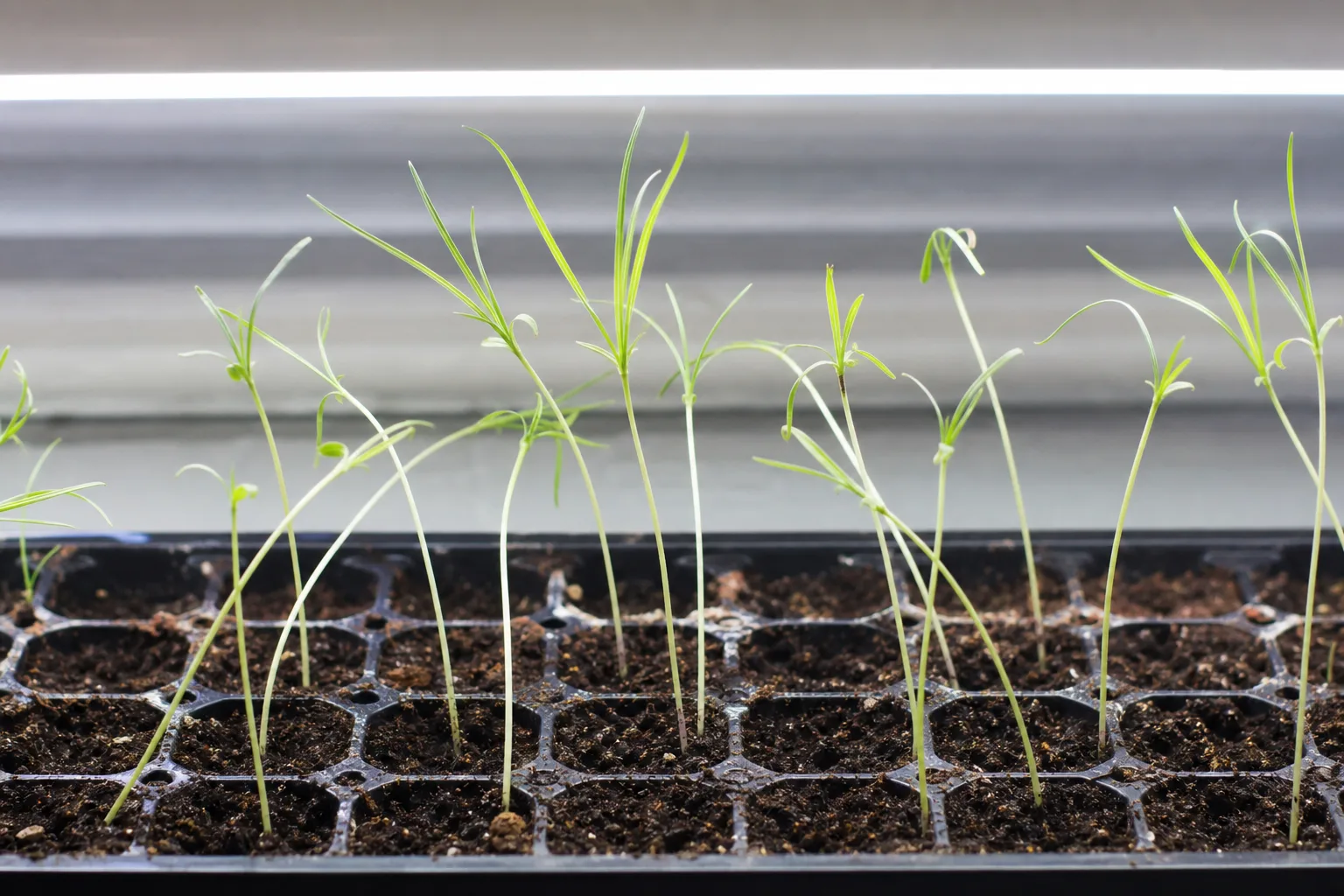
Leggy Seedlings on Janet Craig Dracaena: Causes, Checks & Fixes
This guide covers leggy seedlings on Janet Craig Dracaena. See also the general Leggy Seedlings guide, watering, and light pages for this plant.
Leggy Seedlings on Janet Craig Dracaena: Causes, Checks & Fixes
Quick answer
Leggy young Janet Craig Dracaena (Dracaena fragrans ‘Compacta’, often sold as Dracaena deremensis ‘Janet Craig’) mean insufficient light intensity right after rooting or potting-not too little water or fertilizer on fresh mix. Janet Craig is propagated by stem cuttings, not seed, so most “leggy seedlings” are young rooted cane cuttings showing classic etiolation: the plant reaching for photons with long bare stem between tiny leaf clusters.
First step: move grow lights to within 2–4 inches of the crown and run them 12–14 hours daily on a timer-or relocate water-rooted cuttings to bright filtered indirect light within a few feet of an east-facing window. Lack of light is the major cause of elongated, skinny stems on indoor starts. Hold off on fertilizer, repotting, or burying stretched cane until light is corrected.
Janet Craig is not grown from seed - what “leggy seedlings” really means
Before diagnosing stretch, know what you are actually growing. NC State Extension lists stem cuttings as the recommended propagation strategy for Dracaena, and Janet Craig’s ‘Compacta’ form is a clonal cultivar valued for short, glossy leaves on compact stems-not random seed variation. Commercial and home Janet Craig collections come from tip cuttings, cane segments, or air-layered crowns, not germinated seed.
When searchers say “leggy Janet Craig seedlings,” they usually mean one of these:
- A water-rooted tip cutting recently potted into soil but left on a dim shelf
- A cane segment sprouting its first tiny leaf cluster after weeks in perlite
- A propagation tray cell holding a small start that never received adequate supplemental light
This page covers young cutting etiolation during propagation and early establishment. If your mature floor plant shows long bare trunk between full-sized leaf whorls, read leggy growth on Janet Craig instead-that is ongoing light stress on an established cane, not a propagation-start problem.
What leggy seedlings look like on young Janet Craig cuttings
Healthy young Janet Craig starts show compact dark green leaves spaced relatively close along a firm green or light tan cane, matching the parent’s glossy strap-leaf form.
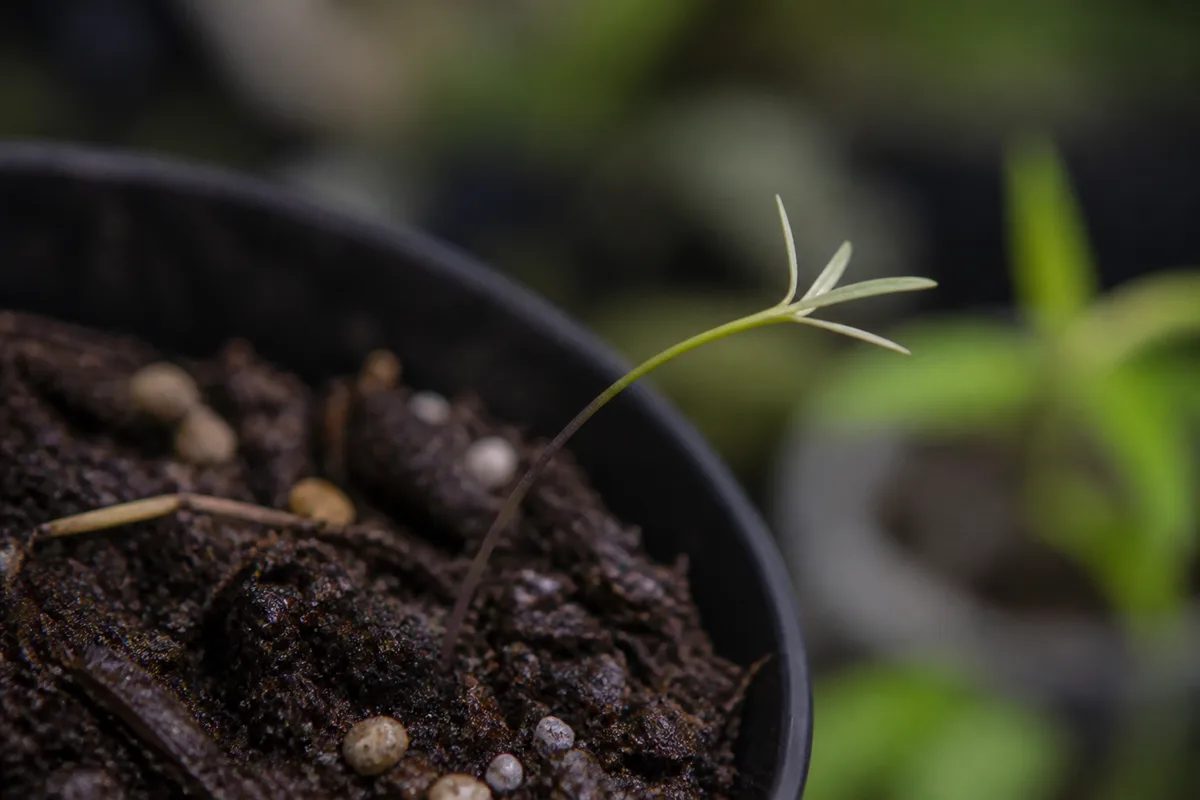
Leggy Seedlings symptoms on Janet Craig Dracaena - compare with healthy tissue on the same plant.
Leggy young Janet Craig cuttings reverse that pattern:
- Long bare cane between tiny leaf clusters-sometimes several inches of naked stem before the first small leaves appear
- Pale or dull green new leaves narrower than leaves on the parent plant; if light levels are too low, leaves will narrow on Dracaena generally
- Strong lean toward the brightest window, desk lamp, or distant overhead fixture
- Thin, wiry cane that cannot support new foliage without tipping-overlap with seedlings falling over on Janet Craig when stretch is severe
- Slow root development while tops keep reaching-energy goes to stem length, not crown density; common when cuttings sit in water jars on bathroom windowsills
Etiolation signs vs. fluoride tips vs. mature legginess
| What you see | Likely cause | What to check |
|---|---|---|
| Long bare cane, pale tiny crown leaves, lean to light | Young cutting etiolation | Light distance; propagation stage |
| Tan or brown margins on otherwise full-sized leaves | Fluoride or salt burn | Tap water history; not a seedling issue |
| Feet of bare trunk on tall floor plant, sparse top crown | Mature leggy growth | Light at crown on established plant |
| Soft mushy cane base, sour wet mix | Rot on overwatered start | Soil moisture; separate from stretch |
| Bleached patches on leaves facing glass | Sun scorch | Direct afternoon sun; not internode stretch |
Leggy young cuttings stay firm and green at the base while growing taller without gaining girth. Fluoride injury shows on leaf margins, not as bare cane between nodes.
Why young Janet Craig cuttings stretch
Janet Craig evolved as a slow-growing tropical understory plant. The ‘Compacta’ cultivar carries short leaves on slow-growing stems, but young tissue etiolates quickly when photons are weak. Fresh cuttings cannot store light the way an established root system stores water-every new leaf follows whatever intensity reaches the crown.
Water propagation in dim rooms
Growers often root tip cuttings in water jars on bathroom windowsills or office desks. Roots may look healthy while new leaves emerge stretched before the cutting is ever potted. Clemson HGIC recommends bright indirect light during dracaena propagation-dim corners that feel “bright enough” to human eyes deliver too little intensity at leaf level.
Weak or distant grow lights
Lights hung a foot or more above a propagation tray may look adequate while young Janet Craig stretches toward them. Keep lights no more than 4 inches above tops; as close as 2 inches is ideal for preventing elongated stems on indoor starts. Janet Craig’s slow metabolism does not protect fresh cuttings from stretch-it only slows recovery after you fix light.
Windowsill-only culture after rooting
Windowsill-grown seedlings tend to be too tall, with thin, bent stems because natural light through glass drops sharply in late fall and winter-exactly when many growers propagate dracaena cane segments indoors. A cutting rooted in summer may stretch all winter beside a north window.
Humidity domes left on too long
If you attempted cane segments under plastic covers, domes trap moisture and diffuse light. Leaving covers on after the first leaf bud appears blocks airflow and delays moving starts under strong supplemental illumination.
Overwatering on propagation mix
Soggy flats do not cause etiolation directly, but wet stagnant conditions weaken crowns on slow-rooting dracaena cuttings. Leggy starts in damp mix invite rot at the base-often confused with simple stretch. Match the Janet Craig watering rhythm once cuttings move to soil: lightly moist, never soggy, with drainage holes.
Leggy young Janet Craig cuttings are rarely a nutrient problem on sterile perlite or plain water. Reaching for light comes first.
How to confirm the cause
Work through these checks in order before you trim, repot, or change water quality:
- Light distance - Measure from bulb or LED panel to the tallest leaf. More than 4 inches with visible stretch confirms insufficient intensity.
- Photoperiod - Confirm a timer runs at least 12 hours daily; seedlings need 12 to 16 hours of light daily, and fewer hours triggers etiolation even when intensity is moderate.
- Propagation method - Water jars in dim corners, newly potted rooted cuttings, or cane segments in perlite each need the same light correction-but water-propagated starts often stretch before you notice because roots look healthy.
- Direction of lean - Uniform lean toward a window points to windowsill culture. Even stretch under a centered fixture points to distance or weak bulbs.
- Leaf spacing trend - Compare newest leaves to the first pair after rooting. Widening gaps on fresh growth confirm ongoing etiolation. Yellowing with wet, sour-smelling mix suggests overwatering or rot-not light alone.
- Stem base firmness - Firm green or tan tissue at the node supports a light diagnosis. Mushy, brown, or pinched stems at the soil line suggest rot or damping-off, not etiolation alone.
- Scope check - Is this a young cutting under six months from propagation? If yes, this guide applies. If it is a tall established floor plant, switch to leggy growth on Janet Craig.
Confirmed leggy young Janet Craig cuttings stay green at the base, grow taller without gaining girth, and stop stretching within days once lights move closer.
First fix for Janet Craig
Move grow lights to within 2–4 inches of the cutting crown and set the timer to 12–14 hours daily-or relocate the container to bright filtered indirect light within a few feet of an east-facing window.
Use ordinary fluorescent shop lights or full-spectrum LEDs-expensive specialty fixtures are not required if distance and duration are correct. Raise the fixture on chains as the cutting grows, always maintaining that close gap. Turn lights off overnight; continuous light stresses plants.
For water-propagated cuttings still rooting, do not wait until potting to fix light. Move the jar now. Janet Craig prefers bright to moderate filtered light-not a dim shelf after roots appear.
Do not bury elongated cane deeper as your first move unless you have already corrected light and elongation is mild. Deep planting without fixing photons invites rot on developing roots on slow-rooting dracaena tissue.
Do not switch to filtered water or adjust fertilizer to fix stretch-that addresses fluoride tip burn, not bare cane between nodes on young starts.
Step-by-step recovery
Once light is corrected, follow this sequence:
- Remove humidity domes when the first leaf touches plastic-within a day of sprouting on cane segments, or sooner if mold appears on the medium surface.
- Pot water-rooted cuttings into light, well-draining mix with perlite once roots reach 1–2 inches, following the Janet Craig propagation guide-then keep them under the same corrected light, not a dim shelf.
- Wait for one flush of tighter new leaves before any cane trimming-Janet Craig is slow-growing; rushing to cut before light proves itself wastes stored stem energy.
- Trim above a node if needed once stems feel firm and new leaves sit closer together. The parent cane segment or tip can branch below a cut in spring or summer per standard dracaena pruning.
- Water when the top inch of mix dries so propagation soil stays lightly moist but never soggy. Slow-rooting cuttings in dim rooms need less water than bright-room starts-check pot weight, not a calendar.
- Hold fertilizer until true leaves are well developed and light is stable; Janet Craig needs light feeding at most during active growth.
- Run a gentle fan for an hour daily once domes are off to strengthen wiry stems-avoid cold drafts below about 50°F (10°C).
If young Janet Craig remains irreversibly thread-thin after a week of corrected light, restart from a fresh stem tip cutting placed directly in bright indirect light-propagation through stem cuttings is the reliable path for this species.
Recovery timeline
Already stretched internodes do not shorten-judge recovery by new growth, not old stem length.
Under corrected light, young Janet Craig usually stops stretching within three to five days and produces darker, more compact new leaves within two to four weeks. Janet Craig’s slow metabolism means visible crown improvement may take one to three months-longer than fast-rooting pothos, but the same light rules apply.
Rooted cuttings moved from water to soil may pause briefly-normal transplant adjustment. Expect resumed compact growth within one to two weeks if light stays strong.
Worsening signs: continued rapid height gain despite close lights, cane flopping after trimming, or base softening at the soil line-those point to remaining light failure, overwatering, or rot, not normal recovery lag.
Lookalike symptoms
Damping-off or crown rot - Cuttings collapse at the soil line with mushy brown stems; often in cold, wet domed trays or waterlogged perlite. Fix moisture and airflow, not just light. Rare on firm water-propagated cuttings but possible on soggy cane segments.
Mature plant leggy growth - Long bare trunk on established floor plants with normal-sized but sparse crown leaves indicates insufficient light on older plants-not a propagation-tray issue. See leggy growth on Janet Craig.
Fluoride tip burn - Tan or brown margins on full-sized strap leaves with tap-water history; cane internodes stay normal length. Fix water quality per brown tips on Janet Craig-not grow-light distance.
Normal early cutting height - A freshly rooted Janet Craig tip may produce one or two small leaves on a short stem before filling in; legginess is the spacing between leaves and cane thickness, not total height alone.
General low light on established plants - If the whole mature plant is pale and sparse but not in propagation, read not enough light on Janet Craig alongside the leggy growth guide.
Mistakes to avoid
Do not leave water-propagated cuttings on a windowsill alone in late fall or winter and expect compact growth-close artificial light outperforms weak natural light during indoor propagation.
Do not keep domes on after the first leaf emerges except during the initial day of bud break. Stagnant humid air weakens stems and encourages mold.
Do not confuse seedling stretch with mature leggy cane and apply floor-plant pruning fixes before correcting propagation lighting.
Do not fertilize heavily on stretched young starts; salts stress weak tissue without fixing photons.
Do not bury stretched cane deeper to “fix” legginess without correcting light first-rot risk on fresh dracaena cuttings is real.
Do not assume Janet Craig’s low-light tolerance protects propagation starts-Janet Craig tolerates dim interiors on mature plants, but survival light is not growth light for etiolating cuttings.
Do not change water quality first when bare cane stretch is the primary symptom-that delays the light fix and misdiagnoses etiolation as fluoride stress.
Janet Craig care cross-check
Propagation sits upstream of normal Janet Craig care. Once young plants outgrow cells or water jars, they need the same fundamentals as mature plants: bright filtered indirect light, well-draining mix with perlite, and watering when the top half of mix dries-not on a calendar.
Leggy propagation trays often sit in too much moisture because growers mist domed flats on schedule or leave water-rooted cuttings in jars too long. After domes come off or cuttings move to soil, transition toward the dry-between-waterings rhythm documented in the Janet Craig overview.
Most successful Janet Craig collections are built from stem cuttings, not seed. If your start stays weak despite corrected light, taking a fresh tip cutting from a healthy parent and rooting it in bright indirect light is a practical recovery path-not a failure.
How to prevent leggy seedlings next time
Start with prevention tied to how Janet Craig is actually propagated:
- Root stem cuttings in bright filtered indirect light from day one-not a dim bathroom after leaves appear in water.
- Place lights within 2–4 inches of the crown from the day new leaves emerge, on a 12–14 hour timer.
- Remove plastic domes immediately after the first leaf bud opens on cane segments in perlite.
- Pot water-rooted cuttings promptly once roots reach 1–2 inches, into well-draining mix, and keep light strong through the transition per the propagation guide.
- Propagate in spring or early summer when warmth and longer days support faster rooting-stretch risk rises when cuttings spend winter in dim rooms.
- Use one cutting per small pot when possible; overcrowding increases competition for light on slow-growing dracaena starts.
Ordinary fluorescent tubes in a shop-light fixture work well if distance and duration are correct-you need not invest in expensive plant-specific lights before mastering the basics.
When to worry
Leggy young Janet Craig cuttings are a correctable culture problem, not a disease-but fresh starts are more delicate than established floor plants.
Restart from new cuttings if cane is thread-thin, breaking when you lift the pot, or stretching continues for more than a week after lights sit 2–4 inches above the crown. Fresh tip cuttings and corrected light cost less than nursing irreversibly weak plants.
Escalate to rot checks if stems soften at the base, sour smell rises from wet perlite, or healthy-looking tops collapse on soggy mix-especially in domed trays that never dried at the surface.
Keep propagated Janet Craig away from pets during recovery-Dracaena is toxic to cats and dogs-and consult a veterinarian if ingestion occurs.
Conclusion
Leggy young Janet Craig cuttings are telling you light is too weak or too far away after rooting-not that the tray needs more water or filtered water changes. Confirm you are growing stem cuttings rather than seed, check light distance and photoperiod first, move fixtures to within 2–4 inches of the crown for 12–14 hours daily, and pot water-rooted starts into well-draining mix under the same strong light. Judge success by compact new strap leaves over the next two to four weeks-not by whether old stretched cane sections shrink. Stocky young starts set you up for the upright, glossy floor plant Janet Craig is meant to become.
Related Janet Craig guides
- Janet Craig propagation guide - stem tip cuttings, cane segments, water rooting, and when to pot
- Leggy growth on Janet Craig - mature floor plant etiolation and cane pruning
- Not enough light on Janet Craig - general low-light symptoms on established plants
- Janet Craig light requirements - filtered indirect placement for compact foliage
- Seedlings falling over on Janet Craig - weak stretched starts that flop at the base
- Janet Craig care overview - watering, soil, and fluoride constraints during recovery