Calcium Deficiency on Janet Craig Dracaena: Causes, Checks
Quick answer
Calcium stress on Janet Craig Dracaena shows as distorted, pale, or crinkled emerging crown leaves while older strap foliage stays relatively firm-common after years without feeding, wet mix in deep shade, or fluoride stacking with depleted minerals. First step: stabilize dry-down watering and switch to filtered water before any fertilizer.
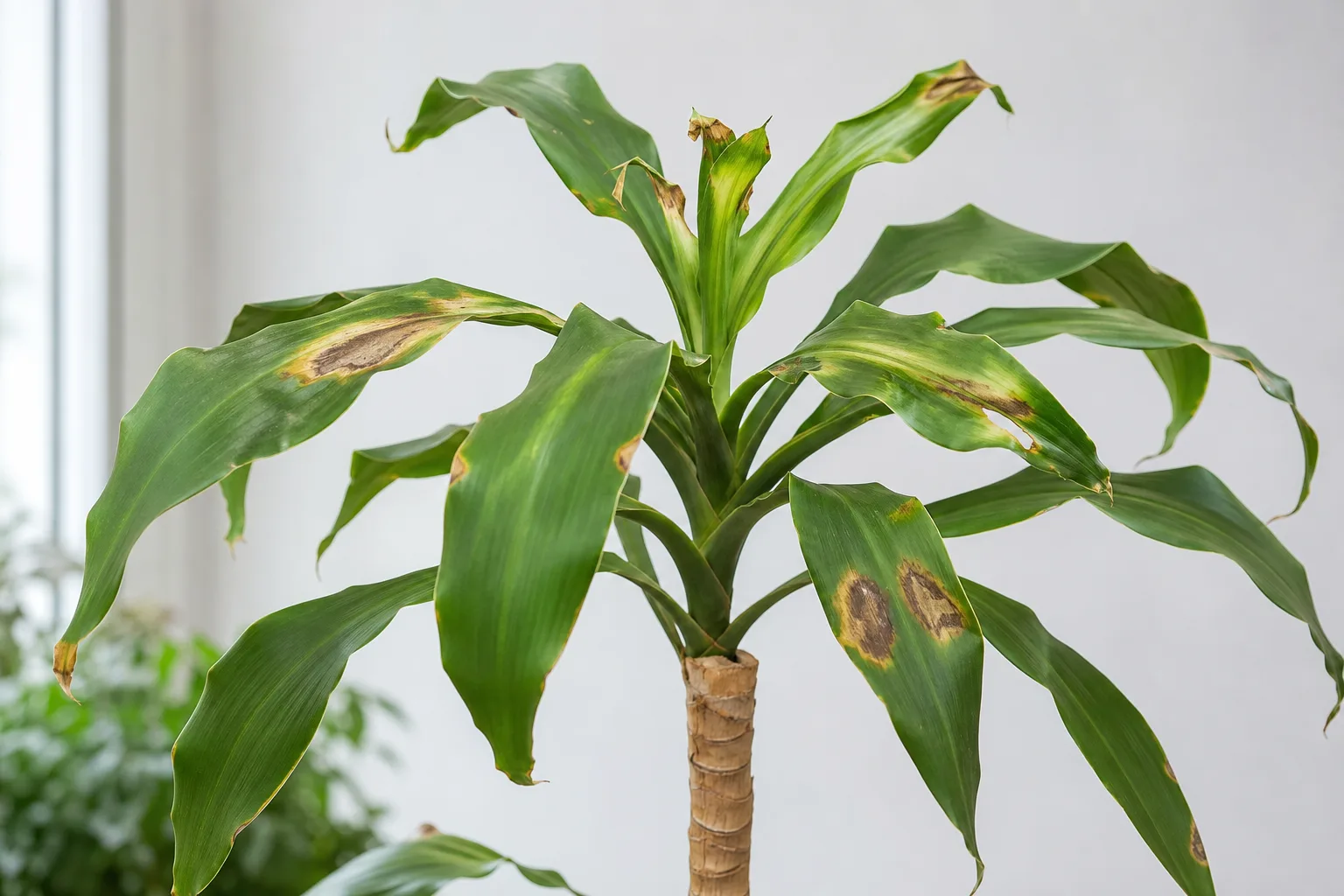
Calcium Deficiency on Janet Craig Dracaena: Causes, Checks & Fixes
This guide covers calcium deficiency on Janet Craig Dracaena. See also the general Calcium Deficiency guide, watering, and light pages for this plant.
Calcium Deficiency on Janet Craig Dracaena: Causes, Checks & Fixes
Quick answer
Calcium stress on Janet Craig Dracaena (Dracaena deremensis ‘Janet Craig’) appears when new crown leaves emerge distorted, pale, hooked, or crinkled while older strap foliage below stays relatively firm and deep green. On this slow-growing office dracaena, the cause is usually calcium transport failure from wet mix in low light, years without balanced feeding, or fluoride and salt stress blocking uptake-not a missing bag of lime in the pot.
First step: stabilize dry-down watering and switch to filtered or distilled water before adding fertilizer. Let the top half of the mix dry in bright placements-or most of the pot in deep shade-then water thoroughly with low-fluoride water. Only after one week of firm roots and appropriate moisture should you consider half-strength balanced feed during active growth.
Full species context: Janet Craig overview. If symptoms are margin-only brown tips on mature leaves, that is usually fluoride injury-not this page.
What calcium deficiency looks like on Janet Craig
New growth at the crown tells the story. Janet Craig pushes strap leaves from a tight central rosette on thick cane. Calcium shortage or transport failure shows up on the youngest blade, not the lower canopy first.
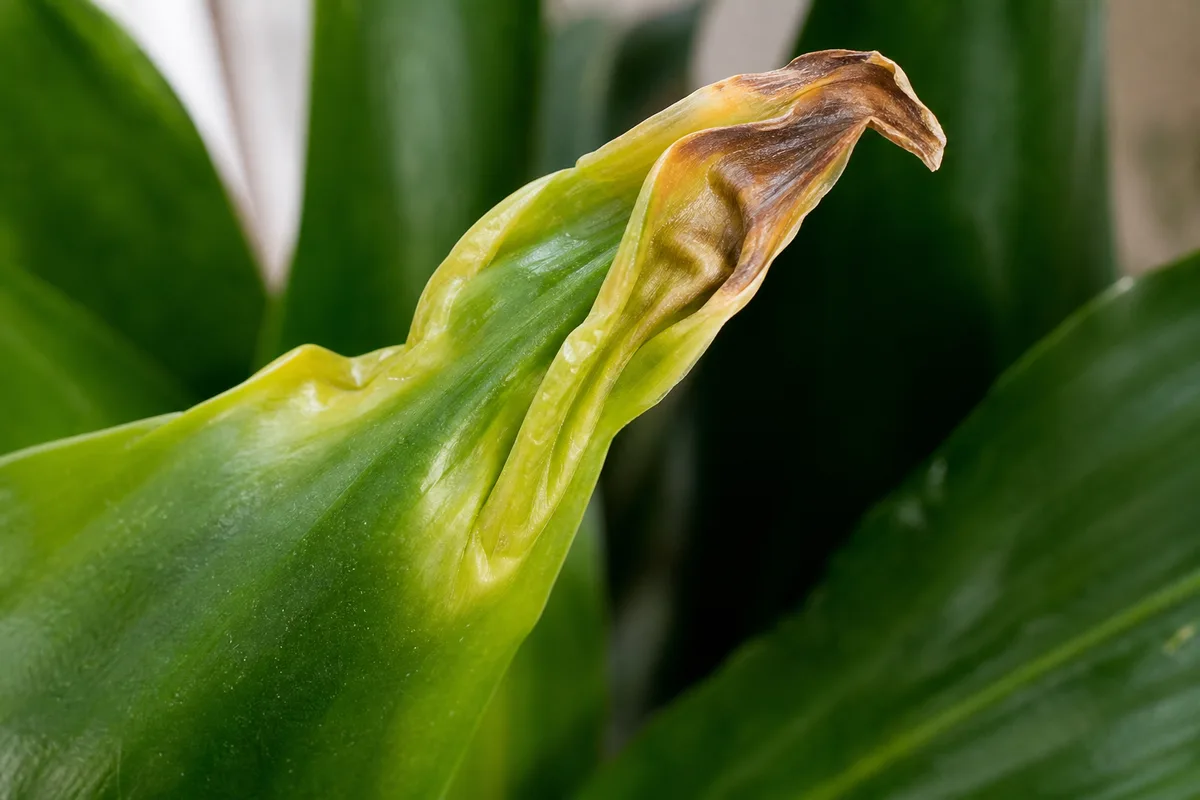
Calcium Deficiency symptoms on Janet Craig Dracaena - compare with healthy tissue on the same plant.
Typical signs:
- Hooked, bent, or crinkled tips on the leaf still unfurling from the crown
- Pale yellow-green new leaves compared to mature deep-green straps below
- Uneven or wavy leaf margins on the newest blade only
- Slow or stalled crown flush after you move the plant to brighter light-demand outpaces supply
- Thin, weak new petioles that fail to hold the leaf upright
Older leaves often stay glossy and firm. That pattern differs from nitrogen deficiency, which yellows lower leaves first, and from overwatering, which softens yellow leaves on a heavy wet pot.
Brown tip burn alone on otherwise flat mature leaves usually means fluoride in tap water-not calcium. When the entire new blade distorts while tips on old leaves look normal, mineral shortage or uptake failure fits better.
Compare with distorted leaves and deformed new growth when multiple stressors overlap; this page focuses on calcium-specific crown patterns.
Why Janet Craig develops calcium stress
Janet Craig is a slow-growing, fluoride-sensitive foliage dracaena widely placed in low-light offices. That combination makes calcium problems look different from fast-growing tropicals in bright windows.
Uptake failure from wet mix in low light
In deep shade, Janet Craig transpires slowly and may go three to four weeks or longer between thorough waterings. When mix stays wet for weeks because you water on a calendar, root function declines and calcium moves poorly in the xylem even if minerals sit in the soil. The crown-furthest from roots-shows stress first.
This is transport failure, not empty soil. Fixing moisture rhythm per the watering guide often matters more than dumping supplements on wet roots.
True deficiency vs. fluoride mimic
True calcium shortage in container Janet Craig usually follows years without repotting or feeding in a bright spot where the plant actively produces leaves. Peat-based mix depletes over time; water alone does not replace structural minerals new cell walls need.
Fluoride toxicity is the more common lookalike on Janet Craig. Dracaena deremensis is very sensitive to fluoride; municipal water at about 1 ppm accumulates in leaf margins through the transpiration stream. Fluoride typically burns tips and margins on mature leaves before it distorts whole new blades-though both problems improve with filtered water. Clemson HGIC notes dracaena is very sensitive to fluoride and recommends keeping soil pH between 6.0 and 6.5 to limit fluoride availability.
Overlap with nutrient lockout and salt buildup
Heavy feeding without flushing, hard tap water, or superphosphate fertilizers can leave soluble salts that block multiple minerals at once-including calcium. If pale crown growth persists after regular feeding and white crust rims the pot, suspect nutrient lockout or salt build-up before adding more fertilizer. PNW Handbooks recommend keeping high calcium levels in soil with pH around 6.5 to 7 for D. deremensis-but indoor lockout from salt often needs leaching first, not more lime.
How to confirm the cause
Work through this checklist in order:
- New vs. old tissue - Distortion limited to emerging crown leaves supports calcium stress; uniform tip brown on all leaf ages suggests fluoride.
- Watering history - Heavy wet pot in dim office for weeks points to uptake failure; light dry pot with crinkled new growth may fit drought compounding stress.
- Feeding record - No fertilizer for 12+ months during active growth in a brighter window supports true depletion.
- Water source - Ongoing distortion after months on filtered water confirms missing nutrients, not fluoride alone.
- Salt crust and feed response - White rim plus fertilizer that “does nothing” routes to lockout before calcium supplements.
- Root firmness - Mushy roots, sour soil, or soft cane mean root rot; feeding worsens rot.
Fluoride tip burn vs. calcium crown distortion
| Pattern | Leaf age affected | Leaf shape | Water history | First direction | Urgency | | --- | --- | --- | --- | --- | | Fluoride tip burn | Mature straps first; crown may follow later | Tips or margins brown; blade otherwise flat | Months of municipal tap | Brown tips - switch water | Low | | Calcium transport failure | Emerging crown blade | Whole new leaf hooked, crinkled, or pale | Wet mix in low light | Fix dry-down; filtered water | Medium | | True calcium depletion | New crown; older leaves still green | Thin weak new blades | Years un-fed in active growth | Light balanced feed after water fix | Medium | | Nutrient lockout | Pale new crown; mixed signs | Distorted plus chlorotic | Recent feeding + white crust | Flush; see nutrient lockout | Medium-High | | Root rot | Yellowing spreads; crown may stall | Soft, not just crinkled | Wet sour mix | Stop water; inspect roots | High (same day) |
Magnesium deficiency can cause interveinal chlorosis on some houseplants; on Janet Craig in office low light, whole-blade distortion on the newest crown leaf is the more reliable calcium signal when roots are firm.
First fix for Janet Craig
Stabilize dry-down watering and switch to filtered or distilled water-one clear action before stacking treatments.
- Lift the pot. If it feels heavy and soil stays wet below the surface in a dim room, skip the next scheduled watering until the top half of mix dries or most of the container dries in deep shade.
- Water thoroughly once with rainwater, distilled, or reverse-osmosis water-not softened tap water, which adds sodium.
- Empty the saucer. Hold fertilizer, repotting, and heavy pruning for at least one week.
When to apply half-strength balanced feed
After seven to ten days of appropriate moisture and firm cane tissue, apply half-strength balanced liquid houseplant fertilizer once during spring or summer active growth-per Clemson HGIC guidance to feed dracaenas monthly in spring and summer. Skip winter feeding in cool, dim offices.
Do not add garden lime, gypsum, or crushed eggshells without a soil test. Indoor peat-based mix rarely lacks calcium; pH shifts from lime can worsen lockout. Do not use superphosphate fertilizers-Clemson warns they often carry high fluorine levels.
If white salt crust is visible, flush with plain low-fluoride water at two to three times pot volume before feeding. Full feeding context: Janet Craig fertilizer guide.
Step-by-step recovery
- Inspect roots only if mix has been wet for weeks-mushy roots need rot protocol first, not fertilizer.
- Switch permanently to filtered water if still on fluoridated tap.
- Match watering to light per the watering guide-office placements need far longer dry-down than window specimens.
- Wait one week after the first corrected watering cycle.
- Apply half-strength balanced feed once if crown distortion persists and roots are firm.
- Move slightly brighter-east window or closer to office fluorescents-so the plant can use nutrients for new leaves.
- Watch the next two to three crown leaf flushes. Each should unfurl cleaner than the last.
- Trim only leaves more than 70% damaged; keep photosynthesizing foliage.
If distortion returns every spring despite filtered water and light feeding, consider repotting into fresh well-drained mix and review salt build-up before escalating supplements.
Recovery timeline
Janet Craig grows slowly-especially in low light-so crown recovery takes patience. Expect cleaner new leaves within two to four weeks after water rhythm and filtered water stabilize in moderate light. Adding correct half-strength feeding may show improvement on the second or third crown flush, often four to eight weeks total in office conditions.
Old distorted strap tissue will not re-green or flatten. Judge success only by new crown emergence. Cane that has not produced a new leaf in over a year may need repotting plus brighter placement before growth restarts.
Causes to rule out
Distorted crown growth overlaps with:
- Fluoride toxicity - Margin or tip necrosis on firm mature leaves; see brown tips
- Nutrient lockout - Pale crown despite feeding; white crust; see nutrient lockout
- Overwatering / root rot - Yellow soft leaves, sour wet mix, soft cane; see overwatering and root rot
- Cold drafts - Brown patches after exposure below about 55°F; new leaves may abort; compare deformed new growth
- Low light alone - Small pale leaves without crinkling; brighten before feeding
What not to do
Do not add garden lime, gypsum, or eggshell top-dressing to indoor Janet Craig without a soil test-pH swings worsen lockout in peat mix. Do not pour full-strength fertilizer on bone-dry or waterlogged soil. Do not repot, prune heavily, and feed on the same day on a stressed plant. Do not confuse fluoride tip burn with whole-blade crown distortion-filtered water alone fixes tips but not mineral depletion. Keep fertilizers away from pets; Dracaena is toxic to cats and dogs.
How to prevent calcium problems next time
Feed lightly and consistently during spring and summer active growth rather than rare heavy doses. Use filtered water as the default for every Janet Craig watering to limit fluoride stacking with mineral stress.
Match watering to light so salts leach slightly with each thorough drink-see the watering guide. Repot every two to three years in bright homes where the plant actively adds height. Flush the pot with plain low-fluoride water seasonally in hard-water regions.
In dim offices, do not overfeed trying to force growth-slow metabolism needs less fertilizer but also produces fewer leaves where deficiency signals hide until you move the plant brighter.
Practical checks
Urgency check
Soft cane, sour-smelling soil, or spreading yellow on a heavy wet pot needs same-day root assessment-that is likely rot, not calcium lack. Distorted crown leaves on firm cane with appropriate dry-down can wait for the watering correction cycle before feeding.
Best inspection order
Crown leaves → pot weight → half-depth moisture → water source and feeding record → salt crust on mix surface → roots only if wet decline persists.
When to worry
Escalate if yellowing spreads down the cane while you increase fertilizer-that may be salt burn or hidden rot, not deficiency. If new leaves stay distorted after two months of filtered water, correct dry-down, and half-strength monthly feeding in moderate light, repot into fresh mix or test for lockout before adding calcium supplements.
Related Janet Craig guides
- Janet Craig overview - species care hub
- Watering - dry-down by light level
- Fertilizer - half-strength schedule
- Brown tips - fluoride differential
- Nutrient lockout - when feeding fails
- Salt build-up - white crust leaching
- Distorted leaves - broader distortion causes
FAQs
Is my Janet Craig distorted new leaf definitely calcium deficiency?
Not always. On Janet Craig, calcium stress usually distorts the newest crown blade while older leaves stay fairly firm, but fluoride injury and root stress can overlap. Use the checklist above to confirm water source, pot moisture pattern, and root condition before feeding.
What should I check first before I add fertilizer?
Check pot weight and moisture depth first. If the mix is still heavy and wet in low light, correct dry-down and switch to filtered water before any feed. Feeding a wet stressed root zone can worsen the problem.
How soon will Janet Craig look better after I fix this?
Expect improvement on new growth, not damaged leaves. In typical indoor light, cleaner crown leaves often appear within two to four weeks, with stronger improvement over the next two to three flushes. Old distorted leaves will not flatten back out.
When is this an urgent problem instead of a slow correction?
Treat it as urgent if the cane softens, the mix smells sour, or yellowing spreads on a heavy wet pot. That pattern points to possible root rot and needs same-day root assessment. Distortion on otherwise firm cane is usually lower urgency.
How do I prevent calcium stress from returning?
Keep watering tied to actual dry-down, not a calendar, and use low-fluoride water consistently. Feed lightly during active growth instead of long no-feed periods followed by heavy doses. Flush salts occasionally if you see crusting at the soil surface.