Faded Leaves on Janet Craig Dracaena: Causes, Checks & Fixes
Quick answer
Faded leaves on Janet Craig Dracaena mean the foliage has lost its deep green gloss and looks dull, olive, or washed out-not crispy brown tips and not bright yellow chlorosis. In dim offices the usual pairing is pale crown leaves plus a heavy wet pot from a bright-room watering rhythm. First step: compare crown-leaf color and gloss to lower leaves, then lift the pot and check half-depth moisture before changing light or water.
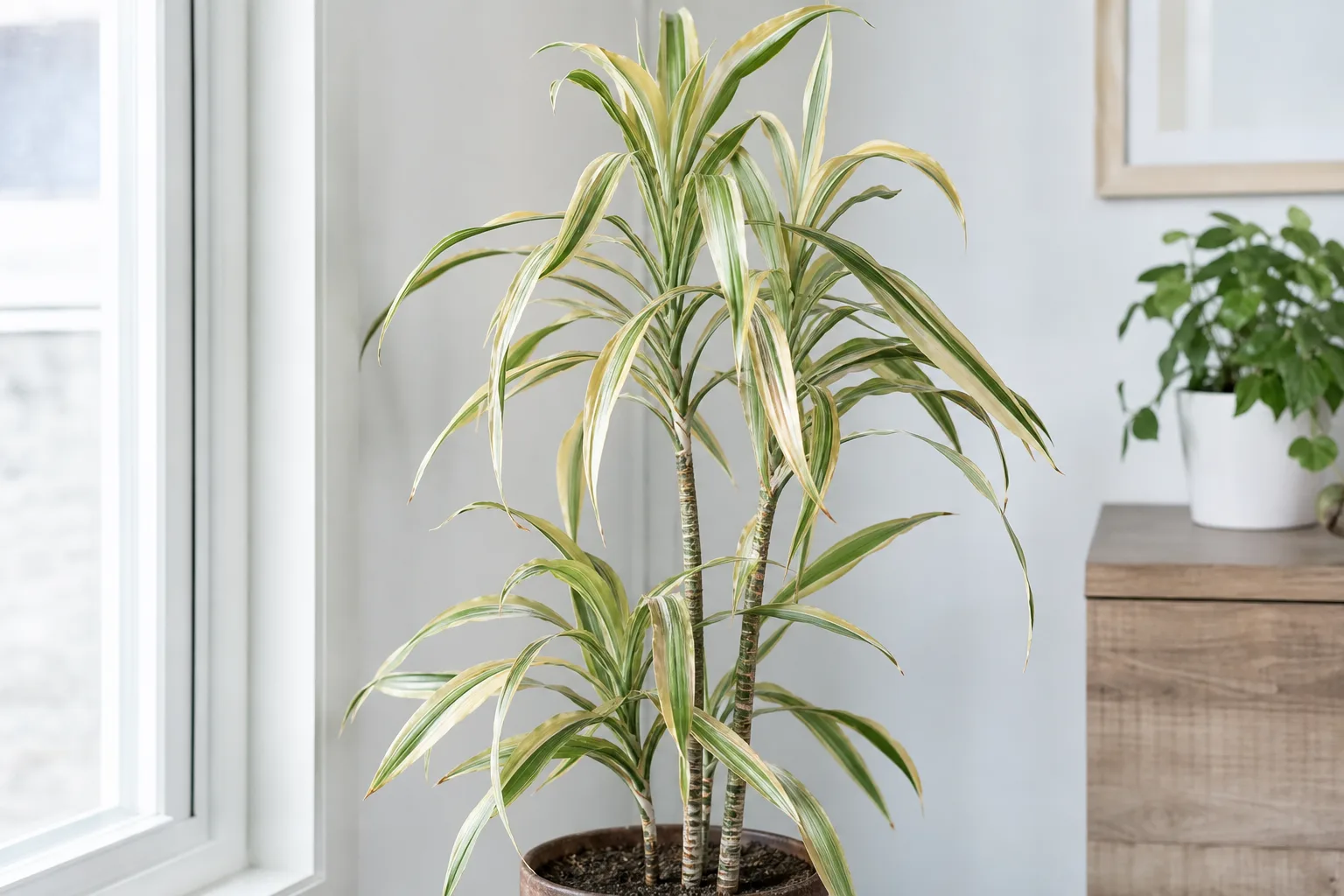
Faded Leaves on Janet Craig Dracaena: Causes, Checks & Fixes
This guide covers faded leaves on Janet Craig Dracaena. See also the general Faded Leaves guide, watering, and light pages for this plant.
Faded Leaves on Janet Craig Dracaena: Causes, Checks & Fixes
Quick answer
Faded leaves on Janet Craig Dracaena (Dracaena deremensis ‘Janet Craig’) describe foliage that has lost its deep green gloss and looks dull, olive, or washed out-not the crispy brown margins of fluoride tip burn and not the bright yellow chlorosis of overwatering in low light. Healthy Janet Craig carries wide, wavy, glossy strap leaves in tight clusters along a slow upright cane. Fade shows up first at the crown when light is weak, at margins when fluoride accumulates, or low on the cane when old leaves age out naturally.
The office-plant trap is real: Janet Craig survives fluorescent corners, but metabolism slows so much that a weekly watering habit leaves the mix wet for weeks. Crown leaves pale while the pot stays heavy-fade and soggy soil then look unrelated until you lift the pot.
First step: compare crown-leaf color and gloss to lower foliage, then lift the pot and probe half-depth moisture. Dull crown on a heavy wet pot points to light plus overwatering. Uniform dullness with light dry soil points to drought. Dull margins progressing toward brown on tap water point to fluoride. One or two dull lower leaves on an otherwise glossy crown is often normal senescence.
Full species context: Janet Craig overview.
What “faded” means on Janet Craig (vs. yellow, brown tips, and leggy pale growth)
Owners use “faded” when the plant looks tired-less vibrant than when it arrived. On Janet Craig, that usually means one of these distinct patterns:
| What you see | Leaf texture | Pot / soil | Likely cause | Read next |
|---|---|---|---|---|
| Dull, olive crown leaves; smaller new growth | Firm, not crispy | Heavy; wet at half depth | Low light + overwatering | Not enough light, yellow leaves |
| Loss of gloss; margins dull before browning | Firm; tips may crisp later | Normal dry-down | Fluoride / salt buildup | Brown tips |
| Pale, washed-out crown; long bare cane gaps | Firm | Normal to light moisture | Insufficient light alone | Not enough light, light guide |
| Gray-green, slightly limp straps | Thin feel | Very light; dry throughout | Underwatering | Watering guide |
| One or two dull lower leaves only | Firm cane | Stable moisture | Normal lower-leaf aging | No action if crown stays glossy |
Fade is a color-depth and gloss problem. Yellow is a pigment loss problem. Brown tips are dead necrotic tissue at margins. Leggy pale growth adds stretch between leaf whorls-see the dedicated not enough light page when the cane looks taller but thinner.
Why Janet Craig leaves lose color and gloss
Janet Craig is marketed as shade-tolerant-and it is-but months in very dim light still reduce photosynthetic output. The plant compensates with thinner, paler crown leaves that look washed out rather than sunburned.
Too little light in office placements
In deep shade Janet Craig maintains color longer than most tropicals, yet NC State Extension notes that if light levels are too low, leaves will narrow and growth stalls. Crown leaves lose the corrugated, glossy look first. The cane may lean toward the brightest wall. This is gradual-often masked for months-then suddenly obvious when new whorls emerge small and dull. See not enough light on Janet Craig when stretch and bottom-up drop accompany the fade.
Fluoride and salt buildup dulling margins
Janet Craig is among the most fluoride-sensitive houseplants. Municipal tap water delivers fluorine with every watering; it accumulates at leaf margins before tips turn crispy brown. Early fluoride stress can look like dull margins and loss of sheen on otherwise firm green blades-not yet full necrosis. Clemson HGIC lists yellowing tips or margins and scorched areas as fluoride symptoms. Superphosphate fertilizers and perlite-heavy mixes can add fluorine. If you have watered with tap for months and dull margins creep inward, switch water source before blaming humidity.
Overwatering chlorosis in slow-drying low light
Low light slows water use. Owners who water on a bright-room calendar keep the top half of the mix wet for weeks. Roots lose oxygen; crown metabolism drops; leaves look dull and olive rather than glossy. The pot feels heavy days after watering. Yellow lower neighbors may follow. This pattern overlaps with yellow leaves-check moisture before fertilizing or repotting.
Underwatering stress in bright dry rooms
Less common on Janet Craig, but a plant near a sunny window or heat vent can dry faster than expected. Wide strap leaves lose turgor; color washes to gray-green. The pot is light; mix is dry at half depth. Leaves may feel slightly thin but stay flat-not rolled like drought curl on brighter placements.
Normal lower-leaf aging
Janet Craig naturally sheds oldest lower leaves as the cane elongates. One or two dull, yellowing lower straps on a firm upright plant with glossy crown growth is often senescence-not a care crisis. Missouri Botanical Garden notes lower leaf drop on Dracaena as plants develop.
What faded leaves look like on Janet Craig
Healthy foliage is glossy deep green, slightly wavy, and held in arching clusters. Faded foliage changes the finish before the whole plant collapses.
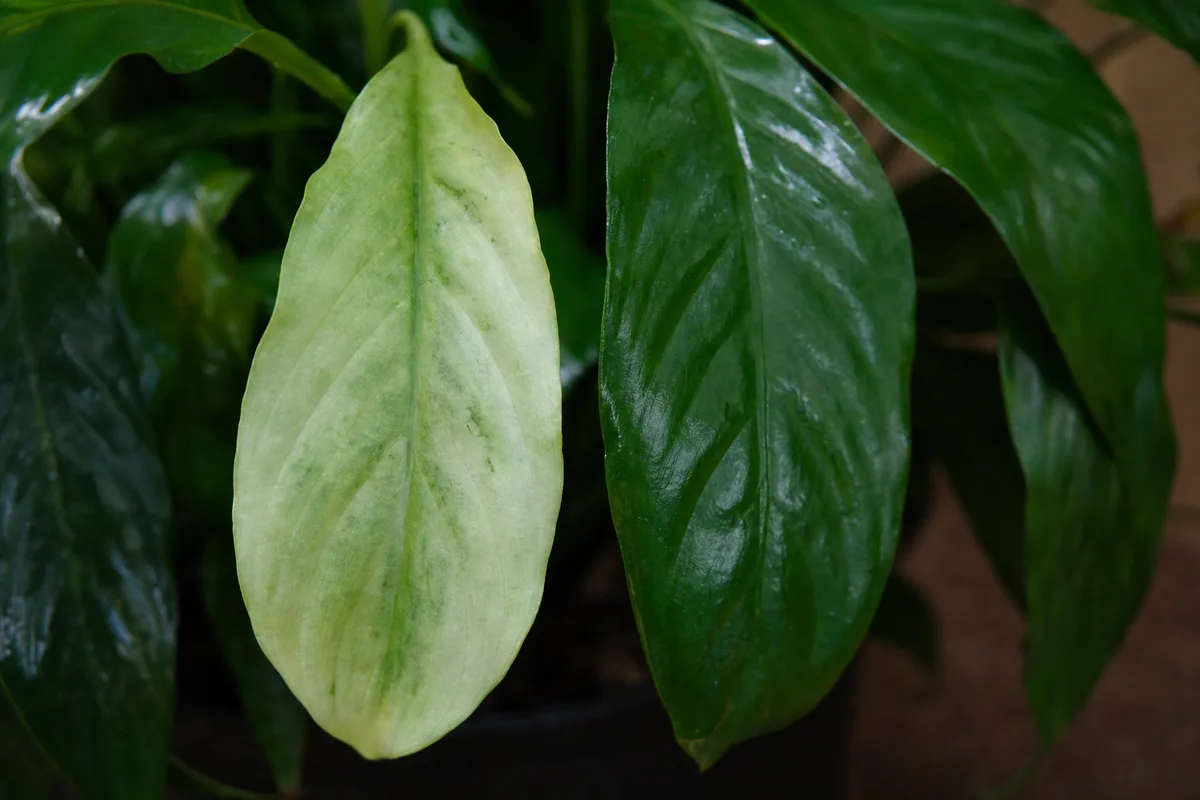
Faded Leaves symptoms on Janet Craig Dracaena - compare with healthy tissue on the same plant.
Low-light fade at the crown:
- New leaves emerge smaller, narrower, and matte olive instead of glossy forest green
- Older crown leaves look flat under daylight-not the waxy sheen you see on nursery stock
- Lower cane may stay darker while the top looks washed out
- Often pairs with a heavy pot if watering did not slow with dim light
Fluoride-related dulling:
- Margins lose gloss first; a dull band may precede tan-brown crisping
- Leaf center can stay relatively green while edges look tired
- White crust on soil surface may accompany salt buildup
- Pattern worsens with months of municipal tap-not after one missed watering
Overwatering dullness:
- Crown color fades to yellow-green or olive on a plant that has not moved
- Lower inner leaves may yellow while crown growth stalls
- Pot weight stays high; skewer at half depth clings with cool damp mix
- No sour smell yet-urgent rot signs come later if watering continues
Underwatering washout:
- Whole canopy looks slightly gray-green; pot is very light
- Leaves may droop subtly but lack the crisp brown of fluoride burn
- More likely in window placements than fluorescent offices
How to confirm the cause
Work through these checks in order. One honest crown inspection beats guessing from a single dull leaf.
- Crown gloss under daylight - Hold the plant near a window (not direct sun on the leaves). Compare the newest whorl to a lower leaf. Matte olive crown on a firm cane in a dim corner supports low light. Dull margins only support fluoride. Bright yellow on wet soil supports overwatering-see yellow leaves.
- Pot weight and half-depth moisture - Lift the pot. Heavy and wet after weeks without a thorough dry-down means stop watering before adding light or fertilizer. Very light with dry skewer means a measured soak is due-see watering guide.
- Water source history - Months of tap water with dull margins that progress toward brown tips point to fluoride injury. Filtered or rain water users with fade only at the crown point to light.
- Light at the crown - If the plant sits more than six feet from glass, behind tall furniture, or in a corner with no sky view, measure whether usable light reaches the growing tip. Pale crown plus leggy cane gaps confirm insufficient light-light guide.
- Roots only if decline continues on wet mix - Soft cane, sour smell, or spreading yellow on heavy soil needs same-day root inspection. Cosmetic dullness on firm cane and stable moisture does not require repotting on day one.
First fix for Janet Craig faded leaves
Match the fix to what you confirmed-do not stack repotting, pruning, fertilizer, and a light move on the same day.
If low light is the trigger: Move the crown into brighter filtered light or add a full-spectrum grow light within a few feet of the foliage. Then extend dry-down-Janet Craig in brighter light uses water faster, but a plant coming from deep shade still needs the top half of mix dry before the next soak. Expect wider, glossier crown leaves in four to eight weeks; stretched cane does not shrink back.
If fluoride or salts are the trigger: Switch immediately to rainwater, distilled, or reverse-osmosis water. Flush the pot with two to three pot volumes of low-fluoride water to leach accumulated salts. Trim only fully dead margins for appearance. Watch for clean new crown leaves within two to four weeks-full guide: brown tips.
If overwatering is the trigger: Stop watering until the top half-or most of the pot in deep shade-dries. Empty saucers after every future soak. In very dim offices that may mean every three to four weeks between drinks, not neglect. Do not fertilize dull plants sitting in wet soil.
If underwatering is the trigger: Water thoroughly once with low-fluoride water, then resume dry-down checks at half depth. Do not leave the pot in standing water.
If only lower leaves faded: Remove spent straps cleanly if they loosen; keep watching the crown. Glossy new growth means normal aging, not crisis.
Recovery timeline
Damaged dull tissue rarely re-darkens to nursery depth. Success is new crown leaves emerging glossy, wider, and closer together. After a light correction or water-source switch, allow two to four weeks for the first clean whorl; full canopy refresh takes several months as old straps age out. Fluoride-dulled margins that already necrosed stay brown-only new tissue recovers. If crown growth stays matte eight weeks after fixes, reassess light measurement and root firmness.
What not to do
Do not increase fertilizer on dull plants-especially in wet soil. Pale foliage is rarely a nitrogen deficiency on Janet Craig; heavy fertilizing can burn margins on fluoride-sensitive Dracaena. Do not mist leaves to restore gloss; it does not fix light or fluoride. Do not move a waterlogged dim-office plant to hot direct sun in one step-burn risk is real on wide straps. Do not water on a calendar copied from a brighter room. Keep trimmed leaves away from pets; Dracaena is toxic to cats and dogs.
How to prevent faded leaves next time
Match light, water interval, and water quality to the same spot-not to a generic schedule. In deep shade, let most of the pot dry; in brighter filtered light, let the top half dry. Use low-fluoride water as the default. Rotate the pot every two weeks so all sides of the crown receive usable light. During weekly dusting, check crown gloss-dull new growth is an early warning before bottom leaves drop. Windowless offices need supplemental lighting, not just survival-level fluorescents, if you want deep green foliage year-round.
Practical checks
Urgency check
Cosmetic fade on a firm cane with stable moisture is not an emergency. Same-day action is needed when the cane base softens, soil smells sour, yellowing spreads on a heavy wet pot, or crown leaves collapse while mix stays saturated-those signs point to advancing root stress, not simple dull color.
Best inspection order
Crown gloss and color → pot weight → half-depth moisture → light at growing tip → water source history → roots only if wet decline persists.
Related Janet Craig guides
- Brown tips - crispy margins and fluoride
- Yellow leaves - chlorosis and wet soil
- Not enough light - stretch and pale crown
- Watering - dry-down by light level
- Light - placement and foot-candles