Water Stress on Janet Craig Dracaena: Causes, Checks & Fixes
Quick answer
Water stress on Janet Craig Dracaena is the swing between too wet and too dry on a slow-transpiring low-light Dracaena-not a single missed watering. Mixed yellow lower leaves, droopy crown, and crisp margins on the same plant point to alternating extremes. First step: lift the pot and check moisture at half depth before you water or withhold again.
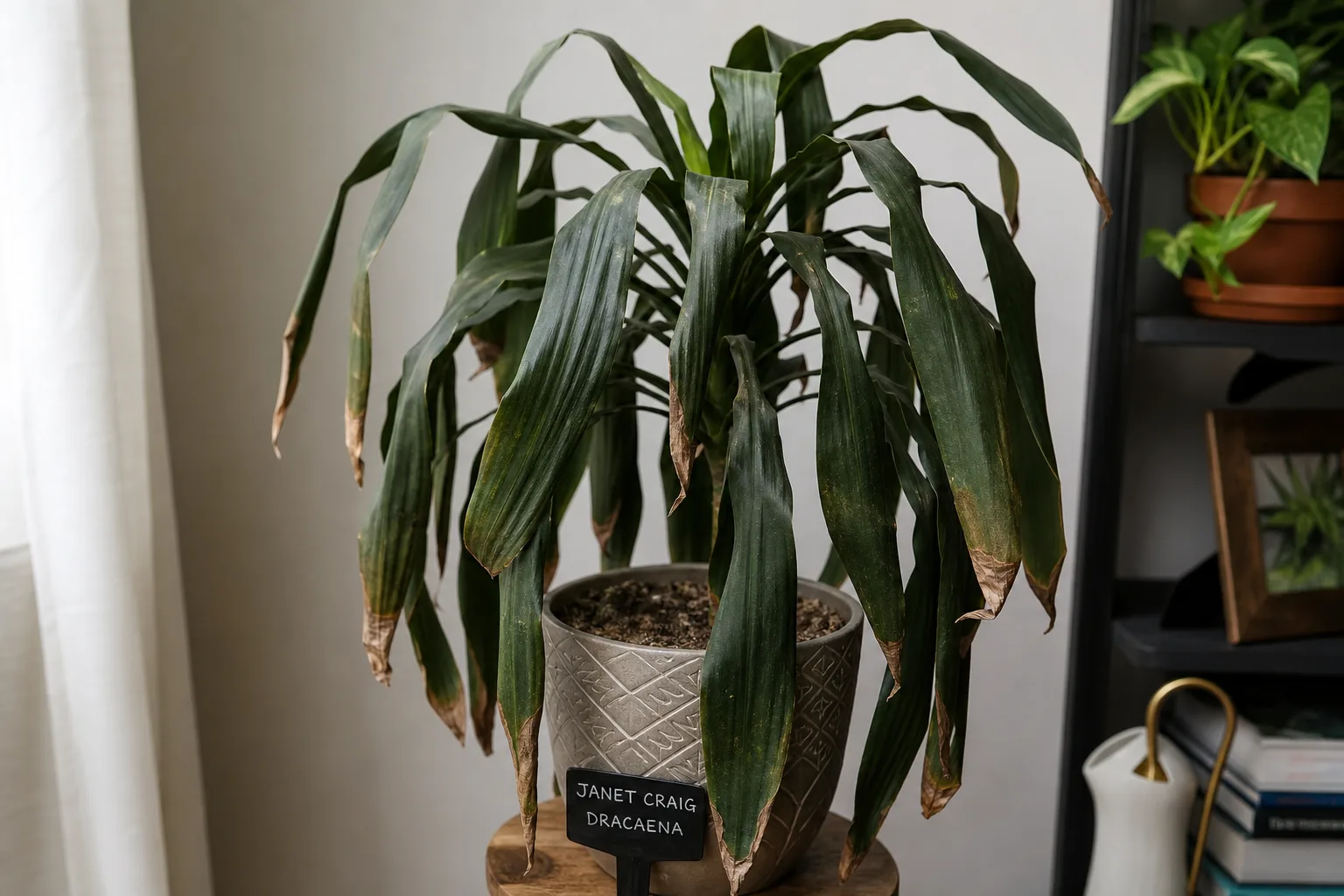
Water Stress on Janet Craig Dracaena: Causes, Checks & Fixes
This guide covers water stress on Janet Craig Dracaena. See also the general Water Stress guide, watering, and light pages for this plant.
Water Stress on Janet Craig Dracaena: Causes, Checks & Fixes
Quick answer
Water stress on Janet Craig Dracaena (Dracaena deremensis ‘Janet Craig’) is rarely one bad watering-it is the swing between too wet and too dry on a slow-growing cane Dracaena that transpires slowly in low light. You may see yellow lower leaves, crown droop, stalled new growth, and brown strap-leaf margins on the same plant because each extreme leaves different damage behind.
First step: lift the pot and check moisture at half depth before you water or withhold again. That single check tells you whether Janet Craig needs a thorough soak, needs to dry out longer, or needs root inspection-not another calendar guess.
For full dry-down intervals and fluoride-safe water sources, see the Janet Craig watering guide. This page focuses on alternating damage that neither pure overwatering nor pure underwatering alone explains.
What water stress looks like on Janet Craig
Janet Craig’s broad dark-green strap leaves grow from a thick upright cane with new foliage emerging only at the crown. Roots are relatively fine compared to the cane mass, so the plant reacts slowly when soil moisture swings-but it also suffers when wet mix sits around a root system that barely moves water in deep shade. The signature is mixed symptoms from alternating extremes, not a clean drought or flood picture.
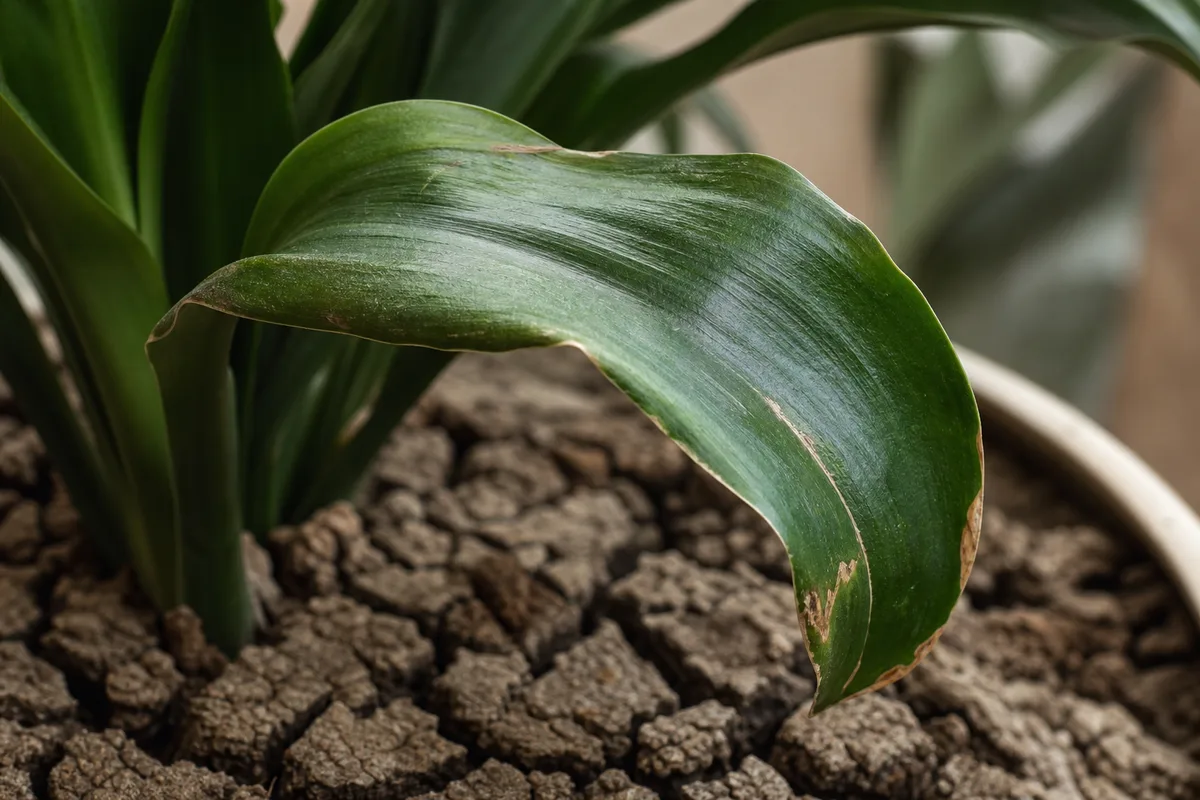
Water Stress symptoms on Janet Craig Dracaena - compare with healthy tissue on the same plant.
After a wet phase or calendar overwatering, expect:
- Yellow lower leaves, sometimes dropping while still partially green
- Heavy pot that stays damp for days or weeks in low light
- Stalled crown growth for months
- Fungus gnats or a musty smell from stale mix
- Softening cane tissue at the soil line in advanced cases
- Worsening brown tips as fluoride and salts concentrate in wet root zones
After a dry phase or skipped waterings, expect:
- Drooping or less rigid crown leaves
- Crisp brown margins on strap leaves, especially older foliage
- A noticeably light pot when lifted
- Dry mix at half depth; in severe cases, soil pulls away from the pot wall
- Leaves that perk within 24 hours after one thorough soak if roots are still healthy
The water-stress pattern is both sets together: yellowing at the base, crisp tips on another leaf, and crown droop-because you soaked after a drought, or let it dry hard after keeping it too wet. Pure underwatering rarely causes yellow lower leaves on damp soil. Pure overwatering rarely causes a feather-light pot and papery margins without wet mix underneath.
Mixed symptoms on the same plant
A Janet Craig that looked fine for months in a fluorescent office can show simultaneous damage layers: older leaves with fluoride-brown tips from tap water, newer yellow lower leaves from a recent wet spell, and crown leaves that droop because roots are compromised-not simply thirsty. That layered picture is why water-stress diagnosis matters on this cultivar. Fixing only tip burn with more water-or fixing only droop with another heavy soak-extends the swing.
Why Janet Craig gets water stress
Janet Craig is a low-light tolerant Dracaena with thick cane tissue and slow crown growth. It stores some resilience against missed waterings but punishes continuously wet, airless soil-especially where light is dim and transpiration drops. That biology makes calendar watering the primary swing trigger.
Low-light slow transpiration and calendar watering
In deep shade or fluorescent-only offices, Janet Craig may need water only every 21 to 28 days or longer after the top half of mix dries. Many caretakers still water weekly because the plant “looks like it needs a drink” or because a shared office schedule runs on autopilot. The bottom half of the pot stays saturated while the surface eventually dries-setting up the wet phase. University of Maryland Extension recommends watering when the plant needs it, not on a fixed schedule.
In brighter filtered light, the same plant may dry every 10 to 14 days in warm months. Continuing office-interval watering after moving Janet Craig to a bright window underwatering; continuing bright-window frequency in a dim corner overwatering. Both mismatches feed the swing.
Guilt-soak after droopy dry spells
Janet Craig leaves droop noticeably when dry, which prompts a heavy soak-then the compact crown and root ball sit in wet mix while the owner waits another two or three weeks in low light. Overwatering can cause root rot and yellowing leaves even after the visible top layer dries. Fear of rot then pushes the opposite extreme: withholding until the whole pot bakes dry, followed by another panic soak. That guilt-soak cycle is the most common water-stress pattern in office placements.
Fluoride sensitivity overlapping with rhythm problems
Janet Craig is highly sensitive to fluoride. Municipal tap water often contains fluorine at about 1 ppm; roots absorb it with every watering and it accumulates at leaf margins and tips. Fluoride injury is often misread as underwatering, so growers water more-deepening the wet phase. Excessive drying between waterings can also brown leaf tips on fluoride-sensitive Dracaena, so drought and fluoride stress can overlap on the same margins. For fluoride-only tip burn without swing symptoms, see brown tips on Janet Craig.
Oversized pots, cachepots, and peaty mix
Oversized containers hold excess wet soil volume that Janet Craig roots never reach. Cachepots trap runoff so the bottom stays saturated while the surface looks dry-you withhold until the whole plant wilts, then soak again. Dense peaty mix without perlite extends the wet phase in low light. Each factor lengthens the soggy half of the swing.
How to confirm the cause
Work through these checks in order before Janet Craig Dracaena repotting guide, pruning, or feeding:
- Crown leaves first - Note whether new growth at the top is firm, stalled, or drooping. Clean emerging crown leaves with damaged lower foliage suggest rhythm or water-quality stress, not total collapse.
- Pot weight - Lift the container. A dramatic weight drop since last week confirms dry-down; persistent heaviness confirms wet mix-even if the surface looks dry.
- Moisture at half depth - Insert a dry skewer or your finger to roughly half the pot depth. Dusty dry throughout with a light pot points to the dry side. Damp or cool mix with a heavy pot points to excess moisture.
- Symptom pattern - Crisp margins plus light pot = dry side. Yellow lower leaves plus damp soil = wet side. Both sets together = alternating water stress.
- Recent history - Did you skip three weeks in a dim office then soak heavily? Water weekly through a dark winter? Repot into a much larger container? Each pattern fits Janet Craig water stress.
- Water source - Tap water with persistent tip burn despite improved rhythm points to fluoride overlap. Softened tap water adds sodium stress-draw irrigation water before the softener line or use distilled or rainwater.
- Stem base firmness - Softening at the soil line on wet mix suggests rot from the wet phase-see root rot on Janet Craig before any soak.
If soil is wet and the cane softens, treat as possible root rot-not simple drought. If soil is dry at half depth, the cane is firm, and the pot is light, a thorough watering with low-fluoride water is appropriate.
Lookalike comparison
| Pattern | Pot weight | Half-depth mix | Key leaf signs | Likely diagnosis |
|---|---|---|---|---|
| Water-stress swing | Alternates heavy ↔ light | Wet history then dry, or both in recent weeks | Yellow lower leaves and crisp margins on same plant | Alternating extremes - this page |
| Pure overwatering | Heavy for days | Cool, damp at half depth | Yellow dropping lowers, gnats, sour smell | Overwatering |
| Pure underwatering | Very light | Dry at half depth | Droop that perks after one soak; no yellow on wet soil | Underwatering |
| Fluoride-only tips | Normal between waterings | Appropriate dry-down | Brown tips on firm leaves; crown growth steady | Brown tips |
| Normal senescence | Normal | Appropriate dry-down | One or two oldest lowers yellow on an otherwise healthy plant | Trim; no rhythm change needed |
First fix for Janet Craig
Stop calendar watering. Check half-depth moisture and pot weight, then act on what you find-nothing else today.
- Dry mix at half depth, firm cane, light pot: Water thoroughly until excess runs from drainage holes, then empty the saucer within 30 minutes. Use filtered, distilled, or rainwater-not untreated tap if tips brown repeatedly. Do not mist, fertilize, or repot.
- Wet mix, firm cane: Withhold water until the top half of mix is dry at half depth. Improve airflow around the pot. Empty any saucer water.
- Wet mix, soft cane base: Do not water. Unpot and inspect roots before any soak-rot from the wet phase needs trimming and dry repotting per root rot guidance, not another drink.
This one pause prevents the classic Janet Craig mistake: drooping leaves trigger a soak when roots are already drowning, or dry soil triggers neglect when the plant only needs a single even watering.
Step-by-step recovery
Once you know which side of the cycle you are on, work in this order:
- Stabilize the rhythm - Water when the top half of mix is dry at half depth, then soak until a small amount drains out. In moderate indirect light that may be every 10 to 14 days; in deep shade every 21 to 28 days or longer-but let the soil tell you, not the calendar.
- Fix water quality in parallel if tips burn - Switch to low-fluoride water before you increase frequency. Sitting tap water overnight removes chlorine but does not remove fluoride.
- Empty saucers every time - Never let Janet Craig sit in standing water; that extends the wet phase.
- Water evenly around the cane - Avoid flooding the crown center; direct moisture around the root zone at the pot rim.
- Match season and placement - Reduce checks in late fall and winter when growth slows; increase monitoring-not volume-if you move the plant to a brighter spot.
- Address chronic wetness - If mix stays damp more than three weeks in low light, consider a smaller pot or airier mix-after the cane is firm and stable.
- Rewet hydrophobic dry peat - If water runs through in seconds on a dry pot, bottom-water 30 minutes or use a slow double-watering so the center rewets without one massive flood.
- Trim only dead tissue - Remove fully yellow or collapsed leaves for hygiene. Keep blemished but firm strap leaves; they still photosynthesize while new crown growth returns.
- Hold fertilizer - Skip feed until new crown leaves look firm for two weeks. Stressed roots cannot use nutrients reliably.
Recovery timeline
Mild water stress on Janet Craig often shows improvement within 24 to 72 hours after the correct single action-firmer crown leaves after a needed soak, or stopped yellow spread after dry-down begins on wet soil.
New crown leaves emerging clean and upright usually appear within two to four weeks once rhythm and water quality stabilize in warm conditions. Janet Craig is slow-growing, so do not expect a fast flush.
Old damage-fully yellow leaves, brown strap margins, dull lower foliage-does not revert. Those leaves may drop while the plant replaces them slowly from the crown.
If the cane stays soft on wet soil after a full dry-down cycle, or no firm new growth appears within six weeks in adequate light, root damage from the wet phase may be too advanced for simple rhythm correction.
Mistakes to avoid
- Soaking every time leaves droop without checking soil-droop on wet mix means damaged roots, not thirst.
- Withholding water for weeks after one yellow leaf-Janet Craig still needs substantial dry-down cycles, not desert treatment.
- Repotting into a much larger pot to “fix” watering-extra wet soil volume prolongs the soggy phase.
- Using softened tap water or increasing tap watering when tips brown-fluoride and sodium worsen margin burn.
- Fertilizing stressed plants to “push growth”-salt stress on compromised roots worsens tip burn.
- Changing water, light, and pot size all at once-you will not know which adjustment helped.
- Treating every brown tip as underwatering when fluoride is the driver-see brown tips before you soak again.
How to prevent water stress next time
Build a Janet Craig routine around predictable half-depth dry-down, not a fixed calendar:
- Check half-depth moisture before every watering with finger, skewer, or moisture meter.
- Match interval to light: 10 to 14 days in moderate indirect light; 21 to 28 days or longer in deep shade-always confirm with tests.
- Use filtered, distilled, or rainwater; avoid superphosphate fertilizers.
- Confirm drainage holes are open; empty saucers within 30 minutes; remove cachepots when watering.
- Keep pot size matched to the root ball-only slightly larger at repot time.
- After travel or a missed month in a dim office, reintroduce water with one thorough soak when half-depth tests read dry-not daily mini-drinks that keep the crown zone alternately flooded and starved.
Lift the pot weekly until you know how it feels at proper moisture. Firm upright crown leaves, stable pot weight between waterings, and one new clean strap leaf are the signs your Janet Craig has escaped the wet-dry swing.
When to worry
Escalate beyond rhythm correction when:
- The cane softens at the base while soil is wet or just dried on the surface
- Leaves stay limp after correct watering on dry mix at half depth
- A sour smell persists after withholding water for a full dry-down cycle
- Yellowing spreads to most of the crown within days
- No firm new growth appears after six weeks in adequate light
Janet Craig is rarely lost to one irregular month if the cane stays firm. It may not be saveable if the stem base has collapsed, roots are entirely mushy, and no firm tissue remains. Keep plants away from pets when handling wet soil or trimmed leaves-Dracaena is toxic to cats and dogs.
What to read next on Janet Craig care
- Janet Craig watering guide - dry-down depth, fluoride-safe water, office vs bright intervals
- Overwatering - chronic wet feet and root damage
- Underwatering - drought droop and hydrophobic mix
- Brown tips - fluoride-focused margin burn
- Root rot - soft cane on wet mix
Conclusion
Janet Craig Dracaena punishes watering swings more than occasional mistakes at either extreme. Its slow metabolism in low light keeps soil wet longer than owners expect, while dramatic droop when dry prompts guilt-soaks that yellow lower leaves and damage roots-often on the same plant when care alternates between neglect and overcorrection. One check at half depth and pot weight breaks the cycle before repotting, misting, or feeding. Stabilize rhythm, use low-fluoride water, match intervals to your room’s light, and judge recovery by firm crown leaves and new clean strap foliage-not by old damaged tissue turning green again.
When to use this page vs other Janet Craig Dracaena guides
- Janet Craig Dracaena watering guide - Use for routine moisture checks before assuming water stress is the main issue.
- Janet Craig Dracaena problems hub - Browse all 50 common issues on this species.