Chemical Damage on Janet Craig Dracaena: Causes, Checks &
Quick answer
Chemical damage on Janet Craig Dracaena usually means fluoride from tap water, salt or fertilizer buildup, foliar contact from leaf-shine or pesticide sprays, or sodium from softened water-not low humidity. First step: identify which pattern you see (margin necrosis, white soil crust, or sudden leaf spots), then switch to filtered water or leach the pot before stacking other treatments.
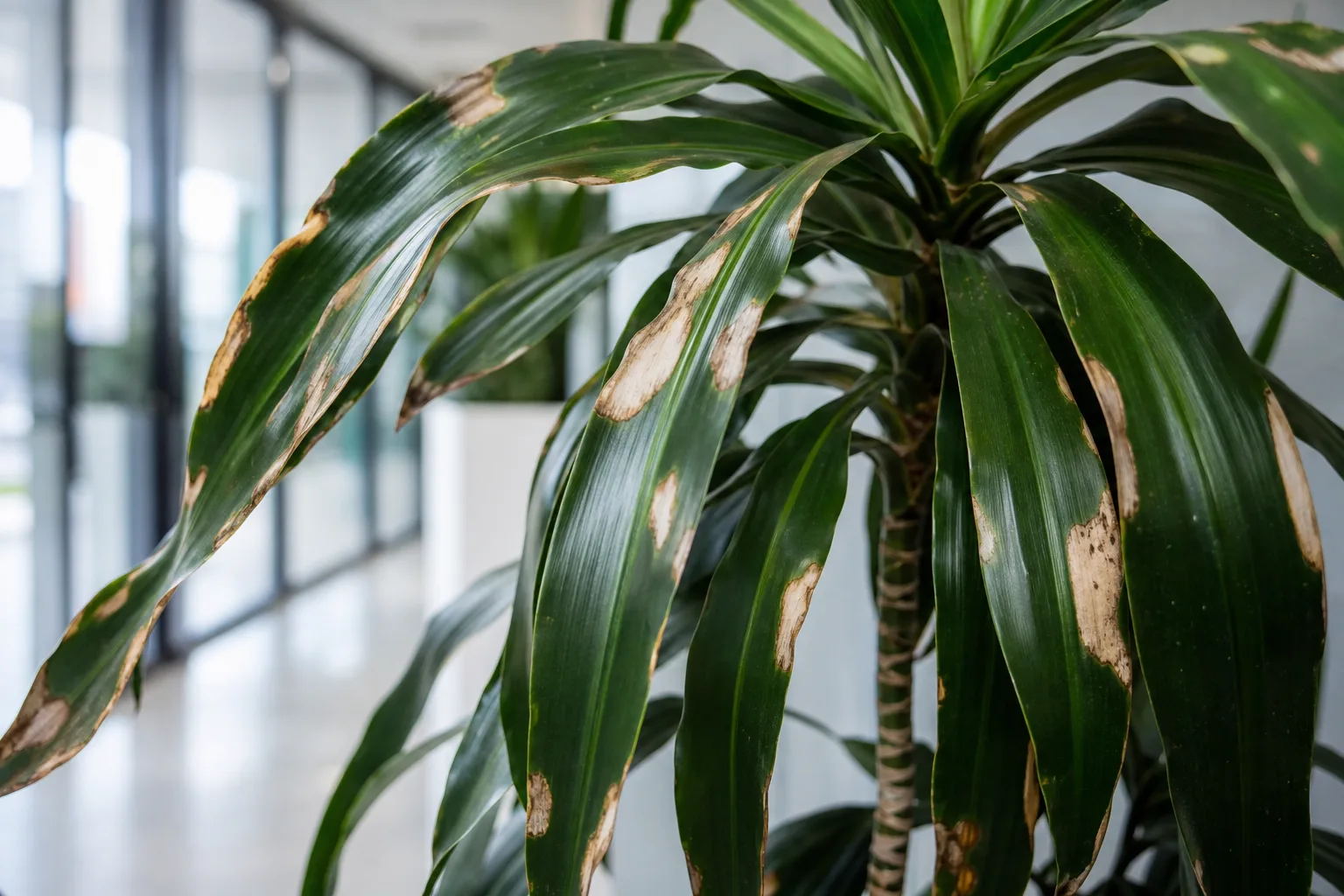
Chemical Damage on Janet Craig Dracaena: Causes, Checks & Fixes
This guide covers chemical damage on Janet Craig Dracaena. See also the general Chemical Damage guide, watering, and light pages for this plant.
Chemical Damage on Janet Craig Dracaena: Causes, Checks & Fixes
Quick answer
Chemical damage on Janet Craig Dracaena (Dracaena deremensis ‘Janet Craig’) means leaf or root injury from chemicals in water, soil, or sprays-not insects, disease, or simple drought. On this cultivar, four causes dominate indoor offices and homes:
- Fluoride accumulation - Chronic tan-to-brown margin and tip necrosis from municipal tap water (often ~1 ppm fluorine) that does not evaporate overnight.
- Salt and fertilizer burn - White crust on soil surface or pot rim plus margin browning from heavy feeding or mineral buildup.
- Foliar contact burn - Sudden localized spots where leaf-shine, cleaning spray, or pesticide droplets touched strap leaves.
- Softened-water sodium - Root-zone stress from home water softeners; margins may brown while the pot feels heavy and growth stalls.
Most searches overlap with brown tips on Janet Craig-fluoride is the most common chemical trigger. This page is the triage hub when you are not sure which chemical source is active or when multiple signals appear together.
First step: name the pattern. Slow margin creep after months of tap water points to fluoride. White soil crust points to salt leaching. Fresh spots after spraying point to foliar burn. Softener hookup on your water line points to sodium stress. Once categorized, apply one fix at a time-switch water source or leach salts or stop foliar products before Janet Craig Dracaena repotting guide or pruning heavily.
Full species context: Janet Craig overview.
What chemical damage looks like on Janet Craig
Janet Craig carries broad, glossy strap leaves on thick cane stems. Chemical injury shows on that foliage or on the soil surface-not as fuzzy pest patches or uniform yellowing from chronic overwatering.
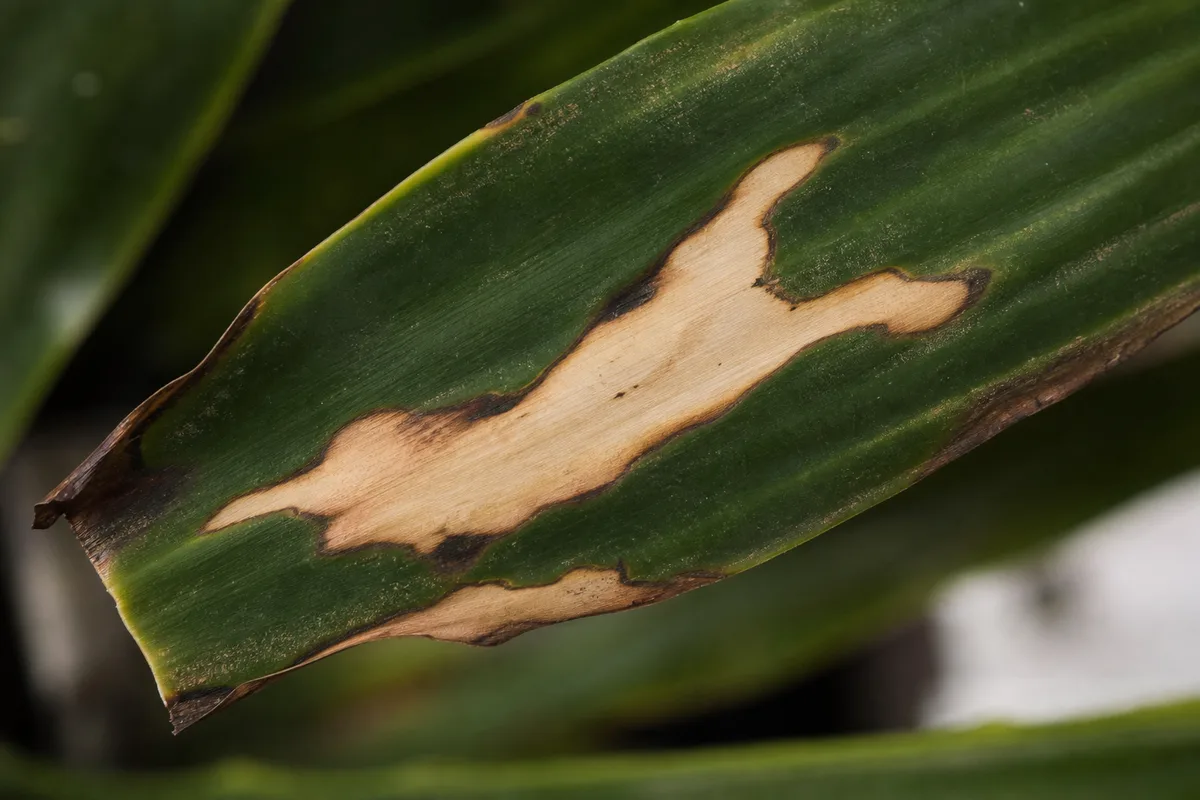
Chemical Damage symptoms on Janet Craig Dracaena - compare with healthy tissue on the same plant.
Fluoride margin necrosis
The signature Janet Craig chemical pattern:
- Tan-to-brown crispy tissue at leaf tips and margins while the leaf center stays deep green and firm
- Damage creeps inward along edges over weeks or months-not overnight
- Often follows months of municipal tap watering with no other recent change
- New crown leaves may show early tip burn if fluoride already saturates the root zone
- No discrete round spots-margins are the primary target
PNW Handbooks document fluoride moving in the transpiration stream and accumulating at leaf margins on dracaena. Clemson HGIC lists dracaena as very sensitive to fluoride, with dead scorched margin areas as a primary symptom.
Salt crust and fertilizer burn
Salt chemistry produces overlapping but distinct signals:
- White or chalky ring on soil surface, pot rim, or saucer edge
- Margin browning that persists despite correct dry-down timing
- May follow heavy fertilizing or years of tap water in an undersized pot
- Leaves often stay firm; problem is root-zone osmotic stress, not rot-unless you compensate with extra water
See salt build-up and fertilizer burn for dedicated leaching and feeding corrections.
Foliar spray and leaf-shine spotting
Acute contact injury looks different from slow fluoride creep:
- Discrete tan or brown patches where droplets landed-often mid-leaf, not only margins
- Timeline is days, not months-follows recent leaf-shine, furniture polish mist, cleaning spray, or concentrated pesticide application
- Affected zones may look water-soaked before they crisp
- Unaffected leaves on the same plant stay clean-pattern traces spray path, not whole-plant fluoride load
Janet Craig leaves are large dust collectors in offices; well-meaning leaf-shine or “cleaner” sprays are a common hidden trigger when margins looked fine until Tuesday’s maintenance round.
Softened-water sodium stress
Home water softeners exchange calcium and magnesium for sodium-damaging to dracaena roots over time:
- Margin burn plus stalled crown growth on a consistently heavy pot
- May lack obvious white crust if sodium builds without fertilizer salts
- Often follows new appliance install or moving the plant to a soft-water-fed line
- Lower leaves may yellow while tips brown-overlap with overwatering if you added water trying to “help”
NC State Extension recommends filtered or rain water for dracaena when tap causes browning-especially critical when softeners add sodium.
Why Janet Craig gets chemical damage
Fluoride-sensitive cultivar in slow-transpiration offices
Janet Craig is among the most fluoride-sensitive commercial houseplants. Municipal water commonly carries fluorine at about 1 ppm; unlike chlorine, it does not dissipate when water sits open overnight. Roots absorb fluoride with every watering; it accumulates at margins where transpiration concentrates solutes.
In deep office shade, Janet Craig transpires slowly-wet mix lingers for weeks but fluoride still accumulates. That is why margin burn appears before lower-leaf yellowing: chemical stress at the leaf edge shows first while the plant otherwise looks stable. Clemson HGIC advises keeping soil pH between 6.0 and 6.5 and avoiding superphosphate fertilizers, which often carry high fluorine levels sufficient to burn sensitive cultivars.
Salt, fertilizer, and foliar contact sources
Overfeeding in low light adds salt without corresponding growth-Janet Craig is a light feeder that may need feeding only a few times per year in dim offices. Undrained cachepots concentrate minerals as water evaporates from the soil surface, producing the white rim owners photograph as “salt.”
Foliar products bypass root uptake entirely-oils and surfactants can disrupt leaf gas exchange on monocot strap leaves with stomata on both surfaces. Pesticide concentrates applied in hot, dry HVAC air burn faster than the same product in a humid greenhouse.
Why chemical stress masquerades as other problems
Margin necrosis from fluoride looks like “needs humidity.” Salt burn looks like “needs fertilizer.” Foliar spots look like fungal leaf spot. Softened-water stress looks like overwatering when owners respond by adjusting water volume instead of water chemistry. Chemical damage on Janet Craig rewards water-source and product-history detective work before any other intervention.
Chemical damage vs. brown tips vs. overwatering
| Pattern | Leaf look | Soil / pot | Timeline | Likely cause | First direction |
|---|---|---|---|---|---|
| Slow margin/tip necrosis, firm leaves, no crust | Tan crispy edges, green center | Normal weight for light level | Months of tap water | Fluoride accumulation | Switch to filtered water; see brown-tips |
| White crust on soil or rim + margin burn | Firm straps, tip burn | May be light or normal | Weeks–months of feed or hard water | Salt / fertilizer burn | Leach pot; pause feed; salt-build-up |
| Discrete spots mid-leaf after maintenance | Localized patches | Unchanged | Days after spray | Foliar contact burn | Rinse leaves; stop sprays |
| Margins brown, crown stalled, heavy pot | Mixed tip and yellow | Wet core, slow dry-down | After softener install | Sodium / water chemistry | Bypass softener water; filtered source |
| Yellow soft lower leaves, sour smell, soft cane | Yellow halos, not just crisp tips | Heavy, wet, may smell | Days–weeks | Overwatering / rot | Stop water; overwatering |
If your only symptom is slow margin creep with tap water and no crust, the brown-tips guide is the deeper fluoride playbook-this page helps when you need to sort chemical types first.
How to confirm the cause
Work through these checks in order. Chemical diagnosis on Janet Craig is mostly history plus pattern, not lab testing.
- Water source - Municipal tap, well, rainwater, filtered, distilled, or softener-fed line? Tap for 6+ months with margin burn strongly implicates fluoride.
- Soil surface - White or chalky crust visible? Scrape lightly-mineral residue confirms salt buildup track.
- Recent products - Leaf-shine, cleaning spray, pesticide, or fertilizer applied to foliage in the last 7–14 days? Timeline fits foliar burn.
- Fertilizer history - Superphosphate product, heavy monthly feeding, or time-release pellets on a plant that has not grown in months?
- Pot weight and half-depth moisture - Heavy wet pot with yellowing lower leaves suggests rot overlap-overwatering-not pure chemical margins.
- Crown new growth - Clean emerging leaves mean recent chemistry is acceptable; burned tips on new crown leaves mean active root-zone or water problem continues.
- Light level - Deep shade slows dry-down; do not increase watering to fix chemical margins-that worsens rot risk.
Confirmed fluoride damage when margins brown slowly, tap or fluoridated water was used for months, no foliar spray event, no white crust, and cane stays firm.
Confirmed salt buildup when white rim is visible, margins burn despite appropriate dry-down, and feeding or hard water fits the history.
Confirmed foliar burn when spots match spray timing and location, margins were fine until the product application, and roots test firm on appropriate moisture.
Confirmed softened-water stress when only softener water is used, growth stalls, and margin burn persists after correct dry-down.
First fix for Janet Craig (by likely cause)
Apply one primary change before stacking repot, prune, and fertilizer on the same day.
Fluoride margins (most common): Switch immediately to rainwater, distilled, or reverse-osmosis water. Water once thoroughly with the new source. Let the top half of mix dry before the next drink per your light level. Trim dead tips cosmetically only. Full fluoride protocol: brown-tips guide.
Salt crust present: Leach the pot with plain low-fluoride water at two to three times pot volume, drain fully, empty saucer. Pause fertilizer for two to three months. Resume at half strength only when new crown leaves emerge clean.
Foliar spray burn: Rinse strap leaves under lukewarm running water or wipe with a damp cloth-no soap. Stop all leaf-shine and foliar treatments. Move plant away from HVAC blasts that accelerate drying on damaged tissue.
Softened water: Never use softener output on dracaena. Route filtered, distilled, or bypass-softener tap to the plant permanently. One thorough flush with clean water helps clear sodium from the upper root zone.
Uncertain but margins are primary symptom: Default to filtered water plus one leaching flush-safe on Janet Craig when cane is firm and soil is not sour. Do not repot solely for margin burn unless roots test mushy.
Recovery timeline
Fluoride margin necrosis - Existing crispy tissue will not re-green. Expect clean new crown leaves within two to four weeks after water source change in warm indoor conditions; slower in winter low light. Full canopy turnover may take many months on a large floor specimen.
Salt and fertilizer burn - After leaching and feed pause, new growth should show unburned tips within three to six weeks. Old burned margins remain until trimmed or naturally shed.
Foliar contact burn - Spotted tissue dies within days; new leaves stay clean once sprays stop. No recovery of spotted zones.
Softened-water stress - Crown growth may resume two to four weeks after clean water and one flush, provided rot has not developed from compensatory overwatering.
Judge success by firm cane and undamaged new crown foliage-not by old margins greening up.
What not to do
Do not increase watering when margins brown from fluoride or salt-wet mix in low-light offices causes separate rot.
Do not mist leaves to fix fluoride burn-humidity does not leach fluoride from tissue.
Do not use water from home softeners on Janet Craig.
Do not apply superphosphate or heavy fertilizer while margins show active burn.
Do not use leaf-shine products on dracaena strap leaves.
Do not stack repotting, heavy pruning, and fertilizer on the same day during chemical recovery.
Dracaena is toxic to cats and dogs-keep rinsed runoff and trimmed leaves away from chewing pets.
How to prevent chemical damage next time
Default to low-fluoride water for every Janet Craig watering-filtered, distilled, or rainwater. Details in the overview and watering guide.
Leach seasonally in pots without repotting-especially after any white crust appears.
Feed lightly during active growth only; avoid superphosphate products on this cultivar.
Clean leaves with water only-no shine sprays in office maintenance routines.
Match dry-down to light - Deep shade means long intervals between soaks; chemical margins are not fixed by more frequent water.
Inspect weekly during dusting-catch crust and new crown tip burn before the whole canopy shows margins.
Practical checks
Urgency check
Same-day attention when cane tissue softens at the base, soil smells sour, or yellowing spreads on a heavy wet pot-that is rot urgency, not cosmetic chemical burn. See root rot.
This week when new crown leaves emerge with tip burn despite a recent water change-recheck softener bypass and leaching completeness.
Monitor when only older leaf margins are crisp, cane is firm, and dry-down matches light-cosmetic fluoride or salt injury with stable plant.
Best inspection order
Crown new leaves (tip burn on fresh growth?) → soil surface (white crust?) → water source and softener status → recent foliar product use → pot weight → half-depth moisture → cane firmness → roots only if wet decline persists
Related Janet Craig problems
- Janet Craig overview - Fluoride sensitivity, filtered water, troubleshooting hub
- Watering - Dry-down rhythm matched to office low light
- Brown tips - Deep fluoride diagnosis and trim protocol
- Salt build-up - White crust leaching steps
- Fertilizer burn - Feed pause after salt injury
- Overwatering - Wet heavy pot lookalike
When to use this page vs other Janet Craig Dracaena guides
- Janet Craig Dracaena watering guide - Use for routine moisture checks before assuming chemical damage is the main issue.
- Janet Craig Dracaena problems hub - Browse all 50 common issues on this species.