Calcium Deficiency on Maidenhair Fern: Causes, Checks &
Quick answer
Calcium deficiency on Maidenhair Fern hits new croziers first: twisted unfurling fronds, ragged leaflets, and brown dead spots while older black-stemmed fronds may look fine. Flush salts and stabilize even moisture before adding supplements or repotting.
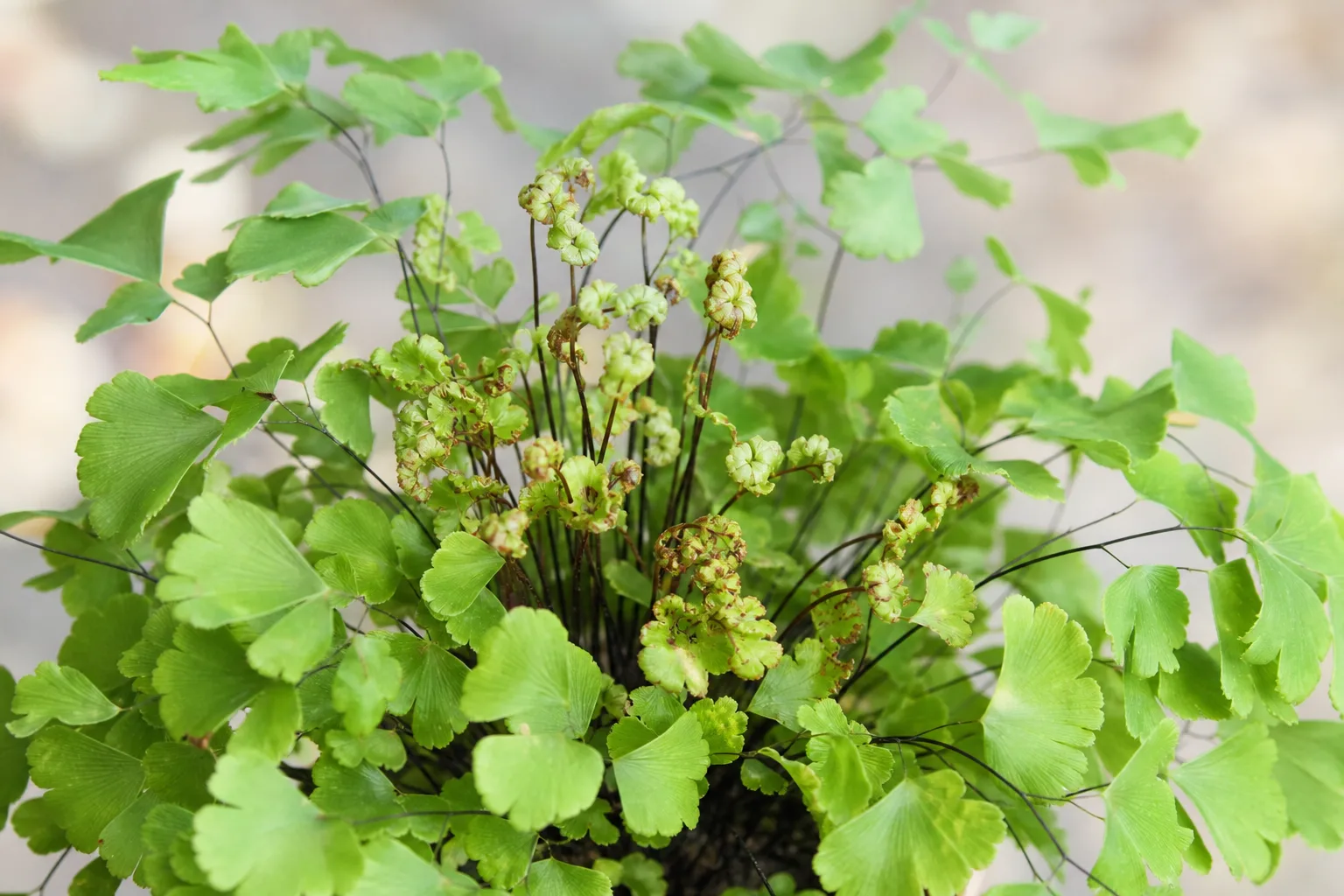
Calcium Deficiency on Maidenhair Fern: Causes, Checks & Fixes
This guide covers calcium deficiency on Maidenhair Fern. See also the general Calcium Deficiency guide, watering, and light pages for this plant.
Calcium Deficiency on Maidenhair Fern: Causes, Checks & Fixes
Quick answer
You switched to filtered or rainwater to protect delicate Adiantum raddianum pinnae from fluoride - and now the newest croziers twist, brown, or stall before they unfurl while older black-stemmed fronds still look fine. That crown-first distortion pattern is classic calcium trouble on Maidenhair Fern, not whole-frond yellowing from soggy roots.
Calcium is immobile in plants, so the youngest croziers and unfurling fronds show trouble first - twisted leaflets, ragged margins, and brown dead spots on tissue that should still be soft. The usual trigger is not a missing calcium bottle but uneven watering, depleted mix, or salt buildup that blocks uptake even when minerals are present. First fix: flush the pot with lukewarm plain water through already-moist soil, then maintain steady moisture for two weeks before resuming fertilizer.
If croziers look deformed but you are unsure whether iron, salt, or humidity is involved, use the comparison table below or start with deformed new growth when distortion is the main symptom.
What calcium deficiency looks like on Maidenhair Fern
Watch the crown before the lower fronds. On Adiantum raddianum, new growth emerges as delicate croziers that should unfurl into fan-shaped leaflets on black stems. Calcium trouble shows up there first:
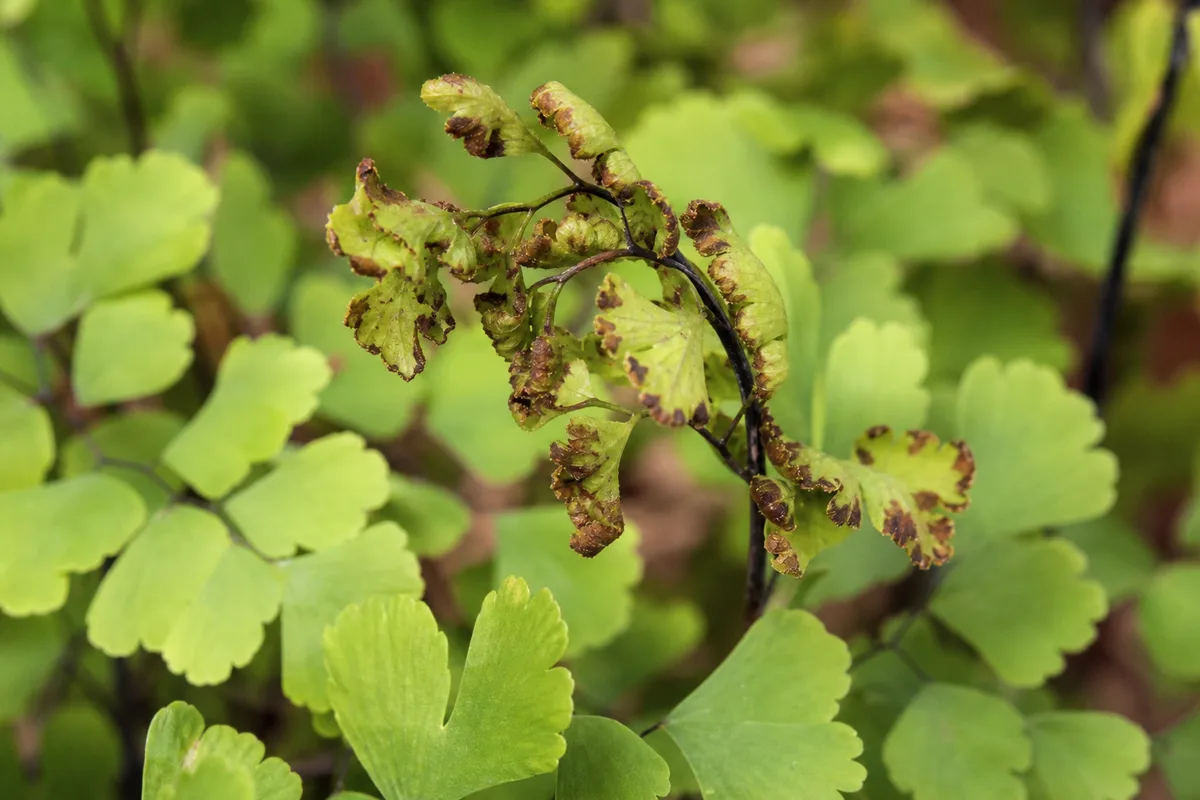
Calcium Deficiency symptoms on Maidenhair Fern - compare with healthy tissue on the same plant.
- Distorted or curled croziers that never open into flat frond planes
- Brown necrotic spots on young leaflets while the black rachis stays intact
- Smaller or ragged new fronds compared to healthy ones on the same plant
- Growing tips that brown and stall before the frond fully expands
- Older fronds unchanged - a key clue that rules out nitrogen shortage
On this fern, crozier distortion is visible early because leaflets are thin and the crown sits above the black wiry stipes - a deformed unfurling frond looks obviously wrong against healthy lower fronds on the same rhizome.
Compare with iron, nitrogen, low humidity, and fluoride burn
| Pattern you see | Most likely issue | Fast differentiator |
|---|---|---|
| Twisted or stalled croziers; brown necrotic spots on young leaflets; older fronds green | Calcium deficiency (this page) | Distortion at growing point, not vein pattern |
| Yellow between veins on newest pinnae; black stipes dark | Iron deficiency | Interveinal chlorosis, not crozier curl |
| Uniform fade on lowest fronds; crown may stay green | Nitrogen deficiency | Whole leaflet yellow, not crown distortion |
| Brown tips on existing fronds; soil moist; RH below 50% | Low humidity | Mature frond margins, not new croziers |
| Tan spots scattered on mature leaflets from tap water | Fluoride or water chemistry | Not concentrated at unfurling croziers |
| White rim crust + tip burn after heavy feed | Salt build-up | Mineral crust; may block calcium uptake |
| Whole-frond yellow with wet, sour mix | Overwatering or root rot | No isolated crozier distortion pattern |
Rule of thumb: twisted or necrotic croziers with green older fronds → calcium or salt lockout. Interveinal yellow on new pinnae → iron. Whole-frond problems with wet soil → water and roots first.
Why Maidenhair Fern gets calcium deficiency
Immobile calcium and fast new fronds. Maidenhair Fern pushes soft new croziers regularly in bright, humid conditions. Calcium cannot move from older fronds to supply new tissue, so any uptake gap appears at the crown immediately.
Filtered or rainwater without mineral replenishment. This fern is often watered with filtered or rainwater to avoid fluoride burn. Over time, calcium leaches from peat-based mix without being replaced - especially when fertilizer is skipped during active growth.
Old, depleted potting mix. Nutrients wash out with every watering. A fern sitting in the same mix for two or more years can run low on available calcium even with occasional feeding. Fresh fern-appropriate mix restores baseline nutrition and stable pH.
Salt buildup from over-fertilizing. Maidenhair Fern is very sensitive to excess fertilizer. Salt crust on the soil surface shifts pH and blocks calcium absorption - the same chemistry salt build-up describes in depth. Heavy feeding on stressed roots makes uptake worse, not better.
Inconsistent moisture. Calcium travels with water through the root system. Brief drought - even on a plant that usually gets frequent water - interrupts transport to growing tips during active spring and summer growth. See the watering guide for the even-moisture rhythm Maidenhair Fern overview needs.
pH drift outside the preferred range. This species grows best in slightly acidic mix around pH 5.5 to 7.0. When pH shifts too acidic or alkaline from salts or water type, calcium becomes less available to roots - often alongside iron lockout on the same alkaline shift.
How to confirm the cause
Work through checks in this order:
- Inspect new croziers under bright light. Twisted unfurling fronds with brown spots on young leaflets match calcium uptake failure better than pest or rot patterns.
- Compare old vs new fronds. Healthy lower fronds with damaged crown growth strongly supports immobile-nutrient deficiency - not nitrogen trouble on older fronds.
- Check mix age and surface salts. White crust on the pot rim or soil surface suggests pH drift and locked-out nutrients; cross-check salt build-up.
- Review water and fertilizer history. Exclusive filtered water, skipped feeding during active growth, or heavy fertilizer doses all increase risk.
- Test moisture consistency. Probe the top centimeter daily for a week. Swings between bone-dry and soggy implicate transport failure, not just depleted mix.
- Smell and feel the mix. Sour odor or persistent wetness points to root problems - confirm roots are firm before treating as pure nutrition issue.
If croziers distort but pinnae also show interveinal yellow between green veins, read iron deficiency - both can trace to alkaline, salt-loaded mix, but the visible pattern tells you which page to act on first.
First fix for Maidenhair Fern
Flush accumulated salts and stabilize even moisture - do not dump calcium supplements on day one.
Water the fern until the top centimeter is evenly moist (never bone-dry). Then slowly pour lukewarm plain water through the pot until excess drains freely from the bottom. Repeat once after ten minutes. Empty the saucer. Hold all fertilizer for two weeks while maintaining the fern’s normal rhythm: water when the top centimeter is barely dry per the watering guide, keep humidity at 60–80%, and avoid direct sun.
This single step clears salt lockout and restores the steady water flow calcium needs - without the shock of Maidenhair Fern repotting guide or heavy feeding on stressed roots.
Step-by-step recovery
- Flush salts as described above; pause fertilizer for two weeks.
- Maintain even soil moisture - never let the root ball dry completely.
- After two weeks, if new croziers still deform, apply half-strength balanced liquid fertilizer to moist soil once, then wait four weeks before feeding again.
- If mix is more than two years old or heavily compacted, repot in spring into fresh airy fern mix - potting compost, coco coir, and fine orchid bark.
- Continue using filtered water if fluoride is a concern, but do not skip feeding entirely during active growth.
- Trim fully distorted fronds at soil line only after new clean growth appears.
- Monitor new croziers weekly for normal unfurling over two to four weeks.
When a diluted Cal-Mag supplement makes sense
After flush, two weeks of stable moisture, and one cautious half-strength feed, croziers that still twist or necrose may need a targeted calcium boost - not before.
- Appropriate: one diluted Cal-Mag or calcium nitrate drench at the lower end of the houseplant label rate on moist soil, with excess drained and the saucer emptied. Soil application is safer than foliar spray on membranous pinnae.
- Not appropriate on day one: stressed dry roots, active root rot smell, or the same day as repot and heavy flush - stacking interventions overwhelms this species.
- Usually unnecessary: if repotting into fresh mix is already planned; new acidic mix plus balanced feeding often restores calcium without a separate supplement.
- Skip foliar calcium and eggshell tea: concentrated contact spots delicate maidenhair leaflets; homemade eggshell water lacks predictable concentration and can shift pH unpredictably in small pots.
If distortion persists after supplement and repot, test mix pH - persistent lockout may need the soil too alkaline workflow before another calcium dose.
Recovery timeline
New croziers should unfurl with normal fan-shaped leaflets within two to four weeks after moisture stabilizes and salts flush. Existing twisted or browned leaflets will not recover - remove them once replacement fronds are established.
Signs of improvement: croziers open flat, leaflet margins stay green through unfurling, and frond size matches earlier healthy growth. Signs the problem is worsening: repeated crozier death, spreading tip necrosis on every new frond, or crown collapse despite moist soil - inspect roots for rot before continuing fertilizer.
Lookalike symptoms
- Low humidity - Brown tips on existing fronds with moist soil; hygrometer below 50%. See low humidity.
- Fluoride burn - Tan or brown spots on mature leaflets from tap water; not crozier distortion. See brown tips.
- Overwatering - Yellowing across multiple fronds, soggy mix, possible root rot smell.
- underwatering on Maidenhair Fern - Whole-frond collapse and mass drop; dry pot weight, not isolated new-growth spots.
- Iron deficiency - Interveinal chlorosis on new pinnae, not twisted croziers.
- Spider mites - Fine stippling and webbing on undersides; inspect with magnification.
What not to do
Do not apply full-strength fertilizer or calcium supplements to a stressed, dry, or newly flushed fern - burned roots deepen the problem. Do not repot on day one unless mix is clearly failing or roots are rotting; handle the rhizome gently if you do repot a calcium-stressed crown - damaged growing points recover slowly. Do not increase watering to flood levels; calcium needs steady moisture, not a waterlogged pot. Do not assume every brown tip is calcium - confirm the crozier-first distortion pattern. Do not foliar-spray concentrated minerals on delicate maidenhair leaflets; they spot and crisp easily.
How to prevent calcium deficiency next time
Repot every one to two years into fresh mix to restore baseline nutrition and stable pH. Feed monthly at half strength during spring and summer on moist soil per the fertilizer guide, then pause in winter. Flush salts occasionally by watering heavily with plain water until drain runs clear - the same leaching rhythm salt build-up prevention recommends. Keep humidity at 60–80% and soil evenly moist so calcium can move with transpiration. If using filtered or rainwater exclusively, balanced feeding during active growth is essential - not optional.
Maidenhair Fern care cross-check
Calcium uptake depends on the same foundation as healthy maidenhair growth: medium indirect light, 60–80% humidity, and soil that stays moist but drains freely. Fix light, humidity, or chronic overwatering first if those are off - nutrient symptoms often overlap with cultural stress on this species.
When to worry
Worry when multiple new croziers brown and die before unfurling, or when every new frond shows necrosis despite stable moisture and a recent flush. That crown-first collapse can leave a bare rhizome if the root environment stays wrong. Slow distortion on one crozier during winter rest is lower urgency - wait until spring growth resumes before escalating to repot or supplements.
What to read next on Maidenhair Fern nutrients
- Iron deficiency - interveinal yellow on new pinnae instead of crozier twist
- Salt build-up - white rim crust and mineral lockout blocking calcium
- Deformed new growth - when distortion is the entry symptom before you know the nutrient
- Nitrogen deficiency - older fronds fade first, opposite age pattern
- Maidenhair Fern fertilizer - half-strength feeding rhythm after recovery
- Maidenhair Fern soil - mix composition for repotting
- Maidenhair Fern watering - even moisture that keeps calcium moving
When to use this page vs other Maidenhair Fern guides
- Maidenhair Fern watering guide - Use for routine moisture checks before assuming calcium deficiency is the main issue.
- Maidenhair Fern problems hub - Browse all 55 common issues on this species.