Soil Too Alkaline on Maidenhair Fern: Causes, Checks & Fixes
Quick answer
When container mix pH climbs above about 7.0, Maidenhair Fern cannot absorb iron even if it is present-new fronds pale between green veins while older black-stemmed foliage may stay normal. First step: test soil pH before adding fertilizer, iron sprays, or fresh mix.
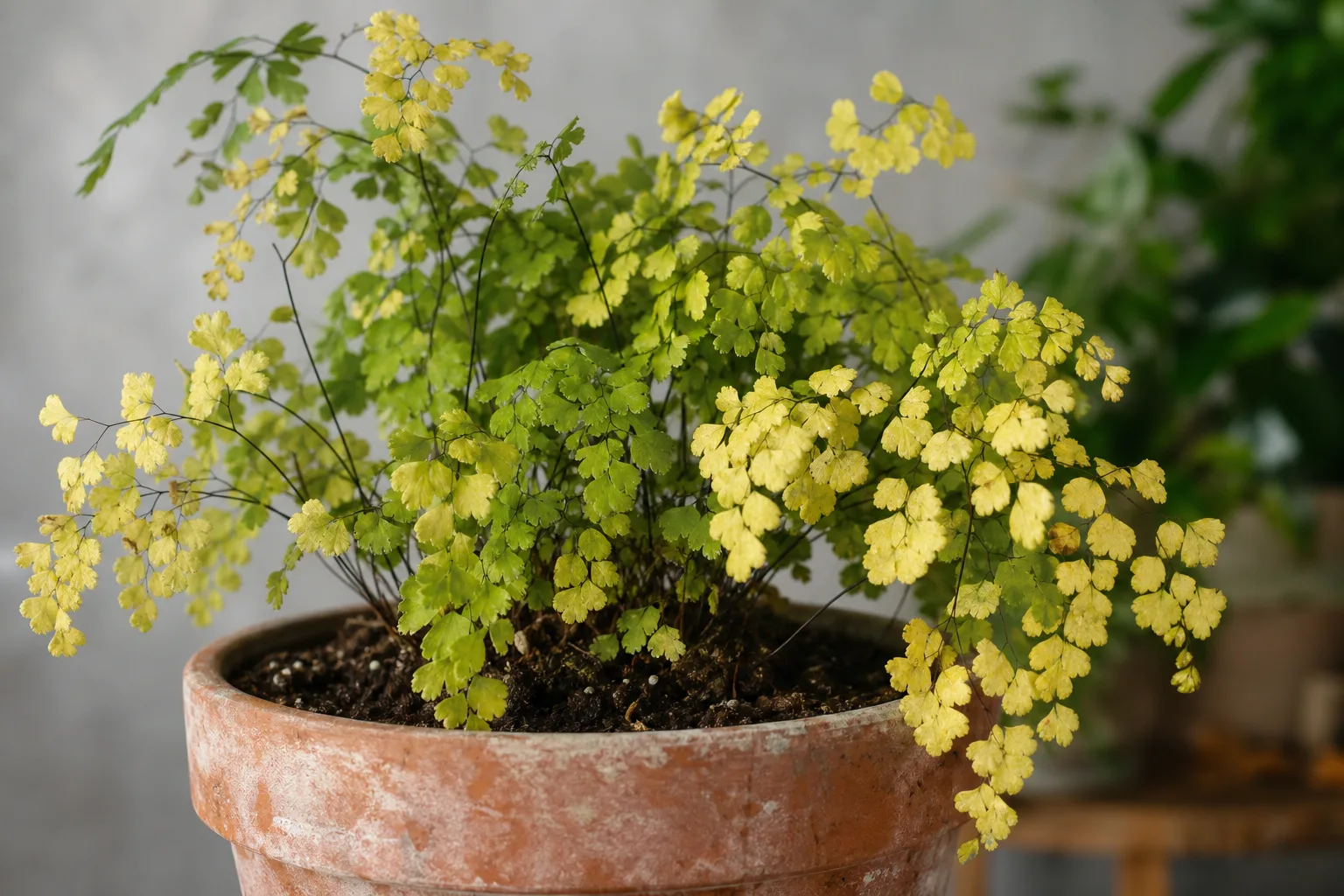
Soil Too Alkaline on Maidenhair Fern: Causes, Checks & Fixes
This guide covers soil too alkaline on Maidenhair Fern. See also the general Soil Too Alkaline guide, watering, and light pages for this plant.
Soil Too Alkaline on Maidenhair Fern: Causes, Checks & Fixes
Quick answer
Soil too alkaline on Maidenhair Fern means the root zone pH has drifted above the slightly acidic to neutral range where iron and manganese stay available. On Adiantum raddianum, the classic sign is pale or yellow new leaflets with green veins on unfurling fronds-iron may sit in the mix, but high pH makes it chemically unavailable to fine fern roots.
Maidenhair Fern performs best in mix around pH 5.5–7.0. Above about 7.0, and especially above 7.5, micronutrient uptake fails and new croziers show chlorosis before older black-stemmed fronds fade.
First step: test soil pH with a meter, probe, or drainage-water sample before you feed, spray iron, or repot. A confirmed high reading plus new-frond chlorosis tells you to fix the root zone-not just treat leaves.
What alkaline soil looks like on Maidenhair Fern
Alkaline lockout hits new growth first because iron does not move from older fronds to supply expanding tissue. On maidenhair, watch the crown and the delicate leaflets on black wiry rachises:
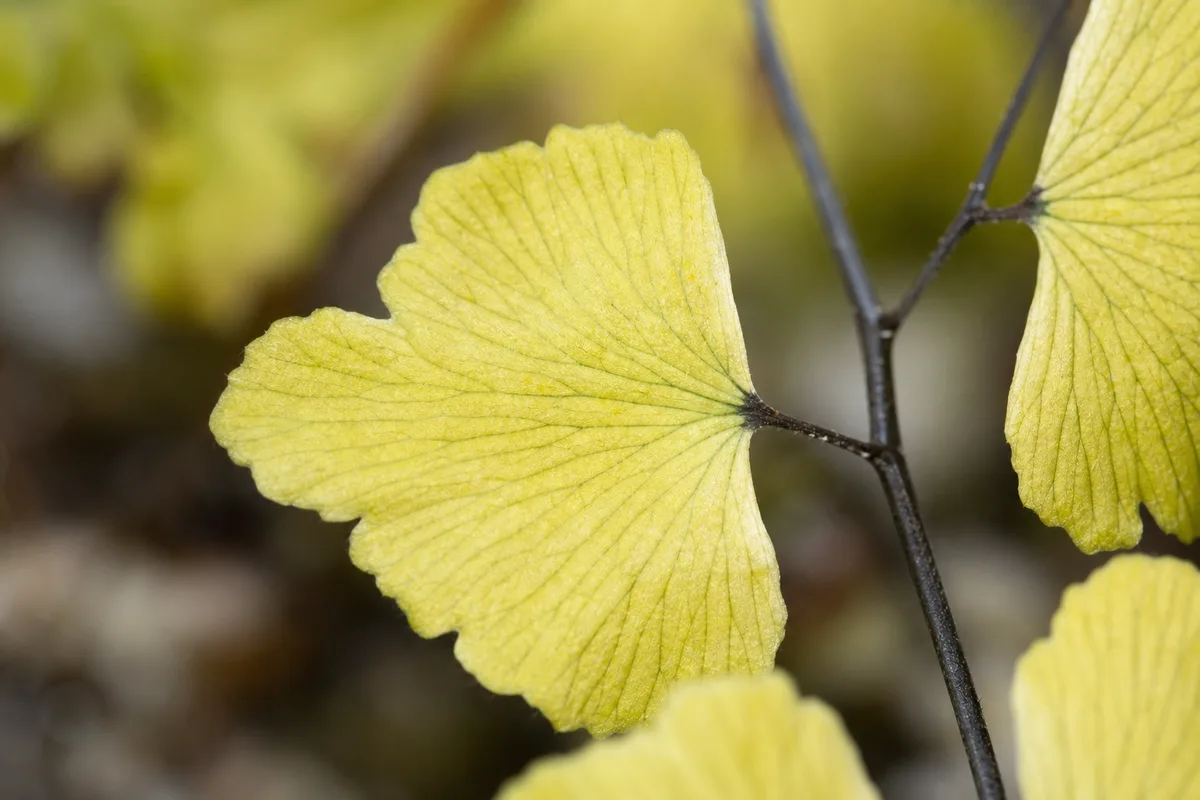
Soil Too Alkaline symptoms on Maidenhair Fern - compare with healthy tissue on the same plant.
- Interveinal pale green or yellow on young leaflets while veins stay darker green
- Bleached or thin new fronds compared with healthy ones on the same plant
- Crozier stall - unfurling fronds stop expanding and look washed out
- Older fronds relatively unchanged - a key clue that rules out nitrogen shortage
- White or gray mineral crust on soil surface, pot rim, or saucer from hard water and fertilizer salts
- Slow spring push when humidity and light are otherwise adequate
What alkaline soil does not look like on this fern:
- Instant whole-frond collapse and mass drop - classic underwatering on Maidenhair Fern, not pH chemistry alone
- Brown crispy leaflet margins on existing fronds in dry air - low humidity tip burn, not striped new growth
- Tan spots scattered on mature leaflets from tap water - fluoride sensitivity, not concentrated crown chlorosis
- Yellowing across many fronds on sour, soggy mix - overwatering on Maidenhair Fern or root rot on Maidenhair Fern; confirm root firmness first
Unlike nitrogen deficiency, which usually fades older fronds first while new croziers stay relatively green, alkaline iron lockout concentrates on the fronds opening now.
Why Maidenhair Fern gets alkaline soil problems
Most maidenhair species grown indoors-including Adiantum raddianum-prefer acid-leaning, organic-rich mix, not lime-heavy garden soil. Several indoor habits push pH upward in the small volume of a container.
Hard tap water is the most common trigger. Even owners who filter water for fluoride may still irrigate with bicarbonate-rich tap that leaves carbonate residues each time. Months of top watering without flushing gradually raises pH faster than in open ground.
Wrong amendments at repot cause sudden spikes. Garden lime, crushed limestone as “drainage,” alkaline municipal compost, or unmodified garden soil can jump pH within one season. Maidenhair Fern wants moisture-retaining but airy mix-potting compost, coco coir, and fine orchid bark-not chalky field soil.
Salt and mineral buildup from heavy fertilizing compounds the problem on this salt-sensitive fern. White crust on the mix surface often travels with pH drift. Nutrients are present, but roots cannot extract them efficiently.
Long intervals between repots let old peat- or coir-based mix break down and lose buffering capacity. A fern sitting in the same alkaline-trending container for two or more years is especially prone to tip chlorosis when spring growth resumes.
Concrete proximity or limestone mulch outdoors can raise pH through lime leaching. Container ferns on alkaline patios may show symptoms even when potting mix started neutral.
How to confirm the cause
Work through these checks in order:
- Leaf age pattern - Pale new leaflets with green veins on unfurling fronds fit iron chlorosis. Uniform fading on lowest fronds first suggests nitrogen shortage instead.
- Soil pH test - Use a handheld meter on moist mix, a soil test kit, or test water that drains freely after a thorough soak. Readings above 7.0 with crown chlorosis strongly support alkaline lockout. Target range for Maidenhair Fern is 5.5–7.0.
- Water source review - Do you use hard tap water exclusively? Has rainwater or filtered water ever been used? Hard water history increases confidence.
- Repot history - Was garden lime, limestone gravel, or alkaline garden soil added recently? Was the last repot more than two years ago with the same hard-water routine?
- Crust and salt signs - White deposits on the pot rim or soil surface suggest mineral accumulation that often pairs with rising pH.
- Moisture and root check (if mix stays wet) - Probe the top centimeter daily. If mix stays soggy for days and smells sour, slide the plant out gently. Firm pale roots with striped new fronds point to pH; brown mushy roots with whole-frond yellowing mean rot-fix drainage and decay before acidifying.
Confirmed alkaline soil requires high pH plus the new-growth chlorosis pattern, not pale fronds alone on a plant you never tested.
First fix for Maidenhair Fern
Test soil pH today and record the number before any other treatment.
That single measurement tells you whether iron sprays, Maidenhair Fern repotting guide, or flushing is the right next move. Without pH data, chelated iron may green a frond briefly while the root zone stays too alkaline for lasting recovery-and extra nitrogen on chlorotic tips can push soft, weak croziers on a fern that already burns easily from salts.
Do not add vinegar, sulfur, or acidifying products blindly to a container. Concentrated acid shocks fine fern roots and gives unreliable results in a small pot volume. Do not repot on the same day you discover severe root rot; address decay first.
Step-by-step recovery
After pH confirms alkalinity, work in this order:
- Flush the container if repot is not yet possible - Water slowly with lukewarm plain water through already-moist mix until roughly twice the pot volume runs freely from drainage holes. Repeat once after the mix partially dries. Empty the saucer. This leaches surface salts and is a holding step-not a full substitute for fresh mix when pH is far above range.
- Repot into fresh slightly acidic mix when pH stays high - Move the fern in spring if timing allows. Use potting compost, coco coir, and fine orchid bark without limestone, garden lime, or unmodified garden soil. Choose a pot only one size larger if the root ball needs room-oversized wet zones slow recovery on this moisture-sensitive species.
- Apply chelated iron only after you are correcting the root zone - Chelated iron is more available in alkaline conditions than ordinary iron sulfate, but foliar sprays treat symptoms temporarily; they do not fix high pH in the pot. Follow label rates for container ornamentals. Expect new fronds-not old ones-to respond.
- Switch or supplement water source if tap is hard - Rainwater or filtered water reduces carbonate load and slows future drift. Continue the fern’s even-moisture rhythm without letting the root ball dry completely.
- Hold fertilizer until new growth greens - Extra nitrogen on iron-locked maidenhair produces lush stems with still-chlorotic tips. Resume half-strength balanced liquid feed only after the next flush shows improved color and roots are in corrected mix.
- Maintain humidity at 60–80% and medium indirect light - Recovery needs stable transpiration so micronutrients move with water. Do not move from dim corner to harsh direct sun in one step.
Recovery timeline
One to two weeks after flushing or repot: New croziers should stop getting worse if pH is moving toward range and roots are healthy.
Two to four weeks during active growth: Greener new leaflets on the next unfurling fronds are the main success signal. Veins and tissue should look more uniformly green than the previous chlorotic tips.
Old chlorotic fronds: They rarely re-green fully. Trim distorted fronds at soil line only after replacement fronds look healthy-do not hard-prune a recovering crown before it stabilizes.
Signs the problem is worsening: Repeated crozier death, tips bleach nearly white, yellowing spreads to older fronds while mix stays wet, or crown collapse despite moist soil. Re-test pH and inspect roots.
Lookalike symptoms to rule out
Nitrogen deficiency - Older fronds fade first; new croziers stay relatively green. Common on ferns not repotted or fed in two or more years.
Calcium deficiency - Distorted or brown-spotted croziers with ragged unfurling; overlaps with pH drift but shows deformation more than striped chlorosis.
Low humidity - Brown tips on existing fronds with moist soil; hygrometer below 50%.
Fluoride burn - Tan or brown spots on mature leaflets from tap water; not crown-first interveinal pattern.
Overwatering and root rot - Whole fronds yellow, mix smells sour, roots mushy. pH may be normal.
Underwatering - Mass frond drop and collapse; dry pot weight, not isolated new-growth paleness.
Mistakes to avoid
Do not spray iron foliar feeds as the only fix while pot pH stays above 7.5. New fronds after treatment may still chlorose because iron is immobile in the plant.
Do not add garden lime or dolomite hoping to “sweeten” soil. That deepens alkaline lockout on acid-preferring maidenhair species.
Do not pour vinegar into the pot without measured pH and dilution guidance. Root burn from strong acid is a real risk on fine fern roots.
Do not stack full-strength fertilizer on chlorotic ferns. Salts raise pH further and stress roots that already struggle with uptake.
Do not confuse winter slowdown with chlorosis. Maidenhair may rest in cool months. Tip chlorosis on active spring flush with high pH test results is the actionable pattern.
How to prevent alkaline soil next time
Repot every one to two years in spring with fresh airy mix. Do not reuse crusty, compacted soil.
Flush containers seasonally in hard-water regions-water until free drainage, once or twice, before resuming normal care.
Keep pH in the 5.5–7.0 band Maidenhair Fern tolerates best. Test annually on long-lived container plants.
Avoid limestone mulch, concrete chips, or alkaline amendments in pots.
Feed monthly at half strength during spring and summer on moist soil only; pause when growth slows.
If using filtered or rainwater for fluoride concerns, balanced feeding during active growth still matters-minerals leach from mix over time.
Maidenhair Fern care cross-check
Iron uptake depends on the same foundation as healthy maidenhair growth: medium indirect light, 60–80% humidity, and soil that stays evenly moist but drains freely. Fix chronic underwatering, low humidity, or soggy mix first if those are off-nutrient symptoms often overlap with cultural stress on Maidenhair Fern overview.
When to worry
Treat as urgent when multiple new croziers bleach and die before unfurling, or when more than a third of active fronds pale within weeks. Maidenhair Fern does not tolerate prolonged crown stress-iron lockout through active growth can leave a bare rhizome if the root environment stays wrong.
Replace or accept loss only when stems stay weak after two corrected flushes, roots are mostly dead, or pH cannot be held below 7.5 in a manageable container despite fresh mix and water changes. Firm rhizomes with living croziers mean the plant is still worth correcting.
If soft stems, blackening at the soil line, and sour roots appear, prioritize rot treatment over pH correction alone.
Conclusion
Alkaline soil on Maidenhair Fern is a root-zone chemistry problem, not a leaf-surface deficiency you can spray away. Test pH, match the new-frond chlorosis pattern, then correct the mix and water habits that pushed pH too high. Greener new croziers within a few weeks tell you the fix is working-old pale fronds are history, not the scoreboard.
When to use this page vs other Maidenhair Fern guides
- Maidenhair Fern watering guide - Use for routine moisture checks before assuming soil too alkaline is the main issue.
- Maidenhair Fern problems hub - Browse all 55 common issues on this species.