Iron Deficiency on Maidenhair Fern: Causes, Checks & Fixes
Quick answer
Iron deficiency on Maidenhair Fern shows as yellow tissue between green veins on the newest pinnae while black wiry stipes stay dark. High soil pH or alkaline tap water usually blocks iron uptake. First fix: confirm the new-growth interveinal pattern, then apply a diluted iron chelate drench - not full-strength fertilizer.
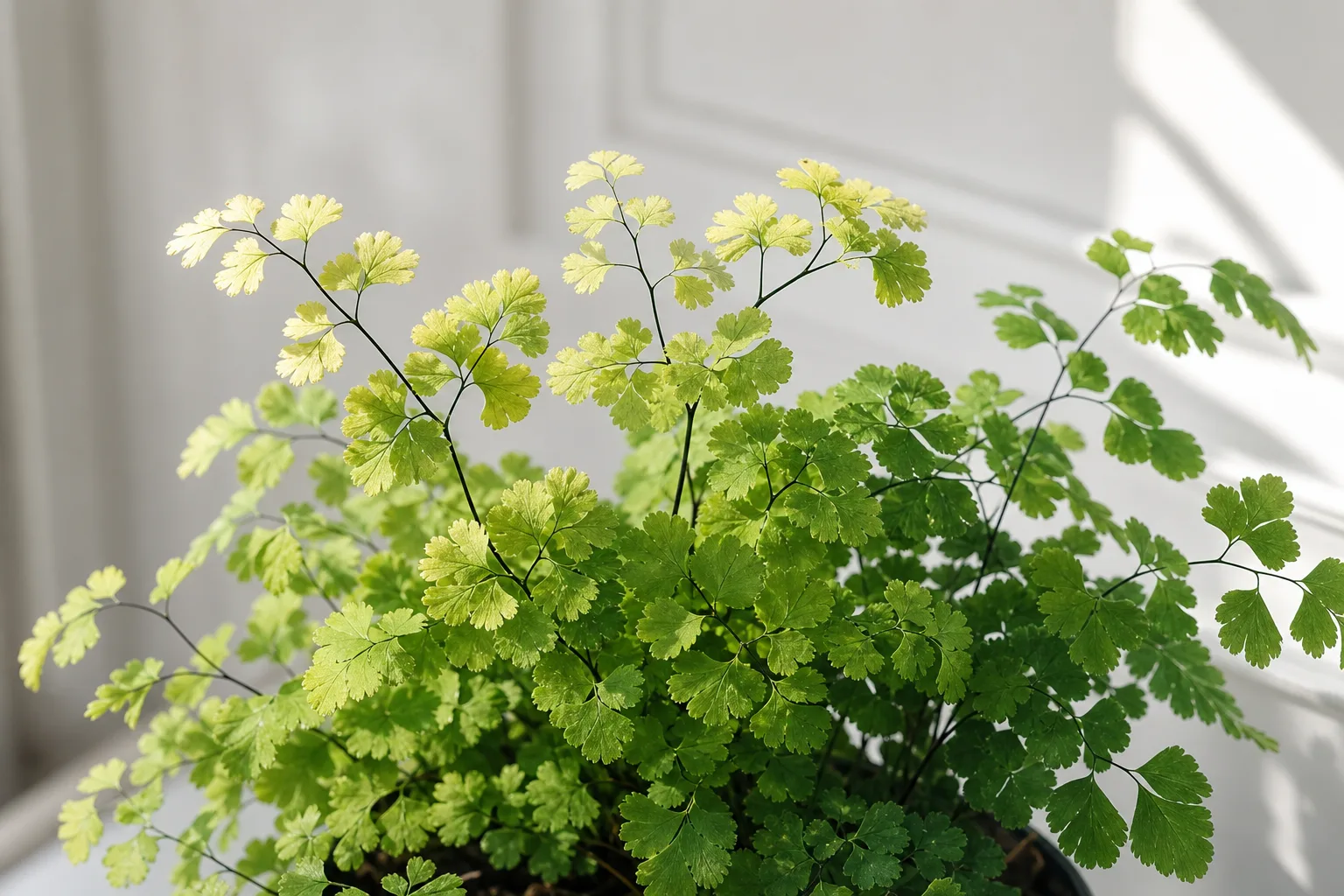
Iron Deficiency on Maidenhair Fern: Causes, Checks & Fixes
This guide covers iron deficiency on Maidenhair Fern. See also the general Iron Deficiency guide, watering, and light pages for this plant.
Iron Deficiency on Maidenhair Fern: Causes, Checks & Fixes
Quick answer
Your Maidenhair Fern’s newest pinnae are bleaching yellow between dark green veins while the black wiry stipes stay firm and dark - that crown-first, vein-pattern yellowing on delicate triangular leaflets is the signature of iron trouble on Adiantum raddianum, not whole-frond fade from sun or soggy roots.
Iron deficiency appears as interveinal chlorosis on the newest pinnae - pale chartreuse tissue between dark green veins. Older fronds may look normal for weeks because iron is immobile and the plant cannot recycle stored iron upward into expanding tissue.
On this fern, yellow leaves from too much sun or waterlogged roots outnumber true iron shortage in most homes. First step: confirm yellowing is between veins on new growth only, with firm roots and bright indirect light already correct. Then apply a diluted iron chelate drench at label rate for houseplants - not full-strength balanced fertilizer on a stressed fern.
If you water with hard alkaline tap into mix older than eighteen months, also read soil too alkaline on Maidenhair Fern - pH lockout mimics iron deficiency and may need pH correction before chelate alone works.
What iron deficiency looks like on Maidenhair Fern
The signature pattern is yellow or whitish tissue between green veins on the smallest new pinnae at frond tips and the crown. Black wiry stipes often stay dark while the membranous leaflets fade - a contrast sun bleach and overwatering rarely produce together.
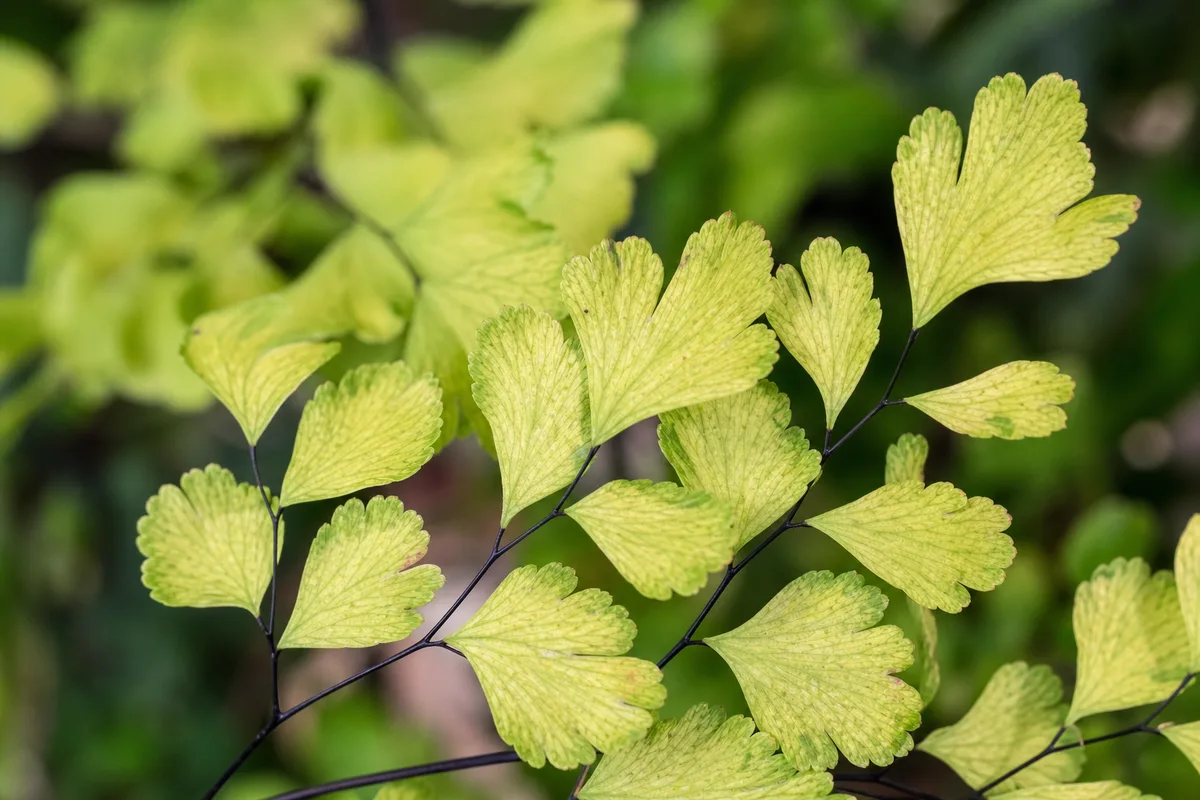
Iron Deficiency symptoms on Maidenhair Fern - compare with healthy tissue on the same plant.
Common patterns:
- Newest pinnae at frond tips show a net-like yellow pattern; lower fronds on the same stem stay greener
- Emerging fronds open pale and fail to deepen to the usual bright green
- Growth slows while humidity and watering seem unchanged
- In advanced cases, pinnae bleach toward white and brown at margins while veins remain green longest
On Adiantum raddianum, interveinal chlorosis shows early because leaflets are thin and translucent. Whole-frond chartreuse yellowing with limp tissue and wet, heavy pots points to overwatering or direct sun - not iron. Sun burn adds crispy brown patches on exposed leaflets; iron chlorosis keeps veins green longer without scorch marks.
Compare with magnesium, nitrogen, sun, and overwatering
| Pattern you see | Most likely issue | Fast differentiator |
|---|---|---|
| Yellow between veins on newest pinnae; black stipes dark | Iron deficiency (this page) | Crown-first interveinal pattern; older fronds may stay green |
| Yellow between veins on older, lower fronds; new pinnae relatively green | Magnesium deficiency | Opposite age pattern from iron |
| Uniform fade on lowest fronds; no vein net | Nitrogen deficiency | Whole leaflet yellow, not striped |
| Whole frond bleach with brown crispy patches | Sunburn or too much light | Veins do not stay prominently green; sun-facing side worst |
| Limp yellow fronds, wet heavy soil, sour smell | Overwatering or root rot | Weak or absent interveinal pattern; mushy roots |
| Pale new growth after months of hard tap without repot | Soil too alkaline or nutrient lockout | Test pH before chelate; white rim crust |
Rule of thumb: interveinal yellow on new pinnae only → iron or alkaline lockout. Interveinal yellow on old fronds only → magnesium. Whole-frond yellow with wet soil → water and light first.
Why Maidenhair Fern gets iron deficiency
Maidenhair Fern needs iron to build chlorophyll in constantly renewing fronds. The problem is usually roots cannot absorb iron, not that the pot is empty of minerals.
High soil pH is the leading cause indoors. Iron becomes less soluble as pH rises above about 6.5 to 6.7. Maidenhair Fern grows best in slightly acidic mix around pH 5.5 to 7.0. Repeated watering with hard, alkaline tap water slowly raises pH in closed containers, especially when saucers are not emptied and salts accumulate - the same chemistry soil too alkaline describes in depth.
Depleted or old potting mix loses buffering capacity after one to two years of constant moisture. Nutrients leach with every watering. A fern that has not been repotted since purchase may show chlorosis mid-season even with occasional feeding. Fresh fern-appropriate mix restores acidity and drainage.
Skipped feeding during active growth matters because Maidenhair Fern pushes new fronds steadily in spring and summer under bright indirect light. Months without any fertilizer during the growing season in fresh mix can leave iron unavailable, especially combined with alkaline water.
Over-fertilizing history can worsen the picture. Ferns are sensitive to salt buildup from heavy feeds. Brown tips and white crust on the rim often precede interveinal yellowing as pH and salt load shift - iron lockout follows chemistry problems, not just hunger. See fertilizer burn if recent heavy feeding preceded chlorosis.
Root damage from chronic waterlogging limits uptake even when iron is present. This fern needs moist soil and the roots should not be allowed to dry out, but stagnant wet mix reduces root function. Pale new growth with mushy roots is a root-zone problem first; chelate alone will not fix it.
How to confirm the cause
Work through this inspection order before Maidenhair Fern repotting guide or stacking treatments:
- Frond age pattern - Yellow between veins on the newest pinnae supports iron trouble; iron deficiency starts on young terminal leaves. Yellow only on lowest, oldest fronds suggests nitrogen deficiency or natural senescence. Whole fronds fading uniformly implicates light or water.
- Light exposure - Direct sun on delicate leaflets causes whole-frond bleaching, not neat interveinal patterns. Bright indirect light with no sun on fronds fits a nutrient diagnosis. Confirm placement against the light guide.
- Soil moisture and roots - Firm pale roots with moist but draining mix fit deficiency. Mushy tan roots with sour odor and wet soil mean rot - hold all fertilizer and read root rot.
- Mix age and salt crust - Potting soil older than eighteen months, white rim deposits, or never-flushed containers raise pH lockout odds. If never tested, follow the pH workflow on soil too alkaline before assuming chelate alone will work.
- Water source - Hard or alkaline tap water correlates with mid-season chlorosis on ferns watered frequently.
- Feeding history - No fertilizer all season, or only heavy bloom boosters, both increase iron risk on different paths.
If new pinnae show interveinal chlorosis, roots are firm, light is correct, and the pot has sat in the same mix for over a year, iron deficiency - or closely related manganese chlorosis from the same pH shift - is a strong working diagnosis.
First fix for Maidenhair Fern
Apply a diluted iron chelate drench at houseplant label rate, then let excess drain completely.
Use a chelated iron product labeled for indoor plants. Mix at the lower end of the label range - Maidenhair Fern tolerates lean feeding poorly and burns easily from concentrated doses. Drench until a small amount runs from drainage holes, then empty the saucer. Rinse any iron contact off delicate pinnae with plain water to avoid spotting.
Do this only after confirming interveinal yellowing on new growth with firm roots and no direct sun stress. If soil smells sour or roots are mushy, fix drainage and trim decay first - chelate on damaged roots adds salt stress without benefit.
Hold full-strength balanced fertilizer until the next new fronds emerge greener. One chelate application is the first intervention; stacking repot, flush, and heavy feed on the same day overwhelms Maidenhair Fern overview.
When pH may be the real blocker: if hard tap water, white rim crust, or untested old mix are in the picture, test pH before or immediately after chelate. Persistent chlorosis after chelate often means alkaline lockout - not a second iron dose.
Step-by-step recovery
- Move the fern to bright indirect light if any direct sun hits fronds; eliminate sun as a confounding factor.
- Confirm the interveinal pattern on newest pinnae versus older fronds using the comparison table above.
- Slide the plant partly out - trim mushy roots only if present; skip chelate if rot is active.
- Apply iron chelate drench at diluted label rate; rinse leaflets lightly afterward.
- Wait two weeks and watch the next frond flush for greener pinnae between veins.
- If mix is over eighteen months old or heavily crusted, repot into fresh slightly acidic fern mix as the second step - not the same day as chelate.
- Resume half-strength balanced fertilizer monthly during spring and summer once new growth looks normal.
- Remove persistently bleached pinnae after the plant stabilizes; they will not re-green.
Recovery timeline
Maidenhair Fern may show healthier color on the next frond flush within two to four weeks after chelate and corrected chemistry. Pinnae that already turned yellow between veins rarely regain full green - judge success by new croziers, not old bleached tissue.
If new fronds stay pale after chelate, a repot into fresh mix, and four weeks of proper half-strength feeding:
- Re-test water hardness and soil pH - high pH above 7.0 keeps iron unavailable even when chelate was applied
- Consider whether manganese deficiency mimics iron at early stages - both tie to alkaline mix; see nutrient lockout
- Flush with plain filtered water monthly and avoid high-phosphorus bloom formulas that can lock iron further
- Escalate to full repot with fresh acidic mix per soil too alkaline if pH remains high
Severe crown collapse with mostly mushy roots gives a poor prognosis unrelated to iron correction.
Lookalike symptoms
- Too much direct light - Whole fronds bleach or yellow with brown crispy patches; veins do not stay prominently green. See sunburn.
- Overwatering and root rot - Uniform yellow, limp fronds with wet heavy soil and sour smell; interveinal pattern is weak or absent.
- Magnesium deficiency - Older fronds yellow between veins while new growth stays relatively green - opposite age pattern from iron.
- Nitrogen deficiency - Lower, older fronds fade uniformly; crown may stay green initially.
- Low humidity alone - Usually browns tips and margins first, not interveinal yellow on new pinnae. See low humidity.
- Alkaline soil lockout - Identical interveinal chlorosis on new pinnae; requires pH correction, not repeated iron alone. See soil too alkaline.
Causes to rule out
Rule out light burn and waterlogging before treating iron. Maidenhair Fern yellow-leaves problems from sun and wet roots outnumber true micronutrient shortages in most homes. Normal senescence of one or two oldest outer fronds at the base is not deficiency.
What not to do
Do not apply full-strength fertilizer or iron on dry, wilted, or newly repotted ferns. Do not use Epsom salt unless magnesium pattern on older fronds is confirmed - random supplements imbalance soil. Do not repot and chelate and flush on the same day. Avoid high-phosphorus bloom formulas that can lock iron further. Do not assume every yellow frond needs iron; confirm the vein pattern first. Do not spray foliar iron products on membranous pinnae without label clearance - concentrated contact can spot delicate leaflets; a soil drench is safer on this species.
How to prevent iron deficiency next time
Water with filtered or rainwater when tap water is hard or alkaline - this fern is watered often, so water chemistry matters. Feed half-strength balanced liquid fertilizer monthly during active growth only per the fertilizer guide; pause in autumn and winter. Repot every one to two years into fresh slightly acidic mix with good drainage. Flush with plain water once monthly during the growing season to leach salts that drift pH upward. Keep bright indirect light per the light guide and very humid atmosphere so the plant uses nutrients steadily without salt-stressed, weak growth.
When to worry
Treat as urgent when every emerging frond opens chlorotic while growth stalls, or when chlorosis spreads despite firm roots and a chelate application. Mild interveinal yellow on a few new pinnae after a long season in the same pot gives you time for one careful chelate drench and observation.
What to read next on Maidenhair Fern nutrients
- Soil too alkaline - when pH lockout, not iron shortage, drives chlorosis
- Magnesium deficiency - interveinal yellow on older fronds instead
- Nutrient lockout - salt crust and pH drift blocking several micronutrients
- Yellow leaves - whole-frond fade from sun and wet roots
- Maidenhair Fern fertilizer - half-strength feeding rhythm after recovery
- Maidenhair Fern soil - mix composition and acidity targets for repotting
When to use this page vs other Maidenhair Fern guides
- Maidenhair Fern watering guide - Use for routine moisture checks before assuming iron deficiency is the main issue.
- Maidenhair Fern problems hub - Browse all 55 common issues on this species.