Magnesium Deficiency on Maidenhair Fern: Causes, Checks &
Quick answer
Magnesium deficiency on Maidenhair Fern shows as interveinal yellowing on older, lower fronds while black wiry stipes and green veins stay visible. New crown pinnae should still look healthy. First step: confirm the lower-frond vein pattern, rule out wet soil and direct sun, then apply half-strength balanced feed - not Epsom salt as a guess.
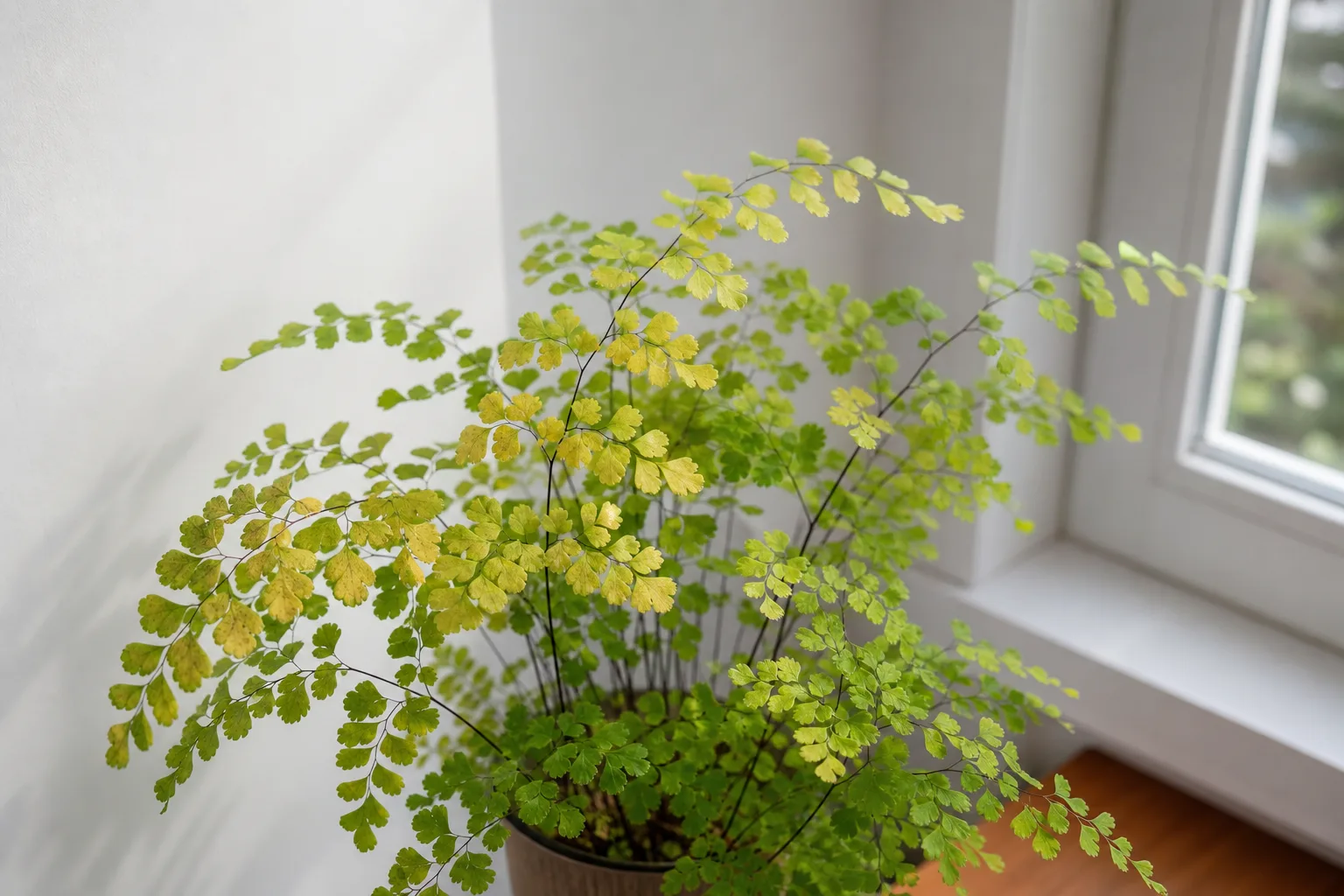
Magnesium Deficiency on Maidenhair Fern: Causes, Checks & Fixes
This guide covers magnesium deficiency on Maidenhair Fern. See also the general Magnesium Deficiency guide, watering, and light pages for this plant.
Magnesium Deficiency on Maidenhair Fern: Causes, Checks & Fixes
Quick answer
Your Maidenhair Fern’s oldest outer fronds are fading yellow between dark green veins while black wiry stipes stay firm and dark and new pinnae at the crown still look green - that lower-frond, vein-pattern yellowing on delicate Adiantum raddianum leaflets is the signature of magnesium trouble, not crown-first chlorosis from iron or whole-frond fade from sun and soggy roots.
Magnesium deficiency appears as interveinal chlorosis on older, lower fronds - pale tissue between green veins. Magnesium is mobile in the plant, so the fern moves it from mature tissue to support new growth - which is why symptoms start on the fronds you see at the pot edge, not the crown.
On this fern, yellow leaves from too much sun or waterlogged roots outnumber true magnesium shortage in most homes. First step: confirm yellowing is between veins on older fronds only, with firm roots and Maidenhair Fern light guide already correct. Then apply half-strength balanced liquid fertilizer on moist mix - or a single weak Epsom salt drench only when the age pattern is clear.
If yellowing is on newest pinnae instead, read iron deficiency on Maidenhair Fern - the opposite age pattern points to iron or alkaline lockout, not magnesium.
What magnesium deficiency looks like on Maidenhair Fern
The signature pattern is yellow or pale green patches between dark green veins on the oldest fronds at the pot perimeter. Black wiry petioles often stay dark while the membranous pinnae fade - a contrast sun bleach and overwatering rarely produce together.
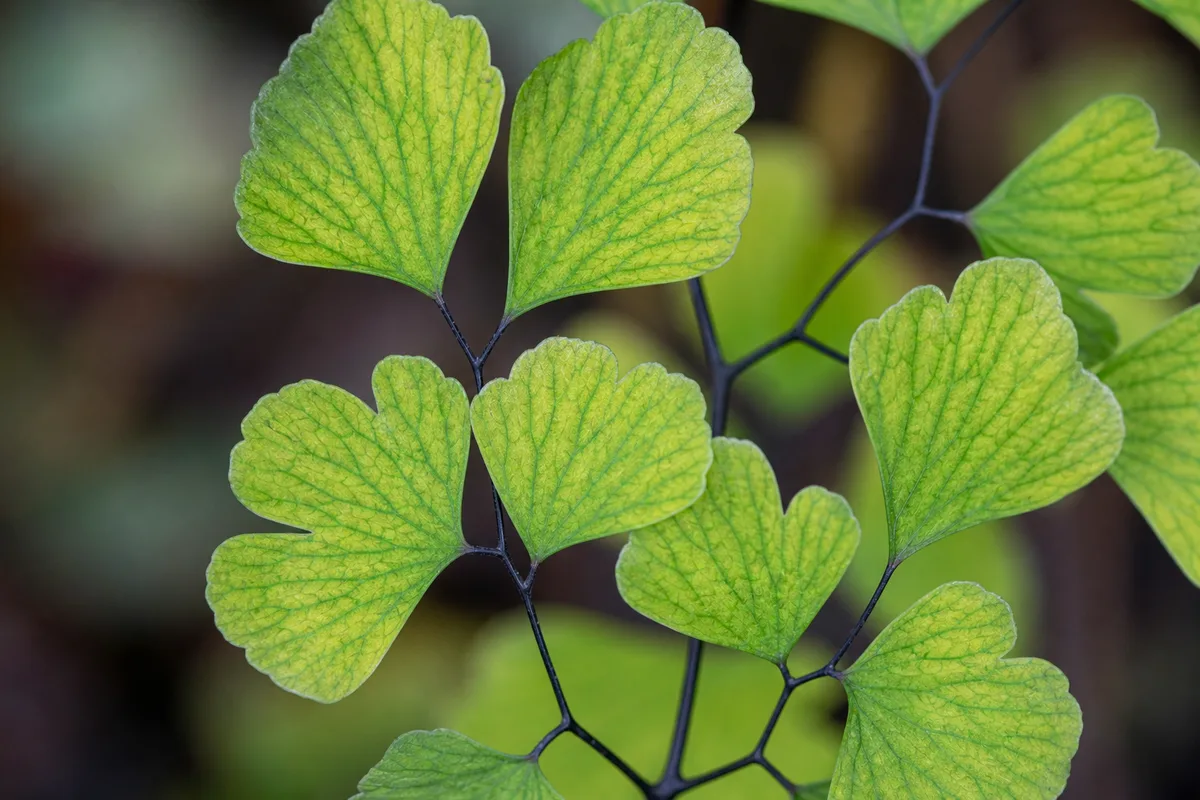
Magnesium Deficiency symptoms on Maidenhair Fern - compare with healthy tissue on the same plant.
Common patterns:
- Oldest fronds at the pot edge fade before center fronds
- Veins remain noticeably greener than the tissue between them
- New pinnae emerging from the crown still look green and normal
- Growth slows slightly, but fronds do not collapse overnight the way drought-stressed plants do
- No sour smell from soil and no mushy roots when you inspect
As deficiency progresses, yellow areas may spread toward younger fronds and leaflet edges can brown. On thin Adiantum leaflets, interveinal chlorosis shows early because the tissue is translucent - you can often see the vein net clearly under bright indirect light.
Compare with iron, sun, and overwatering
| Pattern you see | Most likely issue | Fast differentiator |
|---|---|---|
| Yellow between veins on older, lower fronds; new pinnae relatively green | Magnesium deficiency (this page) | Lower-frond interveinal pattern; black stipes stay dark |
| Yellow between veins on newest pinnae; older fronds may stay green | Iron deficiency | Crown-first interveinal pattern - opposite age pattern |
| Whole frond bleach with brown crispy patches | Sunburn or too much light | Veins do not stay prominently green; sun-facing side worst |
| Limp yellow fronds, wet heavy soil, sour smell | Overwatering or root rot | Weak or absent interveinal pattern; mushy roots |
| Uniform fade on lowest fronds; no vein net | Nitrogen deficiency or normal senescence | Whole leaflet yellow, not striped between veins |
| Pale older fronds after heavy feeding or white rim crust | Fertilizer burn or nutrient lockout | Salt crust on pot rim; recent full-strength feed |
Rule of thumb: interveinal yellow on old fronds only → magnesium. Interveinal yellow on new pinnae only → iron or alkaline lockout. Whole-frond yellow with wet soil → water and light first.
Why Maidenhair Fern gets magnesium deficiency
Leached potting mix is the most common indoor cause. Magnesium leaches from the soil at each watering, so it washes out of container mix with every thorough drink. A fern watered every few days in peat-based mix can exhaust available magnesium within a year or two, especially if you rarely feed during active growth.
Under-fertilizing during spring and summer compounds the problem. Maidenhair Fern grows steadily in bright indirect light with high humidity. Without light monthly feeding at reduced strength per the fertilizer guide, mobile nutrients including magnesium deplete faster than the plant can recycle them from old fronds.
Over-fertilizing history can paradoxically worsen symptoms. Salt buildup from full-strength feed damages fine fern roots and limits uptake, producing yellow or scorched fronds that look like deficiency. Household fertilizers at full strength are likely to produce root burn on ferns, so always dilute heavily on Maidenhair Fern overview. See fertilizer burn if recent heavy feeding preceded chlorosis.
High calcium or potassium in hard tap water or excess fertilizer can interfere with magnesium absorption, though this is less common than simple depletion in old mix. Iron deficiency more often affects younger fronds first - when both show interveinal patterns, age pattern separates them.
Maidenhair Fern is not a heavy feeder, but it is a constant drinker. That combination - frequent irrigation plus sensitive roots - makes magnesium management a real care issue on established plants in the same pot for years, not an abstract nutrient chart.
How to confirm the cause
Work through these checks in order:
- Frond age pattern - Is yellowing confined to older outer fronds with green veins? New center pinnae still healthy? That pattern fits magnesium deficiency. Crown-first interveinal yellowing points to iron deficiency instead.
- Soil moisture - Is mix waterlogged or sour-smelling? Uniform yellow limp fronds with wet soil suggest root stress, not magnesium shortage.
- Light exposure - Direct sun scorches and bleaches fronds. Sun damage often affects the window-facing side with crispy brown patches, not clean interveinal yellowing.
- Fertilizer history - When did you last feed at half strength during spring or summer? Has the plant sat in the same mix for two or more years without Maidenhair Fern repotting guide into fresh fern-appropriate mix?
- Salt crust - White residue on soil surface or pot rim suggests excess fertilizer or nutrient lockout; flush before adding more nutrients.
- Iron comparison - Yellowing on newest pinnae with green veins points to iron or pH issues rather than magnesium.
If older-frond interveinal yellowing persists with firm roots, evenly moist (not swampy) soil, bright indirect light, and a long gap since feeding, magnesium deficiency is the working diagnosis.
First fix for Maidenhair Fern
Water the plant normally, then apply half-strength balanced liquid fertilizer labeled for houseplants - only if you have ruled out wet roots, direct sun, and salt burn.
Maidenhair Fern tolerates feed poorly when stressed. Confirm roots are firm and soil drains before feeding. Use a high-nitrogen liquid fertilizer at one-fourth to one-half strength on a monthly basis on moist (not dry) mix, and never apply full-strength indoor fertilizer to this fern. A balanced 10-10-10 or 20-20-20 diluted to quarter or half label rate works well - see the fertilizer guide for rhythm and NPK detail.
If you prefer a targeted magnesium boost and the interveinal pattern on older fronds is clear, a dilute Epsom salt solution - one teaspoon per gallon of water - can supplement magnesium that leaches with each watering. Apply as a gentle soil drench on already-moist mix, then resume normal watering. Do not foliar-spray concentrated solutions on delicate maidenhair pinnae; they burn easily from salt contact on membranous leaflets.
Hold all feeding if the plant was recently repotted into fresh mix with fertilizer included, or if most fronds are collapsing from drought or rot.
Epsom repeat schedule: one drench is the first intervention. If older fronds still show spreading interveinal yellow but new crown pinnae stay green, you may repeat the same dilute Epsom drench once after two weeks - not sooner. Stop Epsom after two applications in one season; further yellowing on new growth means pivot to iron deficiency or nutrient lockout investigation, not more magnesium.
Step-by-step recovery
- Remove any collapsed or fully brown fronds at soil level for airflow.
- Confirm bright indirect light without direct sun and a very humid atmosphere.
- Check roots - trim only mushy tissue; keep firm pale roots intact. Skip feeding if root rot is active.
- If salt crust is present, flush the pot with plain water until drainage runs clear; wait two weeks before feeding.
- Apply half-strength balanced fertilizer once on moist soil, or one Epsom salt drench at the dilution above.
- Resume light monthly feeding through early fall; stop in winter when growth slows.
- Watch for new green fronds from the crown over the next two to four weeks.
Repot into fresh airy fern mix if the plant has been in the same container more than two years and symptoms persist after one corrected feeding cycle.
Recovery timeline
Yellowed tissue on affected fronds will not re-green. Recovery shows up as new fronds with even green color and normal pinnae size.
Expect visible improvement in two to four weeks once feeding and baseline care align. Severe deficiency that has browned most older fronds still allows recovery if the crown produces steady new growth.
If new fronds emerge pale or interveinally yellow after corrected feeding and Epsom drench:
- Re-read iron deficiency - crown-first interveinal chlorosis is iron or pH, not magnesium
- Check for white rim crust and nutrient lockout from salt buildup or hard tap water
- Test whether yellow leaves from sun or wet roots explain the pattern better
- Repot into fresh mix if the container has not been refreshed in over two years
Escalate beyond two Epsom drenches in one season only after confirming the lower-frond age pattern still fits magnesium and new growth has stayed green throughout.
Lookalike symptoms
- Overwatering / root rot - Whole frond yellowing, limp texture, wet heavy pot, sour odor
- Direct sun scorch - Bleached or crispy patches on sun-exposed fronds, not vein-specific yellowing
- Iron chlorosis - Interveinal yellowing on younger fronds first; more common with alkaline water or old depleted mix
- Normal senescence - One or two oldest fronds fade evenly at the base without distinct green veins
- Low humidity alone - Usually browns leaflet tips before causing interveinal patterns
- Fertilizer burn - Brown tips and white crust after heavy feed; see fertilizer burn
Mistakes to avoid
Do not pour full-strength fertilizer on a yellowing fern. Do not apply Epsom salt without confirming the interveinal pattern on older fronds - random Epsom on crown-first chlorosis wastes time while iron deficiency progresses. Do not feed a plant with mushy roots or waterlogged soil. Do not expect old yellow pinnae to recover - wait for new growth. Avoid stacking repotting, heavy pruning, and strong feed on the same week. Do not foliar-spray concentrated Epsom on membranous leaflets.
How to prevent magnesium deficiency next time
Feed at half strength monthly from spring through early fall per the fertilizer guide. Pause fertilizer in winter unless the fern sits under strong grow lights with active new fronds. Repot every one to two years into fresh fern-appropriate mix to refresh depleted media. Because magnesium leaches with each watering, occasional balanced feeding during the growing season replaces what irrigation removes.
Flush salts annually if you feed regularly - run plain water through the pot until it drains freely. Use filtered or rainwater if your tap water is very hard and you see recurring interveinal yellowing despite proper feeding.
When to worry
Worry when interveinal yellowing reaches every new frond within a week, the crown softens, or roots are mostly mushy on inspection. Those signs exceed a feed gap and point to root rot or severe stress - hold fertilizer until the plant stabilizes. Mild older-frond yellowing with healthy new growth gives you time to adjust nutrition without panic.
What to read next on Maidenhair Fern nutrients
- Iron deficiency - interveinal yellow on newest pinnae instead of older fronds
- Yellow leaves - whole-frond fade from sun and wet roots
- Nutrient lockout - salt crust and pH drift blocking several micronutrients
- Fertilizer burn - brown tips after heavy feed mimicking deficiency
- Calcium deficiency - tip and margin issues when hard water dominates
- Maidenhair Fern fertilizer - half-strength feeding rhythm and NPK after recovery
- Maidenhair Fern soil - mix composition for repotting depleted containers
When to use this page vs other Maidenhair Fern guides
- Maidenhair Fern watering guide - Use for routine moisture checks before assuming magnesium deficiency is the main issue.
- Maidenhair Fern problems hub - Browse all 55 common issues on this species.
- Yellow Leaves on Maidenhair Fern - Different entry point when symptoms overlap with magnesium deficiency.
- Brown Tips on Maidenhair Fern - Different entry point when symptoms overlap with magnesium deficiency.