Deformed New Growth on Maidenhair Fern: Causes, Checks &
Quick answer
Sticky or twisted croziers on Maidenhair Fern usually mean pests or dry air hitting tender crown tissue - not a fertilizer shortage. Magnify every unfurling crozier for aphids, scale, and honeydew before raising humidity or changing water.
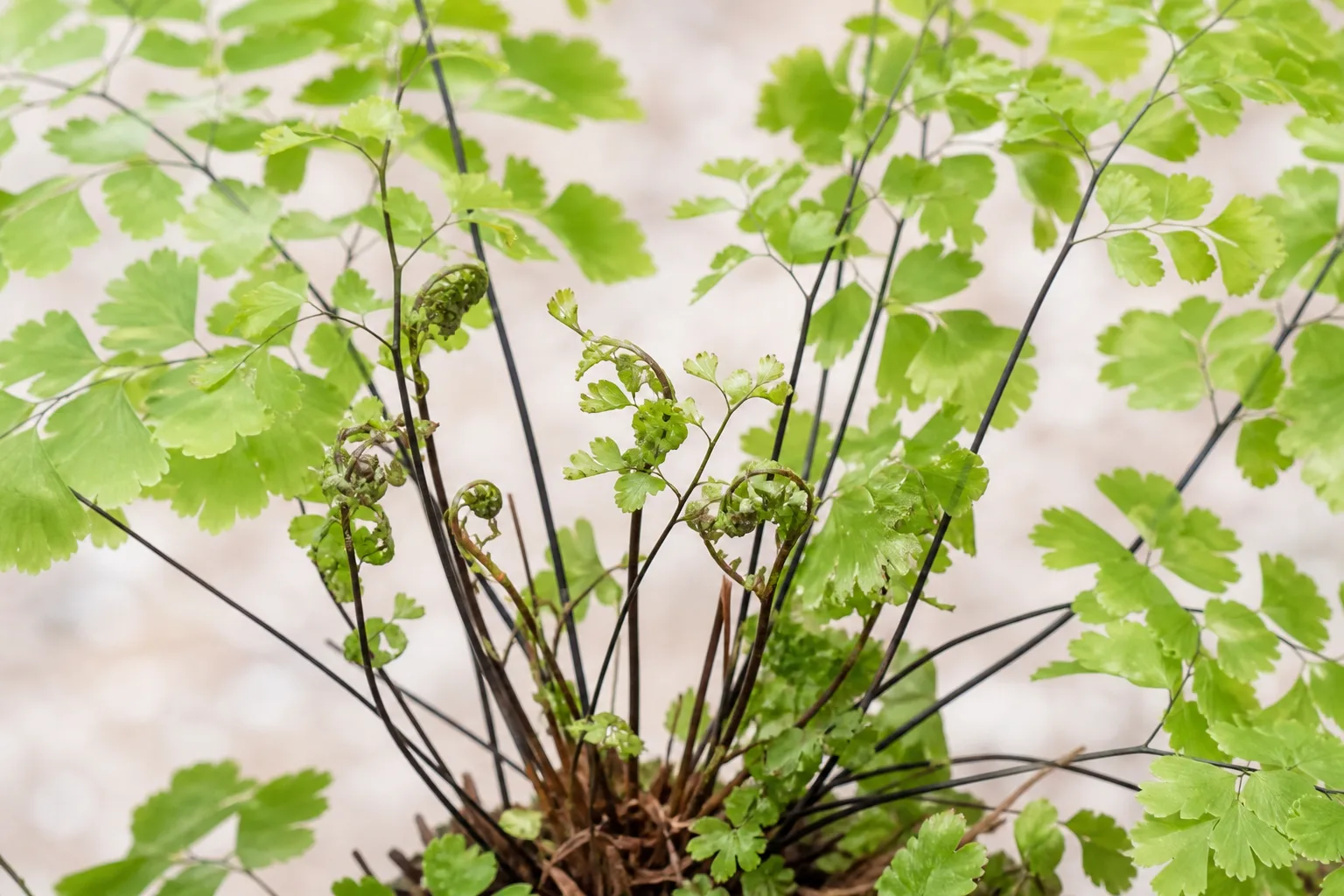
Deformed New Growth on Maidenhair Fern: Causes, Checks & Fixes
This guide covers deformed new growth on Maidenhair Fern. See also the general Deformed New Growth guide, watering, and light pages for this plant.
Deformed New Growth on Maidenhair Fern: Causes, Checks & Fixes
Quick answer
Sticky croziers mean inspect pests first - not humidity. On Maidenhair Fern (Adiantum raddianum), deformed new growth shows as twisted croziers, uneven pinnae, or fronds that stall mid-unfurl while older fronds may still look fine. That crown-first pattern is the signature of this problem page - not general tip burn on mature leaflets.
First step: magnify every unfurling crozier for aphids, scale covers, and honeydew, then read humidity at frond height and check whether the top centimeter of soil is barely dry. This fern needs a very humid atmosphere indoors and roots must never be allowed to dry out, but pests on tender croziers deform tissue faster than dry air alone.
For baseline culture while you diagnose, see the watering guide and overview.
Deformed new growth vs. low humidity vs. scale - which guide to use
Use this page when new croziers at the crown twist, bunch, stall, or emerge sticky while established fronds may look normal. Route to sibling guides when the pattern differs:
| What you see | Primary guide | Why |
|---|---|---|
| Twisted or sticky unfurling croziers, asymmetric new pinnae | This page | Crown-level new-tissue deformity |
| Brown tips on mature fronds only, clean new croziers | Low humidity | Dry air on established leaflets, not crown twist |
| Scale covers on stems and older fronds, not just new tips | Scale insects | Established infestation beyond crozier stage |
| Sticky residue, insects hard to find | Sticky leaves | Honeydew triage before spraying |
| Fine webbing, stippled yellow leaflets | Spider mites | Mite damage pattern on fine pinnae |
| Whole plant limp, all fronds collapse | Wilting or drooping leaves | Systemic collapse, not isolated crozier twist |
Rule of thumb: honeydew stickiness on young fronds → pests first. Inward-curling croziers with moist soil and no stickiness → humidity. Tip burn on old fronds with clean new shoots → low humidity, not this page.
What deformed new growth looks like on Maidenhair Fern
Deformed new growth is easiest to spot at the crown where croziers emerge:
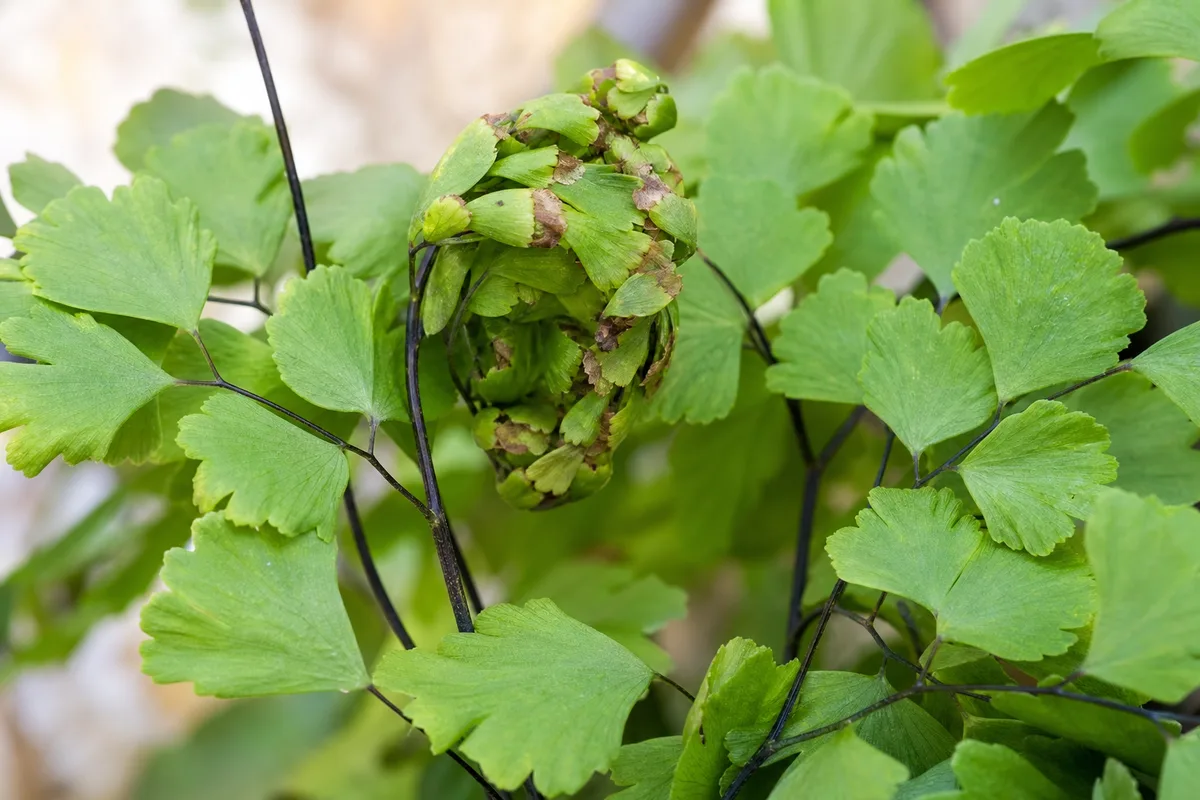
Deformed New Growth symptoms on Maidenhair Fern - compare with healthy tissue on the same plant.
- Croziers that curl inward or fail to open fully, leaving leaflets bunched or overlapping
- Asymmetric leaflet fans - one side of the pinna smaller or crumpled
- Stunted frond length - new shoots stop expanding while black stipes look healthy
- Sticky or shiny young fronds - honeydew from aphids or soft scale interfering with expansion
- Brown-tipped croziers that deform as they dry during unfurling in low humidity
Older established fronds may look fine while only the newest growth shows damage. That crown-first pattern separates environmental or pest stress on tender tissue from whole-plant decline - unlike leggy pale stretching that affects entire frond architecture.
Why Maidenhair Fern gets deformed new growth
Crozier biology and crown-first stress
New croziers are the thinnest, most exposed tissue on Adiantum - they deform first when conditions slip. Adiantum species are susceptible to common houseplant pests including aphids, mealybugs, and scale, all of which cluster on soft emerging fronds before older pinnae show damage.
Low humidity, drought, and inconsistent moisture
Most indoor environments lack sufficient humidity, especially in winter when heated air drops below what thin leaflets tolerate. Croziers curl and tear rather than fan out cleanly. Delicate ferns should not be allowed to dry out completely - brief dry spells cause weak, misshapen shoots as the crown recovers. Dry air can deform croziers even when soil is moist; that is why humidity and watering must be corrected together per the overview streamside-condition guidance.
Aphids and scale on tender unfurling tissue
Aphids cluster on tender buds and cause leaves to become stunted and distorted while excreting honeydew. Fern scale and brown soft scale feed on fern foliage - honeydew’s stickiness may interfere with leaf unfurling and cause leaf deformity on delicate new growth, and heavy infestations can cause deformed growth on ferns. Honeydew physically coats pinnae as they expand, so sticky croziers almost always warrant a pest wash before any other fix.
Tap water, sun, and over-fertilization
Emerging fronds are sensitive to harsh water and light stress. Leaves may scorch in direct sun; new tissue warps before it hardens. Some growers switch to rainwater or filtered water when new tips brown during unfurling - the RHS notes free watering in the growing season for A. raddianum without mineral stress compounding crown damage. Over-fertilization produces soft tissue that burns or attracts pests - never fertilize a stressed fern as a first response.
How to confirm the cause
Work through these checks on the newest growth only:
- Magnify croziers and leaflet undersides - Live aphids, scale covers, white male flecking, or sticky honeydew confirm pests. If sticky but no insects visible, use the sticky leaves triage guide.
- Hygrometer at frond height - Readings below 50% support low-humidity deformation, especially if soil is moist and croziers are not sticky.
- Soil moisture and pot weight - Top centimeter barely dry is correct per the watering rhythm; a light pot with curling croziers means drought stress.
- Water quality - Recurring brown tips on new fronds during unfurling may improve with filtered or rainwater; do not confuse mature tip burn with crozier twist.
- Light exposure - Direct sun on the crown causes scorch and twist on one side of new fronds.
- Recent changes - Maidenhair Fern repotting guide, moves near heat registers, or new fertilizer can coincide with crozier damage.
Rule out normal slow winter rest: few or no new croziers in short cool months can be seasonal. Deformation during active growth - spring through fall indoors - always warrants intervention.
First fix for Maidenhair Fern
Inspect and stabilize before treating - one variable at a time.
Hold each unfurling crozier to bright light and check for insects, scale, and stickiness. If pests are present, isolate the plant from others and wash all fronds with lukewarm water in a sink or shower - that is your first action, not fertilizer or repotting. Repeat the wash every 3–5 days until croziers expand without stickiness.
If no pests are visible, run a cool-mist humidifier targeting 60–80% at frond height - NC State lists high humidity among Adiantum raddianum cultural needs. Place the outlet 1–2 feet from the crown, aiming mist at frond height rather than the floor. Pots may be set in a tray of wet pebbles as supplemental humidity. Water when the top centimeter is barely dry. Do not change pot, fertilizer, and water source on the same day.
Pest inspection and wash protocol
For light aphid or scale on croziers: shower both frond surfaces, crown crevices, and pot rim. Apply insecticidal soap labeled for houseplants only if washing fails - test one frond first because ferns are sensitive to many pesticide ingredients. Avoid systemic pesticides not labeled safe for indoor ferns.
Humidity and watering stabilization
Move the plant away from drafty areas or heat registers that dry croziers locally. Clemson HGIC notes that fine, thin-leafed ferns need extra humidity in heated homes - a bathroom with adequate light can supplement a humidifier during recovery.
Step-by-step recovery
- Complete the pest-and-environment inspection above.
- If aphids or light scale are found, wash fronds thoroughly; repeat every 3–5 days. Escalate to labeled insecticidal soap only after repeated washing fails.
- If humidity is low, add a humidifier at crown height and relocate away from heat registers.
- Switch to filtered or rainwater if new tips brown during unfurling despite correct humidity.
- Trim fully distorted fronds at the soil line once replacement growth looks clean - old twisted tissue will not straighten.
- Hold fertilizer until new croziers emerge normally for several weeks.
Recovery timeline
Environmental correction often produces clean new fronds within 2–4 weeks. Pest removal may take 2–3 weeks of repeated washing before croziers expand without stickiness.
Severe crown damage where multiple croziers blacken may require rhizome division of living sections - full recovery can take one to two months. Judge success by the shape of the newest crozier, not older damaged fronds.
Lookalike symptoms
| Symptom pattern | Likely cause | Next step |
|---|---|---|
| Twisted sticky croziers, asymmetric new pinnae | Pests or combined pest + humidity | Wash + isolate; see scale insects if covers persist |
| Inward-curling croziers, moist soil, no stickiness, RH below 50% | Low humidity on crown tissue | Humidifier at frond height; low humidity guide for mature tip burn |
| Whole-frond collapse from dry soil | Drought | Water thoroughly; underwatering guide |
| Leggy pale fronds, wide pinna spacing | Too little light | Not enough light |
| Brown tips on mature fronds only, clean new croziers | Low humidity or water quality on old tissue | Low humidity - not this page |
| Yellowing with soggy soil | Overwatering | Overwatering - crown may stall, not twist |
Causes to rule out
- Nutrient deficiency - Rare on ferns in fresh mix; deformity with good light and moisture points elsewhere first.
- Root rot - Crown softness and sour soil smell; new growth may stall entirely rather than twist. See root rot.
- Cyclamen mites - Uncommon on ferns; extreme stunting in protected buds matches different hosts.
What not to do
Do not fertilize to force growth out of deformed croziers. Do not repot on day one unless roots are clearly rotting. Do not increase watering into soggy soil to fix humidity problems - rot and fungus gnats follow. Avoid systemic pesticides on ferns unless labeled safe. Do not prune every frond at once; leave photosynthesizing tissue while the crown recovers.
How to prevent deformed new growth next time
Treat steady humidity and even moisture as non-negotiable. Run a humidifier through heating season at crown height, follow the watering guide, and inspect new croziers during weekly care. Quarantine new plants two weeks before placing near ferns. Watch for scale and mealybugs before populations interfere with unfurling.
Maidenhair Fern care cross-check
Humidity and watering work as a pair - dry air deforms croziers even with moist soil, and dry soil collapses the crown even with a humidifier on the floor. Light should be bright indirect; full shade loses vitality while direct sun scorches new tissue. The overview explains why streamside stability matters for Adiantum indoors.
When to worry
Worry when croziers blacken at the crown, stop emerging entirely, or pests coat every new shoot. Multiple fronds collapsing within a week signals combined drought and low humidity - correct both immediately. Chronic crozier failure despite correct pest and humidity correction may warrant contacting your local cooperative extension office for specimen diagnosis.
Related Maidenhair Fern problems
- Low humidity - mature tip burn without crozier twist
- Scale insects - established scale beyond sticky croziers
- Sticky leaves - honeydew triage when bugs are hard to see
- Spider mites - stippling and webbing in dry air
- Wilting and drooping leaves - whole-plant collapse patterns
- Propagation - crown salvage via rhizome division
When to use this page vs other Maidenhair Fern guides
- Maidenhair Fern watering guide - Use for routine moisture checks before assuming deformed new growth is the main issue.
- Maidenhair Fern problems hub - Browse all 55 common issues on this species.