Calcium Deficiency on Philodendron Gloriosum: Causes
Quick answer
Calcium deficiency on Philodendron Gloriosum shows on the newest growth at the rhizome tip first: cupped or twisted velvet leaves, brown edges on tender tissue, and weak petioles while older heart-shaped leaves look fine. Fix watering rhythm and mix condition before adding supplements.
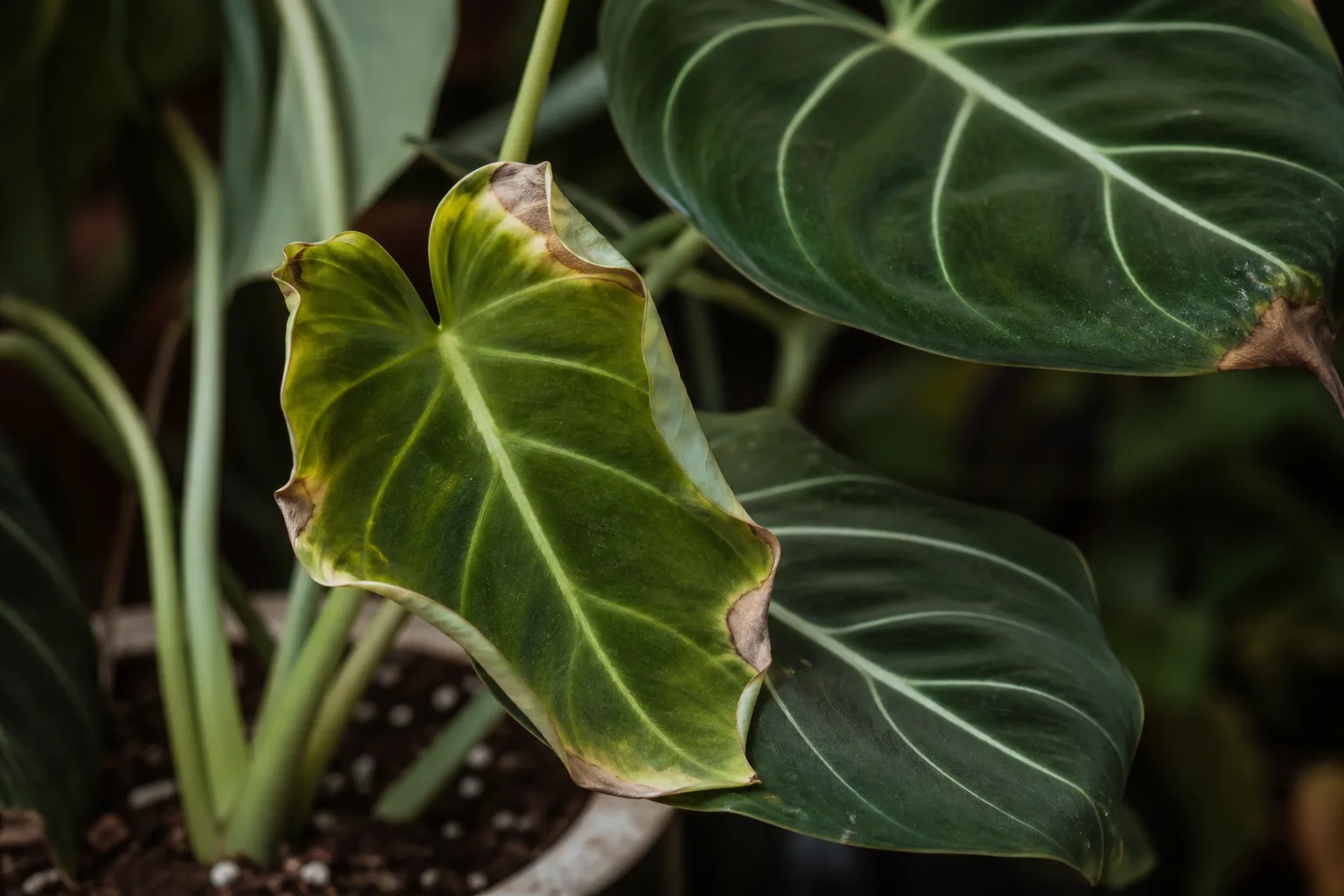
Calcium Deficiency on Philodendron Gloriosum: Causes, Checks & Fixes
This guide covers calcium deficiency on Philodendron Gloriosum. See also the general Calcium Deficiency guide, watering, and light pages for this plant.
Calcium Deficiency on Philodendron Gloriosum: Causes, Checks & Fixes
Quick answer
Calcium deficiency on Philodendron Gloriosum is a new-growth problem at the rhizome front, not a whole-plant yellowing issue. Calcium is immobile in plants, so the youngest velvet leaf emerging from the crawling stem shows trouble first-cupped or twisted new hearts, brown margins on tender tissue, and petioles that bend while older heart-shaped leaves below still look healthy. On this slow terrestrial crawler, the trigger is often interrupted water flow, depleted mix, or salt imbalance-not a missing bottle of calcium. First fix: confirm the growth point sits above the mix, stabilize soil moisture rhythm, and repot into fresh well-draining aroid mix if the medium is old before resuming diluted fertilizer.
Why Philodendron Gloriosum gets calcium deficiency
Philodendron Gloriosum grows from a horizontal rhizome that advances across the soil surface. New velvet leaves push from the active tip only when roots, humidity, and moisture stay steady. During spring and summer in Philodendron Gloriosum light guide, the plant uses nutrients slowly but steadily-long gaps without feed, mix washed out by years of watering, or pH drift outside the slightly acidic range Philodendron Gloriosum overview prefers can all limit calcium uptake even when minerals are technically present.
The most common causes on Gloriosum are:
- Inconsistent watering. Calcium moves through the plant with water via transpiration. Repeated dry cycles followed by heavy soaking interrupt calcium delivery to the one new leaf unfurling at the rhizome tip.
- Old or exhausted potting mix. Nutrients leach out with each watering. Crawlers kept in the same mix for two or more years run low on available minerals, especially in peat-heavy aroid blends.
- pH or salt imbalance. Calcium uptake problems often signal a water-transport issue rather than absent calcium in the soil. Fertilizer salt buildup and excess magnesium from random Epsom salt use can inhibit calcium absorption.
- Rhizome stress from wet growth points. If the crawling stem or active tip sits buried in soggy mix-a common mistake in deep pots-roots and the growth front both fail. UF/IFAS notes that new leaves of hybrid philodendrons become twisted or distorted with calcium deficiency, but waterlogged rhizome tissue produces similar stalled unfurling; confirm root firmness before fertilizing.
Because Gloriosum is slower than trailing philodendrons, owners sometimes underwater during humid summer stretches or overwater in winter when transpiration drops-both patterns disrupt the steady moisture calcium needs.
What calcium deficiency looks like on Philodendron Gloriosum
Watch the rhizome tip before you worry about lower leaves. The newest velvet heart may emerge smaller, cupped inward, or twisted compared with healthy plump leaves with crisp white veins. Brown or necrotic patches can appear on the youngest tissue-sometimes at leaf margins, sometimes as dead spots in the center of a leaf still unfurling. The rhizome front may stall for weeks while older foliage looks fine, and petioles on fresh growth may feel soft or kink easily.
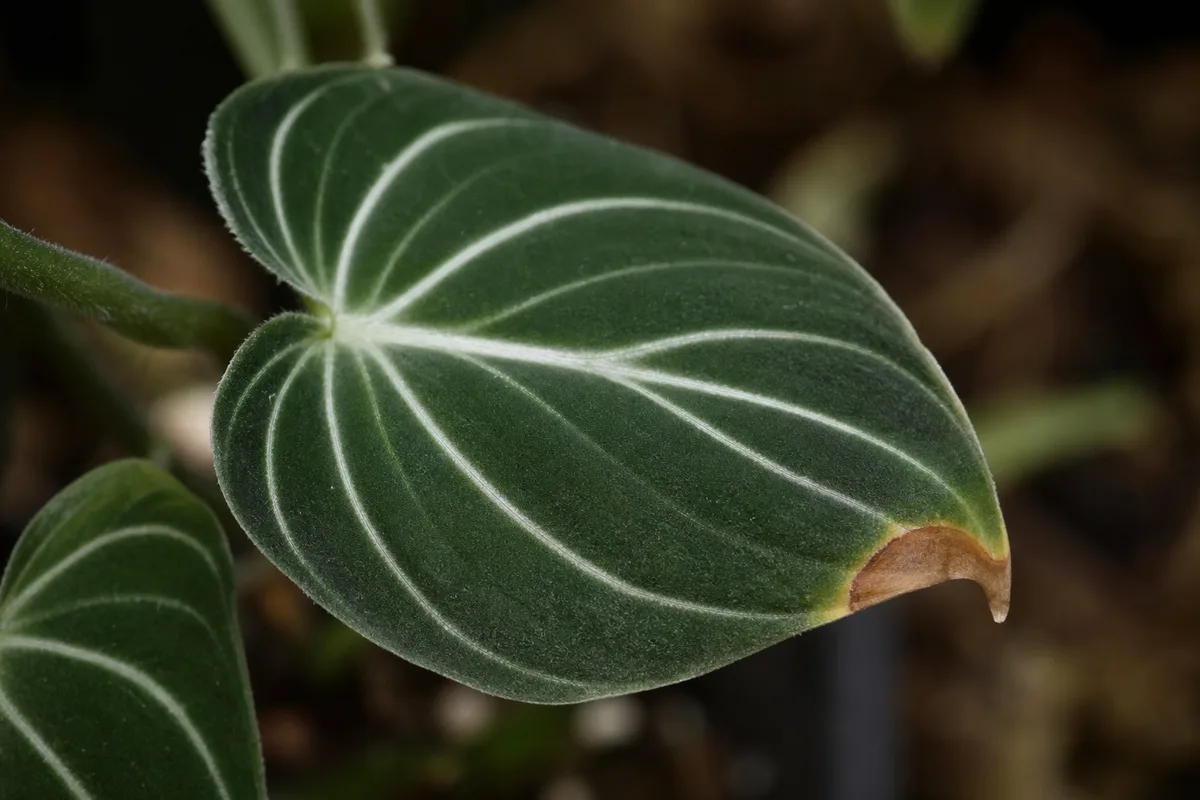
Calcium Deficiency symptoms on Philodendron Gloriosum - compare with healthy tissue on the same plant.
Compare carefully with lookalikes:
- Low humidity damage browns velvet margins on multiple leaves, not only the single newest heart at the tip.
- Rhizome rot from overwatering pairs distorted new growth with a soft, sour-smelling mix and yellowing at the base-not firm roots with a dry, healthy smell.
- Potassium shortage often shows brown edges on several mature leaves, not isolated tip distortion on otherwise firm lower hearts.
- Fertilizer burn can scorch tips soon after a heavy feed rather than after months of depleted mix.
How to confirm the cause
Work through checks in this order:
- Inspect the newest leaf at the rhizome front under bright light. Distorted young velvet hearts with normal older leaves below match calcium uptake failure better than pest or rot patterns.
- Check rhizome placement. The active growth point should sit above the mix surface in a wide shallow pot-not buried under fresh soil after Philodendron Gloriosum repotting guide.
- Review soil moisture rhythm. Does the mix swing from bone dry for weeks to saturated? That pattern limits calcium delivery to developing tissue even when fertilizer is present.
- Review mix age and surface salts. White crust on the pot rim, mix older than two years, or never repotted since purchase all raise lockout risk.
- Feel roots and smell the mix. Firm white roots with dry, healthy-smelling mix support a nutrition diagnosis. Mushy rhizome tissue and sour-smelling mix need a rot workup instead-do not fertilize until roots are healthy.
If several nutrient symptoms overlap, treat the root environment first. Fresh chunky mix and balanced feeding address most deficiencies together rather than chasing a single element in isolation.
First fix for Philodendron Gloriosum
Stabilize the root zone before adding supplements. If mix is more than two years old or heavily salted, repot into a well-draining chunky aroid blend-potting mix with perlite and orchid bark-in a wide shallow pot only slightly larger than before. Keep the rhizome tip above the mix, gently loosen old medium from roots without tearing healthy tissue, and water once until excess drains. Hold fertilizer for two weeks while the plant settles.
When you restart feeding, use a balanced houseplant formula at half the label strength monthly during spring and summer-not full label rates indoors. Do not fertilize during winter dormancy or while the plant is stressed. Do not dump Epsom salt or high-dose calcium products on a dry plant; excess magnesium can make calcium problems worse.
Match watering to how the pot dries: allow the top 3–5 cm to dry before watering during growth, but avoid letting the rhizome sit drought-stressed for weeks during active spring and summer when a new leaf is trying to unfurl.
Recovery timeline
New velvet hearts should emerge with normal shape and prominent pale veins within four to eight weeks after repotting and consistent feeding if roots are firm-Gloriosum is slower than vining philodendrons. Rhizome advance may resume slightly later. Old twisted or browned young leaves will not fully flatten-remove them only after new growth looks stable and you want to tidy the crawler front.
Signs the problem is worsening: repeated tip dieback, spreading distortion down the rhizome, or new leaves staying tiny and pale while the stem softens at the base. If nothing improves after repot and one full month of proper feeding in bright indirect light with 60–70% humidity, inspect for rhizome rot or confirm you are not underwatering between feeds.
What not to do
Do not foliar-feed with undiluted fertilizer on delicate new velvet-it can spot the surface permanently. Do not increase watering because new tips look weak; soggy rhizome tissue blocks uptake. Do not bury the crawling stem deeper to “support” the plant-that stalls the growth front. Do not assume every cupped heart needs calcium-confirm the new-growth-only pattern first. Do not feed a plant sitting in wet, rotting mix; fix drainage and rhizome health first. Do not stack repotting, heavy pruning, and full-strength fertilizer on the same week.
How to prevent calcium deficiency next time
Repot every one to two years into fresh airy mix to keep pH in the slightly acidic to neutral range Gloriosum prefers. Micronutrients are deficient in many indoor plants, so feed lightly and consistently during spring and summer rather than in large bursts, and flush salts occasionally by watering deeply until excess runs from the drainage hole. Keep the rhizome tip above the mix in a wide pot, maintain 60–70% humidity so transpiration stays steady, and avoid oversized deep planters that stay wet and stall root function.
When to worry
Escalate beyond nutrition correction if:
- New growth dies back repeatedly while the rhizome feels mushy near the tip
- Yellowing spreads from the base with wet, sour-smelling mix
- The crawler stalls entirely for more than three months despite corrected care
- Wilting accompanies distorted new leaves despite moist mix-possible rhizome rot
Those patterns need root-zone inspection, not just a fertilizer adjustment.
Conclusion
Calcium deficiency on Philodendron Gloriosum shows at the rhizome front first: twisted or tip-burned velvet new leaves while mature hearts stay green. Confirm by comparing leaf age, checking rhizome placement and mix condition, then stabilize watering and repot into fresh chunky mix before resuming diluted feed. Success means clean new leaves unfurling from the crawler tip-not repaired old tissue.
When to use this page vs other Philodendron Gloriosum guides
- Philodendron Gloriosum watering guide - Use for routine moisture checks before assuming calcium deficiency is the main issue.
- Philodendron Gloriosum problems hub - Browse all 22 common issues on this species.