Dry Hydrophobic Soil on Lavender: Causes, Checks & Fixes
Quick answer
Hydrophobic soil on lavender means dry potting mix has turned water-repellent, so water runs down the pot wall while the root core stays dry. First fix: bottom-soak once to fully re-wet the root ball, then return to deep-but-infrequent watering and repot to a grittier mix if runoff keeps returning.
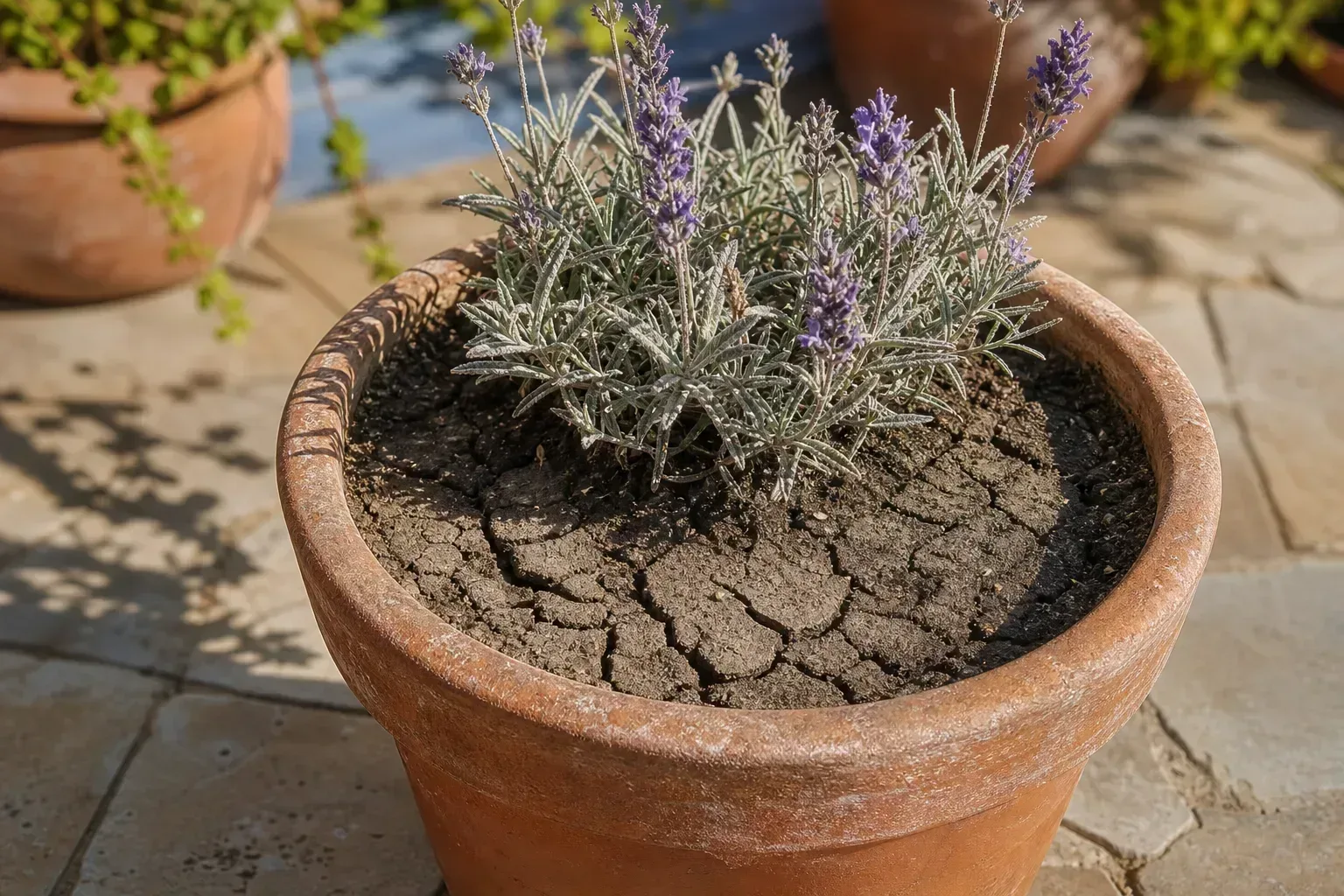
Dry Hydrophobic Soil on Lavender: Causes, Checks & Fixes
This guide covers dry hydrophobic soil on Lavender. See also the general Dry Hydrophobic Soil guide, watering, and light pages for this plant.
Dry Hydrophobic Soil on Lavender: Causes, Checks & Fixes
Quick answer
Dry hydrophobic soil on lavender means the potting mix has become water-repellent after extreme dry-down, so surface watering misses the root core. This is common in old peat-heavy container media, where water can run along the pot wall and out the drain hole while the center stays dry UC Master Gardeners of Santa Clara County.
First fix: bottom-soak the pot one time until the root ball is fully re-wet, then drain completely.
Lavender still needs fast drainage and dry intervals after that first rescue. It performs best in Lavender light guide and free-draining soil, and declines in wet, poorly drained conditions Royal Horticultural Society Missouri Botanical Garden.
For broader moisture scheduling, see lavender watering and lavender soil. This page is specifically the hydrophobic-soil diagnosis and fix path.
What hydrophobic soil looks like on Lavender
Water beads on the surface instead of infiltrating. Top watering may appear to “work” because water exits from drainage holes, but the core can remain dusty dry. A useful check is the pot-wall gap: the root ball often shrinks away from container sides in severe dry-down.
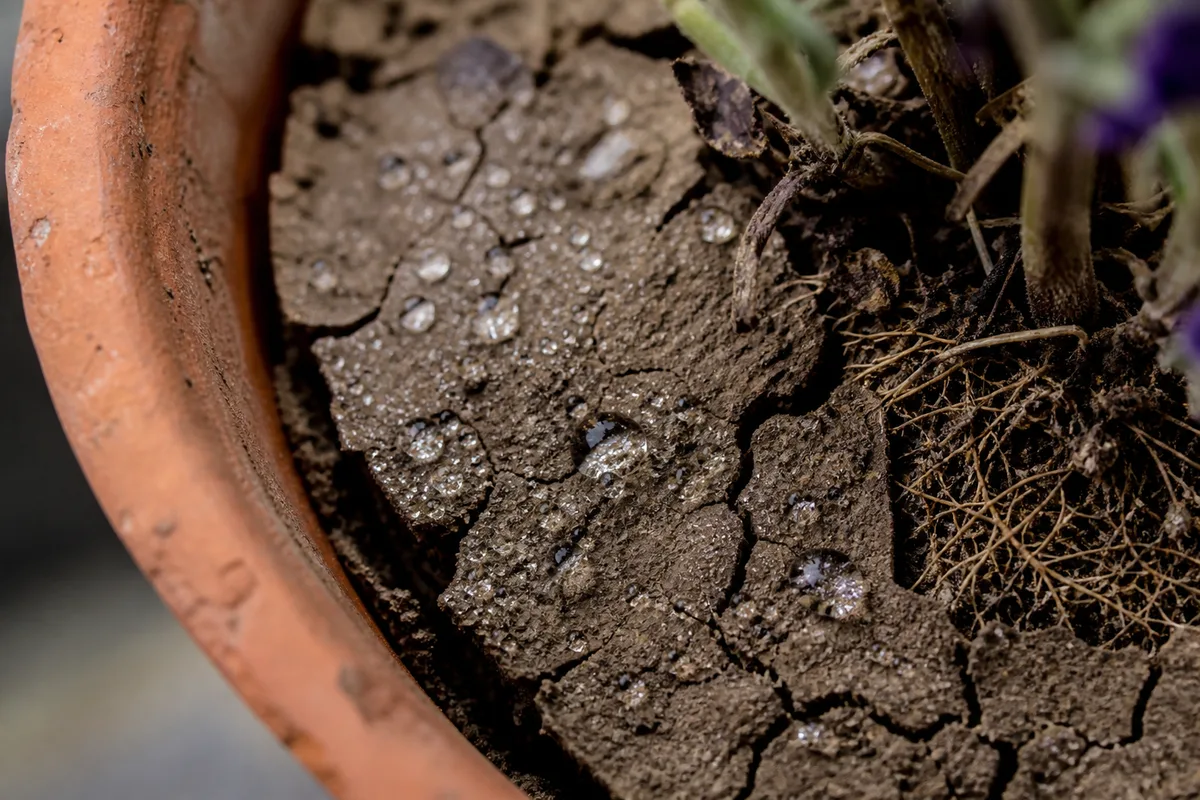
Dry Hydrophobic Soil symptoms on Lavender - compare with healthy tissue on the same plant.
Typical lavender pattern:
- pot feels unusually light for its size
- mix is dry at about 7 cm depth even after watering
- foliage looks dull, curled, or lightly wilted
- recovery starts quickly after proper re-wetting if roots are still firm
Why Lavender mix turns hydrophobic
Many potting mixes become hydrophobic when they dry out fully, especially mixes with high peat content UC Master Gardeners of Santa Clara County. Water repellency can involve wax-like organic coatings on dry particles that resist infiltration USDA Forest Service.
Lavender context matters:
- It prefers dry-to-medium moisture, full sun, and free drainage, so growers often allow long dry intervals Missouri Botanical Garden.
- In terracotta, media dries faster because porous clay walls wick and evaporate moisture Nebraska Extension.
- If that dry interval stretches too far, peat-rich media can become difficult to re-wet.
How to confirm the cause
- Runoff check - water beads or races down pot edges instead of soaking evenly.
- Depth check - at roughly 7 cm, mix is still dry after a top-water attempt.
- Pot-weight check - pot remains very light compared with its post-watering weight.
- Root check - firm pale roots favor hydrophobic drought stress; mushy dark roots suggest rot.
- Re-wet test - one bottom-soak causes clear improvement within 24 hours if diagnosis is correct.
Hydrophobic soil vs underwatering on Lavender vs root rot on Lavender
| Pattern | Hydrophobic soil | Underwatering (not repellent) | Root rot |
|---|---|---|---|
| Top watering | Beads or channels | Absorbs normally | Absorbs slowly in already-wet mix |
| Pot feel | Light | Light | Heavy |
| Root-zone condition | Dry core after watering attempt | Dry, but re-wets normally | Wet, low-oxygen, often sour |
| Root texture | Usually firm if caught early | Firm, dry | Soft or mushy |
| First action | Bottom-soak once, then drain | Deep top watering | Inspect roots and remove rot |
If you suspect pure underwatering, compare with underwatering on lavender. If pot stays heavy and wilt persists, switch to root rot on lavender.
First fix for Lavender
Bottom-soak once: place the pot in a tray or basin so water rises into the root ball, wait until the mix darkens through, then remove and drain fully. This re-wets repellent cores more effectively than repeated surface pours UC Master Gardeners of Santa Clara County.
Do not leave lavender standing in water after the soak. Prolonged saturation increases rot risk in a species that needs sharp drainage Royal Horticultural Society.
Step-by-step recovery
- Put the pot in shallow water and allow capillary re-wetting until the profile darkens.
- Remove and drain thoroughly so the crown and lower root zone are not left saturated.
- Break surface crust gently to improve later infiltration without tearing major roots.
- Return to bright light and airflow; monitor for perk-up within about one day.
- Resume deep-but-infrequent watering using depth checks, not calendar watering.
- If runoff repeats within the next cycle, repot into a grittier, structurally stable mix (see lavender soil and lavender repotting).
- Skip fertilizer until stable new growth appears.
If you choose a wetting agent, use container-labeled products only and follow label rate; surfactants increase media wetting by reducing surface tension UF/IFAS.
Recovery timeline
Lavender with intact roots may regain firmness within hours to 24 hours after full re-wetting. New shoot growth is a better recovery marker over the next one to two weeks than old leaf appearance. Needle tips that crisped from internal drought usually do not reverse.
If wilting continues despite corrected moisture, reassess for overlapping issues such as wilting, compacted soil, or drainage defects like no drainage hole.
Causes to rule out
- Root rot: heavy wet pot, sour smell, soft roots, persistent wilt.
- Simple underwatering: dry mix that still accepts water normally.
- No drainage hole: trapped water with delayed dry-down.
- Heat-only midday wilt: temporary wilt with adequate depth moisture.
What not to do
Do not keep “chasing runoff” with frequent top splashes; this leaves the core dry and can keep crowns damp.
Do not keep the pot in a full saucer after rescue soaking.
Do not switch to a heavy moisture-retentive mix to solve wilting on lavender; this often trades hydrophobic stress for rot stress.
How to prevent hydrophobic soil next time
Use a free-draining, grit-forward mix and refresh aging media before it collapses. Lavender prefers dry-to-medium moisture in full sun and does best when roots are never trapped in persistent wetness Missouri Botanical Garden Royal Horticultural Society.
Container-specific prevention:
- check moisture at depth before each watering
- use pot weight trends as your drought warning
- increase summer checks for terracotta-grown lavender
- repot after repeated repellency episodes, not after every single dry day
Lavender care cross-check
Hydrophobic soil often masquerades as underwatering because watering attempts are visible but ineffective. Keep this sequence: confirm depth dryness, re-wet fully once, then return to lavender’s normal dry-down rhythm from lavender overview and lavender watering.
If symptoms shift toward heavy wet media and decline, escalate to overwatering or root rot.
When to worry
Treat as urgent when lavender remains wilted in heat and runoff persists after two correct re-wetting attempts, or when root inspection finds soft tissue.
Lower urgency cases in cool seasons can be corrected over days, but unresolved hydrophobic cycles still weaken root function before spring growth.
Conclusion
Hydrophobic soil on lavender is a water-delivery failure, not always a watering-frequency failure. Correct it once with complete re-wetting, then prevent recurrence with gritty structure, depth-based watering checks, and timely media refresh.
Related guides: lavender watering, lavender soil, underwatering, wilting, and root rot.
When to use this page vs other Lavender guides
- Lavender watering guide - Use for routine moisture checks before assuming dry hydrophobic soil is the main issue.
- Lavender problems hub - Browse all 51 common issues on this species.