Transplant Shock on Lavender: Causes, Checks & Fixes
Quick answer
Transplant shock on lavender shows temporary wilt, dull grey-green foliage, or paused growth for one to three weeks after moving pots, planting out, or failing to harden off-normal when the crown stays firm in gritty drained mix. Give one settling water, then dry down at 7 cm depth, harden sun gradually if needed, and hold fertilizer and hard pruning until new silver tips appear.
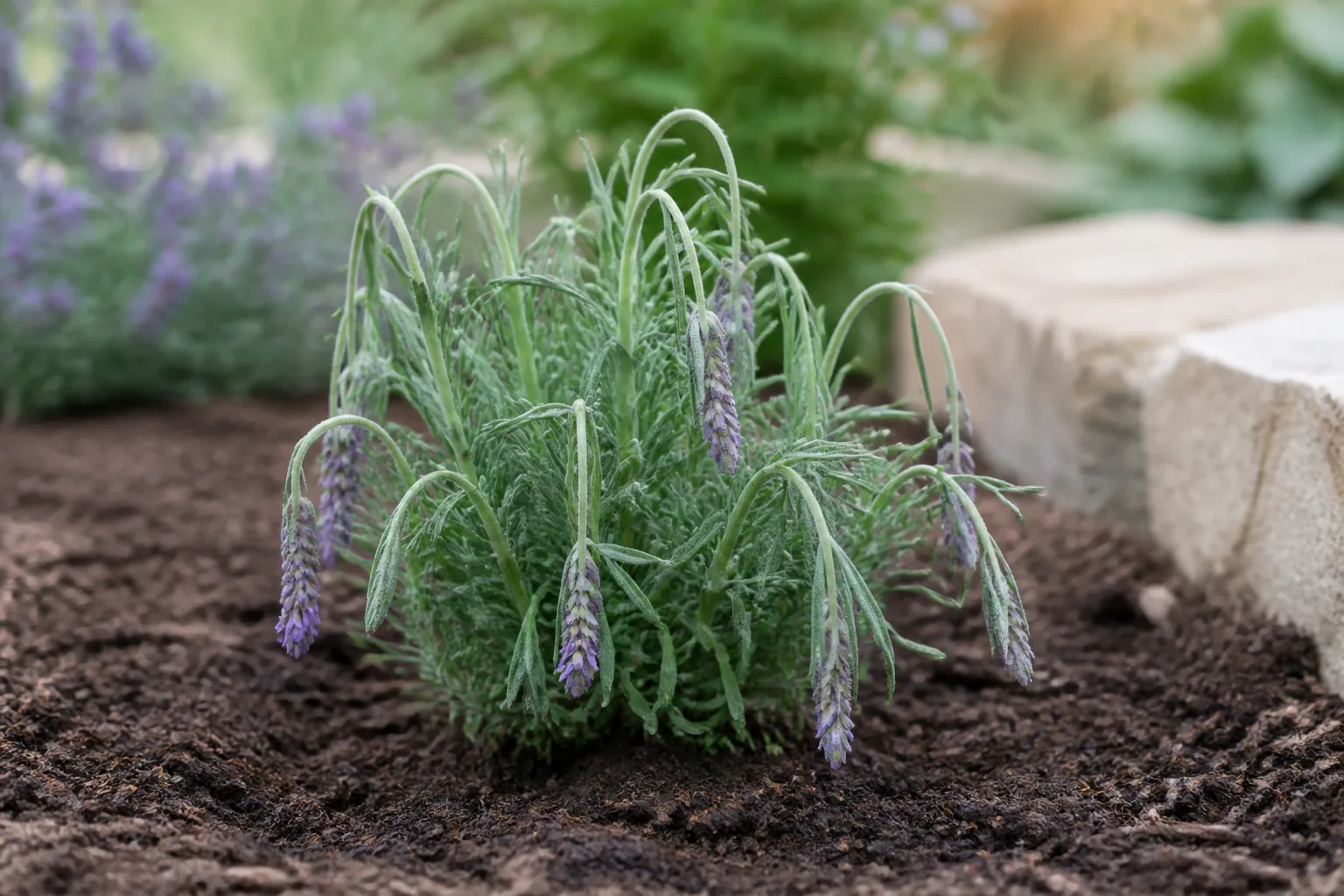
Transplant Shock on Lavender: Causes, Checks & Fixes
This guide covers transplant shock on Lavender. See also the general Transplant Shock guide, watering, and light pages for this plant.
Transplant Shock on Lavender: Causes, Checks & Fixes
Quick answer
You moved your lavender yesterday-repotted it, planted it in the garden, or carried a greenhouse tray to full patio sun-and now the narrow leaves look limp and dull grey-green. That panic is common, and on a firm crown in gritty, draining soil it usually means transplant shock: a temporary gap between what the foliage loses to sun and wind and what disturbed roots can pull back up.
First step: give one settling water if the mix is dry at 7 cm depth, then let it dry down before watering again. Hold fertilizer and hard pruning, harden sun gradually if scorch is obvious, and watch for new silver tips at stem nodes-not old leaves re-greening-as your recovery signal. If the crown goes soft or the mix smells sour within a week, you are dealing with crown rot or root rot from a bad transplant, not normal shock.
This page covers diagnosis and recovery after any move-repot, field plant-out, or hardening failure. For step-by-step repot procedure, see the lavender repotting guide. If symptoms began only after a pot upgrade with otherwise correct technique, the repotting-stress page walks through that narrower scenario.
Transplant shock vs repotting-stress vs wilting on lavender
These three pages overlap in wilt symptoms but differ in trigger, timeline, and first response. Use this table before you change anything else:
| Trigger | Timeline | Crown + mix signal | Start here |
|---|---|---|---|
| Any move-repot, garden plant-out, sun jump | Wilt within 3–7 days of disturbance | Firm crown, draining gritty mix | This page - settle water, then dry-down |
| Pot upgrade only, same location | Wilt days 2–5 after root tease | Firm crown, modest pot jump | Repotting stress |
| No recent move; chronic or sudden wilt | Any | Heavy wet OR light dry pot | Wilting hub |
| Midday leaf hang only, stems firm | Hot afternoon, no repot | Moist soil, crown hard | Drooping leaves or heat stress |
| Wilt worsens on constantly wet mix | Within a week of bad transplant | Soft crown, sour smell | Crown rot or root rot |
Scope rule: If light, wind, garden depth, or hardening changed-not just pot size-stay on this page. If the only change was a container upgrade in the same spot, repotting-stress may be enough. If wilt predates any move, use the wilting hub first.
What transplant shock looks on lavender
Transplant shock on lavender is a temporary wilt or growth pause that starts within three to seven days of moving location-not a slow decline over months. The plant still has structure: stems feel rigid, the woody base at the soil line stays hard when you pinch it, and there is no sour or swampy smell from the drain hole.
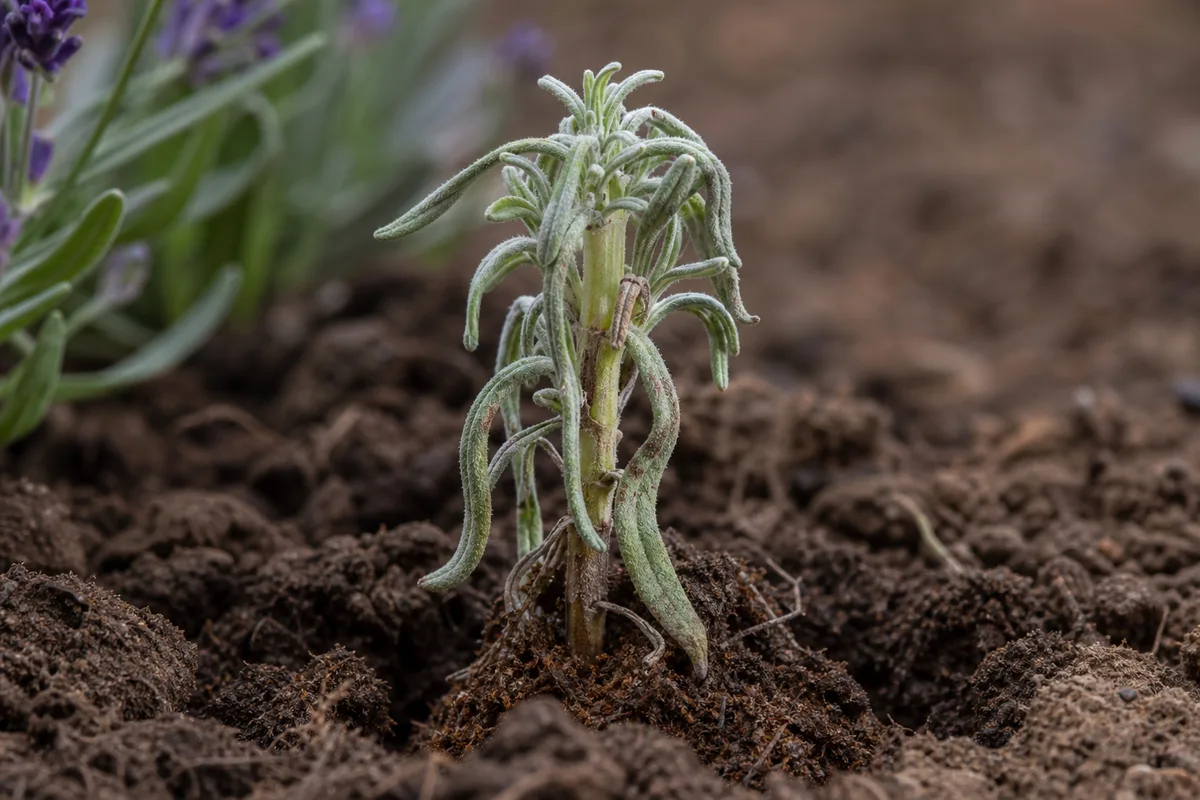
Transplant Shock symptoms on Lavender - compare with healthy tissue on the same plant.
Typical shock signs:
- Slight wilt or dull grey-green foliage for days after repot, plant-out, or a hard sun move
- Afternoon droop on an otherwise firm plant, especially when greenhouse-grown stock hits roof sun without hardening
- Growth pause without rot odor-no new silver tips yet, but no spreading grey mush either
- Lower leaves may look tired while upper stems stay structurally sound
What shock usually does not include:
- Grey, mushy tissue at the crown or stems that dent when pressed
- Sour or rotten smell from wet mix that stays heavy for days
- Progressive collapse that worsens daily on constantly soggy soil after the first week
- Blackened spreading tissue up stems from a buried crown
Damaged leaves from shock rarely return to bright silver-green-they may stay dull or drop. Judge recovery by firm wood and fresh silver shoots at nodes, not by old foliage color. Lavender’s narrow, aromatic leaves are not needles; if your plant shows needle-like browning on conifers, you are looking at a different species entirely.
Visual patterns to compare before you act
Firm-crown afternoon wilt (likely shock): Grey-green foliage limp at 2 p.m. on a terracotta pot; woody base rigid when pinched; mix dry at 7 cm by evening; no sour smell. Leaves may perk slightly overnight while roots still catch up.
Grey mushy crown rot (not shock): Upper leaves still briefly green while tissue at the soil line turns grey and soft; mix stays heavy for days; sour odor from the drain hole within a week-often after sympathy soaking or a buried crown.
New silver tips (recovery confirmed): Small pale shoots breaking at stem nodes while old lower leaves stay dull-this is the correct success marker for Mediterranean subshrubs, not re-greening of damaged foliage.
Why lavender shocks after transplant
Lavender evolved on dry Mediterranean hillsides where roots breathe in gritty, fast-draining soil and foliage bakes in full sun. When you lift a plant from a nursery pot or disturb a field root ball, you break fine root hairs that absorb water and nutrients. Until new roots grow into fresh soil, the shrub loses more moisture through its leaves than damaged roots can replace. That mismatch produces wilt that looks like thirst but is really a temporary uptake problem.
Lavender makes this worse in several predictable ways. It needs free-draining soil in full sun and does not perform well in wet or waterlogged soils-so any transplant into heavy peat, sealed plastic without holes, or garden clay without amendment can slide from shock into rot within days. Because lavender regenerates roots slowly compared with soft herbs like mint, shock can last one to three weeks even when you do everything right.
Container repot vs. field plant-out
Container repots fail most often from oversized wet pots, buried crowns, or sympathy soaking after the move. The root ball sits in a larger volume of mix that stays damp around broken roots; well-intentioned daily watering finishes what disturbance started. Correct repots use holed terracotta, gritty alkaline mix, and the same crown depth as before-details in the lavender repotting guide.
Field plant-out adds different stressors: sun scorch when nursery plants meet unfiltered midday sun, dry edges on the root ball that repel water, and mulch piled against the woody stem. Plant lavender at the same level it grew in its previous pot and water regularly through the first season in dry weather-but that does not mean keeping soil constantly wet. On heavy clay, RHS guidance recommends planting on a 20–30 cm mound or ridge so roots do not sit in a wet bathtub. One thorough settle water, then dry-down rhythm, matches how lavender roots breathe.
Greenhouse-to-patio hardening failures are a third common path: foliage adapted to filtered light cannot support full transpiration load the day roots are also disturbed. Afternoon wilt on firm plants in draining mix often traces to this double hit, not underwatering on Lavender.
Root-hair biology and slow regeneration
Most water uptake happens through delicate root hairs at the root surface, not through the thick woody roots you see when unpotting. Transplanting severs those fine root hairs; the plant must regenerate new hairs and re-establish contact with soil particles before uptake catches up with leaf transpiration. Lavender’s woody subshrub habit means it will not bounce back overnight the way a mint division might. Expect a pause of one to two weeks before the first silver tips, and two to four weeks before the plant looks visibly fuller-timeline varies with season, cultivar, and how aggressively roots were disturbed.
Lavender also does not break new growth easily from old woody stems-so during shock recovery, remove only clearly dead tips; do not hard-prune into bare wood hoping to stimulate shoots.
Moving during peak bloom or extreme heat diverts energy away from root repair. Dampness more than cold kills lavender in poorly drained conditions, so monsoon plant-outs without perfect drainage are high-risk even when the crown looked firm at purchase.
How to confirm the cause
Work through these checks in order before you change anything else:
- Timeline - Did wilt or dulling start within a week of repot, plant-out, or a major sun move? Shock fits a tight post-move window.
- Crown firmness - Pinch the woody base where stem meets soil. Hard, rigid tissue supports shock. Soft, grey, or dented bases point to crown rot.
- Drainage - Water should run through gritty mix in seconds. Heavy peat that stays wet for days extends shock into rot.
- Sun change - Did the plant jump from greenhouse shade to full roof sun in one step? Scorch plus shock is common; hardening may be the missing piece.
- Depth - Is the crown buried deeper than before? Buried wood stays wet and rots while upper leaves still look briefly green.
- Smell - Neutral or earthy soil fits shock. Sour or swampy odor from the drain hole does not.
Crown and drainage inspection checklist
Slide the plant out gently if you need visual confirmation. Healthy roots are white to pale tan and firm. Brown, slimy roots with a soft crown mean root rot rescue, not patience. If the root ball center is dusty dry while the surface looks moist-common after summer plant-out-see dry hydrophobic soil for a one-time bottom soak before returning to dry-down rhythm.
Symptom lookalike comparison table
| What you see | Firm crown + draining mix | Soft crown or sour wet mix | Most likely cause |
|---|---|---|---|
| Wilt 2–5 days after move | Yes | No | Transplant shock - dry-down and sun hardening |
| Afternoon droop, morning recovery | Yes | No | Sun scorch or unhardened exposure on shocked roots |
| Progressive wilt, no new tips by week 3 | Yes | No | Check depth, pot size, or hidden dry core |
| Grey mush at soil line | No | Yes | Crown rot from burial, mulch, or overwatering |
| Wilt on constantly wet heavy mix | Any | Often yes | Overwatering / rot, not shock |
| Wilt on light dry pot throughout | Yes | No | Underwatering or hydrophobic dry core |
First fix for lavender
Give one settling water if the mix is dry at 7 cm depth, then wait for that zone to dry before watering again.
This single step settles fresh soil around roots without the drowning spiral that kills Mediterranean shrubs. Insert a finger or bamboo skewer to roughly 7 cm (3 inches)-about knuckle-deep in a standard pot. Dry at that depth after a move warrants one thorough soak until excess drains freely; empty the saucer. Damp at depth means wait, even if leaves droop in afternoon heat.
Place the plant in full sun if it was hardened, or bright morning sun with afternoon shade for three to five days if greenhouse stock shows scorch on firm crowns. Do not fertilize, hard-prune, or repot again on day one. Stability matters more than perfect placement during the first week.
Step-by-step recovery
After the initial settling water and light adjustment:
- Dry-down watering rhythm - Probe 7 cm deep before every pour. When dry, water until excess exits the drain hole, then empty the saucer. Terracotta dries faster than sealed plastic; adjust interval by pot weight, not calendar days.
- Harden sun if scorch is evident - Move unhardened plants through increasing exposure over seven to ten days (schedule below). Once new tips appear, return to full sun-lavender needs at least six hours of direct light daily for compact growth.
- Hold fertilizer two to four weeks - Salts burn tender regrowing roots. New silver shoots with firm turgor are your green light to resume light feeding.
- Remove only clearly dead material - Snip desiccated tips if tissue is obviously brown and brittle. Do not cut back into old woody stems hoping to stimulate growth; lavender does not break easily from bare wood.
- Re-evaluate at three weeks - No new silver tips on firm stems with neutral-smelling soil warrants a gentle unpot to check for hidden rot, dry core, or a crown buried too deep.
Dry-down watering rhythm (7 cm probe)
Lavender’s drought tolerance is real, but damaged roots cannot handle constant wet feet. The 7 cm probe separates “the plant looks thirsty” from “the mix is actually dry where roots live.” In cool spring weather, dry-down may take five to seven days; in hot summer on terracotta, three to four days is common. Lift the pot-noticeable lightness plus a dry probe means water; a heavy, cool pot with a damp probe means wait.
Hardening schedule for unhardened plants
For greenhouse or indoor stock moving to full patio sun:
| Days | Exposure | What to watch |
|---|---|---|
| 1–2 | Morning sun 3–4 hours, bright shade afternoon | Slight afternoon wilt acceptable if crown firm |
| 3–4 | Morning sun plus late afternoon sun 1–2 hours | Leaf edges browning means slow down |
| 5–6 | Full sun except peak midday hour if heat exceeds 32°C (90°F) | New tips staying firm = proceed |
| 7–10 | Full sun | Reduce shade once silver tips appear |
French and Spanish lavenders (Lavandula stoechas, L. dentata) are less hardy than English types and may need longer hardening in hot climates-the same drainage rules apply.
Recovery timeline
Most firm lavender plants show the first silver shoots at stem nodes within two to four weeks when moisture, sun, and depth are correct. Full visual fill-in may take another few weeks because lavender grows moderately once roots anchor.
Improvement signs: Firm crown, neutral soil smell, new silver tips, afternoon wilt shrinking as roots establish.
Worsening signs: Softening crown, sour smell, daily deepening wilt on wet mix, grey mush spreading from soil line-these mean rot intervention, not more waiting.
Bad plant-out into heavy wet soil can decline within days if uncorrected. Mild shock on correct gritty mix should plateau, not accelerate.
Causes to rule out
Root rot follows overwatering in heavy mix, oversized pots, or buried crowns. Wilting worsens even though soil stays wet, and roots turn brown and slimy. Shock wilts on moist but aerated gritty mix with firm stems.
Underwatering wilts lavender when the entire root ball dries out-common if old mix was hydrophobic and water ran down the sides at plant-out without soaking the core. Probe deep; dusty dry center warrants one bottom soak, then dry-down rhythm.
Heat scorch without repot can yellow or crisp leaf edges when a pot sits against hot paving. Check whether symptoms started before any move; if so, shade the pot root zone rather than watering more-see heat stress.
Repotting-stress overlap - When symptoms follow only a container upgrade with correct depth and mix, the dedicated repotting-stress workflow may be all you need; this page covers broader moves including field plant-out and hardening failures.
General wilting - Chronic wet-or-dry wilt without a recent move belongs on the wilting hub, not here.
What not to do
Do not keep soil wet to “help establishment” on lavender-that causes rot faster than shock resolves. Lavender needs dry, well-drained conditions, not sympathy soaking.
Do not move unhardened greenhouse stock to blistering roof midday sun on day one. Roots and leaves are stressed together; splitting the load with a hardening schedule prevents scorch on top of shock.
Do not repot again on day four because the plant looks sad. Double disturbance often kills shrubs that would have recovered from one move.
Do not fertilize, hard-prune, or stack major interventions in the same week as transplant. Space stressful jobs by at least two to three weeks.
Do not pile mulch against the woody crown after garden plant-out-wet organic matter against stem tissue invites crown rot.
How to prevent transplant shock next time
Time moves for spring or early fall, not peak bloom or extreme heat. Lavender is best planted in April or May as soil warms-the same logic applies to container upgrades.
Harden greenhouse plants seven to ten days using the schedule above before full sun exposure.
Use gritty alkaline mix and holed terracotta for containers; plant field specimens on mounds or ridges if garden soil is heavy clay. Crown at the same depth as the nursery pot-never bury woody stems.
Water once to settle, then dry-down at 7 cm depth. Avoid moving during monsoon unless drainage is perfect.
Move up only one pot size when repotting; oversized tubs hold excess moisture roots cannot use. Full procedure lives in the lavender repotting guide.
When to worry
Treat as urgent when the crown softens within a week of transplant, the mix smells sour, or wilt deepens daily on constantly wet soil. Those signs point to rot from bad depth, poor drainage, or overwatering-not recoverable shock without gritty repot and tissue removal. Follow numbered rescue steps on crown rot and root rot the same day.
Also escalate if there is no new silver tip break after three weeks on correct dry-down watering with firm stems and neutral-smelling soil-hidden rot, dry core, or a crown planted too deep may need hands-on inspection.
Normal shock plateaus then improves: firm wood, appropriate moisture at depth, and the first silver shoots within two to four weeks. Temporary afternoon wilt on a firm plant in draining mix is expected, not an emergency-unless drainage has clearly failed.
Related lavender problems
- Wilting - primary wilt hub when no recent move; wet rot vs drought vs heat split
- Repotting stress - pot upgrade only, same location; narrower than this page
- Drooping leaves - softer foliage hang on firm stems, often midday heat
- Heat stress - scorch and reflective heat without root disturbance
- Dry hydrophobic soil - dusty dry core after summer plant-out
- Crown rot - soft grey tissue at soil line on wet mix
- Root rot - brown slimy roots after sympathy soaking
- Overwatering - chronic wet wilt mistaken for transplant thirst
Lavender care guides
Transplant shock resolves faster when culture matches Mediterranean needs:
- Lavender overview - species hub and cluster entry point
- Repotting - step-by-step container procedure and crown depth
- Watering - dry-down rhythm after establishment
- Soil - gritty alkaline mix for containers and clay gardens
- Light - full sun and hardening context
Frequently asked questions
How can I confirm transplant shock on lavender?
Wilting or dulling that begins within days after a move or field planting, with a firm crown and no sour smell from the mix, fits shock when drainage is good. Progressive grey wilt with mushy roots and constantly wet mix points to rot from buried crowns or poor drainage-not benign shock.
Should I water if lavender droops in the afternoon but the crown is firm?
Afternoon wilt on a firm crown in gritty, draining mix is often transpiration stress while roots re-establish-not a call for more water. Probe 7 cm deep; if dry, one thorough soak is appropriate. If the probe emerges damp and the pot feels heavy, wait-sympathy soaking is how lavender rot starts after transplant.
Will lavender recover from transplant shock?
Firm plants in holed terracotta or well-drained garden spots usually push new silver shoots at stem nodes within two to four weeks after shock. Unhardened scorch plus shock may need brief partial shade while roots catch up, but full sun remains the long-term goal once new tips firm up.
When is transplant shock urgent on lavender?
Urgent if wilt worsens with a soft crown and sour soil within a week-that is bad-transplant rot, not patience. Mild afternoon wilt on a firm plant after reasonable hardening is wait-and-support, not an emergency repot unless drainage has clearly failed.
How does field plant-out shock differ from container repot stress?
Field plant-out often adds sun-scorch and dry-edge hydrophobic soil around a disturbed root ball, so one bottom soak may be needed before dry-down rhythm resumes. Container repots more commonly fail from oversized wet pots or buried crowns-see the lavender repotting guide for procedure and repotting-stress when symptoms follow only a pot upgrade.
Is lavender transplant shock the same as wilting?
Not always. Wilting covers wet rot, drought, and heat collapse on any timeline. Transplant shock is a time-limited uptake gap within days of a move, with a firm crown and neutral-smelling gritty mix. If wilt started before any disturbance, use the wilting hub first.
When to use this page vs other Lavender guides
- Lavender watering guide - Use for routine moisture checks before assuming transplant shock is the main issue.
- Lavender problems hub - Browse all 51 common issues on this species.
- Repotting Stress on Lavender - Different entry point when symptoms overlap with transplant shock.
- Leaf Drop on Lavender - Different entry point when symptoms overlap with transplant shock.