Leggy Growth on Lavender: Causes, Checks & Fixes
Quick answer
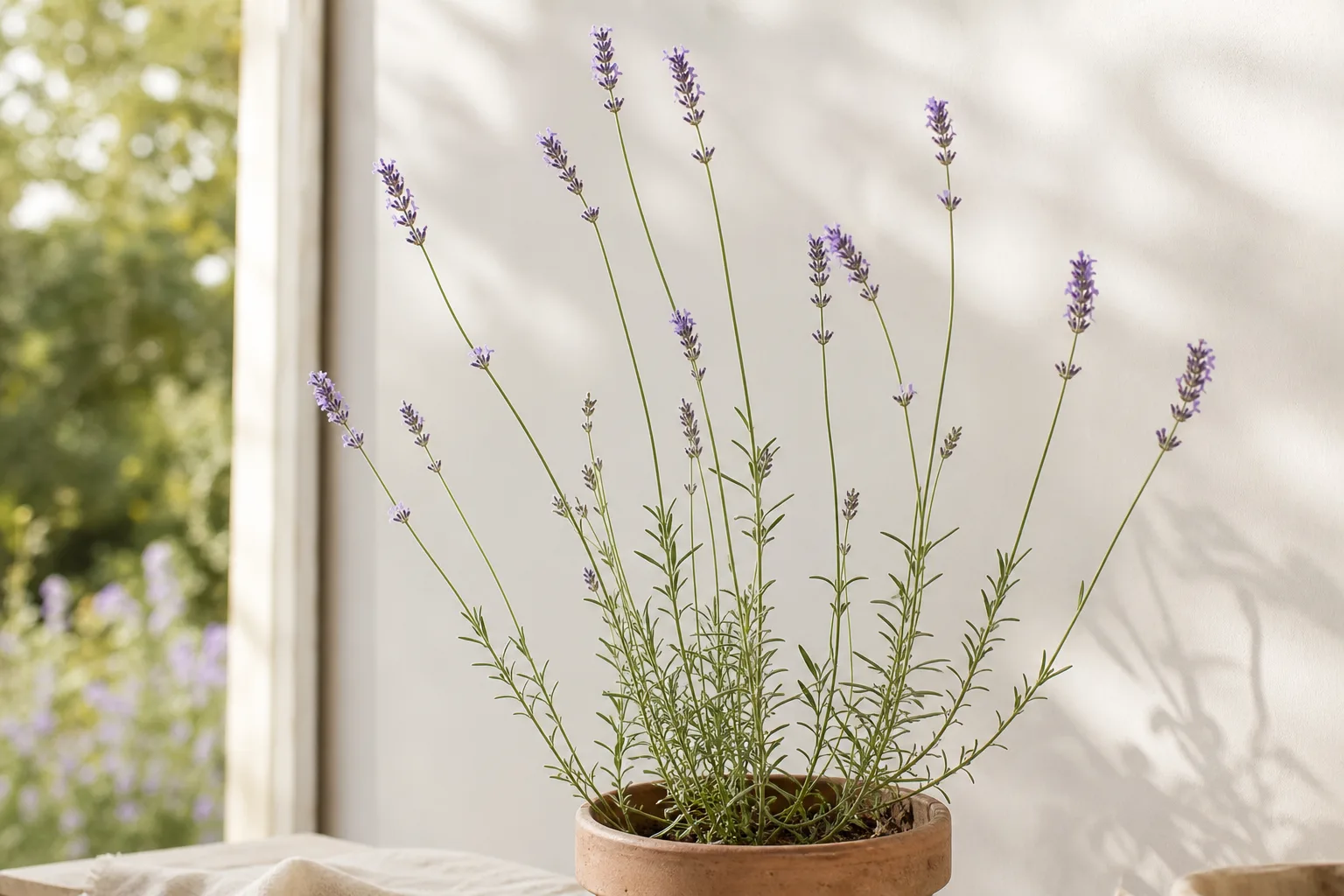
Leggy lavender shows long bare woody stems with narrow grey-green leaves clustered at the tips. If the pot already gets six or more hours of direct sun, a missed post-flowering prune is the likely cause-cut stems back by about one-third after bloom, staying in green wood. If sun hours are low, fix light first on the not-enough-light page before hard pruning.
Leggy Growth on Lavender: Causes, Checks & Fixes
This guide covers leggy growth on Lavender. See also the general Leggy Growth guide, watering, and light pages for this plant.
Leggy Growth on Lavender: Causes, Checks & Fixes
Quick answer
Leggy English lavender (Lavandula angustifolia) looks like long bare woody stems with narrow grey-green leaves clustered at the tips-not a bushy silver mound. Wide internodes, old flower wands on upright wood, or a strong lean toward the brightest direction tell you whether missed post-bloom pruning or insufficient direct sun is driving the stretch.
First step: run the light-vs-prune table below. If the pot already receives six or more hours of direct sun on the foliage, prune-neglect is the primary fix-remove spent spikes and cut stems back by about one-third after flowering, staying in green wood. If sun hours are low, do not hard-prune first; follow the not enough light page for sun-hour audit and acclimation. This page is the leggy morphology and maintenance hub; seedling stretch belongs on leggy seedlings.
What leggy growth looks on English lavender
On a healthy container plant, English lavender forms a dense mound roughly 30–90 cm tall with foliage along green stems-not a few thin wands rising from a naked base. Leggy culture breaks that subshrub silhouette in predictable ways:
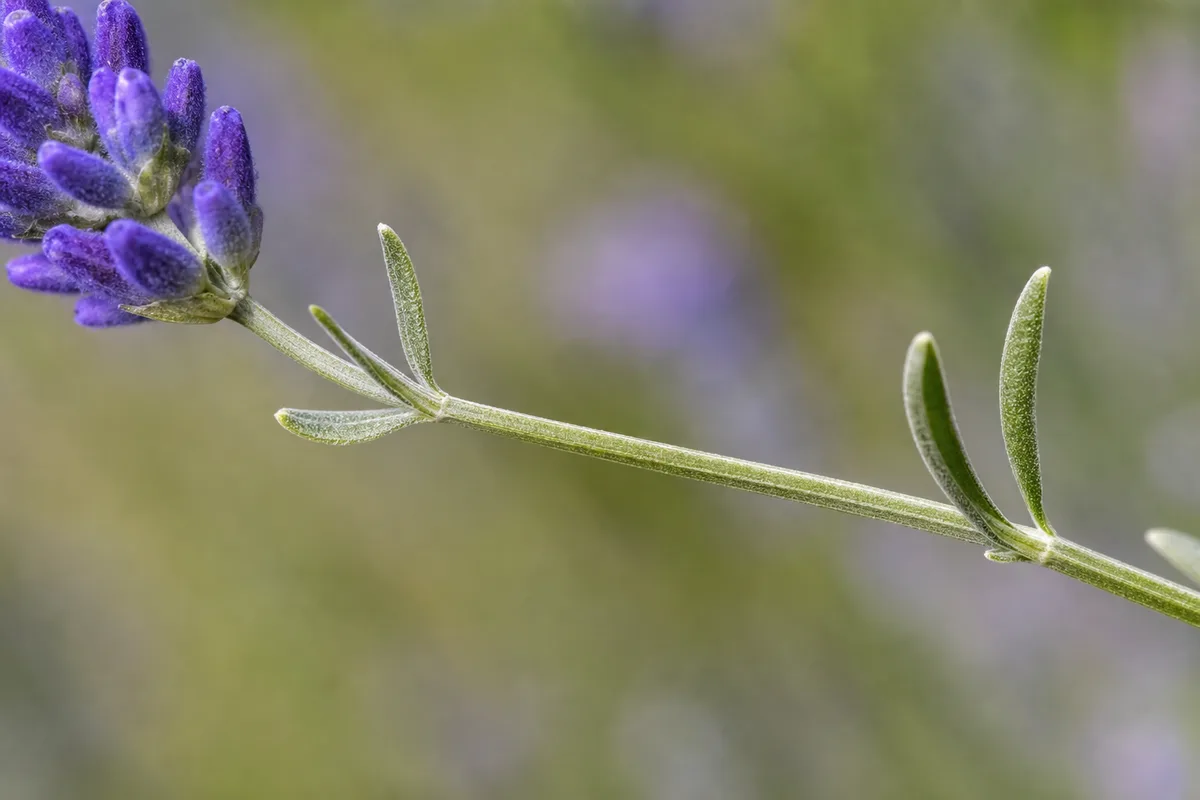
Leggy Growth symptoms on Lavender - compare with healthy tissue on the same plant.
- Wide internode gaps between pairs of narrow grey-green leaves compared with last season’s compact wood
- Bare brown or grey lower stems with silvery foliage clustered only at the tips
- Old flower spikes still attached to upright long wood when pruning was skipped
- Lean toward one light vector when etiolation from weak sun is the co-cause
- Fewer, smaller blooms on thin terminal shoots when light and maintenance both slipped
Lavender is a woody subshrub, not a soft herbaceous perennial. Leaves attach along green semi-hardwood; once lower stems go leafless from shade or neglect, that bare zone does not refill on its own-new compact shoots emerge from nodes you leave above the cuts, not from bark-covered old wood.
Etiolation vs. natural woody aging
Etiolation means stems elongate searching for photons-internodes stretch, new growth may look pale, and pots lean toward windows. It often pairs with under six direct hours on the leaves. Natural aging on very old plants can leave a woody base, but current-season shoots in full sun should still look firm and grey-green with reasonable flower potential.
Suspect culture-caused legginess when stretch appears on young or middle-aged stock, when old bloom wands persist, or when a neighbor rosemary in the same spot looks bushy while your lavender does not.
English containers vs. lavandin hedges
Nursery tags matter. English lavender (L. angustifolia) is bred for compact mounds in pots. Lavandin (L. × intermedia) grows taller and wider-open bare bases on an unshorn hedge are often missed hedge shearing, not the same diagnosis as a stunted patio pot. Spanish (L. stoechas) and French (L. dentata) types need gentler pruning than English stock-see species notes on the lavender overview and light guide.
Why lavender gets leggy
Two maintenance failures cause most leggy English lavender in containers-and they often stack.
Insufficient direct sun (etiolation)
Lavender evolved on dry rocky Mediterranean hillsides. Grow in average, dry to medium, well-drained, alkaline soil in full sun-partial shade or bright indoor shelves without direct rays produce stretched, flower-poor plants. Indoor “bright” corners, north-facing balconies, and pots under deep eaves frequently deliver far fewer than six hours of true direct sun on the foliage while the room still feels luminous.
Lower narrow grey-green leaves drop from shaded wood; stems elongate and lean. Full light correction protocol-including acclimation-lives on not enough light; this page assumes you will route there when the sun-hour test fails.
Missed post-flowering prune (tip-only regrowth)
Lavender blooms on upright wands. When spent flowers stay attached, the plant invests in length at the tips instead of side branching. Without the annual rhythm-remove bloom stalks and shorten green stems by roughly one-third to one-half after flowering-woody bases dominate and new growth clusters at the ends.
Prune to shape in spring after new leaves appear, and plan harder renewal every few years on established plants-but never into leafless old wood. The RHS lavender growing guide warns that lavender does not break new growth easily from old stems-cuts must stay in leafy tissue. Full technique and old-wood ceilings are on the lavender pruning guide.
Overfertilizer in low light
Heavy nitrogen in mediocre light produces soft pale shoots with reduced fragrance. Lavender thrives in somewhat low fertility-fix sun and skip feed before chasing bushiness with fertilizer.
How to confirm the cause
Light vs. prune decision table
| What you see | Direct sun on foliage | Stem pattern | Old spikes on wood | Most likely cause | First action |
|---|---|---|---|---|---|
| Lean, pale tips, poor bloom | Under 6 hours | Tilts toward brightest direction | May be present | Insufficient light | Not enough light - audit and acclimate |
| Upright long bare wood, tip foliage | 6+ hours | Stands vertical | Still attached | Missed post-bloom prune | Prune one-third in green wood after bloom |
| Both lean and old spikes | Under 6 hours | Mixed | Present | Light + prune neglect | Fix sun first, then post-bloom cut |
| Soft shoots, weak scent | Any | Elongated pale growth | Variable | Overfertilizer in dim culture | Stop feed, increase sun |
| Wilting on wet shaded mix | Any | Weak base | Any | Crown or root rot | Crown rot - do not hard-prune mushy crowns |
Numbered confirmation checklist
- Sun hours on leaves - Track when sharp shadows hit foliage from mid-morning through afternoon. Full sun means six or more hours of direct sunlight daily for English lavender-fewer hours implicates light even if the pot “feels sunny.”
- Stem pattern - Strong one-direction lean confirms phototropism. Upright bare wood with persistent spikes points to prune neglect in adequate sun.
- Internode length - Compare new shoots to last year’s wood; visible stretch confirms etiolation when sun is low.
- Prune history - Did last season’s wands come off? Was a post-flowering one-third reduction skipped?
- Root and crown check - Firm crown on dry gritty mix supports maintenance fixes. Mushy base on wet soil means rot protocols before heavy shearing.
- Plant age and type - Seedlings belong on leggy seedlings; multi-year woody specimens may need renewal limits from the pruning guide.
First fix for lavender (by likely cause)
When sun hours pass (6+ on foliage) and old spikes remain: remove spent flower wands, then cut each long stem back by about one-third, angling just above healthy green nodes. That is the prune-first path this page owns-distinct from the light-first acclimation sequence on not enough light.
When sun hours fail: relocate and acclimate before any one-third heading cut. Hard pruning a light-starved plant removes leaf area it needs to recover photon capture.
When only the base is bare but green remains higher on stems: stay in leafy tissue. Lavender does not sprout reliably from bare old wood-do not cut below the lowest green leaves hoping for magic regrowth. Multi-year hollow shrubs with green only at tips are often replace, not rescue; see rejuvenation limits on lavender pruning.
Make cuts with clean bypass secateurs. Wait until some new growth starts in spring before hard shaping if bloom season has passed and you missed the post-flowering window-avoid heavy fall cuts that leave soft tissue exposed to frost.
Step-by-step recovery (prune-focused)
Use this sequence when sun is already adequate and morphology points to maintenance neglect. If the sun-hour test fails, start on the not enough light path instead.
- Inspect crown and roots - Firm dry base supports pruning. Soft crown on wet mix means fix drainage and rot risk before shearing.
- Remove spent flower spikes down into the foliage to expose the green-wood line on each stem.
- Cut one-third off long stems, staying clearly above the lowest green leaves on every wand.
- Strip dead lower foliage only-leave living grey-green leaves on each shortened stem to feed recovery.
- Water when mix is dry 7 cm deep per the watering guide-do not keep a shaded-watering schedule on a full-sun plant.
- Hold fertilizer until new shoots are firm; lean soil supports compact regrowth.
- Rotate the pot weekly if light is directional until new shoots fill evenly along stems.
Worked example: north balcony to compact mound
A container L. angustifolia on a north railing received roughly three direct hours on the leaves while the apartment felt bright. Internodes stretched; lower stems went bare. Over seven days the pot moved to an unobstructed south edge with stepped sun exposure (see acclimation detail on not enough light). After late-summer bloom, spent wands came off and stems were shortened by one-third above green nodes. Compact silver shoots emerged along cut stems within three weeks in warm full sun-old bare wood did not leaf out; only new nodes below the cuts bushed up.
Recovery timeline
Stretched woody sections never shrink-only forward growth looks compact. After correct green-wood pruning in full sun, most healthy English lavender pushes side shoots within two to four weeks in warm weather. Blooms return on fresh wood the next flowering cycle, not necessarily the same season if recovery started mid-summer.
If nothing sprouts after a month in warm sun with a firm crown, inspect roots for rot or confirm cuts stayed in green tissue-not into bare bark. Chronic bare bases after years without annual pruning may not rejuvenate even with better light; replacement is often more honest than repeated hard cuts into old wood.
Causes to rule out
- Insufficient light - under six direct hours; see not enough light.
- Seedling stretch - soft young tray stems; see leggy seedlings.
- Root rot - wilting with wet soil and sour mix; light or prune fixes alone will not save mushy roots.
- Winter indoor stretch - temporary etiolation on a windowsill; move outdoors to sun when weather allows, then prune after bloom.
- Natural end of life - very old plants with all-woody interiors and tip-only green may need replacement despite correct culture.
What not to do
Do not keep leggy lavender in the same shady spot and expect fertilizer to fix structure. Do not prune heavily in fall-wait for spring new growth before firm shaping if you missed the post-flowering window. Do not cut into leafless brown wood expecting new sprouts-the RHS notes lavender does not break easily from old stems.
Do not stack repotting, heavy pruning, and relocation on the same day. Do not remove every leaf-each stem needs foliage to recover. Avoid treating lavandin hedges like compact English patio pots without accounting for taller growth habit.
How to prevent leggy growth next time
Place pots in full sun from the start with gritty alkaline drainage per the soil guide. Plan an annual post-flowering prune removing about one-third of green stem length and remove faded flowers to promote continued bloom.
Feed once in early spring at most-lavender does not need heavy nitrogen. Mark your calendar for late summer after bloom on English lavender in temperate climates; that single session prevents the upright bare-wood look far more reliably than emergency spring reconstruction.
Rotate containers weekly on directional balconies so all sides branch evenly. Replace tired specimens after several years when rejuvenation pruning no longer produces compact regrowth from remaining green wood.
When to worry
Leggy form alone is maintenance, not an emergency-act before long stems flop in wind or snap under flower weight. Escalate when the crown feels soft, stems collapse at the base, or wilting persists on wet soil-those signs point to crown or root rot, not legginess alone.
If a firm plant shows no new shoots after a month in warm full sun following correct green-wood cuts, inspect roots before cutting harder into old wood. When green exists only at branch tips and the interior is hollow bark, consult lavender pruning for replacement timing rather than repeated rescue shearing.
Frequently asked questions
My lavender is in full sun but still looks leggy-what else should I check?
Verify six or more direct hours on the leaves, not just beside the pot. Check for old flower wands on upright bare stems-a sign the post-bloom prune was skipped. Confirm you are not holding a lavandin hedge to English mound standards. Remove spikes and cut one-third into green wood after flowering; bare brown sections will not leaf out without heading cuts above remaining foliage.
How do I tell leggy lavender from normal woody aging?
A healthy mound carries foliage along most green stems. Leggy culture shows tip-clustered leaves, long internodes, and often persistent bloom stalks. Some woody base on old plants is normal, but new season growth in full sun should stay compact-not pale, leaning, and flower-poor on thin wands.
Can I fix leggy lavender without cutting into old wood?
Yes when green leaves remain on stems you shorten. Post-flowering cuts stay about one-third into current green growth, just above nodes. Lavender does not regrow from bare old stems-stretched bare zones never refill without cuts above living tissue. All-woody plants with green only at tips usually need replacement; see lavender pruning.
Is leggy growth on lavender seedlings the same problem?
No. Seedling stretch is a propagation-bench light issue on soft stems-route to leggy seedlings. This page covers mature woody subshrubs with multi-year bloom cycles and maintenance pruning rhythm.
When should I worry that leggy lavender will not recover?
Worry when the crown is soft on wet soil, stems collapse, or no sprouts appear after a month in warm sun despite correct green-wood pruning. Leggy shape alone is slow decline. Multi-year bare interiors with no response to light and annual pruning mean replace rather than chase regrowth from bark.
Conclusion
Leggy lavender is a visible maintenance report: bare woody stems and tip-clustered foliage mean missed post-bloom pruning, too little direct sun, or both. Use the decision table-lean and low sun hours route to not enough light; upright wood with old spikes in six-plus hours means prune one-third in green tissue after bloom. Old stretched sections never compact without cuts, and bare brown wood does not sprout-judge success by new silver shoots along shortened stems, not by hoping naked bases refoliate. When pruning limits or species depth matter, continue on lavender pruning and lavender light.