Lavender Fertilizer: When, How, and Mistakes to Avoid
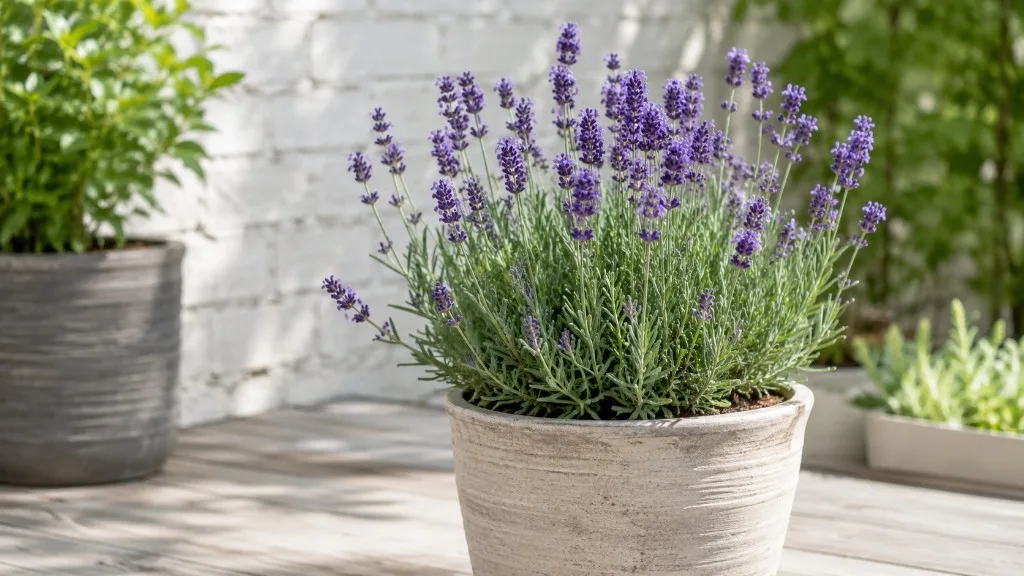
Lavender Fertilizer: When, How, and Mistakes to Avoid
Lavender Fertilizer: When, How, and Mistakes to Avoid
Lavender fertilizer is one of those topics where the internet overcomplicates a simple rule and then contradicts itself. Lavandula angustifolia and its relatives evolved on lean, alkaline, fast-draining slopes around the Mediterranean - places where nutrients are scarce, water drains in minutes, and summer sun is relentless. That history matters more than any product label. Lavender is a low feeder. It wants light nutrition, ideally from a low-nitrogen formula, applied sparingly and early in the growing season. Push nitrogen the way you would on tomatoes or lawn grass, and you get the opposite of what you bought the plant for: soft, leggy stems, fewer flower spikes, weaker fragrance, and roots that stay wet too long in rich soil.
The practical goal for most home growers is conservative: use a low-nitrogen, slow-release or diluted liquid fertilizer - think 5-10-10, 5-10-5, or a dedicated herb/Mediterranean blend - once in early spring as new growth starts. Established plants in lean, well-drained garden soil may need no supplemental feed at all. Container lavender on a sunny balcony may benefit from half-strength liquid every four to six weeks through mid-summer, then nothing until next spring. Stop all feeding by mid-summer so new tissue can harden before cold weather. When in doubt, skip the feed - lavender fails from generosity far more often than from neglect.
This guide covers why lavender needs less than most plants, when and how much to feed, which NPK ratios work, how to read deficiency versus burn, and the mistakes that cause more damage than missing one season of fertilizer ever would.
Why Lavender Needs Less Fertilizer Than Most Plants
Lavender is not a hungry annual. It is a woody perennial shrub - typically reaching 30–90 cm tall and 60–90 cm wide in cultivation - that builds structure slowly and invests heavily in essential oils, not rapid leaf mass. In its native range across Spain, southern France, and Italy, it grows in sandy, gravelly, low-fertility soils with a pH around 6.5–8.0. Those conditions are not a hardship lavender tolerates; they are the environment its roots and foliage chemistry expect.
UMass Amherst’s lavender production guidance notes that lavender does well in low-fertility soils and that excessive nitrogen applications can decrease essential oil quality and make plants unhealthy, while also encouraging weed competition (UMass Amherst - Lavender Production). Commercial guidance for mature field plantings caps nitrogen at roughly 50 lb. N per acre - a fraction of what heavy-feeding crops receive. That context reframes home feeding: a tablespoon of high-nitrogen soluble fertilizer in a 25 cm pot is not “a little boost.” It is a concentrated shock to a plant adapted to scarcity.
Extension and production guidance on English lavender describes it as a low feeder that thrives in mineral-rich but nutrient-poor environments, with many growers avoiding synthetic fertilizers entirely and relying on natural soil mineral breakdown. High nitrogen, UMass Extension notes, drives rapid, leggy growth that lacks the structural strength to support heavy flower spikes - soft tissue that is also more vulnerable to pests and frost. Illinois Extension puts it plainly: added fertilizer is not necessary - lavender is more likely to suffer from over-fertilization than from nutrient lack when drainage and sun are correct.
Think of fertilizer for lavender as optional maintenance in lean conditions, not a default monthly chore. Fix Lavender light guide, gritty well-draining soil, and infrequent deep watering first. Only then consider a light spring feed if growth looks pale, sparse after year two, or the plant sits in a container that leaches nutrients with every watering.
When to Fertilize Lavender: Active Growth vs Rest
Timing follows lavender’s metabolism, not a generic houseplant calendar. Feed when the plant is actively pushing new shoots and preparing flower buds, and stop well before growth that will not harden off before winter. Lavender has a narrow useful nutrient window compared to fast-growing foliage annuals - miss that window or extend it too late, and you create problems that no amount of feeding next year will quickly undo.
Indoor lavender in a bright window may show some winter growth, but metabolic demand still drops with shorter days and cooler roots. Feeding a plant that is not using nutrients is how soluble salts accumulate - the same salts that show up as white crust on soil and brown leaf margins. Outdoors, the rhythm is clearer: spring wake-up, summer bloom, autumn hardening, winter rest.
Early Spring Feeding Window
The best time to fertilize lavender - if you fertilize at all - is early spring, just as new green shoots emerge from the base and before flower buds swell. In temperate climates (USDA Zones 5–9 for most English lavender), that usually falls between late March and mid-April, roughly two to three weeks after the last frost when soil temperatures at 5 cm depth stay consistently above 10°C (50°F). The goal is to support the coming season’s roots and flower production, not to force lush foliage.
Illinois Extension recommends a very dilute, balanced low-nitrogen liquid at half or quarter strength, or a slow-release granular formula for herbs or Mediterranean plants, applied once in early spring as new growth begins. Some growers add a second, lighter application in late spring or early summer, about four to six weeks before peak bloom, if the plant is in a container and showed active growth after the first feed. That second dose is optional - not a requirement - and should stay low in nitrogen.
| Month (temperate climate) | Growth phase | Feeding guidance |
|---|---|---|
| March–April | Breaking dormancy, new shoots | One light feed if needed; low-N slow-release or half-strength liquid |
| May–June | Stem elongation, bud formation | Optional second half-strength feed for containers only |
| July | Peak bloom | No new feeding; plant is in reproductive mode |
| August–September | Growth slowing, hardening off | Stop all fertilizer; prepare for dormancy |
| October–February | Rest / minimal growth | No fertilizer |
The table is a framework. A lavender in a sunny Mediterranean-climate garden with gravel mulch may need zero rows filled in. A lavender in a 20 cm terracotta pot on a hot balcony may sit at the container end of the schedule. Watch the plant: compact gray-green foliage, sturdy stems, and abundant spikes mean nutrition is adequate. Floppy, bright green, overly lush top growth after feeding means you already went too far.
Mid-Summer Cutoff and Dormancy Pause
Never fertilize lavender in late summer or fall. Late-season nitrogen pushes tender new growth that will not lignify before frost, increasing winter dieback and rot risk at the crown. Illinois Extension advises against fall pruning and heavy feeding that promotes soft growth before winter dormancy.
From late summer through winter, hold all fertilizer. Most lavender - whether in garden beds or pots - rests with reduced root activity. University of Maryland Extension notes that excessive or frequent fertilizer use is a primary cause of high soluble salts in container plants, with symptoms including brown leaf tips and marginal necrosis (University of Maryland Extension - Fertilizer Toxicity). Winter feeding on a plant metabolizing slowly is an easy path to exactly that damage, especially indoors where evaporation is lower and salts concentrate faster.
If you grow lavender under strong supplemental lights indoors and it keeps producing new shoots all winter, you still feed lightly at most - half strength, six- to eight-week intervals - and only if the plant is clearly active. For typical home setups, November through February means no fertilizer, full stop.
Best Fertilizer Type for Lavender
The best lavender fertilizer is one you barely use: a complete formula with nitrogen lower than phosphorus and potassium, released slowly enough that roots never sit in a concentrated salt spike. You are not trying to maximize leaf area. You are supporting root function, flower initiation, and drought tolerance without triggering the soft vegetative surge that high nitrogen causes on Lavender overview.
Avoid shopping by the word “lavender” on the bottle unless you trust the NPK on the label. A generic 10-10-10 or 20-20-20 at full strength is a common reason home plants fail - equal or nitrogen-heavy ratios are designed for hungry crops, not Mediterranean shrubs.
Low-Nitrogen NPK Ratios That Work
Look for NPK ratios where the first number is the smallest - or at least not dominant. Practical examples:
- 5-10-10 or 5-10-5 - widely recommended for lavender and other Mediterranean herbs
- 2-4-2, 3-4-5, or 3-9-4 - organic herb blends with modest nitrogen
- 0-10-10 - acceptable in soils that already carry adequate nitrogen; use only when a soil test supports it
Low-nitrogen formulas with higher phosphorus and potassium relative to nitrogen - ratios like 5-10-10 or even 0-10-10 in lean soils - are widely recommended for Mediterranean herbs. The logic is straightforward: phosphorus supports root development and flowering; potassium improves drought tolerance, cell wall strength, and winter hardiness; nitrogen in excess drives leafy sappy growth that lavender does not need and actively suffers from.
Why high nitrogen is the main enemy: Nitrogen is the nutrient most associated with vegetative expansion - bigger leaves, longer stems, faster soft tissue formation. On lavender, that translates to leggy plants with fewer, weaker flower spikes and, according to commercial and extension observations, reduced essential oil concentration in the foliage (UMass Amherst). The plant smells and performs best when slightly stressed in lean conditions - not when pumped with lawn-grade nitrogen.
What about “balanced” 10-10-10? If you already own a balanced soluble formula, you can use it only at half or quarter strength, once in spring, and only for container plants showing clear need. It is not the ideal ratio, and repeated use at full strength pushes nitrogen too high. Dedicated low-N herb or Mediterranean plant formulas remove the guesswork.
Liquid fertilizers offer dose control - you mix, dilute, and apply a known amount to moist soil. Slow-release granules labeled for herbs or low-feeding perennials work for in-ground plantings where one spring application should last the season. Never stack slow-release granules with monthly liquid feeds unless you are deliberately trying to over-feed.
Organic, Slow-Release, and What to Skip
Organic options that fit lavender’s philosophy include composted manure used sparingly at planting (UMass notes composted manure and bone meal at establishment), bone meal for slow phosphorus at planting or in very lean soil, kelp meal for trace minerals and modest potassium, and worm castings as a light top-dressing in early spring. These release slowly and align with lavender’s low-demand rhythm better than concentrated synthetics applied on a aggressive schedule.
Slow-release granular herb fertilizers (often in the 3-4-5 or similar range) suit garden beds where one application in spring matches the plant’s single nutrient window. In small indoor pots, granules can release unpredictably with fluctuating temperature and moisture - liquid at half strength usually gives cleaner control.
What to skip:
- High-nitrogen lawn fertilizers - even organic lawn products; runoff alone can trigger unwanted foliage growth near garden beds
- Full-strength balanced synthetics (10-10-10, 20-20-20) on a monthly schedule
- Bloom boosters high in phosphorus (>10% P₂O₅) unless a soil test shows deficiency - excess phosphorus builds up and can interfere with micronutrient uptake in poorly drained soils
- Fresh manure - high nitrogen and soluble salts; UMass Extension warns excess nitrogen decreases oil quality and encourages weak growth
- Fish emulsion at full strength - often too rich in ammonia-nitrogen for lavender’s delicate root zone; if used at all, dilute heavily and treat as a rare supplement, not a monthly feed
- Foliar feeding and fertilizer-pesticide combos - unnecessary for routine lavender care
Pet note: The ASPCA lists lavender (Lavandula species) as toxic to cats and dogs, with ingestion causing nausea, vomiting, and central nervous system depression (ASPCA - Lavender). Lavender essential oil is highly concentrated and especially dangerous to cats. Concentrated fertilizer solution and crusty salted soil are not safe for pets to ingest either. Keep plants, runoff saucers, and stored products out of reach.
How Much Fertilizer Lavender Actually Needs
If you remember one rule, make it half strength - or less - applied rarely. Lavender’s commercial nitrogen ceiling in mature field production (~50 lb. N/acre) translates at home to teaspoons, not handfuls, and often to zero in established garden plantings.
For in-ground lavender in well-drained, lean soil amended with grit at planting: no supplemental fertilizer is often correct for the life of the plant. If you amended the planting hole with a small amount of compost and the plant grows vigorously with gray-green foliage and strong bloom by year two, assume the soil is sufficient. A single light application of slow-release low-N granules in early spring - half the label rate for shrubs or herbs - is the upper limit for most garden situations.
For container lavender: mix liquid fertilizer at half the label strength (or quarter strength if the label rate targets heavy feeders), apply until a little water drains from the bottom, and discard saucer runoff so roots are not sitting in concentrated salts. A typical 25–30 cm pot in full sun might receive 250–500 ml of half-strength solution per feeding event - enough to moisten the root zone without flooding. Exact volume depends on pot size and mix; the principle is moisten thoroughly, do not saturate repeatedly on a fixed calendar.
Newly planted lavender rarely needs fertilizer beyond what was mixed into the planting medium. The first season is about root establishment, not pushing top growth. UMass used composted manure and bone meal at planting in their extension trial but emphasized low ongoing nitrogen for mature plants (UMass Amherst). If you added compost to the hole and used a gritty mix, skip feed until year two unless growth is clearly stunted with all other care correct.
When interpreting fertilizer labels, the first number is percent nitrogen by weight in the package’s N-P-K statement. A “light” feed on lavender means low percentage AND low application frequency AND dilution - all three matter. A 5-10-10 applied once at half rate in spring is conservative. A 24-8-16 applied monthly at full strength on a pot is aggressive enough to cause leggy growth within a single season.
How Often to Fertilize Lavender
Frequency is where most growers overshoot. Lavender is not tomatoes. It is not petunias. It is a woody aromatic shrub that completes most of its nutrient uptake in a short spring window.
In-ground, established lavender: Zero to one application per year, early spring only. Many successful garden plantings never receive supplemental feed after the first year.
Container lavender in active outdoor growth: Every four to six weeks at half strength from first spring feed through mid-July at the latest, for a total of two to three applications per season in most cases. Some growers stop after one or two feeds and still get excellent bloom.
Indoor lavender with strong grow lights: At most every six to eight weeks at half strength while new shoots are actively forming - and many indoor plants need no fertilizer at all if repotted into fresh gritty mix annually.
Never:
- Feed on the same schedule as your leafy houseplants
- Feed every watering with a weak constant dose - salts accumulate faster than lavender uses them in small pots
- Feed in late summer, fall, or winter for typical setups
- Feed immediately after Lavender repotting guide, during drought stress, or when roots may be damaged
If your lavender blooms heavily, holds a compact shape, and produces fragrant gray-green foliage without any fertilizer, do not start feeding because the calendar says spring. The plant is telling you the current nutrition level is adequate. Fertilizer is a tool for correcting lean conditions or container depletion - not a loyalty program you must redeem every year.
Step-by-Step: How to Feed Lavender Safely
Confirm timing (spring to early summer only, with visible new shoots). Mix a low-N product at half label strength. Water the day before if soil is dry. Apply to moist soil at the drip line, not the woody crown or foliage. Allow slight drainage and empty the saucer. Record the date and wait at least four weeks before another feed (containers) or until next spring (in-ground). Flush monthly with plain water during any active feeding period to leach residual salts.
Pre-Feed Checks and the Moist-Soil Rule
Before any fertilizer touches lavender, run a quick checklist:
- Season: Is it spring or early summer? If not, stop.
- Growth: Are new shoots or bud initials visible? If the plant is static, fix light and water first.
- Stress: Is the plant drought-stressed, wilted, or recently repotted? If yes, wait two to four weeks.
- Soil moisture: Is the mix moist an inch below the surface? If dry, plain water first and feed tomorrow.
- Salt crust: Is there white residue on the soil surface? If yes, flush with plain water and skip feeding for four to six weeks.
- Nearby nitrogen sources: Did you or a neighbor recently apply lawn fertilizer? If yes, skip lavender feed entirely this season.
The moist-soil rule is non-negotiable: never apply fertilizer concentrate to dry roots. Lavender already tolerates drought by slowing uptake; dry roots hit with salts suffer osmotic shock - water literally pulled out of root cells - faster than many other herbs. Water with plain water first, wait until the pot feels evenly moist, then apply diluted feed.
Signs Your Lavender Needs More Nutrition
True nutrient deficiency in lavender is less common than over-feeding, especially in garden beds. Before assuming hunger, rule out insufficient sun (lavender needs six or more hours of direct sun for compact growth), overwatering (the most common killer in pots), and heavy soil that holds moisture around the crown. Fertilizer will not fix any of those.
When other care is correct and the plant still struggles, deficiency signs include:
- Pale or yellowing older leaves while veins stay relatively green - can indicate nitrogen lack, but also waterlogging or pH drift
- Stunted new growth after the second year in the same container without repotting - often leaching and root-bound depletion rather than garden soil poverty
- Fewer flower spikes year over year on a mature plant in gritty soil that was never amended - may respond to one light spring feed
- Overall lack of vigor in very sandy beds where organic matter is below 1.5% and a soil test confirms low phosphorus or potassium
Newly planted lavender rarely needs additional fertilizer if the hole was amended with compost and drainage is good - focus on establishment. Illinois Extension adds that if the plant looks healthy and blooms well, assume no additional nutrition is required.
If you suspect deficiency, a soil test beats guessing. Randomly adding nitrogen when phosphorus or pH is the limiting factor makes problems worse. For containers, repotting into fresh gritty mix often resolves “hunger” without any fertilizer at all.
Signs of Over-Fertilizing and High-Nitrogen Damage
Over-fertilizing - especially with high nitrogen - is the dominant fertilizer mistake on lavender. Symptoms often appear weeks after the feed, when salts accumulate and soft growth collapses under its own weight or cold stress.
Watch for:
- Bright green, overly lush foliage on a plant that should stay gray-green and compact
- Leggy stems with long internodes and weak flower spikes that flop
- Reduced fragrance in leaves and flowers - linked in production literature to excessive nitrogen and oil dilution (UMass Amherst)
- Brown leaf tips and margins - classic salt burn
- White crust on the soil surface - soluble salts left behind as water evaporates
- Sudden leaf drop or browning after a feed, especially if applied to dry soil
- Increased aphid or soft-rot problems on tender new growth pushed late in season
- Winter dieback worse than normal after late-season feeding promoted vulnerable tissue
High-nitrogen damage and salt burn can overlap. Nitrogen pushes growth; salts desiccate margins. Both trace to feeding too much, too often, or with the wrong formula. If your lavender looked better before you started “helping” it with monthly 20-20-20, trust that observation - pull back hard.
How to Recover Lavender After Over-Feeding
Stop all fertilizer immediately. Flush the root zone with plain water several times over a week until drainage runs freely; discard saucer runoff. If mix stays wet for days, repot into grittier soil once the plant stabilizes. Prune soft leggy stems to woody tissue at the next early-spring window. Wait four to six weeks before judging recovery - browned tips will not green up; new gray-green basal shoots mean salt load has dropped. Resume feeding only next spring at half strength once, or not at all if the plant rebounds without it.
Seasonal and Situational Adjustments
Lavender schedules bend toward less feeding, not more. Year one: no liquid feed unless planted in pure grit with clear stunting - compost at planting is enough. Years two through five: at most one spring feed in-ground; containers may take two to three half-strength liquids through mid-summer. Mature in-ground plants often need no fertilizer again if bloom and scent stay strong. Do not increase feeding during drought - water deeply instead. Delay spring feeds until shoots elongate in cool weather, and wait until new growth is 2–5 cm long after hard pruning before any application.
Containers vs In-Ground and After Repotting
Container lavender leaches nutrients every time you water to drainage. The soil volume is tiny compared to a garden bed. That is why containers tolerate slightly more frequent feeding - still low-N, still half strength, still only spring to mid-summer - while in-ground plants often need nothing.
Terracotta pots dry faster and leach more; plastic retains moisture longer - adjust watering first, then feeding. A lavender that dries every two days in July may need a second summer feed; one that stays damp a week after watering needs no fertilizer until drainage is fixed.
After repotting, pause fertilizer for four to six weeks. Fresh mix usually contains enough starter nutrition, and root edges are sensitive. Illinois Extension emphasizes root establishment over top growth for new plants. Let the plant settle, then consider one spring feed next year.
In-ground lavender benefits from gravel mulch and lean soil more than from annual fertilizer. If you enrich surrounding beds heavily for vegetables, keep lavender in a separate lean zone so runoff does not deliver hidden nitrogen.
Fertilizer and Other Lavender Care
Fertilizer only works when light, water, and soil are already aligned. Lavender needs six or more hours of direct sun; shaded plants stretch and need less or no feed. Water infrequently once soil dries at depth - overwatering mimics deficiency but fertilizer worsens soggy roots. Target pH 6.5–8.0 and gritty, fast-draining mix; no NPK compensates for heavy clay. Annual pruning and spent-spike removal often produce strong bloom on lean soil without any feed. New cuttings need no fertilizer until rooted and actively growing. If bloom stays poor after year three with correct culture, soil test before escalating products.
Common Lavender Fertilizer Mistakes
The failures repeat: high-nitrogen or lawn fertilizer (leggy growth, lost scent), monthly full-strength feeds meant for houseplants, late-season applications that invite winter dieback, and feeding dry or stressed roots that burn within days. Avoid stacking rich compost, manure, granules, and liquid in the same season - pick lean soil plus optional light spring feed. Flush salts monthly in fed containers, treat yellow leaves as overwatering first, and never expect NPK to fix shade or soggy mix.
Conclusion
Lavender fertilizer success looks boring from the outside: a compact gray-green plant, stiff stems, heavy scented spikes, and a feeding history you can count on one hand. That is the point. Lavender evolved on lean ground; it performs best when you respect that heritage with light, low-nitrogen feeding in early spring, half-strength doses in containers only when needed, and silence from mid-summer through winter. High nitrogen is the mistake to avoid - it trades the qualities you grow lavender for (structure, bloom, scent) in exchange for temporary lushness that collapses under heat, rain, or frost.
Start with sun, grit, and restraint. If established plants bloom well without feed, leave them alone. If container plants fade after year two, offer one or two diluted low-N applications between spring and mid-July, flush salts monthly, and reassess. When something looks wrong, check water and drainage before assuming hunger - and when burn or legginess appears, flush, pause, and recover rather than doubling down. Lavender rewards the grower who feeds less, not the one who feeds most.
When to use this page vs other Lavender guides
- Lavender overview - Start here for whole-plant context before deep-diving this topic.
- Lavender problems hub - Jump to symptom-specific fix guides when this care topic does not resolve the issue.
- Nitrogen Deficiency on Lavender - Escalate here when fertilizer adjustments are not enough.