Weak Stems on Lavender: Causes, Checks & Fixes
Quick answer
Weak stems on lavender are pale, floppy wands that bend without wind-usually from excess nitrogen, chronic overwatering, old unpruned hollow wood, or seedling stretch in dim trays. Shade etiolation is a related but separate problem covered on the leggy-growth page. First step: squeeze the crown at soil line. If firm, identify the cause from the table below and correct culture before staking or pruning.
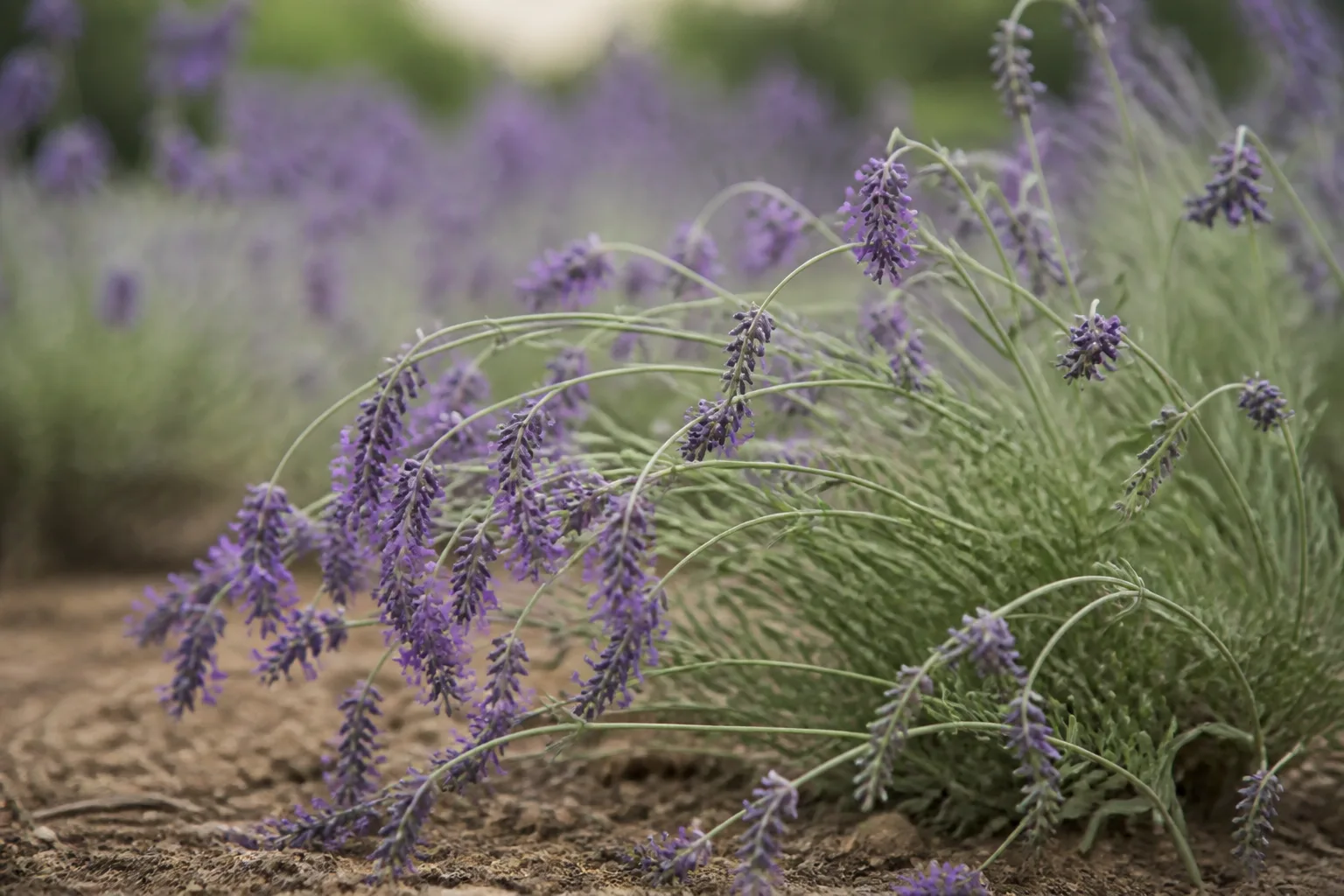
Weak Stems on Lavender: Causes, Checks & Fixes
This guide covers weak stems on Lavender. See also the general Weak Stems guide, watering, and light pages for this plant.
Weak Stems on Lavender: Causes, Checks & Fixes
Quick answer
Weak stems on English lavender (Lavandula angustifolia) and lavandin (L. × intermedia) show up as pale, floppy wands that bend under their own weight without wind-not the normal slight flex of a tall bloom spike on a firm silver base. The usual culprits are excess nitrogen, chronic overwatering, years without renewal pruning, or leggy seedlings in dim trays. Pure shade stretch (long internodes reaching for light) overlaps this page but is covered in depth on leggy growth.
First step: squeeze the crown at the soil line. A firm hard base means culture or pruning fixes apply. A mushy grey base in wet mix is rot-see crown rot before you stake anything.
What weak stems look like on lavender
Healthy container lavender forms a compact mound of semi-woody silver stems. Weak stems break that pattern in recognizable ways:
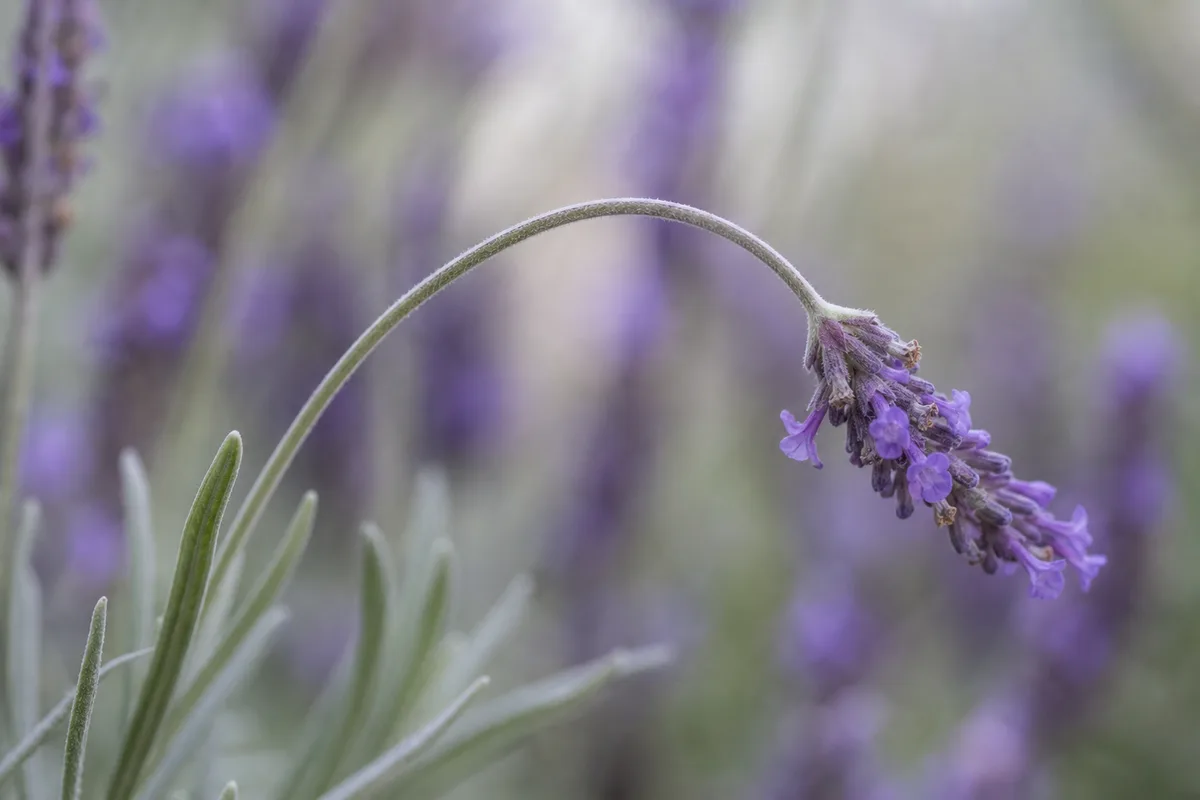
Weak Stems symptoms on Lavender - compare with healthy tissue on the same plant.
- Long pale internodes between sparse needle leaves, with the whole wand flopping horizontally
- Soft limp green-silver tissue that feels rubbery rather than firm when you bend it
- Multiple shoots collapsing from an open, hollow center on old unpruned plants
- Tender lush wands after a nitrogen feed-often wider leaves and weak fragrance
- Thin stretched seedlings in seed trays (distinct from mature weak wands)
Symptom photo reference
Use these field marks at the crown and along the wand. Normal bloom-wand flex: the woody base at soil line stays hard and silver; only the top third of a tall flower spike arcs in wind while lower stem tissue feels firm like a pencil. Nitrogen-fed weak wands: entire shoots stay pale green, feel rubbery tip to base, and often show wider leaves with reduced scent-the crown may still be firm. Hollow-center flop: long bare gaps in the middle of the mound with only a thin green fringe at the tips; outer wands hinge outward from an open woody bowl. Container vs. in-ground: pots on railings flop from soft culture faster than hedge plants because limited root volume and wind leverage amplify weak tissue-same causes, faster visual drama in a 30 cm terracotta pot.
Weak entire plant vs. normal bloom-wand flex
This distinction matters because many growers misdiagnose normal harvest wands as “weak stems.”
| Pattern | Base at soil line | Stem texture | Likely issue |
|---|---|---|---|
| Whole mound flops; long bare gaps between leaves | Firm and woody | Soft green upper wands | Culture: nitrogen, overwater, or hollow wood |
| Only tall flower wands bend; mound stays upright | Firm and woody | Firm lower stem, flexible tip | Normal bloom weight or wind-see plant leaning |
| Long internodes leaning one direction | Firm | Pale, stretched | Shade etiolation-see leggy growth |
| Collapse at soil line on seedlings | Pinched wet collar | Mushy at base | Damping off |
| Mushy grey base, wet pot, sour smell | Soft | Rotten lower stem | Crown rot or root rot |
Lavender is a woody subshrub. Once a stem section has stretched soft and floppy, it does not stiffen back-only new growth hardens to silver wood in sun, or you cut back to firm wood during renewal pruning.
Nitrogen-fed soft wands vs. shade-stretched pale wands
Both look floppy, but the fix path differs.
| Clue | Nitrogen excess | Shade etiolation |
|---|---|---|
| Recent feed or rich compost | Yes, within four to six weeks | No |
| Leaf width and scent | Lush wide leaves, weak fragrance | Narrow pale leaves, typical scent |
| Stem lean | Often upright but soft | Strong lean toward brightest window |
| Sun hours on foliage | May be adequate | Usually under six hours direct |
| First fix | Stop feed; full sun; dry-down water | Move to full sun-see leggy growth |
Why lavender stems weaken - five main causes
English lavender, lavandin, and French types - who flops how
English lavender (L. angustifolia) and lavandin (L. × intermedia) are the main subjects here-both form semi-woody mounds and respond to lean sun culture. Lavandin (cultivars like ‘Grosso’) grows taller with longer bloom wands on more vigorous stems; on windy balconies those wands snap or flop from bloom weight alone even when culture is sound-stake individual spikes, not the whole shrub. English types stay more compact; weak entire mounds on Munstead or Hidcote usually trace to nitrogen, water, or missed renewal prune rather than height alone. French lavender (L. stoechas) is shorter-lived and less hardy; weak floppy growth on French types in cold wet winters often means replace rather than heavy renewal prune-check hardiness before treating like English lavender.
Container vs. in-ground: In-ground hedges anchor through spreading roots and rarely flop from a single soft wand unless nitrogen or drainage failed site-wide. Containers concentrate mistakes-overwater keeps shoots soft, small pots tip in wind, and balcony heat accelerates lush nitrogen growth. The diagnostic tables below apply to both, but container growers should weigh pot weight and drain-hole flow on every check.
Shade legginess (etiolation)
Insufficient direct sun produces stretched pale shoots. Lavender demands full sun and dry well-drained soil; partial shade yields flower-poor, structurally weak plants. If long internodes and one-direction lean dominate the picture, read leggy growth and lavender light for the sun-hour audit-this page focuses on weak wands from feed, water, age, and seedlings rather than pure light deficit alone.
Excess nitrogen (tender lush wands)
Lavender evolved in lean Mediterranean soils and prefers somewhat low fertility. Excessive nitrogen encourages soft, succulent growth, leading plants to break apart in the center-general garden fertilizer, rich compost top-dress, or liquid feed on a schedule meant for leafy vegetables signals the plant to push soft vegetative growth. Stems elongate fast, stay green and tender, and flower poorly. The wands feel lush but lack the semi-woody strength sun-grown lavender normally develops. See lavender fertilizer for lean-feed recovery if you overfed recently.
Chronic overwatering (soft limp tissue)
Wet soil keeps lavender shoots physiologically soft. Root stress from dampness in poorly drained soil compounds the flop, especially in winter when cold wet soil is most damaging. Overwatered weak stems often sit alongside yellow-grey lower needles and a pot that stays heavy for days after watering. Cross-check your dry-down watering rhythm before blaming light alone.
Old unpruned hollow center
Lavender does not break new growth easily from old stems, so it does not sprout reliably from bare old wood. Without annual post-flowering pruning, the base becomes a thick tangle of hollow brittle stems with only a thin productive green layer at the tips. Those outer wands look long and floppy because the woody center no longer supports them-renewal pruning is the structural fix, not more sun alone on a neglected five-year-old mound. Even with annual pruning, older plants can become straggly and woody-fast-growing lavenders are often best replaced when green exists only at the tips.
Seedling stretch and damping off
Lavender seedlings in dim trays produce thin wands that cannot support themselves outdoors. That is leggy stretch, not mature weak wood-see leggy seedlings for the light protocol. If stems pinch and collapse wet at the soil line overnight, that is fungal damping off, not weak growth you can stake back upright.
How to confirm the cause
Work through these checks in order:
- Crown squeeze - Firm woody base vs. mushy grey rot at soil line
- Sun hours on the pot - Fewer than six hours of direct sunlight daily points to etiolation (leggy-growth page)
- Recent fertilizer - Any nitrogen feed in the last four to six weeks?
- Soil moisture - Does mix stay wet three or more days after watering?
- Plant age and prune history - Hollow open center with bare inner wood?
- Seedling vs. mature - Tray-grown thin stems vs. established pot?
- Flop pattern - Entire plant vs. only bloom wands on firm base?
- Container context - Heavy pot after watering, wind exposure on a railing?
Cause confirmation table
| What you see | Most likely cause | First action |
|---|---|---|
| Pale long internodes, one-direction lean | Shade etiolation | Move to full sun; see leggy growth |
| Lush soft green wands after feed | Excess nitrogen | Stop fertilizer; full sun; prune tender tips later |
| Soft limp stems + wet heavy pot | Overwatering | Dry-down water; check drainage and soil grit |
| Long bare center, floppy outer wands | Old hollow wood | Spring renewal prune into green wood |
| Thin tray seedlings falling over | Low light stretch | Grow lights; see leggy seedlings |
| Mushy collar, tray-wide collapse | Damping off | Remove affected seedlings; dry and ventilate |
| Mushy crown, grey stems, wet soil | Crown/root rot | Stop water; inspect roots-urgent |
First fix for lavender (by likely cause)
Match one action to your confirmed cause-do not stack repot, prune, feed, and relocate on day one.
If crown is firm and nitrogen is the trigger: stop all fertilizer, move to the sunniest spot, and let gritty mix dry before the next drink.
If overwatering softened stems: hold water until the top 5–7 cm of mix is dry, confirm drainage holes, and improve airflow between pots.
If hollow old wood is the issue: plan a renewal prune for early spring when new growth appears-cut back into green tissue, never into bare brown stems. See lavender pruning for old-wood limits.
If shade stretch dominates: maximum sun first; pruning alone will not fix wands that keep stretching in the same dim spot.
If seedlings are thin: add grow lights and harden gradually-do not plant floppy tray stems deep outdoors without light correction.
If crown is mushy: do not stake-treat as rot before any shaping cut.
Step-by-step recovery
Once the crown is firm and you have identified the branch:
- Week one - culture correction - Relocate to full sun with gradual acclimation if moving from deep shade. Resume dry-down watering only. Hold all feed.
- Week two - assess new tips - Look for silver firming on newest growth. No improvement with firm crown and dry soil may mean rot is developing-unpot and inspect.
- Post-bloom or early spring - structural prune - Remove the worst floppy wands by cutting into green wood above a leaf node. On old hollow plants, renewal-cut the outer ring to restart compact growth per your pruning guide.
- Wind season - temporary wand staking - Stake individual tall bloom spikes on firm plants if wind threatens snap; remove stakes after flowering and prune.
- Seedling path - Transplant only stocky light-grown starts; bury green stem slightly if needed, never the woody crown of mature plants.
Worked example
A container ‘Munstead’ on a shaded east balcony received liquid feed every two weeks in spring. By May the wands were pale, twice as long as last year, and flopped over pot edges while the crown stayed firm. Feed stopped, the pot moved to a south rail with six hours of direct sun, and watering shifted to dry-down only. Within three weeks new tips silvered and stiffened; the worst pre-feed wands were cut back after the first light post-bloom flush to firm semi-wood. The hollow center did not appear because the plant was only three years old-renewal pruning was scheduled for the following spring regardless.
Recovery timeline
New sun-grown tips on a firm crown typically firm to semi-wood within two to four weeks in warm full sun once nitrogen and excess water stop. Existing floppy sections of old stretched wood will not self-stiffen-they need renewal cuts or post-bloom removal.
Hollow-center plants may need a full growing season after spring renewal prune before the mound looks compact again. If nothing firms after a month in warm sun with corrected water, inspect roots for rot.
Rot-softened stems never strengthen-cut to firm wood or replace the plant if the crown is mostly mush.
Multi-year replacement threshold: When a plant is five years or older with green only at wand tips, bare hollow wood in the center, and no new sprouts after one correct post-bloom prune in green tissue, plan replacement rather than repeated hard cuts into old wood.
Causes to rule out
- Normal bloom-wand flex - Firm base, only tips bend in wind or after rain
- Phototropic lean - Whole plant tilts toward light but stems are not soft-see plant leaning
- Pure etiolation without feed or age factors - See leggy growth and not enough light
- Wilting from drought - Dry light pot, not soft lush flop-see underwatering
What not to do
Do not add nitrogen fertilizer to stiffen weak wands-it produces more soft growth. Do not keep a floppy shaded plant in the same spot hoping less stress helps. Do not confuse mushy crown rot with legginess and stake a dying plant upright. Do not cut deep into bare old wood expecting new shoots-lavender does not break new growth easily from old wood. Do not bury a woody crown deeper to prop up a weak mound.
How to prevent weak stems next time
Grow English lavender and hardy lavandin in full sun from the start with gritty alkaline mix and infrequent dry-down watering. Feed lightly at most once in early spring if at all-lean culture is the default per the lavender overview.
Annual post-flowering prune keeps centers from hollowing. Remove spent wands, and shorten green growth by about one-third while staying above the lowest green leaves-details in lavender pruning.
Start seedlings under strong lights and harden before outdoor placement. Replace multi-year plants that are mostly bare wood with green only at tips-rejuvenation may no longer be possible after year five to seven on English lavender.
When to worry
Treat as urgent when the stem base is mushy, grey, or smells sour in wet soil-that is rot collapse, not weak growth culture. Same-day action also applies to seedling damping off spreading tray-wide.
Leggy shade flop and nitrogen-fed soft wands are not same-day emergencies unless stems snap before bloom-but fix sun and feed before peak flowering so weak wands do not fail under bloom weight.
If a firm plant shows no wood hardening after four weeks in corrected full sun and dry culture, contact your local extension office for help before assuming the specimen is saveable.
Related lavender guides
- Lavender overview - Sun, soil, and lean-culture hub
- Lavender pruning - Renewal cuts and old-wood limits
- Lavender light - Hour audit and acclimation
- Lavender watering - Dry-down rhythm for firm wood
- Lavender fertilizer - Lean feed and nitrogen recovery
- Leggy growth on lavender - Shade etiolation depth
- Plant leaning on lavender - Phototropism and bloom weight
- Leggy seedlings on lavender - Tray stretch protocol
- Damping off on lavender - Seedling collar collapse
- Crown rot on lavender - Mushy base emergency
FAQs
Are floppy lavender bloom wands normal or weak stems?
Tall flower wands on a firm semi-woody base often bend in wind without meaning the whole plant is weak-that is normal bloom weight. Weak stems mean the entire wand or multiple shoots flop from soft green tissue, long pale internodes, or a hollow woody center that no longer supports upright growth. If only the tips of long wands sag while the base stays silver and hard, stake wands temporarily or read the plant-leaning guide instead.
My lavender stems went weak after I fertilized-what now?
Stop feeding immediately. Lavender prefers lean soil and excess nitrogen produces soft, lush shoots with few flowers. Move the pot to full sun, let the gritty mix dry down between waterings, and prune the most tender floppy tips after the plant pushes firmer silver regrowth. Do not add more fertilizer to stiffen stems-it worsens the problem-see lavender fertilizer for recovery rhythm.
Will weak lavender stems stiffen on their own?
New tips grown in full sun and lean culture harden to silver semi-wood within two to four weeks on a healthy crown. Existing floppy sections of old wood do not self-stiffen-you need a renewal prune to firm wood in early spring or a post-bloom cut back into green tissue. Mushy stems at the crown from rot never strengthen; cut to firm wood or treat as crown rot.
Can I save a five-year-old hollow lavender?
If green growth exists only at the tips and the center is bare woody stems with no sprouts after a correct post-bloom prune and full sun, rejuvenation is unlikely-replace the plant or start fresh cuttings. English lavender often lasts five to seven years with annual pruning; lavandin may hollow faster on windy sites. A firm crown with floppy outer wands still responds to renewal cuts into green wood per the pruning guide.
When are weak stems on lavender urgent?
Act same-day if the stem base feels mushy, grey, or wet while soil stays saturated-that is crown or root rot, not culture flop. Leggy shade stretch and nitrogen-fed soft wands are not emergencies but should be corrected before bloom season so wands do not snap under flower weight. Seedling collapse at the soil line with a pinched wet collar is damping off-remove affected trays immediately.
Conclusion
Weak lavender stems split into three escalation tiers once you have squeezed the crown. Firm crown with soft culture wands (nitrogen, overwater, or missed prune)-correct sun, lean dry culture, and renewal-cut floppy wood after new silver tips firm; expect visible stiffening on new growth within two to four weeks in warm sun. Firm crown with hollow multi-year wood and green only at tips-one renewal prune into leafy tissue; if no sprouts appear after that cut, replace the plant rather than cutting deeper into bare brown stems. Mushy crown or grey wet base-urgent rot protocol, not staking; salvage cuttings only if upper stems stay firm. For shade-only stretch without feed or hollow wood, use the leggy-growth guide so nitrogen and hollow-center readers stay on this page.