Mealybugs on Lavender: Causes, Checks & Fixes
Quick answer
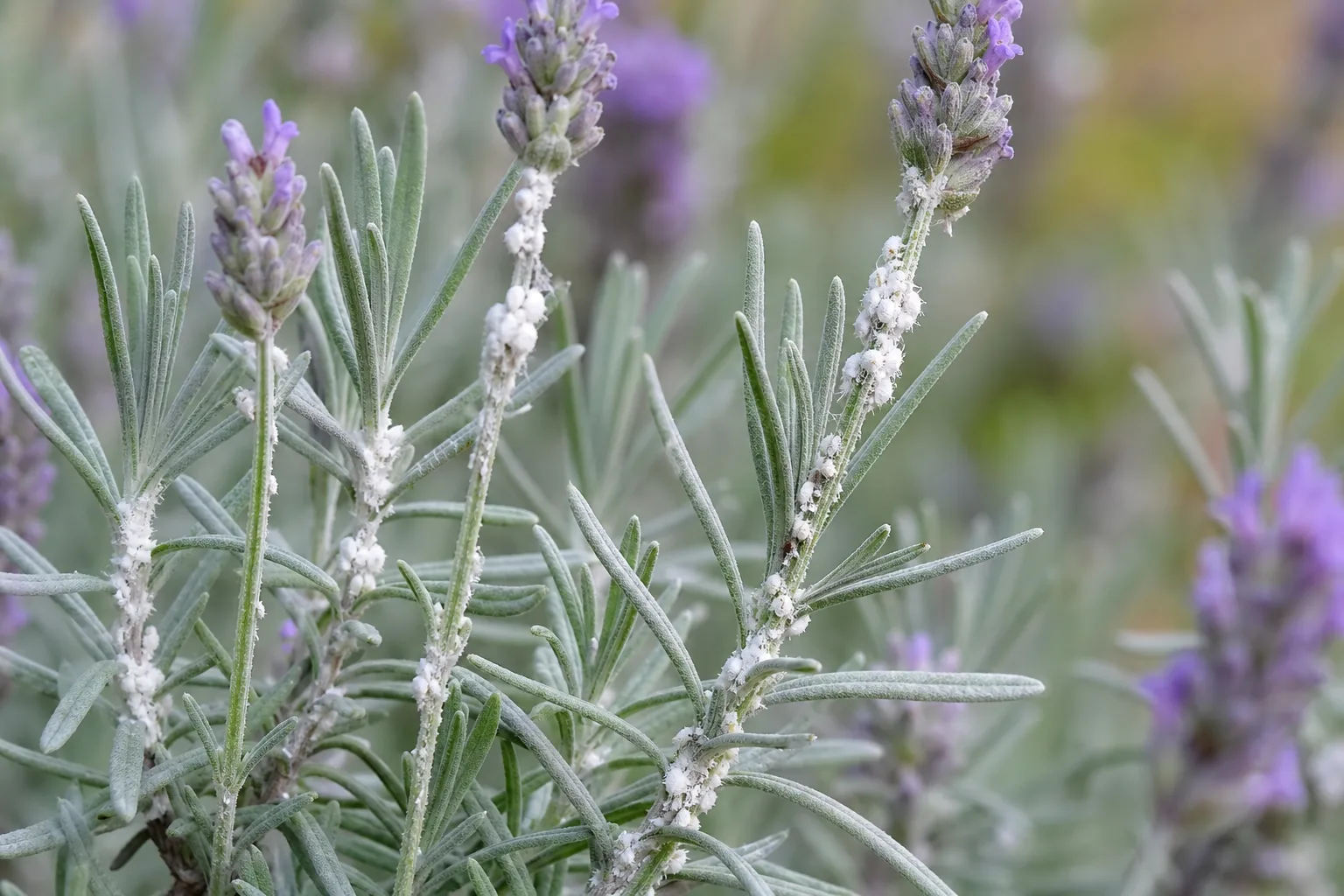
On English lavender (Lavandula angustifolia), mealybugs usually show as white cottony clusters in woody stem joints and crown crevices, often with sticky honeydew. First isolate the pot, then dab visible colonies with 70% or lower isopropyl alcohol before moving to repeat soap or oil coverage and weekly checks.
Mealybugs on Lavender: Causes, Checks & Fixes
This guide covers mealybugs on Lavender. See also the general Mealybugs guide, watering, and light pages for this plant.
Mealybugs on Lavender: Causes, Checks & Fixes
Quick answer
On English lavender, Lavandula angustifolia, mealybugs usually appear as white cottony clusters in woody stem joints, lower crown crevices, and sheltered leaf axils, often with sticky honeydew UC IPM mealybugs. First move: isolate the plant, dab visible clusters with 70% or lower isopropyl alcohol after a small test area, then spray insecticidal soap or horticultural oil thoroughly into joints and undersides and repeat weekly checks UC IPM mealybugs.
Why Lavender gets mealybugs
Mealybugs are sap-feeding, wax-covered insects that cluster in protected plant crevices, especially where air movement is low and cleanup is inconsistent UC IPM mealybugs. Lavender in containers can become vulnerable when dense canopies, crowded rails, or sheltered winter storage reduce airflow and predator pressure.
Lavender is naturally adapted to Lavender light guide and sharply drained soil, and stress from damp, heavy conditions weakens performance over time RHS lavender growing guide. Mealybugs also produce honeydew that attracts ants, and ant activity can protect these colonies from natural enemies, allowing populations to build UC IPM mealybugs.
New nursery plants can introduce hidden infestations on stems, tags, and pot rims. Quarantining newcomers before they join a shared herb area is one of the highest-value prevention steps UC IPM mealybugs.
What mealybugs look like on Lavender
- White, cottony colonies in woody joints, crown forks, and leaf axils.
- Sticky honeydew droplets on needles and lower stems.
- Black superficial coating (sooty mold) on honeydew-coated surfaces RHS sooty moulds.
- Slower movement than aphids; soft oval body visible after wax is disturbed.
- Stalled tips, reduced vigor, and twig decline in heavier infestations.
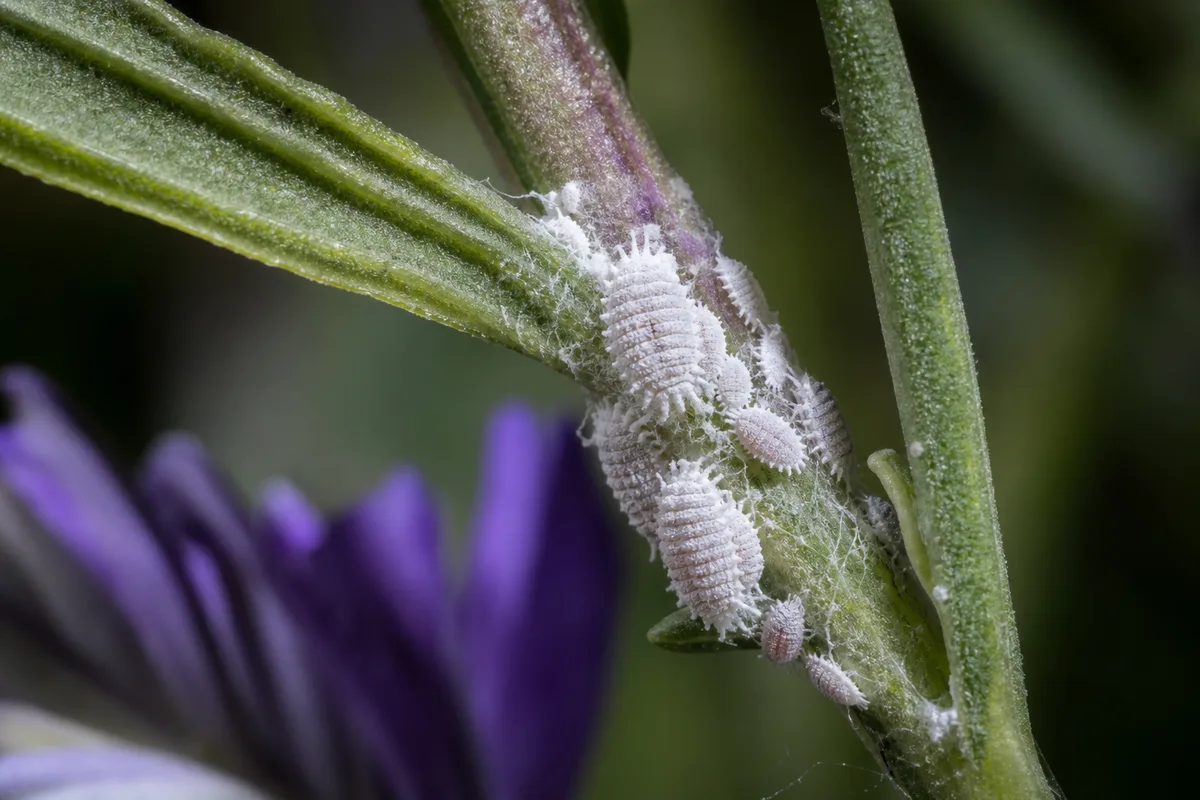
Mealybugs symptoms on Lavender - compare with healthy tissue on the same plant.
How to confirm the cause
Use this inspection order so you do not miss hidden colonies:
- Crown and lower woody forks: open the canopy and check where stems branch close to the base.
- Stem crotches and leaf axils: look for cottony masses and sticky residue.
- Pot rim and drainage holes: root-zone species can hide around the pot interior and are easy to miss UC IPM mealybugs.
- Wipe test: rub one cluster with a swab; mealy wax smears and reveals a soft-bodied insect.
- Ant traffic check: repeated ant movement on stems/pot often signals ongoing honeydew production.
Lookalikes to rule out
| Problem | Typical look on lavender | Quick differentiator |
|---|---|---|
| Mealybugs | Cottony white clumps in joints | Soft body under wax, sticky honeydew |
| Woolly aphids | Fluffy colonies on tender growth | Often on softer tips, more visible movement |
| Scale insects | Brown/tan bumps on stems | Hard shell-like bumps, not cottony |
| Powdery mildew | White powdery film on leaf surfaces | Fungal film, not clustered insects |
First fix for Lavender
First fix: isolate the pot and manually knock down colonies before spraying anything.
For light-to-moderate infestations, dab visible mealybugs with 70% or lower isopropyl alcohol using a cotton swab, and test first on a small section for phytotoxicity UC IPM mealybugs. For broader infestations, follow with insecticidal soap coverage into all hidden joints; repeat treatment because eggs and protected individuals often survive first passes University of Maryland Extension.
Do not stack six interventions on day one. Start with isolation and physical knockdown, then build a repeat cycle.
Step-by-step recovery
- Isolate the infested lavender from nearby herbs and inspect adjacent pots the same day.
- Manual removal: alcohol swab visible clusters and prune only heavily infested dead tips.
- Thorough spray pass: apply insecticidal soap or horticultural oil to undersides, nodes, and crown crevices per label.
- Repeat cycle: recheck weekly and retreat active spots until you complete at least 2 clear weeks.
- Ant management: reduce ant access so predators are not excluded from colonies Missouri Botanical Garden mealybugs.
- Environment reset: move to strongest available sun and maintain fast-draining conditions.
If root-zone mealybugs are suspected
If top growth keeps declining while above-ground colonies seem controlled, inspect around drainage holes and rootball surfaces for cottony residue. Root mealybugs are less visible until roots are exposed, so persistent decline can require unpotting and replacing media UC IPM mealybugs.
Recovery timeline
Visible clusters usually collapse quickly after direct contact, but hatch cycles can restart infestation if follow-up lapses. Expect several weeks of monitoring and repeat treatment before you can call the plant clear University of Maryland Extension. Recovery is measured by clean new silver growth and stable vigor, not perfect appearance of older damaged needles.
If black sooty coating remains after pest suppression, it can be washed off as a cleanup step while monitoring for fresh honeydew University of Maryland honeydew and sooty mold.
What not to do
- Do not stop after one treatment pass; mealybugs frequently rebound from hidden eggs.
- Do not drench lavender crowns in cool, humid evening conditions.
- Do not use broad-spectrum insecticides as a first reflex where nonchemical and selective options work.
- Do not ignore ant activity around infested stems.
- Do not leave treated lavender accessible to nibbling pets; ASPCA lists lavender as toxic to cats and dogs ASPCA lavender toxicity.
How to prevent mealybugs next time
Quarantine incoming plants before adding them to your lavender grouping and inspect stem joints regularly UC IPM mealybugs. Keep lavender in full sun and very well-drained media so growth stays firm rather than soft and pest-prone RHS lavender growing guide. Clean pruners and check pot rims, labels, and stakes where crawlers can hide.
Lavender care cross-check
Lavender care and mealybug prevention are tightly linked: full sun, low humidity around foliage, and sharp drainage all reduce stress and lower pest pressure RHS lavender growing guide. When the plant is repeatedly overwatered or grown in stagnant air, infestations are harder to clear and recur faster.
Related lavender problems
If sticky residue and ant traffic persist after treatment, compare with:
- Aphids on lavender
- Scale insects on lavender
- Ants on lavender
- Sticky leaves on lavender
- Crown rot on lavender
- Lavender plant overview
When to worry
Escalate when cottony colonies keep returning after multiple full-coverage cycles, the crown area is widely infested, or new growth remains weak. In severe cases, discard heavily infested plants to protect nearby pots and restart with clean media and sanitation University of Maryland Extension.
Conclusion
Mealybugs on lavender are manageable when you diagnose early and treat consistently. Focus on crown-and-joint inspections, repeat physical and contact control, and fix the growing conditions that let colonies rebound. Judge success by clean new growth and declining pest signs over time.
When to use this page vs other Lavender guides
- Lavender watering guide - Use for routine moisture checks before assuming mealybugs is the main issue.
- Lavender problems hub - Browse all 51 common issues on this species.
- Sticky Leaves on Lavender - Different entry point when symptoms overlap with mealybugs.
- Ants on Plant on Lavender - Different entry point when symptoms overlap with mealybugs.
- Yellow Leaves on Lavender - Different entry point when symptoms overlap with mealybugs.