Slow Growth on Lavender: Causes, Checks & Fixes
Quick answer
Slow growth is often normal for lavender in containers-a naturally slow grower. Ensure full sun, gritty drainage, and one light spring feed; only escalate if new shoots stall for months or roots are mushy on wet soil.
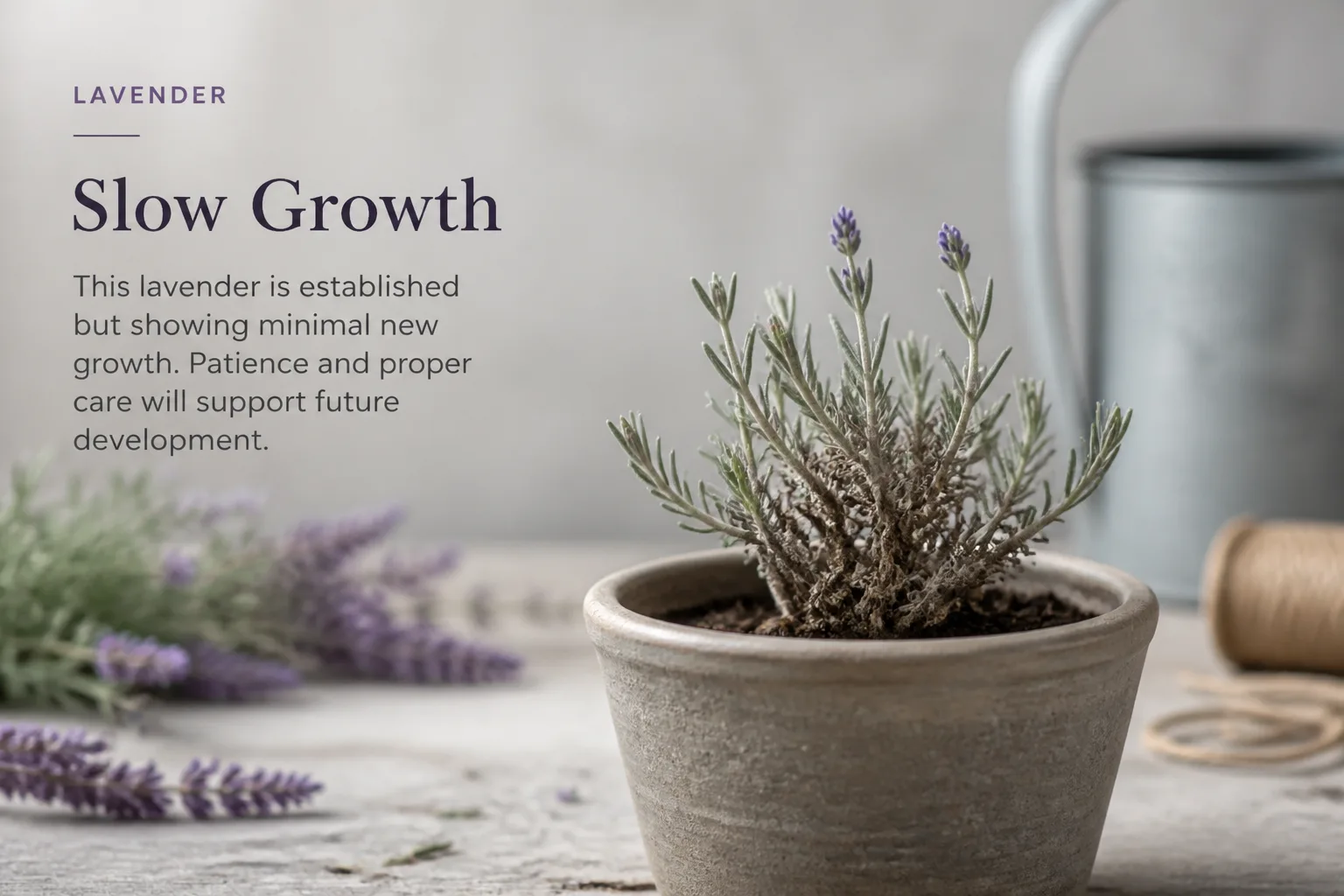
Slow Growth on Lavender: Causes, Checks & Fixes
This guide covers slow growth on Lavender. See also the general Slow Growth guide, watering, and light pages for this plant.
Slow Growth on Lavender: Causes, Checks & Fixes
Quick answer
Slow growth on Lavender is often normal in containers-English lavender is a slow to moderate grower that will not behave like a tropical houseplant. First step: confirm Lavender light guide and gritty drainage, apply one light spring feed if needed, and be patient. Escalate only when warm-season new shoots stall entirely or roots fail on wet soil.
What slow growth looks like on Lavender
Healthy slow growth means modest spring shoots on firm woody stems, a stable silvery mound, and perhaps only a few centimeters of extension per season in a pot. The plant may look “unchanged” week to week while still being alive and fragrant on sunny days.
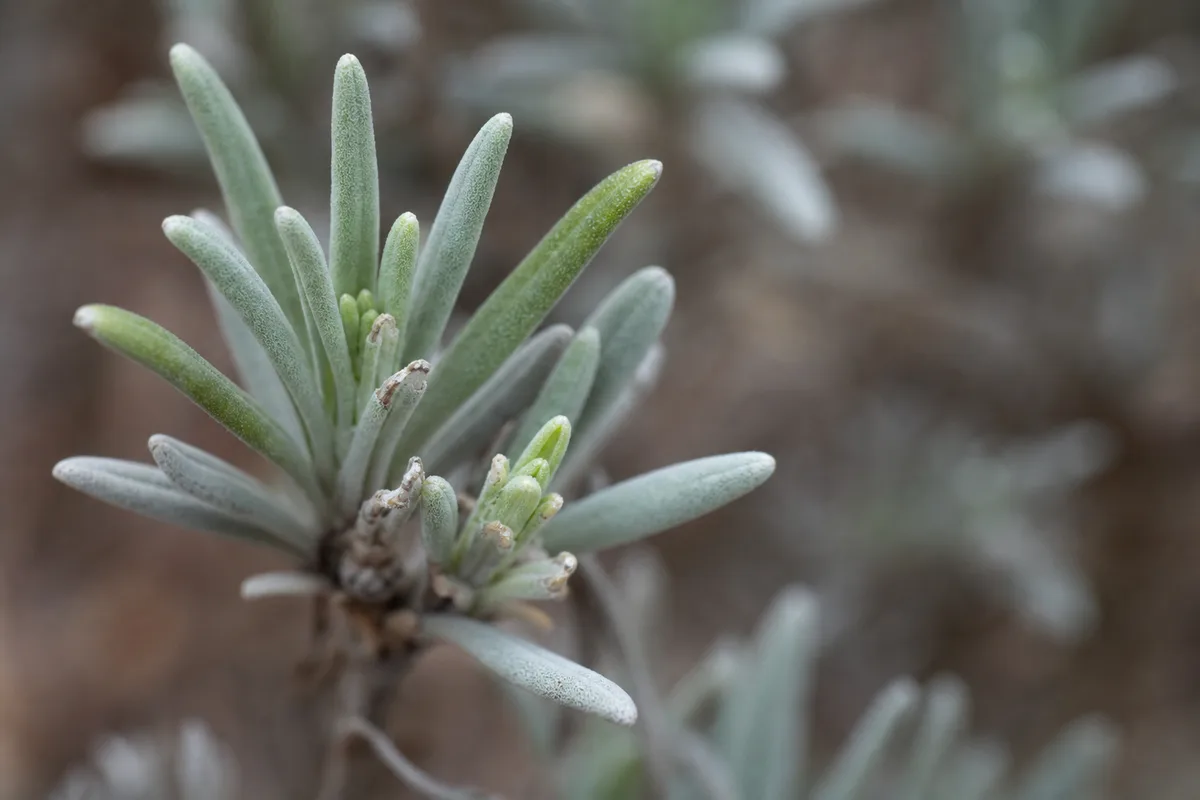
Slow Growth symptoms on Lavender - compare with healthy tissue on the same plant.
Problematic slow growth looks different: no new tips through summer despite full sun, progressive lower stem dieback, dull grey-green foliage, or a plant that has not filled out since purchase while neighbors in the same light grow actively.
Container lavender typically matures around 30–90 cm tall over years-not months. Expecting weekly visible growth leads to overwatering and overfeeding that actually slows the plant further.
Why Lavender grows slowly
Genetics and culture both matter. Lavender is adapted to lean, dry Mediterranean soils. Prefers a light, sandy soil with somewhat low fertility-rich wet mix and heavy feeding produce weak lush shoots with reduced oil quality, not faster healthy growth.
Containers limit root spread compared with in-ground plantings. A lavender with roots circling a terracotta pot may grow slowly until repotted every two to three years-but repot only when circling roots and stalled top growth coincide, not on a calendar alone.
Insufficient sun is the main correctable limiter. Lavender in bright indirect light survives but barely extends-stems stay short-term static while the plant etiolates or flowers poorly. Full sun drives the photosynthesis that fuels measured but steady growth.
Chronic overwatering slows growth indirectly: damaged roots cannot support new tissue, and the plant stalls while soil stays wet. Lavender suffers when it receives too much water-slow growth plus sour wet mix is decline, not normal pace.
Winter naturally pauses growth. Do not judge slowness during cool months when the plant is semi-dormant.
How to confirm the cause
- Season - Is it warm growth season? Winter stillness is normal.
- Sun - Six or more hours of direct sun on the pot?
- New tips - Any silver shoots in the last eight weeks of warm weather?
- Pot weight and roots - Light dry pot with firm roots supports “normal slow.” Heavy wet pot with mushy roots means rot-driven stall.
- Fertility - Has heavy fertilizer been applied in shade? That combination weakens growth.
- Pot size - Roots circling tightly with no new tips may need Lavender repotting guide into slightly larger gritty terracotta.
First fix for Lavender
Ensure full sun and one annual light fertilizer in early spring-then wait.
Move the pot to the sunniest feasible location. Confirm gritty mix drains in seconds. Feed once in February–March with low-nitrogen slow-release granules or a small compost top-dress-then stop. Lavender actually thrives in poor soil; more fertilizer rarely speeds healthy growth.
Water only when soil is completely dry 7 cm deep. If roots were wet and sour, dry down and inspect before feeding or repotting.
Step-by-step recovery
- Audit sun hours; relocate to full sun if needed.
- Check drainage; repot into gritty mix only if roots are circling or mushy.
- Apply one light spring feed if none was given this year.
- Prune spent flower wands after bloom to redirect energy to new shoots.
- Track new tip emergence monthly through warm season-not weekly height gains.
Recovery timeline
Normal container lavender may add only modest wood each season. After correcting shade or root problems, expect visible new shoots within three to six weeks in warm sun-not overnight bushiness.
Rejuvenation pruning on old woody plants stimulates fresher growth the following season.
Causes to rule out
- root rot on Lavender stall - Wet soil, wilting, sour smell; inspect roots.
- Leggy shade stretch - Long thin stems; fix light and prune.
- Pest stress - Spider mite bronzing reduces vigor; inspect undersides.
- Post-repot pause - Two to four weeks of stillness after repotting is normal.
What not to do
Do not accelerate growth with heavy nitrogen fertilizer-lavender becomes weak and less fragrant. Do not water more often because growth is slow; check dryness at 7 cm instead. Do not repot into oversized rich mix “to help it grow.” Do not compare container lavender to in-ground field growth rates.
How to prevent misleading slow-growth panic
Place pots in full sun from day one. Use gritty alkaline mix and terracotta. Feed once annually. Repot every two to three years when roots circle. Grow in well-drained soil with full sun and accept measured container pace.
Lavender care cross-check
Slow growth is healthy when paired with firm wood, clean new tips in season, dry-down watering, and full sun. It is unhealthy when paired with wet soil, crown softness, or absent warm-season shoots.
When to worry
Worry when no new growth appears through a full warm season, stems die back from the base, or wilting joins chronic wetness. Patience is appropriate when the plant is stable, fragrant, and pushing occasional new silver foliage in sun.
Conclusion
Slow growth on container lavender is often normal-not a crisis. Confirm full sun, gritty drainage, lean annual feeding, and firm roots before forcing change. Treat stall plus wet soil or crown decline as root problems, not slowness. Judge success by healthy new tips each warm season, not rapid height gains.
When to use this page vs other Lavender guides
- Lavender watering guide - Use for routine moisture checks before assuming slow growth is the main issue.
- Lavender problems hub - Browse all 51 common issues on this species.
- Not Enough Light on Lavender - Different entry point when symptoms overlap with slow growth.
- Leggy Growth on Lavender - Different entry point when symptoms overlap with slow growth.
- Yellow Leaves on Lavender - Different entry point when symptoms overlap with slow growth.