Scale Insects on Lavender: Causes, Checks & Fixes
Quick answer
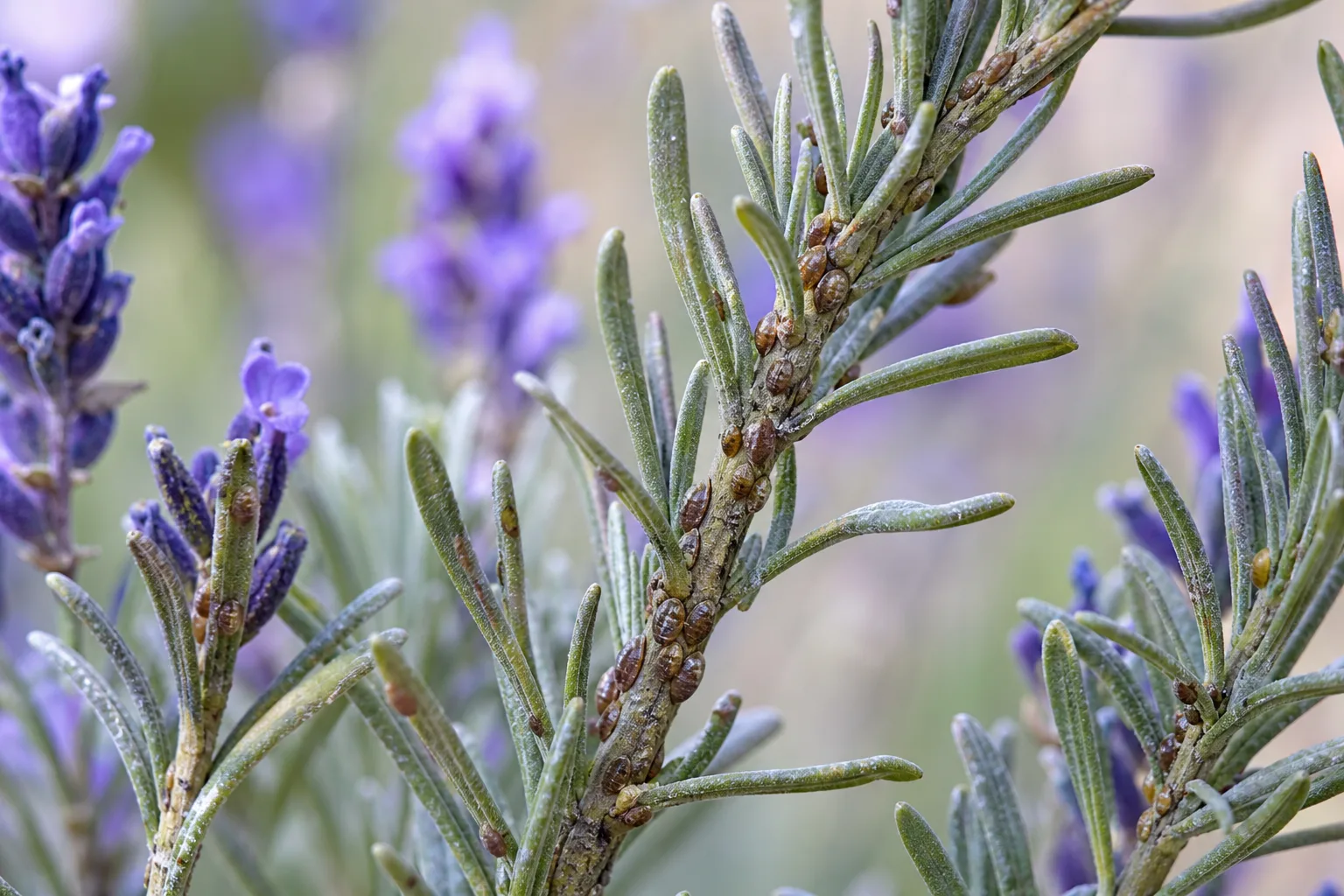
Scale on lavender appears as fixed brown or tan bumps on woody stems, often with sticky honeydew and black sooty mold. First isolate the plant, scrape reachable clusters, then spray horticultural oil for full stem coverage and manage ants so predators can work.
Scale Insects on Lavender: Causes, Checks & Fixes
This guide covers scale insects on Lavender. See also the general Scale Insects guide, watering, and light pages for this plant.
Scale Insects on Lavender: Causes, Checks & Fixes
Quick answer
On lavender (Lavandula angustifolia), scale insects usually show up as fixed shell-like bumps on woody stems and branch forks, often with sticky honeydew and dark sooty mold below feeding sites RHS scale insects. First fix: isolate the plant, scrape off the heaviest clusters you can reach, then spray horticultural oil to full coverage on stems and branch joints; oils kill by contact/smothering and usually need repeat applications Colorado State Extension. Keep lavender in full sun and very well-drained lean soil while you treat.
What scale looks like on lavender
Scale on lavender is easiest to spot on older woody tissue, not the soft flower spikes. Common clues:
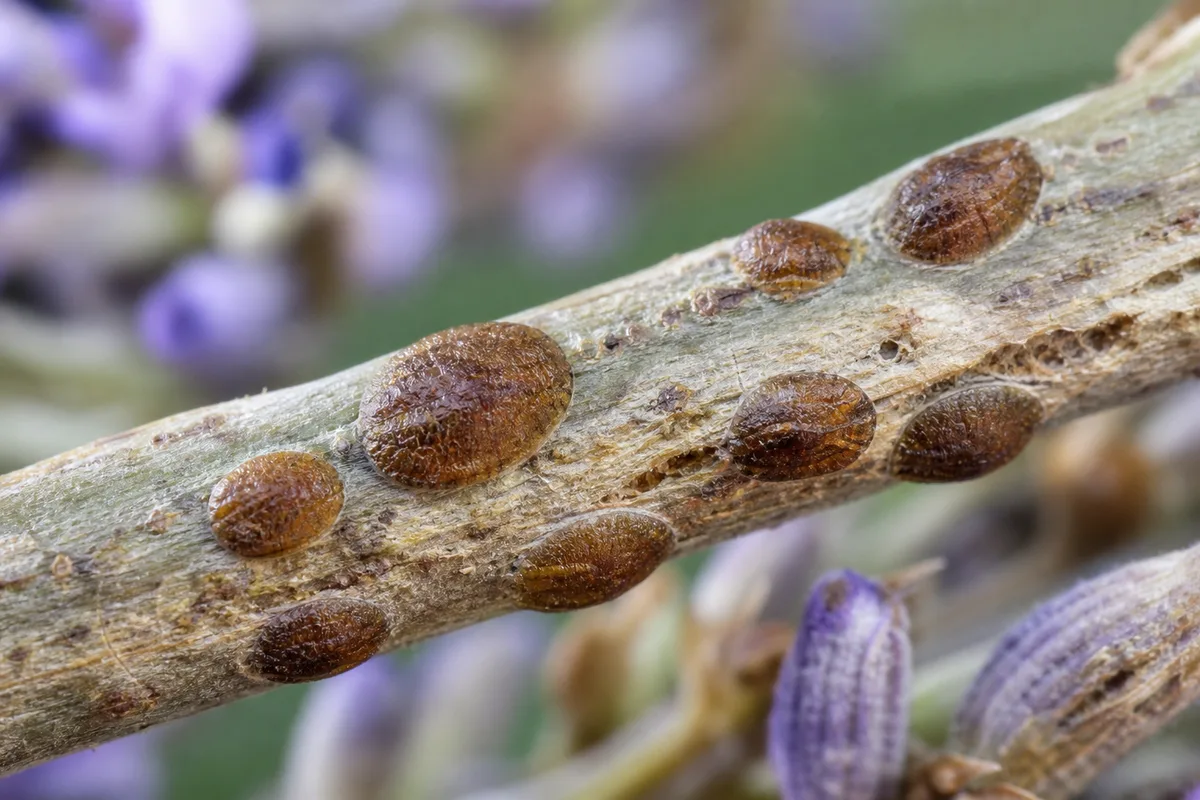
Scale Insects symptoms on Lavender - compare with healthy tissue on the same plant.
- Small brown, tan, gray, or whitish domes stuck to stems
- Sticky residue (honeydew) on nearby leaves or stems from soft scales
- Black coating (sooty mold) growing on honeydew deposits RHS sooty moulds
- Ant traffic moving up and down stems to feed on honeydew
Many gardeners miss early infestations because lavender bark is textured and gray-brown. Use a hand lens and inspect branch forks, lower stem crotches, and dense interior wood.
Why lavender gets scale
Lavender is naturally adapted to bright, airy, low-fertility sites. Plants become more vulnerable when grown in shade, crowded humidity, or rich conditions that push tender growth Missouri Botanical Garden Plant Finder. Indoor-overwintered lavender is also a common source of spring flare-ups because predators are reduced indoors.
Ants make outbreaks worse by protecting honeydew-producing insects from predators, so untreated ant activity can slow your recovery UC IPM scales.
How to confirm the cause (7-step check)
- Location check: Inspect woody stems, branch forks, and sheltered inner canes first.
- Scrape test: Gently lift one bump with a fingernail. Scale usually detaches or smears; bark does not.
- Honeydew check: Touch leaves or stems below suspect colonies for sticky residue.
- Sooty mold check: Look for black surface coating on tissues below sap-feeders University of Maryland Extension.
- Ant check: Track ant trails to feeding points.
- Spread pattern: Scale often clusters along woody seams and protected stem angles.
- Neighbor check: Inspect nearby rosemary, sage, or other balcony herbs for shared infestations.
Scale lookalikes on lavender
| Lookalike | What it looks like | Key difference from scale |
|---|---|---|
| Natural lenticels/bark texture | Tiny corky dots or rough bark | Part of the stem; cannot be lifted off cleanly |
| Mealybugs | White cottony tufts in joints | Fluffy wax, not hard domes; often easier to squash |
| Woolly aphids | Cottony moving clusters | Individuals move; usually on softer growth |
| Soft scale | Dome-like bumps plus honeydew | Produces sticky residue and ant activity |
| Armored scale | Hard shell-like bumps, less honeydew | Often drier appearance; tougher to crush |
First fix to try
Do one clear first action before stacking treatments: lower the pest load physically, then apply oil correctly.
- Isolate the lavender from nearby plants.
- Prune out the most encrusted dead twigs.
- Gently brush or wipe reachable colonies from woody stems.
- Spray horticultural oil thoroughly on stems, forks, and undersides of nearby foliage.
Horticultural oils work by suffocation/contact and require complete coverage; one spray is rarely enough Clemson HGIC. Recheck labels for temperature windows and edible-herb use directions.
Alcohol scrape for reachable woody bumps
For small clusters on accessible stems, dip a cotton swab in 70% isopropyl alcohol and wipe each bump until it lifts or smears. Early scale infestations can be removed by scraping on houseplants; the same contact approach works on lavender woody forks before you commit to full-canopy oil. Test one hidden stem first and wait 24 hours-alcohol can spot-burn tender new silver shoots in hot sun.
Soft scale vs. armored scale on lavender
| Type | Clues on lavender wood | Treatment emphasis |
|---|---|---|
| Soft scale | Sticky honeydew, sooty mold, ant trails | Alcohol scrape plus horticultural oil; honeydew confirms sap feeding |
| Armored scale | Hard dry domes, little honeydew | Thorough oil coverage on stems; scraping matters more because shells resist weak sprays |
Repeat whichever path you choose every seven to ten days for at least three cycles-new crawlers settle after the first spray and protected eggs hatch on their own schedule.
Harvest note: If you cook with lavender, wait until oil or soap residues have weathered off and follow label pre-harvest intervals before cutting stems for kitchen use. Treat before heavy bloom when possible so open flower spikes are not coated.
Step-by-step recovery plan
1) Treat in cycles, not once
Scale control is usually a repeated process because protected eggs and new crawlers can appear after initial treatment UC IPM scales. Repeat according to label intervals and keep notes by date.
2) Break ant protection
Use targeted baiting around containers or bed edges (not on open flower spikes) so predators can return and suppress survivors.
3) Clean only after pests drop
Wipe sooty mold after pest pressure is down. Cleaning too early looks better temporarily but does not solve the cause.
4) Correct site stress
Move potted plants to stronger sun and airflow, and avoid frequent light watering that keeps crowns humid. Lavender performs best in dry-to-medium, fast-draining conditions Missouri Botanical Garden Plant Finder.
Recovery timeline and expectations
- Light infestation: Noticeable improvement in 2-6 weeks with repeated coverage and ant control.
- Moderate infestation: 1-3 months to stabilize, depending on canopy density and weather.
- Heavy woody encrustation: Often needs hard pruning of affected wands and a full season for cleaner regrowth.
Old scarred tissue may never look perfect again. Use clean new growth and reduced fresh scale activity as your success markers.
Causes to rule out before overtreating
- Crown/root stress from wet soil: Lavender declines quickly when drainage is poor; root rot on Lavender risk rises in wet, cold soils PNW Plant Disease Handbook.
- Heat/water stress alone: Can dull foliage and stall growth without sticky honeydew.
- Nutrient push growth: Excess nitrogen can produce softer growth that attracts sap-feeders.
What not to do
- Do not spray oils in extreme heat or on drought-stressed plants.
- Do not fertilize heavily during active infestation.
- Do not ignore ants while treating only the visible bumps.
- Do not repot and prune hard on the same day unless roots are clearly failing.
Preventing scale on lavender next time
Keep prevention tied to lavender biology:
- Grow in full sun with lean, sharply drained media Missouri Botanical Garden Plant Finder.
- Inspect woody forks monthly in spring through early fall.
- Quarantine incoming plants for 2-3 weeks.
- Manage ant trails early.
- Prune for airflow so interior wood does not stay humid and shaded.
Related lavender problems
- Sticky leaves - tacky foliage without confirmed woody bumps; start here if you see shine but no domes on stems
- Mealybugs - cottony wax in joints, not hard shells on wood
- Aphids - soft moving clusters on tender growth
- Ants on plant - ant trails often mean honeydew-protected scale below
- Crown rot - soft wilt on wet soil while treating scale; inspect roots same day
Lavender care guides
Scale returns when culture stays humid and shaded. Correct the site while you treat pests:
- Lavender overview - Mediterranean herb culture hub
- Light - full sun keeps wood firm and less pest-friendly
- Watering - lean dry-down between drinks
- Soil - sharp drainage at the crown
- Pruning - open airflow through woody forks after treatment
When to worry or escalate
Escalate if multiple main stems are encrusted, the plant keeps declining after repeat cycles, or you also see wilt in wet media. At that point, you may be managing both scale and root/crown disease pressure. If crown or root rot is advanced, saving the whole plant may not be realistic PNW Plant Disease Handbook.
Related reads that help with overlap symptoms:
/plants/lavender/plant-problems/mealybugs//plants/lavender/plant-problems/aphids//plants/lavender/plant-problems/sticky-leaves//plants/lavender/plant-problems/ants-on-plant//plants/lavender/plant-problems/crown-rot/
Conclusion
Scale on lavender hides on woody forks where bark texture mimics bumps-scrape-test before you spray. Isolate, alcohol-wipe reachable clusters or oil thoroughly by scale type, break ant protection, and move the plant back into full sun with lean drainage. Escalate to discard heavily encrusted specimens only when crown rot overlaps wet wilt; mild woody scale on culinary lavender usually clears with repeated contact cycles if you judge success by clean new silver shoots, not perfect old wood.
When to use this page vs other Lavender guides
- Lavender watering guide - Use for routine moisture checks before assuming scale insects is the main issue.
- Lavender problems hub - Browse all 51 common issues on this species.
- Sticky Leaves on Lavender - Different entry point when symptoms overlap with scale insects.
- Ants on Plant on Lavender - Different entry point when symptoms overlap with scale insects.
- Yellow Leaves on Lavender - Different entry point when symptoms overlap with scale insects.