Sticky Leaves on Lavender: Causes, Checks & Fixes
Quick answer
Sticky lavender leaves almost always mean honeydew from sap-sucking pests-aphids, scale, whiteflies, or mealybugs-not normal silvery wax on healthy needles. First step: inspect new shoots and woody stems for insects, isolate the plant, and wipe tacky residue with a damp cloth before treating the pest you find.
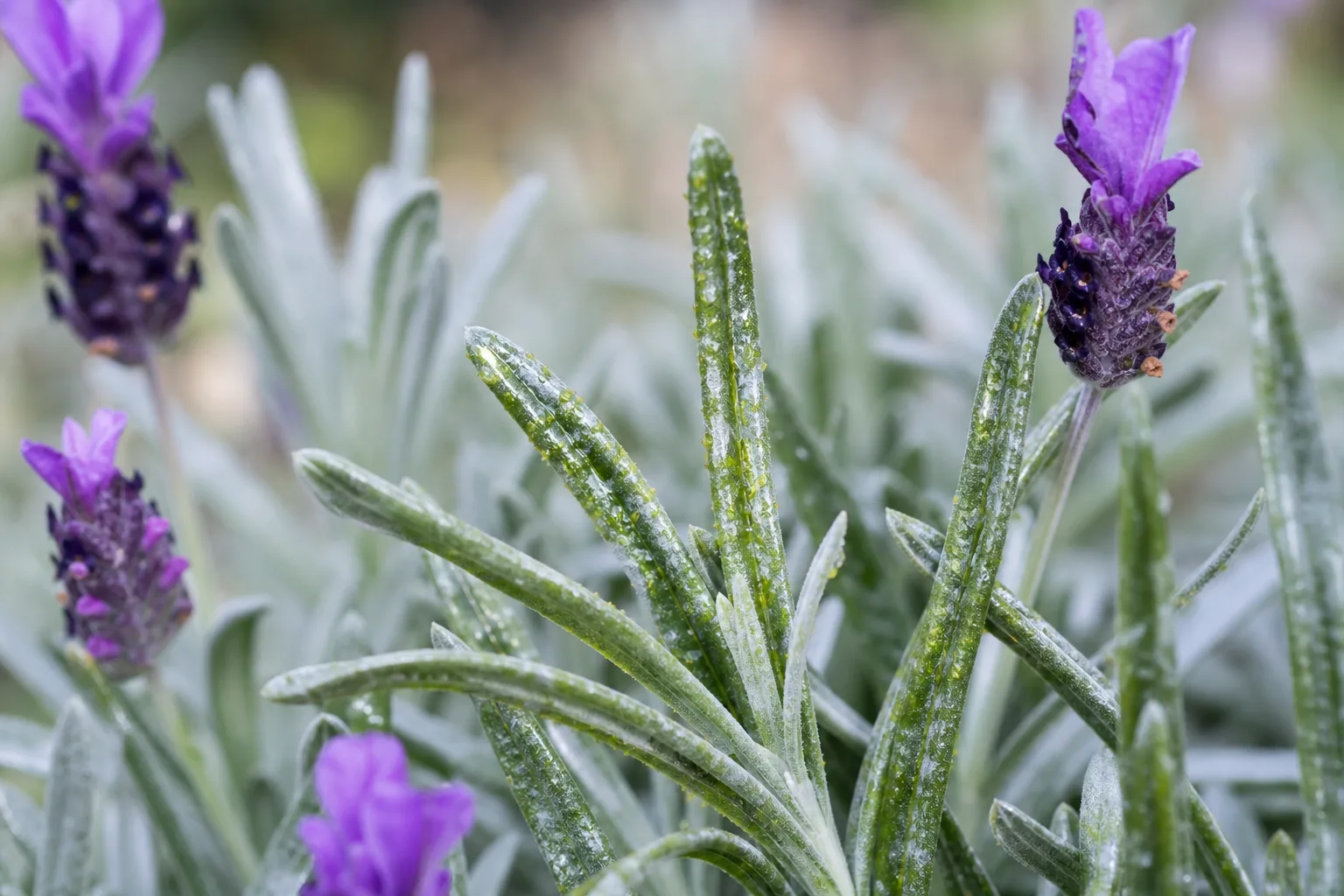
Sticky Leaves on Lavender: Causes, Checks & Fixes
This guide covers sticky leaves on Lavender. See also the general Sticky Leaves guide, watering, and light pages for this plant.
Sticky Leaves on Lavender: Causes, Checks & Fixes
Quick answer
If your silvery lavender feels tacky instead of dry, you are almost certainly dealing with honeydew-a clear, sugary waste left by sap-sucking insects-not normal plant sap or healthy wax on the needles.
First step: move the pot away from neighbors, inspect new spring shoots and flower wands for aphids, then check woody stem forks for scale. Wipe tacky residue with a damp cloth so you can see live pests clearly. Do not reach for fungicide, extra fertilizer, or a humidifier until you confirm which insect is feeding.
Healthy English lavender (Lavandula angustifolia) carries silver-grey evergreen foliage that should feel dry and matte. Sticky shine, ant trails, and black sooty film on needles mean pests are active-treat the insect, and the stickiness stops.
Is sticky lavender normal? Waxy bloom vs. honeydew
This is the confusion that sends most growers searching: lavender needles look silvery and can feel slightly waxy, so tacky leaves seem plausible as “just how the plant is.” They are not.
Normal glaucous bloom on lavender is a fine, even, dry powder on needles and stems. It repels water, does not smear sticky residue on your fingers, and does not attract ants. RHS notes evergreen silver-grey or grey-green foliage as typical for healthy plants-matte, not adhesive.
Honeydew feels glossy and tacky when you rub a needle between thumb and finger. It coats pot rims, window sills, and lower needles. It may darken into sooty mold-a black film that grows on the sugar, not inside leaf tissue. Ants often march along stems to harvest it.
Quick wipe test: dampen a cloth and wipe one needle cluster. Honeydew returns within a day or two if pests are still feeding. Normal wax does not leave a recurring sticky smear.
What sticky leaves look like on lavender
On lavender, stickiness shows up where sap flow is highest and where pests hide in plain sight against silvery foliage.
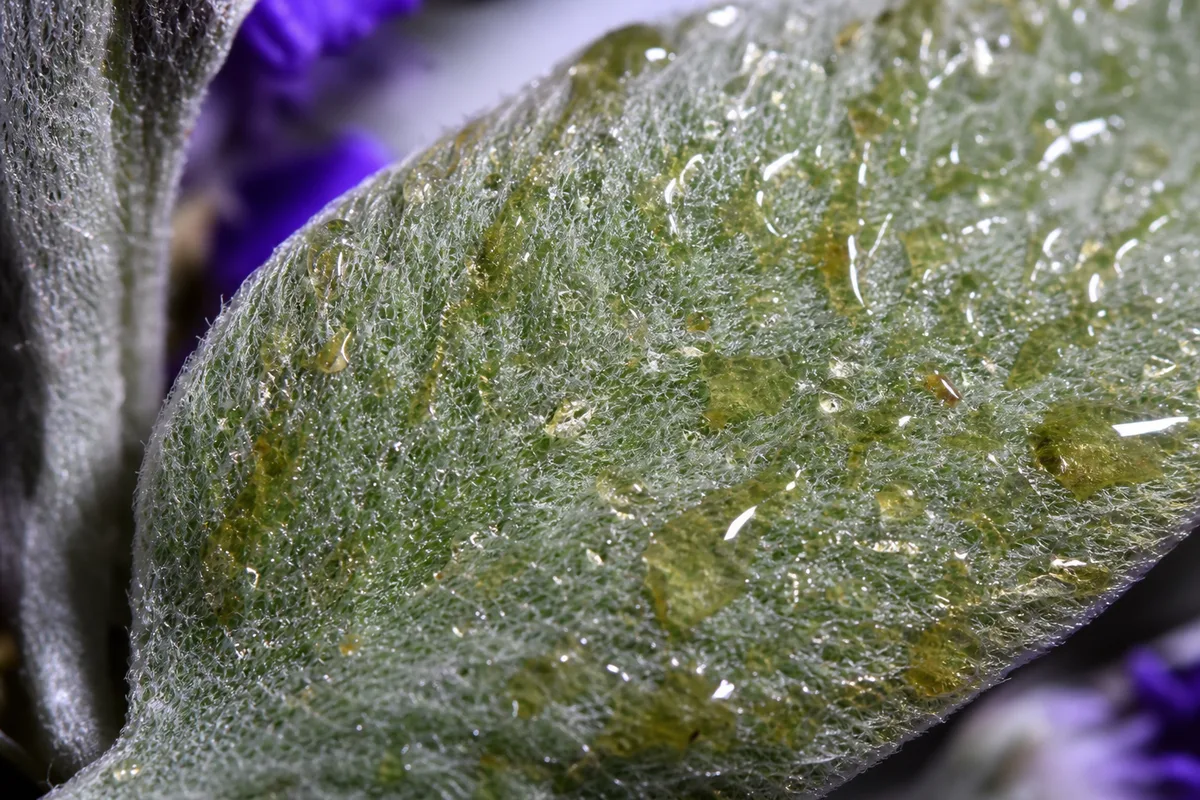
Sticky Leaves symptoms on Lavender - compare with healthy tissue on the same plant.
Typical patterns:
- Glossy tacky coating on needle faces, flower wands, or pot edges-often worse on the sunny side where new growth is softest
- Black sooty film on sticky zones-fungal growth on honeydew, not a separate lavender disease
- Ant trails along woody stems or across the container rim-ants protect honeydew producers from lady beetles and lacewings
- Soft green, pink, or black aphids clustered on spring shoot tips and developing bloom spikes
- Tan or brown immobile bumps on older woody stems and branch forks-scale that does not wipe off
- Tiny white flies drifting up when you brush a wand-whiteflies on undersides of young leaves
- White cottony patches in stem joints-mealybugs, less common on sun-grown outdoor lavender but frequent on overwintered indoor pots
Outdoor lavender after rain or morning dew may look wet briefly; that moisture dries by midday in full sun. Honeydew stays sticky all day and often carries insects or ants nearby.
Why lavender gets sticky leaves
Lavender does not normally drip sweet sap from healthy needles. Stickiness is insect waste, and the pest species determines where you find it on the plant.
Aphids on spring shoots and flower wands
Aphids concentrate on succulent young shoots and leaves, sucking phloem sap and excreting excess sugar as honeydew. On lavender, they favor the soft spring flush and flower wands just before bloom-exactly where you plan to harvest. Heavy nitrogen in partial shade produces lush tips aphids prefer; lavender evolved for full sun and lean soil, which yields tougher, less attractive growth.
See the dedicated aphids on lavender guide for water-blast timing and soap repeat schedules.
Scale on woody stems
Soft scale insects attach to stems, suck sap, and produce large amounts of honeydew like aphids. On mature lavender mounds, scale hides on woody branch forks and shaded inner stems where silvery needles make tan bumps easy to miss. Scale does not rinse off with water-you need scraping plus horticultural oil. Details live on the scale insects on lavender page.
Whiteflies and mealybugs
Whiteflies feed on undersides of young leaves and fly up in a cloud when disturbed; they leave sticky honeydew on wands below. Mealybugs form white cottony clumps in stem crevices-more common on lavender kept indoors over winter with weak light than on a sunny patio pot. Cross-check whiteflies and mealybugs if those patterns match.
Sooty mold follows honeydew
Several fungi grow on honeydew deposits, creating a black soot-like coating on needles and stems. Sooty mold does not infect plant tissue directly, but heavy growth can block light and stress leaves. It clears once honeydew production stops-no fungicide needed for the mold alone.
Why soft overfed growth attracts pests
New tender plant growth is preferred by many sucking insects. Shaded patio lavender pushed with heavy nitrogen fertilizer produces a soft spring flush that aphids colonize fast. Lean culture-full sun per the lavender light guide, gritty fast-draining mix per soil guidance, and minimal feed per the fertilizer guide-produces compact silver growth that recovers faster after light pest pressure.
How to confirm the cause
Work through this order before spraying anything:
- Touch test - Rub a needle cluster. Honeydew is tacky and slightly glossy; dew or irrigation water feels wet but not glue-like once the surface dries.
- New growth inspection - Check soft shoot tips and flower wands in bright light. Aphids cluster where sap is richest.
- Woody stem check - Run fingers along older stems and forks. Scale feels like fixed bumps; scrape one gently with a fingernail to confirm it is not bark texture.
- Underside scan - Whiteflies and early aphids hide under young leaves on wands.
- Ant trails - Follow ants on stems or pots upward to the colony they protect. Ant control helps beneficial insects reduce pest numbers.
- Wipe-and-wait - Wipe a sticky zone today. Fresh tackiness within 48–72 hours means active feeding, not old residue.
If you find insects, ants with tacky residue, or recurring stickiness after wiping, you have confirmation. If needles are clean of pests and only briefly damp after watering, look at lookalikes below.
Symptom lookalike comparison table
| What you see | Often confused with | How to tell apart on lavender |
|---|---|---|
| Tacky glossy needles | Normal glaucous wax | Wax is dry and matte; honeydew smears sticky on fingers and pot rim |
| Tacky needles after rain | Morning dew | Dew dries by midday in sun; honeydew stays sticky all day |
| Black coating on needles | Lavender blight or rust | Sooty mold wipes off as black film on top of stickiness; true leaf diseases show lesions in tissue |
| White powder on needles | Mealybugs or mildew | Even dry silver bloom; mealybugs are cottony clumps that move when disturbed |
| Sticky pot rim only | Spilled drink or syrup | No insects on plant; residue does not return after cleaning; check nearby furniture |
| Sticky lower needles | Honeydew from plant above | Inspect the lavender itself-pests are usually on the same plant or a neighbor touching it |
| Hard-water spots | Honeydew | White mineral crust when dry; not tacky; does not attract ants |
First fix: isolate, blast, and treat safely
Isolate the plant, inspect new shoots and woody stems for insects, and wipe sticky residue with a damp cloth.
Move the pot away from other herbs and ornamentals so aphids and mealybugs do not walk to neighbors. Wipe honeydew from needles and pot rims with plain water on a soft cloth-wear gloves if you have sensitive skin. This is diagnostic, not a cure: stickiness returns if pests remain.
Outdoor morning rinse on full-sun lavender
For outdoor English lavender in active growth, a strong cool-morning water stream dislodges soft-bodied aphids on flower wands and shoot tips. Aim at new growth, not at the crown in wet weather. UC IPM notes that a strong stream of water can knock off sucking insects in some situations-repeat every two to three days for a week on light infestations. Avoid midday rinses on hot summer days when wet foliage in intense sun can stress Mediterranean herbs.
Indoor or greenhouse lavender: rinse in a sink or shower, then return to bright light once needles dry.
Do not apply insecticidal soap or horticultural oil until you see live pests after rinsing. Do not fertilize or hard-prune the same day.
Which pest page to read next
| What you found | Read next |
|---|---|
| Soft clusters on new tips and wands | Aphids on lavender |
| Fixed bumps on woody stems | Scale insects on lavender |
| Tiny white flying insects | Whiteflies on lavender |
| White cotton in stem joints | Mealybugs on lavender |
| Heavy ant activity, few visible pests | Ants on lavender |
Step-by-step recovery
After the initial wipe and rinse:
- Name the pest - Aphids: soft bodies on new growth. Scale: immobile bumps on wood. Whiteflies: fly when disturbed. Mealybugs: cottony masses in joints.
- Physical removal - Pick off visible aphid clusters after rinsing. Scrape scale lightly with a soft brush or fingernail on woody stems-do not gouge living bark.
- Targeted spray if insects remain - Apply insecticidal soap or horticultural oil to shoot tips, wand undersides, and stem crevices at label dilution. Treat in early morning or evening to reduce leaf stress in full sun. On culinary lavender, note the label re-entry interval before harvest.
- Repeat on schedule - Most sap feeders need weekly treatments for two to three weeks until new growth stays clean and no fresh honeydew appears.
- Manage ants in parallel - Disrupt trails with water; use ant bait stations away from open blooms so predators can work. See ants on lavender for patio-pot setups.
- Clean sooty mold after pests decline - Wipe black residue with damp cloth and mild soap. Mold weathers off old needles over weeks; judge success by clean new shoots, not by old coated foliage turning silver again.
- Correct culture - Confirm dry-down watering, six or more hours of direct sun, and no heavy nitrogen until new growth looks firm for two weeks.
If the woody base feels mushy in wet soil while you treat pests, pause sprays and assess crown health separately-wet rot and honeydew can coexist on stressed container lavender.
Recovery timeline
After first wipe and rinse, fresh stickiness should slow within two to three days if most soft-bodied aphids were removed.
Weekly pest treatments typically need two to three cycles before spring wands stay clean and honeydew production stops.
Sooty mold may take several weeks to weather off older needles even after pests are gone. New silvery shoots without black film tell you the fix worked.
Signs you are on track: no new tacky deposits, ants disappear, flower wands open without distortion, and the woody crown stays firm.
Causes to rule out
- Normal glaucous bloom - Dry silver matte coating; not tacky; no ants
- Morning dew or rain splash - Dries by midday on outdoor plants in sun
- Hard-water mineral spots - White crust when dry; not adhesive
- Spilled sugary drink or kitchen syrup - No insects; one-time residue
- Honeydew from a touching neighbor - Still inspect your lavender; local pests are common even when a shelf mate drips above
What not to do
Do not wash stickiness alone without treating pests-it returns overnight. Do not apply fungicide for sooty mold while insects keep producing honeydew. Do not heavy-feed hoping to “outgrow” aphids; excess nitrogen softens spring growth and attracts more pests. Do not spray horticultural oil in hot afternoon sun on lavender in full blaze-oil plus heat can burn needles; follow label temperature limits. Do not harvest culinary blooms immediately after soap or oil without checking the re-entry interval on the product label.
Avoid stacking hard renewal pruning, Lavender repotting guide, and pesticide on the same day on an already stressed plant.
How to prevent sticky leaves next time
- Quarantine new lavender from farmers markets or nursery six-packs for two weeks before placing beside established plants
- Inspect weekly during spring flush-new wands and shoot tips first
- Grow in full sun with lean gritty mix and dry-down watering-lavender in damp shade invites soft growth and lingering honeydew
- Skip heavy nitrogen before bloom; see the fertilizer guide for lean-feed timing
- Control ants early on patio pots-trails often appear before you notice aphids
- Rinse early when you spot a few aphids on one wand before honeydew coats the whole mound
- Use targeted soap or oil instead of broad-spectrum sprays when open blooms attract bees
French lavender (Lavandula stoechas) in containers overwintered indoors is more prone to mealybugs and soft growth than English lavender in a sunny border-inspect those pots at winter-to-spring transition.
Harvest and culinary lavender notes
Culinary and sachet harvest usually happens just as flower spikes start to open-the same stage aphids colonize. If wands were sticky, resolve the pest first.
After insecticidal soap or horticultural oil, wait for the label re-entry interval before cutting blooms for kitchen use. Rinse spikes in cool water and dry in a dark ventilated space as usual. UMD Extension notes that fruits and vegetables coated with sooty mold remain edible after washing-the same practical rule applies to rinsed lavender, but pesticide residue is the stricter limiter, not the mold itself.
If you only used water blasting and manual removal with no spray products, harvest is generally reasonable once needles wipe clean and no live pests remain-still skip wands that were heavily coated until residue is gone.
When to worry
Treat as urgent if:
- Stickiness spreads across most new growth within a week before bloom
- Heavy ant activity covers stems while pest numbers stay high
- Sooty mold coats most foliage and new tips struggle to open cleanly
- Three weekly treatment rounds fail to stop fresh honeydew
A few sticky leaves on one flower wand with visible aphids and a firm woody base is manageable with isolation and consistent weekly treatment-not a reason to discard the plant on day one.
For chronic scale encrusting old wood on a five-year-old mound, consider your local extension office or master gardener helpline-a stem sample helps confirm species and treatment timing before bloom season.
When to use this page vs other Lavender guides
- Lavender watering guide - Use for routine moisture checks before assuming sticky leaves is the main issue.
- Lavender problems hub - Browse all 51 common issues on this species.