Transparent Leaves on Lavender: Causes, Checks & Fixes
Quick answer
Transparent or glassy lavender foliage usually means edema from overwatering in humid weather, cell damage from wet leaves overnight, or thrips and mite scraping-not healthy silver bloom. Hold a leaf to light, probe soil at 7 cm depth, confirm crown firmness, stop overhead evening watering, and match the first fix to edema culture, pest IPM, or root-rot rescue.
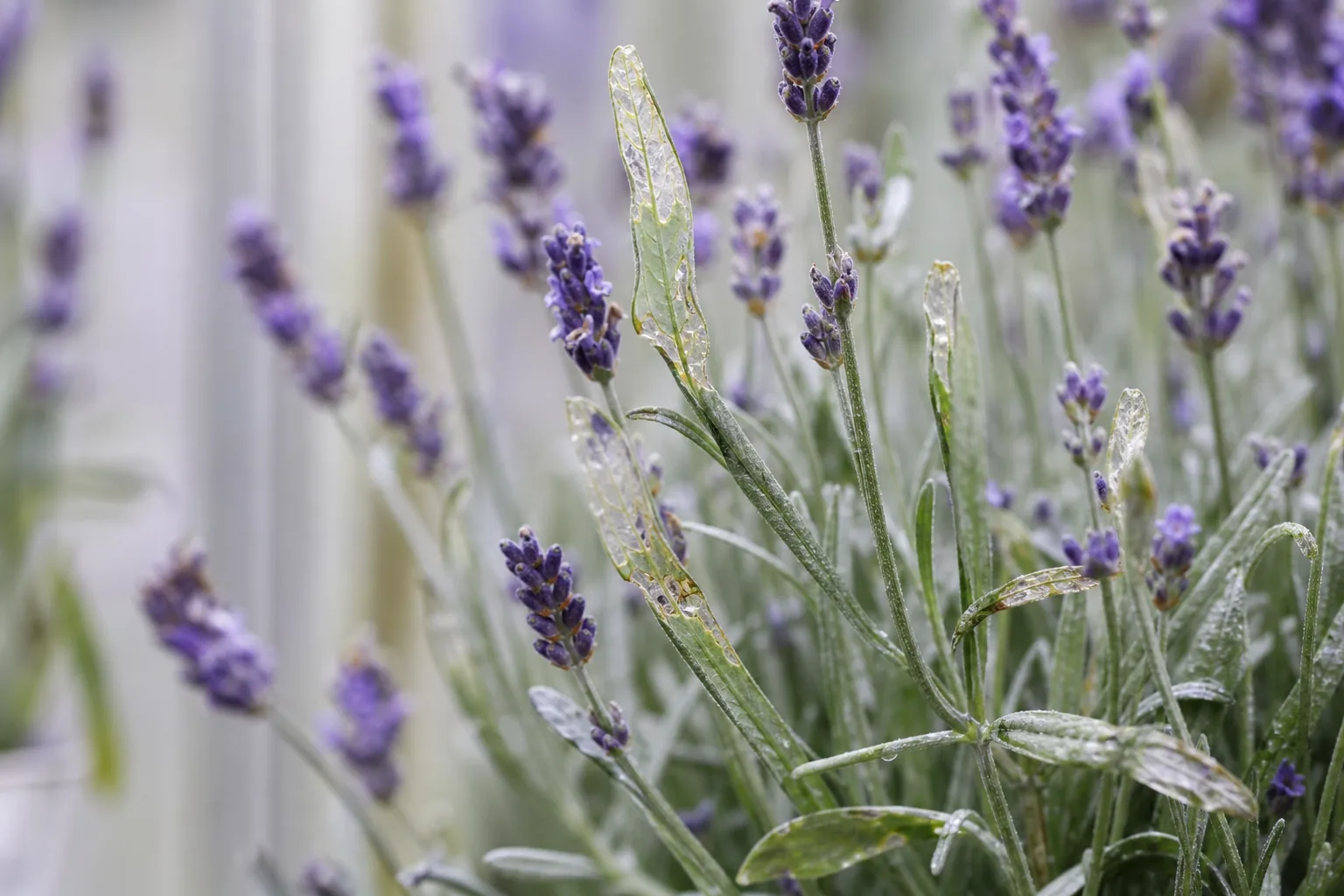
Transparent Leaves on Lavender: Causes, Checks & Fixes
This guide covers transparent leaves on Lavender. See also the general Transparent Leaves guide, watering, and light pages for this plant.
Transparent Leaves on Lavender: Causes, Checks & Fixes
Quick answer
Transparent leaves on English lavender (Lavandula angustifolia) look water-soaked or glassy, losing the normal matte silvery opacity of healthy foliage. On this Mediterranean dryland herb, that pattern usually means edema from overwatering in humidity, wet foliage sitting overnight, thrips or mite scraping, or advancing rot stress-not the healthy wax bloom that makes lavender look silver from across the garden.
First step: probe soil at 7 cm depth and confirm crown firmness. If the mix is wet in humid weather and inner leaves show glassy blisters while the crown is still firm, start with a dry-down culture fix per the lavender watering guide-not pest sprays. If silvery linear scars come with black frass and a positive tap test, open the thrips page. Glassy tissue plus a soft crown means escalate to root rot rescue the same day.
This URL is the transparency and edema sub-intent hub. Chronic wet-soil collapse without a glassy edema story belongs on overwatering.
What transparent leaves look like on Lavender
Healthy lavender carries narrow, linear to lanceolate grey-green leaves under one inch long, covered with fine white hairs that create a soft velvety silver sheen. When you hold healthy foliage to a window, light passes through the thin leaf-but the tissue looks dry and opaque silver, not water-filled.
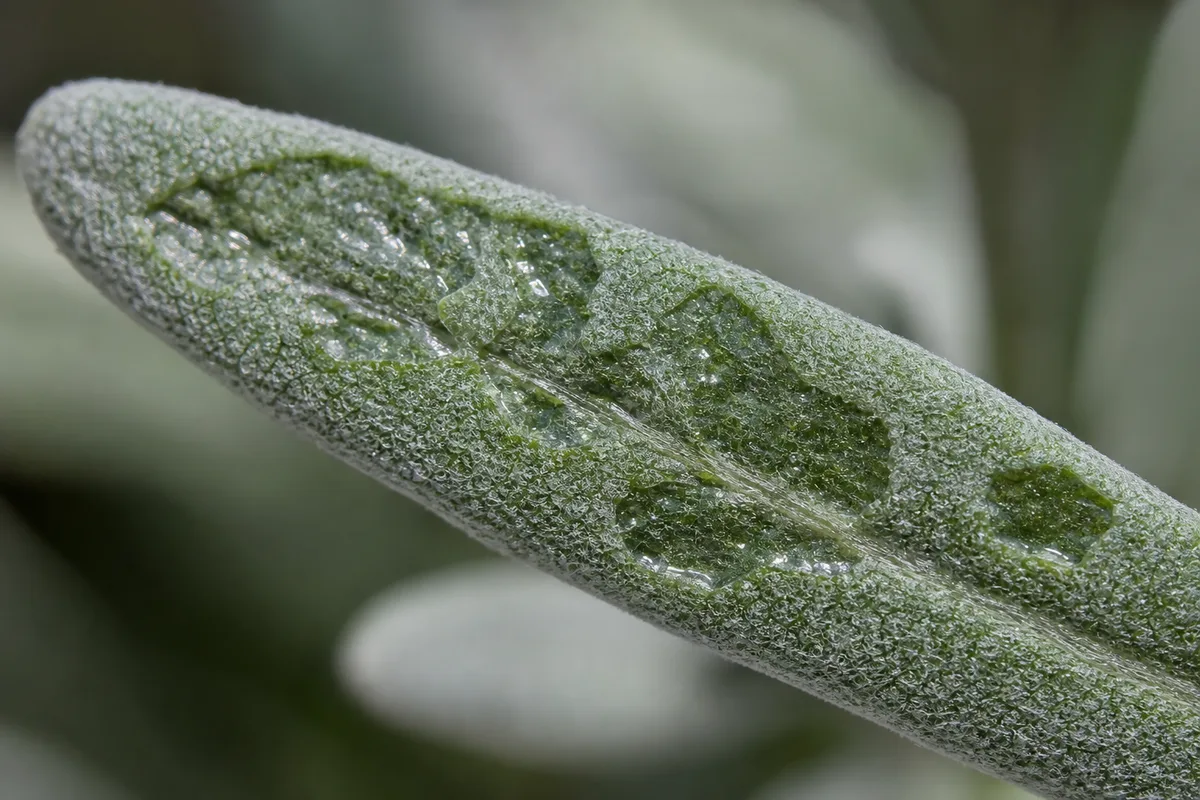
Transparent Leaves symptoms on Lavender - compare with healthy tissue on the same plant.
Normal glaucous bloom vs. glassy edema vs. pest-scraped tissue
| What you see | Texture when backlit | Crown / soil | Likely cause |
|---|---|---|---|
| Even matte silver-grey sheen | Dry, opaque silver | Firm crown; soil dry at 7 cm | Healthy glaucous bloom |
| Glassy water-soaked patches or blisters | Wet-looking, translucent pockets | Often firm; mix wet in humidity | Edema from wet culture |
| Fine silvery-bronze linear streaks | Thin scraped surface, not water pockets | Firm; frass or insects on tap test | Thrips or spider mites |
| Yellowing then glassy before brown | Uneven collapse | Soft crown; sour wet mix | Rot stress-see root rot |
Edema on lavender often appears as blister-like translucent spots on lower inner foliage in dense, humid pots before the whole plant looks sick. That localized pattern differs from succulents, where entire leaves may turn uniformly glassy. Pest damage looks scraped and dull bronze, not uniformly water-logged.
Why Lavender foliage turns transparent
Edema from overwatering in humid nights
Edema is a non-infectious disorder that appears when roots absorb water faster than leaves transpire it-common when soil stays wet during cool, humid nights or extended rainy weather. Water pressure builds in leaf cells, they enlarge and burst, and you see bumps or glassy water-soaked areas that may later cork over tan and brown.
Lavender is especially prone because it evolved for full sun and dry, well-drained soil. Container growers in monsoon or coastal humidity often combine small frequent drinks, heavy peat mix, and weak light-exactly the conditions extension guides associate with edema: high soil moisture, high relative humidity, and reduced transpiration.
Wet foliage overnight and dense inner growth
Mediterranean herbs transpire heavily in hot daytime sun and shut down at night. Overhead irrigation or misting in the evening keeps foliage wet through cool humid hours when transpiration is lowest-amplifying edema on narrow leaves packed in the plant center. Dense inner growth with poor airflow traps humidity the same way greenhouse stock develops oedema in late winter.
Evening wetting is not the same problem as one deep morning soak at the pot edge when soil is dry at 7 cm-that pattern matches lavender watering culture and dries before night.
Thrips and mite surface scraping
Thrips rasp leaf surfaces and suck cell contents, leaving silvery to dark brown scabby scarring and black varnish-like frass. On lavender’s narrow silvery foliage, that damage reads as dull scraped streaks-not water-filled blisters. Spider mites cause bronze stippling and fine webbing on stressed plants; severe scraping can thin the leaf surface until it looks semi-transparent, but the backlight test shows dry scar tissue, not edema pockets.
How to confirm the cause
Work through these checks in order:
- Backlight test - Hold suspect foliage to bright light. Water-soaked edema looks glassy and swollen; pest scars look flat, silvery, and scraped.
- Soil moisture at 7 cm - Wet heavy pot in humid weather with firm crown points to edema or early overwatering, not drought.
- Crown firmness - Pinch the woody base. Soft, mushy tissue with glassy lower foliage is rot urgency.
- Watering method and timing - Overhead or evening foliage wetting in monsoon season?
- Pest confirmation - Shake a shoot over white paper; check for mite webbing on inner stems.
- Growth location - Lower inner leaves in a dense humid pot vs. uniform scarring on new shoot tips.
If soil has been soggy for a week and wilting appears on wet mix, transparency may be an early warning before full overwatering collapse-cross-check the overwatering guide for root inspection steps.
First fix for Lavender
Match one primary action to your confirmed branch-do not stack repot, soap, and misting on day one.
Edema on a firm crown: culture fix
Stop watering until soil is completely dry 7 cm deep. Empty saucers, move the pot to full sun with airflow, and never wet foliage in the evening during humid weeks. Thin one or two congested inner stems so air reaches the crown. Resume soil-level morning water only when the probe reads dry-often skipping entire monsoon weeks if rain keeps the mix damp.
Pests: IPM if scar pattern confirmed
When the tap test shows thrips or mites and scars are silvery-not glassy-rinse shoot tips with plain water first, hang a blue sticky trap at canopy height, then follow the thrips or spider mites page for soap timing. Pesticides will not restore scraped tissue; new clean silver tips mark success.
Rot: same-day protocol if crown softens
Glassy foliage with wilting, soft crown, and sour wet soil is not edema to wait out. Withhold water, unpot, trim mushy roots, and repot into fresh gritty mix with the crown high-full rescue detail on root rot. Take cuttings from firm upper stems if the base is questionable.
Step-by-step recovery
Mild edema branch (firm crown, wet 7 cm, glassy inner leaves):
- Dry-down per watering intervals-probe before every drink.
- Relocate to the sunniest airy spot; rotate the pot weekly.
- Remove only the worst glassy inner leaves after new silver tips appear-do not strip the plant bare.
- If mix stays waterlogged despite dry-down, repot into one-part compost to three-parts grit in terracotta-borrow the gritty repot steps from overwatering without repeating a full wet-soil lecture here.
Confirmed pest branch:
- Rinse and trap as above; treat buds and shoot tips before wands open on harvest plants.
- Recheck weekly until new growth emerges unscarred.
Rot branch:
- Same-day root rescue; do not fertilize stressed plants.
Monitor crown firmness weekly through humid season. Transparency that clears shows new opaque silver tips, not old blistered tissue re-darkening.
Recovery timeline
On a firm plant with edema only, expect new matte silver shoot tips in two to four weeks after dryness and airflow improve-many plants recover from edema once growing conditions normalize. Old glassy patches may stay corky or thin; judge health by fresh growth.
Rot-linked transparency can progress to collapse within days if the crown stays wet-do not wait a month for cosmetic recovery. Pest-scarred leaves do not revert; clean new foliage in one to two flushes after IPM.
Causes to rule out
- Normal glaucous bloom - Dry silver sheen on firm plants in dry gritty mix; backlit but not water-filled.
- Frost damage - Crisp blackened tissue after a freeze, not humid-season blisters.
- Pale or yellow foliage without glassiness - See pale leaves and yellow leaves for color-problem triage.
- Grey wilting on wet soil without glassy edema - Primary diagnosis may be overwatering rather than transparency.
What not to do
Do not increase watering when foliage looks waterlogged-that deepens edema and invites rot. Do not mist foliage in humid monsoon evenings. Do not oil-spray or soap a plant you have not confirmed as pest-damaged. Do not repot into rich moisture-retentive mix on day one unless roots are mushy. Do not fertilize glassy stressed foliage hoping for recovery.
How to prevent transparent leaves next time
Grow lavender in full sun and extremely well-drained soil with a 7 cm dry-down probe before every drink. Use terracotta, open drainage holes, and gritty mix-sharp drainage prevents crown rot. Water at soil level in the morning so leaves dry before night. Skip supplemental irrigation during monsoon weeks when pots stay damp from rain. Thin dense centers after bloom for airflow. Hang a blue trap near spring wands if thrips scarred foliage last season.
French lavender (L. dentata) and Spanish types tolerate marginally more humidity in warm zones but still fail in wet peaty flats-English lavender is the strictest dryland reference for container culture.
Lavender care cross-check
Glassy inner foliage on wet lavender in humidity is an early warning before crown rot-not a cosmetic quirk. If your transparency checklist keeps pointing to wet mix, read overwatering for root-trim protocol and wilting when stems droop on damp soil. The lavender overview explains why silver foliage and dry roots belong together.
When to worry
Same day: glassy leaves plus soft crown, sour smell, or collapse after a wet week-open root rot.
This week: firm crown but recurring edema blisters-fix drainage and watering rhythm before rot follows.
Lower urgency: isolated silvery scrape marks, firm crown, dry probe, positive pest ID-IPM on the pest pages without emergency repot.
Conclusion
Transparent lavender foliage is a visual diagnosis problem first: glassy edema blisters from humid wet culture, scraped silvery pest scars, or translucent tissue ahead of rot. Backlight the leaves, probe at 7 cm, and pinch the crown-then execute one primary fix (dry-down culture, pest IPM, or root rescue). Old transparent patches may never re-silver; recovery means new opaque grey-green tips on a firm plant. When in doubt between early edema and full overwatering, use both this page and the overwatering guide with the scope table above.
When to use this page vs other Lavender guides
- Lavender watering guide - Use for routine moisture checks before assuming transparent leaves is the main issue.
- Lavender problems hub - Browse all 51 common issues on this species.