Thrips on Lavender: Causes, Checks & Fixes
Quick answer
Thrips rasp lavender needles and unopened bud scales, leaving silvery-bronze scars and black frass that distort spring flower wands. First step: shake a developing wand over white paper to confirm slender insects, then hang a blue sticky trap at canopy height while you plan treatment.
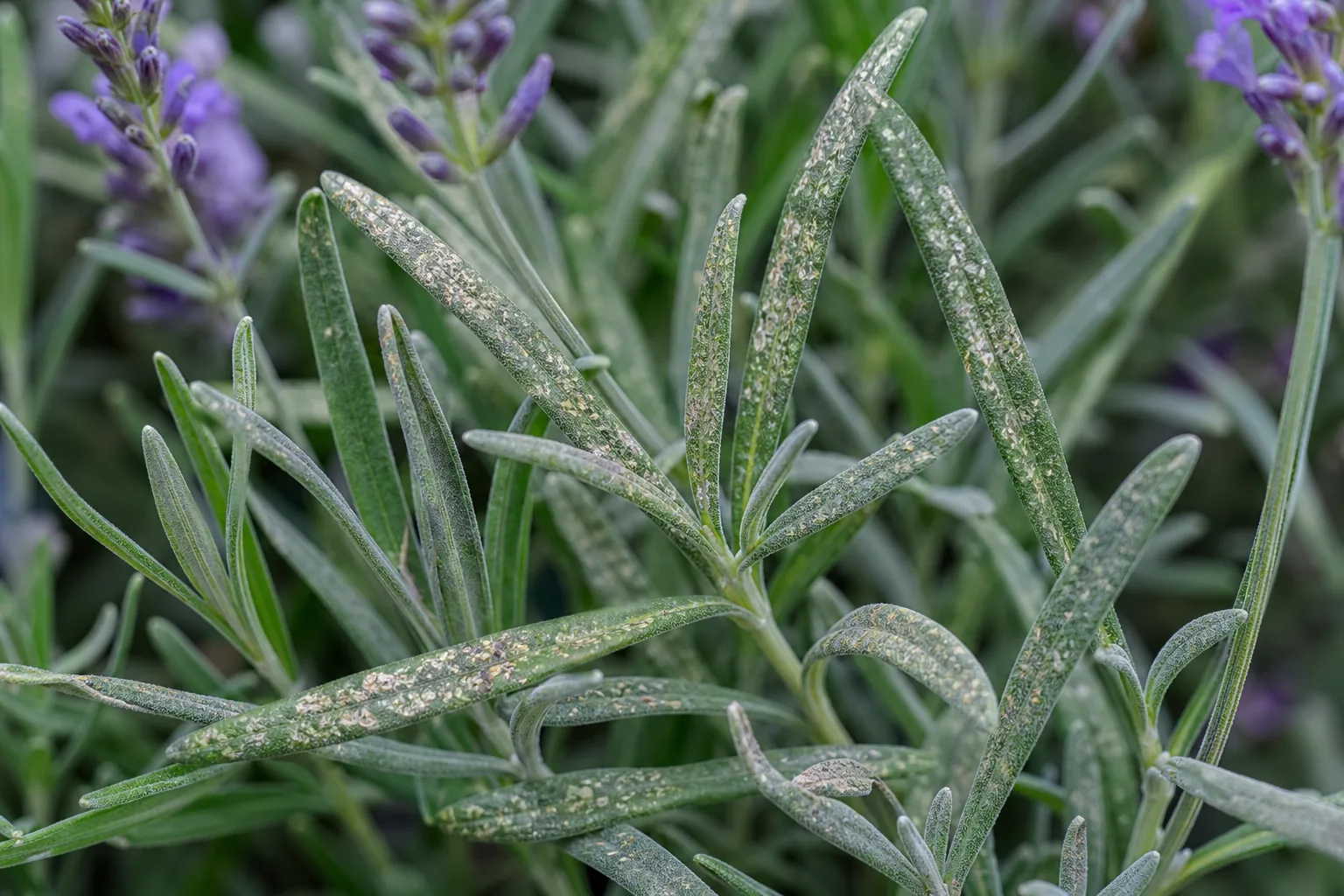
Thrips on Lavender: Causes, Checks & Fixes
This guide covers thrips on Lavender. See also the general Thrips guide, watering, and light pages for this plant.
Thrips on Lavender: Causes, Checks & Fixes
Quick answer
Thrips are slender sap-feeding insects that scrape English lavender (Lavandula angustifolia) and hybrid lavandin foliage, leaving silvery-bronze scars on narrow needles and black fecal specks on developing flower wands. On a plant grown for fragrant harvest spikes, bud damage is the costliest symptom-scales twist, petals open streaked, or buds fail to open at all.
First step: shake a tight flower wand over white paper. If tiny yellow to brown insects fall out and move, you have thrips-not drought stress, heat scorch, or a nutrient problem. Hang a blue sticky trap at canopy height near the newest shoots while you assess how far scarring has spread across spring wands.
Container growers on south-facing balconies often see the first silver streaks within days of moving a greenhouse-overwintered pot outdoors-thrips that were barely visible indoors explode once tender wand tissue pushes in warm spring light.
What thrips look like on lavender
Lavender’s narrow, silvery foliage makes thrips scrape damage unusually visible compared with broad-leaf houseplants. Healthy needles look matte silver-green; thrips-scarred tissue turns dull bronze with fine linear streaks where cells were rasped.
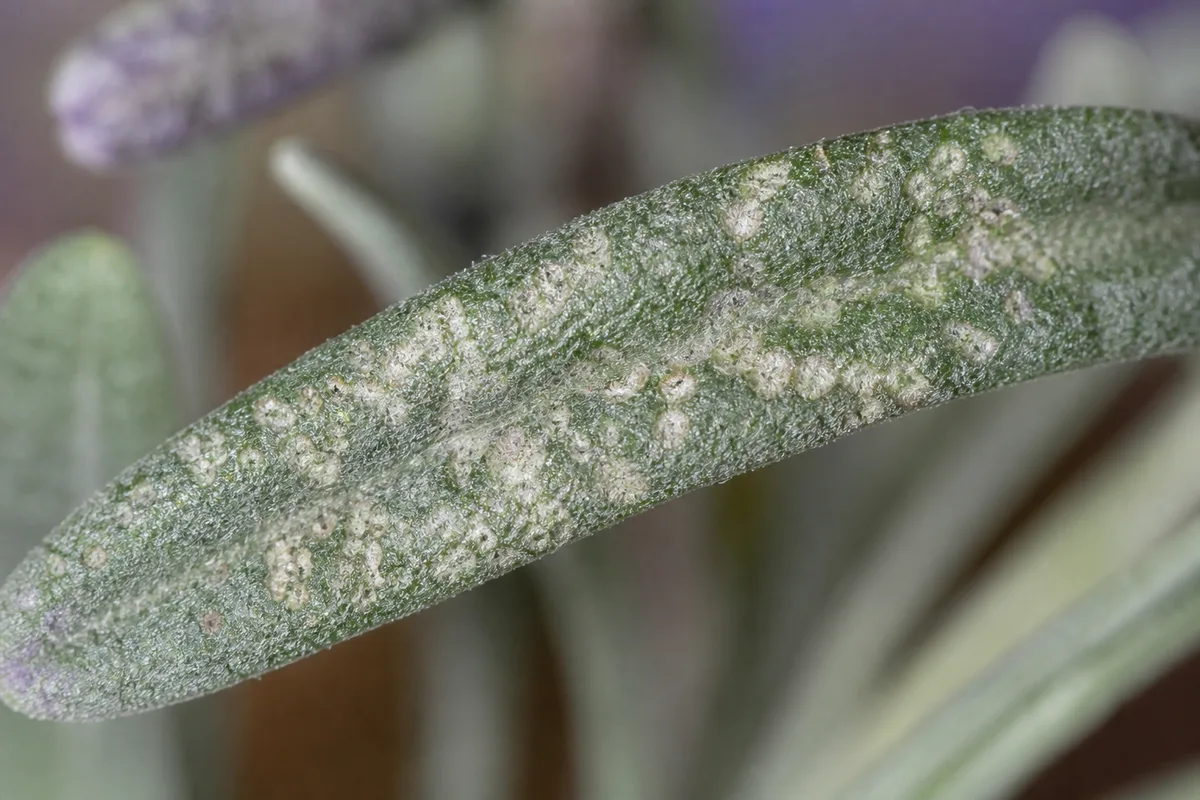
Thrips symptoms on Lavender - compare with healthy tissue on the same plant.
On flower wands-the highest-stakes site on harvest lavender:
- Silvery or bronze scrape marks on partially open purple petals
- Twisted or ruffled bud scales on tight spring wands before bloom
- Black varnish-like fecal specks on bud bracts and nearby needles
- Wands that open crooked, stay partially closed, or abort before peak fragrance
On foliage:
- Silvery stippling or linear scars along needle edges
- Distorted or narrow new shoots at branch tips in heavier infestations
- Black specks on upper needle surfaces where thrips fed
- Premature browning of heavily scarred needles when feeding is intense
Thrips damage feels dry and scraped-not the shiny tackiness aphids leave behind. Spider mites cause fine yellow stippling with webbing at stem tips; thrips leave broader silvery trails without silk. Many growers first notice thrips when a wand opens streaked instead of uniform purple.
Why lavender gets thrips
Lavender pushes soft spring shoots and tight flower wands just as thrips populations peak in warm weather. Thrips feed on tender leaves, flowers, and growing tips-exactly the tissue English lavender and lavandin (L. × intermedia) produce in volume before the main harvest window. Western flower thrips (Frankliniella occidentalis) is a common landscape species that hides inside unopened buds and beneath bud scales, where contact sprays often miss adults until petals expand.
Humid microclimates in dense shaded mounds
Lavender is a Mediterranean sun herb that prefers dry, well-drained soil and full sun, but real-world pots often violate that ideal. Leggy plants stretching toward a window, crowded balcony rails, or hedges tucked against a north wall develop dense inner growth that traps humidity exactly where thrips shelter. Correcting leggy growth and heat-stressed soft tissue helps long term, yet an established thrips colony inside unopened bud scales will not disappear from sun alone-you still need direct pest control on affected wands.
Greenhouse-to-balcony spring introduction
Container lavender overwintered in a greenhouse, sunroom, or bright indoor spot frequently arrives at spring outdoors with low-level thrips that explode once wand formation starts. The pest was present on tight buds all winter; warm outdoor air and rapid new growth simply make damage visible. Skipping quarantine on a new nursery pot before placing it beside harvest plants is one of the fastest ways to spread thrips across a balcony collection.
In-ground lavender hedges are less prone to explosive outbreaks than cramped containers, but weedy edges and neighboring ornamentals can harbor alternate hosts that reinfest clean plants each spring. Unlike aphids, thrips do not produce sticky honeydew as the primary sign-scraping damage and silvery scars dominate the picture on lavender.
How to confirm the cause
Work through these checks in order:
- Tap test - Hold a flower wand or young shoot over white paper and tap sharply. Thrips are slender insects about 1/16 inch long, yellow to brown, and they move when disturbed. Static debris does not count.
- Bud scale inspection - Use a hand lens on tight wands at stem tips. Thrips often cluster under bud scales where sprays cannot reach until petals expand.
- Scar pattern - Silvery linear streaks with black specks point to thrips. Fine yellow dots with webbing suggest spider mites instead.
- Blue sticky trap - Hang a blue trap at canopy height for three to five days. Several thrips per card supports active infestation; rising counts mean the population is still building.
- Inner mound check - Part dense inner branches on shaded pots and inspect protected shoots. Container lavender mounds offer many hiding spots along pot rims and overlapping stems.
- Neighbor scan - Check other plants on the same rail or windowsill. Thrips crawl and fly short distances between touching foliage.
If soil follows your normal dry-down watering rhythm, stems are firm and woody, and damage is only on oldest lower needles with no wand scarring, age or light stress may explain symptoms better than thrips.
The first fix to try
Shake a developing flower wand over white paper to confirm thrips, then hang a blue sticky trap at canopy height near the newest shoots.
That single step separates thrips from lookalike problems and gives you a baseline for whether the population is rising or falling. Remove the most heavily scarred wands and any shoots with extensive silvering. Bag dropped debris rather than leaving it on the soil surface where nymphs can pupate.
Do not spray everything on day one. Confirm the pest first, then treat based on how far damage has spread across buds and new growth.
Step-by-step recovery
Once thrips are confirmed, work in this order:
- Trap monitoring - Keep blue sticky traps at canopy height and note counts every three to five days. Falling counts after treatment mean control is working; climbing counts mean you need another soap cycle or escalation.
- Sanitation - Prune off scarred wands and heavily stippled new shoots every few days. Drop material into a bag, not the compost pile near outdoor lavender.
- Insecticidal soap on buds and shoot tips - Spray developing wands, new needles, and inner branch crevices thoroughly on a calm morning. Repeat every five to seven days for two to three cycles to catch newly hatched nymphs-thrips develop through multiple life stages, and a single spray only hits exposed individuals. Follow label rates for ornamentals and let foliage dry before midday sun on container plants to reduce phytotoxicity risk.
- Target buds deliberately - Thrips hide inside unopened bud scales. A light spray that only hits open flowers will miss most of the population on lavender.
- Improve sun and spacing - Move pots to the sunniest airy spot and thin dense inner growth so needles dry quickly after rain or irrigation. Full sun alone does not cure an active infestation, but it supports recovery once pests are controlled.
- Hold heavy fertilizer - Do not push nitrogen while the plant is pest-stressed. Resume light feeding after two weeks of clean new silver tips on a specimen that already had adequate summer light per your lavender overview care baseline.
- Escalate if soap cycles fail - After two full soap cycles with trap counts still high, consider spinosad labeled for ornamentals-often more effective than soap on hidden thrips-applied per label with harvest timing in mind. Container growers with recurring outbreaks can introduce predatory mites such as Amblyseius cucumeris in enclosed porch setups, though open balcony hedges rarely sustain biological control alone.
For heavy infestations on prized harvest plants, commercial growers rotate products because thrips develops resistance easily. Home gardeners should exhaust soap, sanitation, and trapping before reaching for broad-spectrum sprays that wipe out beneficial insects.
Recovery timeline
Light infestations caught on the first silvery bud often stabilize within one to two weeks of trapping and repeated soap. New needles should emerge clean silver once trap counts drop.
Moderate container infestations usually need two to three weeks of repeated treatment. Old scarred needles and streaked petals will not revert to perfect form-judge success by clean new wands and fewer insects on tap tests.
If stippling spreads across new growth despite two full soap cycles, reassess whether thrips are still present or another stressor such as spider mites has joined the picture. Waiting until bloom season ends usually means most harvest spikes are already ruined.
Lookalike symptoms
| Sign | Likely cause | Quick check |
|---|---|---|
| Silvery wand streaks + black specks | Thrips | Tap test over paper |
| Fine stippling + webbing at tips | Spider mites | Webbing on newest growth |
| Sticky needles + soft green clusters | Aphids | Pear-shaped insects on shoots |
| White cottony tufts in axils | Mealybugs | Wax clusters at stem bases |
| Scrape marks without frass or insects | Mechanical damage | Hail, wind, or pet contact history |
| Uniform needle greying + dry pot weight | underwatering on Lavender | Dry-down check |
Mistakes to avoid
Do not assume streaked wands mean drought stress and respond with extra water. Wet soil plus damaged foliage invites root problems on lavender without touching thrips.
Do not rely on sticky traps alone without treating buds and shoot tips where thrips hide on dense mounds.
Do not use broad-spectrum insecticides as a first move on balcony lavender. Products that wipe out predatory mites often flare spider mites in the same hot dry conditions thrips already favor.
Do not apply soap or oil during peak midday sun on sun-baked container pots-schedule treatments for calm mornings so needles dry within a few hours.
Do not skip quarantine on a new nursery pot because the label says pest-free. Inspect developing wands before placing it beside established harvest plants.
How to prevent thrips next time
Quarantine new lavender pots for two weeks before placing them on a shared balcony rail. Hang blue sticky traps early when soft spring shoots appear-not only after wand damage shows.
Scout developing wands weekly from late winter through the main bloom period. Remove spent or scarred flowers on schedule; thrips congregate where old and new tissue overlap on woody mounds.
Keep your normal dry-down watering rhythm so plants are not drought-stressed, but avoid crowding multiple pots so stems touch. One infested greenhouse purchase can seed thrips across an entire container collection.
When moving overwintered lavender outdoors in spring, inspect wands and inner branch joints first. A plant that looked clean indoors may harbor thrips that become visible only when forced spring growth starts under full sun.
Lavender care cross-check
Thrips ruin bloom quality on harvest lavender-catch damage at the bud stage on spring wands, not after the harvest window passes. If your plant is simultaneously stretching toward dim light and showing silver scars only on shaded inner shoots, address leggy growth after the pest is controlled; dense shade prolongs humid pockets where thrips rebound.
Balcony English lavender after a greenhouse winter often needs one disciplined trap-plus-soap cycle in early spring before wands elongate-clean silver regrowth on new tips within two to three weeks is a realistic outcome when treatment starts at the first distorted bud scales.
When to worry
Treat as urgent if:
- Silvery scarring spreads across multiple wands within days on an otherwise firm plant
- Buds fail to open during peak bloom season while trap counts climb
- New growth stays distorted after two full soap cycles
- Several lavender pots on the same rail show fresh scarring simultaneously
Thrips rarely kill established woody lavender outright, but they can ruin an entire bloom cycle-the main reason most people grow the plant. Escalate treatment after two soap cycles if trap counts stay high rather than waiting for petals to open and reveal damage that is already done.
For chronic infestations that return after three disciplined treatment cycles on an otherwise healthy specimen, contact your local extension office for identification help before applying systemic products near open harvest blooms.
Related lavender problems
- Lavender overview - Sun, soil, and harvest culture hub
- Lavender watering - Dry-down rhythm that supports pest recovery
- Leggy growth on lavender - Shaded dense mounds that trap humidity
- Heat stress on lavender - Soft growth that attracts pests
- Aphids on lavender - Sticky honeydew lookalike
- Spider mites on lavender - Webbing and fine stipple differentiation
- Mealybugs on lavender - Cottony wax clusters at stem bases
Conclusion
Thrips on lavender are a bud-stage problem first and a foliage problem second-confirm with a tap test on developing wands, monitor with blue traps, and treat tight bud scales with repeated morning soap before harvest spikes open. Scarred needles stay blemished; success means clean new silver shoots and undistorted next wands. If stippling keeps spreading after two soap cycles, escalate to spinosad or seek extension help rather than waiting out the bloom you meant to harvest.
When to use this page vs other Lavender guides
- Lavender watering guide - Use for routine moisture checks before assuming thrips is the main issue.
- Lavender problems hub - Browse all 51 common issues on this species.
- Brown Tips on Lavender - Different entry point when symptoms overlap with thrips.
- Yellow Leaves on Lavender - Different entry point when symptoms overlap with thrips.