Wind Damage on Lavender: Causes, Checks & Fixes
Quick answer
Wind damage on lavender snaps tall flower wands, sandblasts narrow silvery leaves on exposed rooftops, and dries pots fast-not usually fatal on firm rooted plants. First step: prune broken stems to firm wood, stake remaining wands loosely, and dawn-water only if the mix is dry 7 cm deep after desiccating wind.
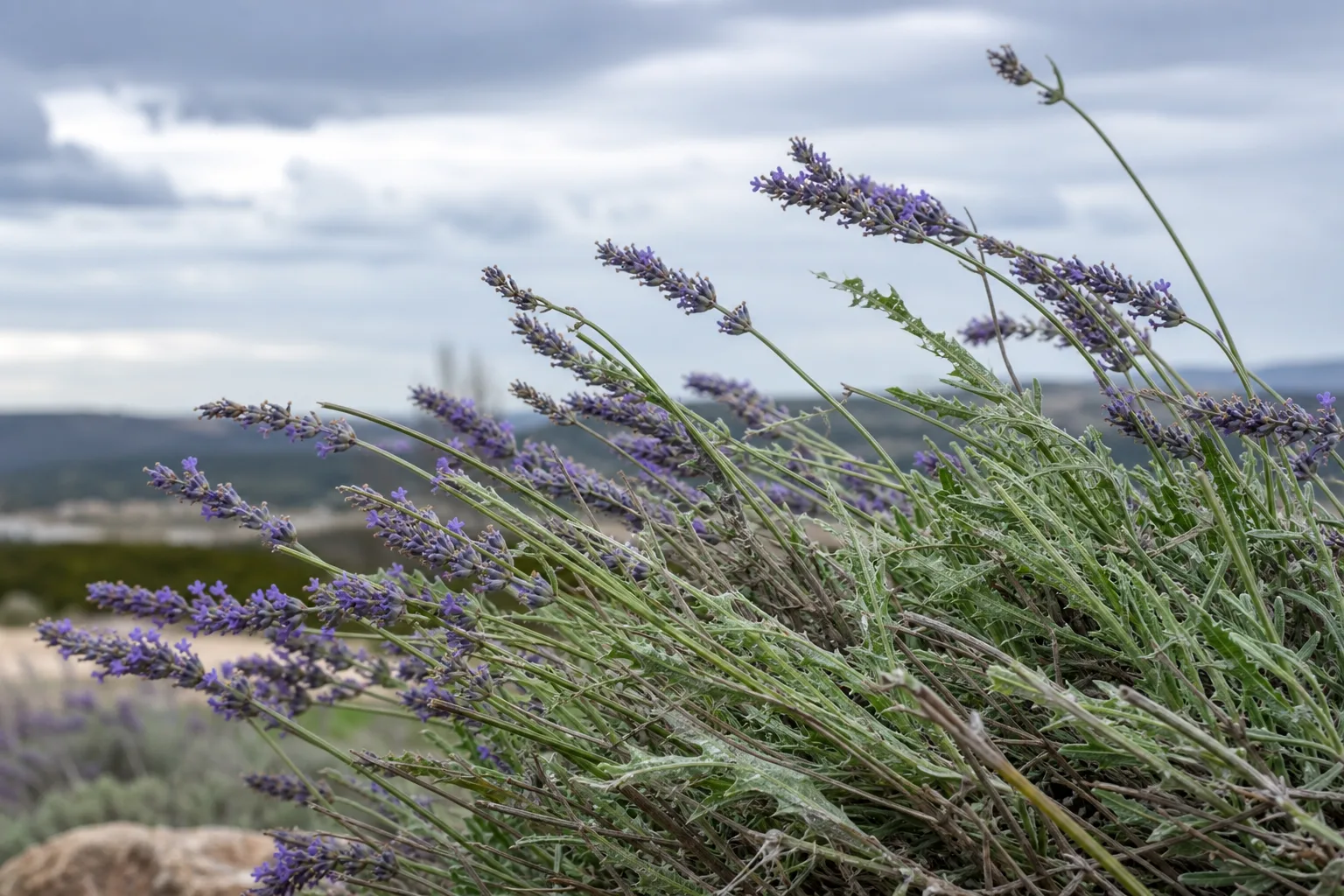
Wind Damage on Lavender: Causes, Checks & Fixes
This guide covers wind damage on Lavender. See also the general Wind Damage guide, watering, and light pages for this plant.
Wind Damage on Lavender: Causes, Checks & Fixes
Quick answer
Wind damage on English lavender (Lavandula angustifolia) snaps bloom wands, sandblasts narrow silvery leaves on exposed balconies, and desiccates container mix faster than calm weather-lavender tolerates normal breezes better than humid shade plants, but extreme gusts break soft wands and dry roots quickly on rooftop pots.
First step: prune broken stems to firm wood, stake remaining wands loosely, and dawn-water only if the mix is dry 7 cm deep.
Keep the crown dry after tip-over. Do not flood a plant that already sat in saucer mud.
Wind damage vs. wilting and heat stress on Lavender
This page covers mechanical wind injury-snapped wands, sandblasted foliage, tipped pots, and wind-driven desiccation after gust events. It is not a full guide to every wilt pattern on lavender.
| Pattern | Leading cause | This page vs. sibling guide |
|---|---|---|
| Sudden wilt after gusty dry wind, dry 7 cm soil, tipped pot | Wind desiccation | Start here - stabilize, dawn water if dry |
| Gradual limp stems on wet soil without storm timing | Overwatering or rot | See wilting and root rot |
| Midday droop in calm hot air, soil still moist | Heat stress | See heat stress - watering timing differs |
| Slow one-direction lean over weeks, no storm | Phototropism or weak wood | See plant leaning |
| Wobble after recent repot without wind event | Loose root ball | See repotting stress |
Wind desiccation can mimic drought, but the weather event, windward abrasion, and pot movement tell you to fix exposure and stability-not only to add water on a calendar.
What wind damage looks like on Lavender
Mechanical wind injury on lavender shows distinct patterns you can separate from disease or chronic underwatering:
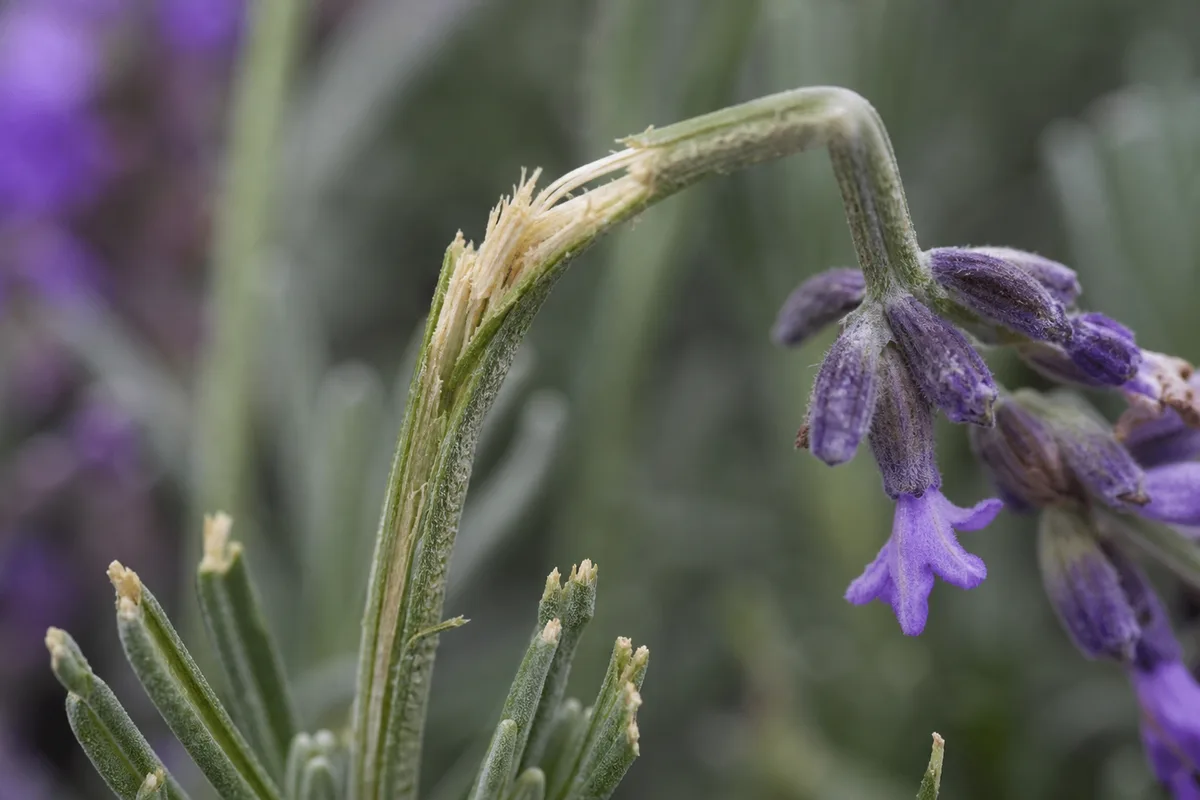
Wind Damage symptoms on Lavender - compare with healthy tissue on the same plant.
Snapped wands, sandblasted foliage, tipped pots, and desiccation wilt
- Snapped flower wands - Tall bloom spikes break at mid-stem or near the base after gusts, especially on soft nitrogen-fed growth or one-sided bloom weight.
- One-sided brown abrasion - Windward narrow silvery leaves show sandblasted or scorched tips while leeward foliage stays intact. Lavender has narrow gray-green leaves, not true needles-abrasion shows on the exposed edge first.
- Tipped or rolled pots - Lightweight plastic containers on railings end on their side; mix blows away from the lift edge and roots may pull slightly from the wall.
- Rapid wilt from desiccation - Firm plants droop temporarily after dry wind strips moisture from foliage and surface mix faster than calm days-not sour wet rot at the crown.
- Loose wobble - Crown rocks in the container after repeated tipping or a recent shallow repot without firm settling.
What wind damage is not: circular leaf spots, uniform mushy stem bases on wet soil, sticky pest residue, or slow window-lean without a recent storm.
Why Lavender suffers wind damage
English lavender evolved on dry rocky Mediterranean slopes with full sun, lean soil, and good air circulation. That heritage makes established in-ground plants surprisingly wind-tolerant-the woody base and fibrous roots anchor well in free-draining border soil. Container lavender on exposed rooftops and coastal balconies faces a different physics problem.
Mediterranean dryland biology and wand sail effect
Mature English lavender reaches roughly 30–90 cm (1–3 ft) tall with stiff flower wands that rise above the silver mound in summer. Those wands act as sails. Lavandin and tall cultivars carry even longer stems. French lavender (Lavandula dentata) and Spanish types are often grown as seasonal containers in cold climates and can be less cold-hardy and more top-heavy in pots-worth extra staking on windy decks.
Narrow gray-green foliage catches less wind than broad leaves, but constant gusts still strip moisture through the leaf surface-especially on hot dry afternoons when evaporation outpaces root uptake in a small soil volume. Established plants are drought tolerant once rooted, but containers dry faster than in-ground hedges.
Container roots on exposed rooftops and coastal balconies
RHS container guidance recommends pots 30–40 cm (12–16 in) in diameter with large drainage holes and gritty mix. Smaller or tall narrow pots hold less ballast and tip easily. Plastic nursery pots on open rails are the most common failure point.
In-ground lavender hedges tolerate breezes; elevated containers meet higher effective wind speed. Roots have limited soil to search for moisture, so blow-over and desiccation compound quickly.
Soft wands vs. sun-hardened wood in windy sites
Soft nitrogen-rich wands snap before compact sun-hardened wood. Lavender still needs full sun and sharply drained soil-moving to deep shade for wind protection weakens stems long-term and defeats the plant’s drought adaptation.
Recent repots, fresh nursery stock, and bloom-heavy plants with minimal root anchorage are highest risk the first windy week after planting.
How to confirm the cause
Work through these checks in order:
- Weather event - Did damage appear within hours of known gusts or after moving the pot to an exposed rail?
- Break pattern - Snapped wands and irregular mechanical tears vs. mushy rot at the soil line?
- Pot moisture - Is mix dry and light at 7 cm depth after wind, or soggy with sour smell?
- Crown firmness - Press the woody base at soil level. Firm tissue supports wind diagnosis; soft grey mush points to rot.
- Abrasion side - Is browning mostly windward with intact leeward foliage?
- Stability - Was the pot tipped, shifted in the saucer, or rocking at the crown?
Confirmation decision table
| Damage type | Urgency | First action |
|---|---|---|
| Cosmetic snapped bloom wand, firm crown, stable pot | Low | Prune to firm wood; loose stake |
| Desiccation wilt, dry 7 cm soil, firm crown | Medium - same day | Dawn deep water; partial windbreak |
| Tipped pot, crown in saucer mud | High - same day | Clean crown; dry; firm repot if needed |
| Root lift / rocking in shallow repot | High | Firm gritty mix; brief base stake; no deeper burial |
| Mushy crown on wet soil after blow-over | Critical | Dry crown; stop watering; assess rot |
If only your exposed lavender shows windward abrasion while sheltered pots look fine, wind is the leading cause.
First fix for Lavender (by damage type)
Default first fix: prune broken stems to firm wood, then stabilize what remains.
Match severity before adding extra steps:
- Snapped wands only - Sterilize shears; cut to firm green or woody tissue above a leaf node; loosely tie remaining wands to a slim stake with soft ties that allow slight movement.
- Desiccation wilt with dry soil - Dawn water deeply until excess drains; do not water again until 7 cm is dry per lavender watering culture.
- Tipped pot with crown mud - Right the pot; blot and air-dry the crown same day; never bury deeper to stabilize.
- Root rocking - Follow the repot-firming protocol below before the next gust.
Do not relocate permanently to deep shade. Do not overwater sympathy when soil is already wet from saucer spill.
Step-by-step recovery
- Inspect crown and roots after tip-over - Lift the pot upright; confirm the crown sits at the original soil line, not buried by spilled mix.
- Clean mud from crown if saucer spill - Gently remove wet soil from the woody base; let the crown air-dry hours before evening dew or re-watering.
- Prune snapped stems - Cut to firm wood; sterilize blades if jagged tears expose wet inner tissue.
- Stake wands and pot if needed - Use a slim stake beside tall wands with loose loops-not wire cinched tight. For repeat tipping, a ring stake around the outside of the container beats piercing the crown.
- Firm repot if rocked loose - See numbered protocol below; use gritty fast-draining mix per lavender soil.
- Resume dry-down rhythm - Not constant wet sympathy. Probe 7 cm depth before each deep soak.
- Trim sandblasted tips after new growth starts - Abraded tissue does not re-silver; wait for fresh shoots, then shear lightly for shape.
Repot-firming protocol for root rocking
- Slide the plant out gently; shake only loose spill mix, not the intact root ball.
- Trim mushy roots if present; keep firm white roots.
- Re-seat at the same crown depth-never deeper.
- Backfill with gritty alkaline mix; firm around the root ball without compacting into a waterlogged plug.
- Water once to settle; then return to dry-down watering only when 7 cm is dry.
- Add a temporary base stake or move to a heavier wide terracotta pot if tipping repeats.
Recovery timeline
Minor wand snap on a stable firm crown: new shoots from lower wood in two to four weeks in full sun.
Desiccation wilt with firm roots: perk within hours to one day after correct dawn water when soil was genuinely dry at 7 cm.
Sandblasted leaf tips: old tissue does not heal; new silver growth replaces it over several weeks.
Tip-over with crown mud dried same day: survival is good if the crown stayed firm; rot risk rises sharply if mud sat wet 12+ hours in cool weather.
Repeated seasonal tipping: escalate to heavier pots, in-ground planting, or permanent leeward placement-see plant leaning if structural lean persists after stabilization.
Causes to rule out
- Root rot wilt - Wet heavy sour pot without wind event; mushy crown; wilt despite moisture.
- Heat collapse - Midday droop in calm air; soil may still read moist; no mechanical tearing or pot movement.
- Transplant shock - Wilt after repot in still air; no gust timing or windward abrasion pattern.
- Weak nitrogen wands - Soft flop without storm may be feed or shade culture-see weak stems before blaming wind alone.
What not to do
Do not relocate to deep permanent shade for wind-lavender needs six or more hours of direct sun to rebuild strong wood. Do not overwater a tipped plant when saucer mud already saturated the crown-dry first. Do not bury the crown deeper after blow-over to stabilize; that invites crown rot in wet weather. Do not cinch stakes so tight that wands cannot flex slightly-rigid ties snap bark. Do not assume sandblasted tips will green up; wait for replacement growth.
How to prevent wind damage next time
- Heavier wide terracotta pots - Lower center of gravity than tall plastic; RHS notes containers dry quickly in summer but need weight on exposed sites.
- Seasonal wand staking - Install loose stakes when bloom wands elongate in early summer; remove or loosen after flowering if wood hardens.
- Grouped pots as windbreak - Place heavier containers windward; maintain open sun exposure to the south or west where possible.
- Gravel top-dress - Stabilizes surface mix and matches lavender’s preference for inorganic mulch such as rock or gravel that keeps crowns dry.
- Lean growth, not soft tall feed - Avoid high-nitrogen feeds before peak bloom on windy balconies; firm sun-hardened wood resists snaps better.
- Pre-wind water when dry - If dry wind is forecast and 7 cm is already dry, dawn-water before the gust front-not after drowning wet soil.
- Lee of a wall for storm nights - Move pots to the rain shadow at a wall base for storm warnings; return to full sun when calm.
When to worry - crown mud and root lift
Escalate same day when the crown sat in saucer mud after blow-over, when root mass pulls further from the container wall with each tipping event, or when the stem base softens after wind on already-wet soil-those patterns compound mechanical stress with rot.
Cosmetic snapped blooms on a firm crown are routine: prune, stake, resume normal lavender care rhythm.
Contact your local extension office if repeated balcony failures persist after heavier pots and leeward placement-site physics may require in-ground planting or a permanent screen.
Related lavender guides
- Lavender overview - Sun, soil, and Mediterranean culture hub
- Lavender watering - 7 cm dry-down rhythm after desiccating wind
- Lavender soil - Gritty mix for firm repot after tip-over
- Wilting on lavender - Wet-soil wilt and rot overlap
- Heat stress on lavender - Calm hot-day droop vs. gust damage
- Plant leaning on lavender - Slow phototropism and bloom weight
- Repotting stress on lavender - Post-repot wobble without wind
- Weak stems on lavender - Soft wands that snap before bloom
Conclusion
Wind damage on lavender breaks wands, abrades windward foliage, and dries pots on exposed sites-usually survivable when the crown stays firm. Prune to firm wood, stake loosely, dawn-water only if 7 cm is dry, and firm loose repots without burying the crown. Treat crown mud and root lift as same-day priorities; treat cosmetic wand snaps as routine seasonal maintenance. For wilt on wet soil or slow lean without storms, use the sibling guides above so this page stays focused on gust-driven mechanical injury.