Pale Leaves on Lavender: Causes, Checks & Fixes
Quick answer
Pale leaves on lavender lose the silver-blue tone and look washed-out yellow-green-usually from too little sun, wet roots, or heavy nitrogen feeding. Move to six or more hours of direct sun, water only when soil is dry 7 cm deep, and skip fertilizer until new tips regain silver color.
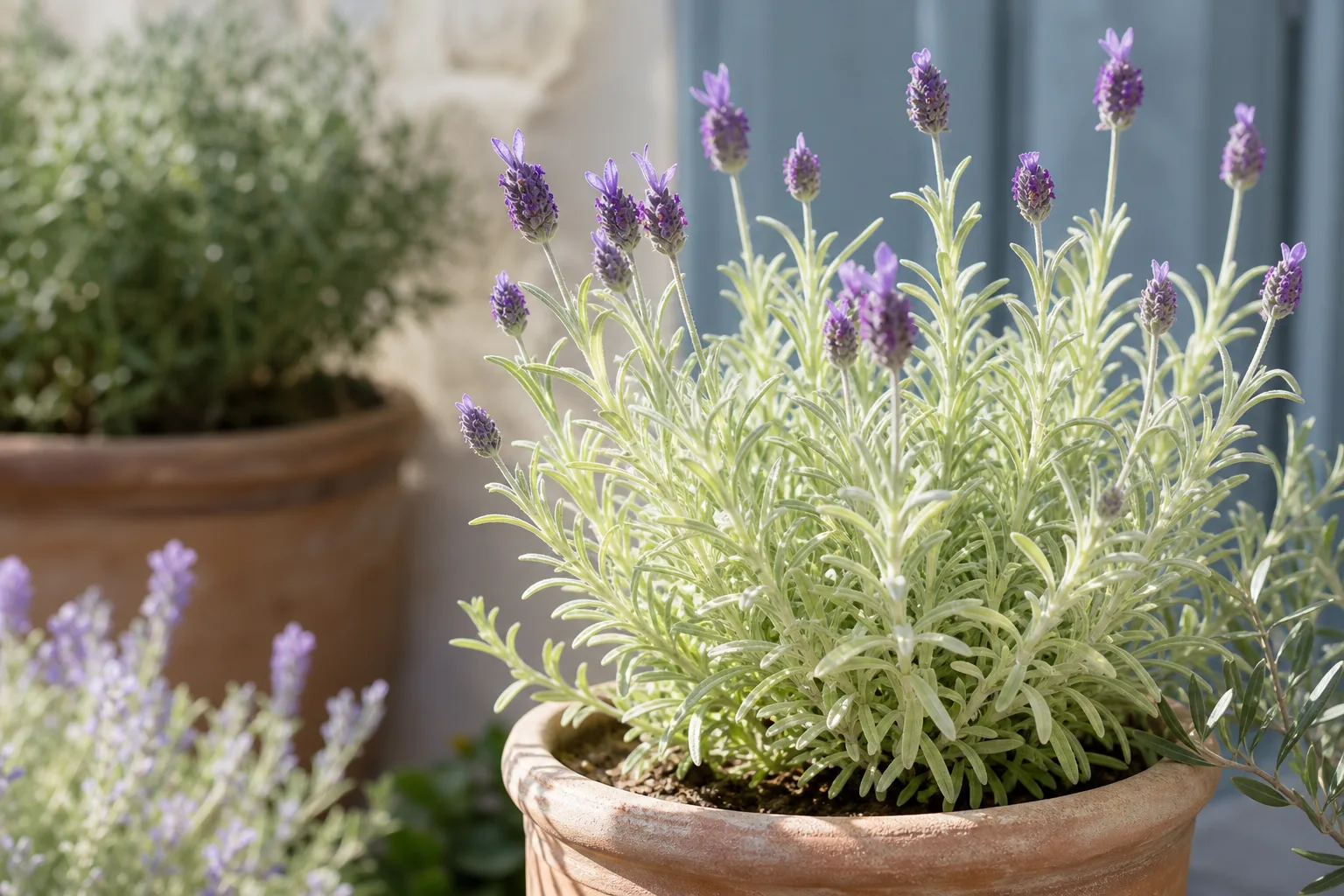
Pale Leaves on Lavender: Causes, Checks & Fixes
This guide covers pale leaves on Lavender. See also the general Pale Leaves guide, watering, and light pages for this plant.
Pale Leaves on Lavender: Causes, Checks & Fixes
Quick answer
English lavender (Lavandula angustifolia) with pale leaves shows washed-out yellow-green narrow grey-green foliage missing the silvery bloom-almost always shade, wet roots, or excess nitrogen, not mysterious disease. First step: move to maximum direct sun and confirm dry to medium, well-drained soil in full sun with dry-down watering before any fertilizer.
This page covers lime-green washout and silvery-bloom loss on healthy-looking mounds. For dull grey-green without yellow cast, see faded leaves. For chlorosis and base yellowing, see yellow leaves. For pure stretch without color loss, see not enough light.
Pale vs. faded vs. yellow leaves on lavender
Owners describe the same culture failure with different words. Pale usually means washed-out yellow-green tips or a whole mound that lost its reflective silver coat. Faded means dull flat grey-green without the strong lime cast. Yellow means chlorosis-often lower or inner leaves turning true yellow before brown, common on wet roots.
| What you see | Dominant color | Texture | Likely cause | Urgency | Read next |
|---|---|---|---|---|---|
| Washed-out lime-green, no silver sheen | Yellow-green pale | Firm thin stretch OR soft limp | Shade ± wet ± nitrogen | Medium unless crown soft | This page |
| Dull grey-green, silver gone | Flat olive-grey | Often firm if early | Shade or mild wet stress | Low–medium | Faded leaves |
| True yellow lower leaves | Yellow before brown | Soft if rot | Wet roots, poor drainage | High if wilting | Yellow leaves |
| Long bare wands, weak internodes | May stay grey-green | Thin reaching stems | Low light alone | Medium | Not enough light |
| Interveinal yellow on old leaves only | Yellow between green veins | Firm | Magnesium pattern, not uniform pale tips | Low | Soil test; not typical pale |
Pale and faded often share the same fix: more sun, less water, no nitrogen until new silver tips appear. This guide goes deeper on pale-specific confirmation-texture, root firmness, and the rule that old pale leaves do not re-silver.
What pale leaves look like on lavender
Healthy English lavender carries silver-grey to blue-green narrow leaves with a waxy surface bloom that reflects light. Pale plants look flat olive or lime-green instead-uniform across the mound or concentrated on newest tips. Three common patterns:
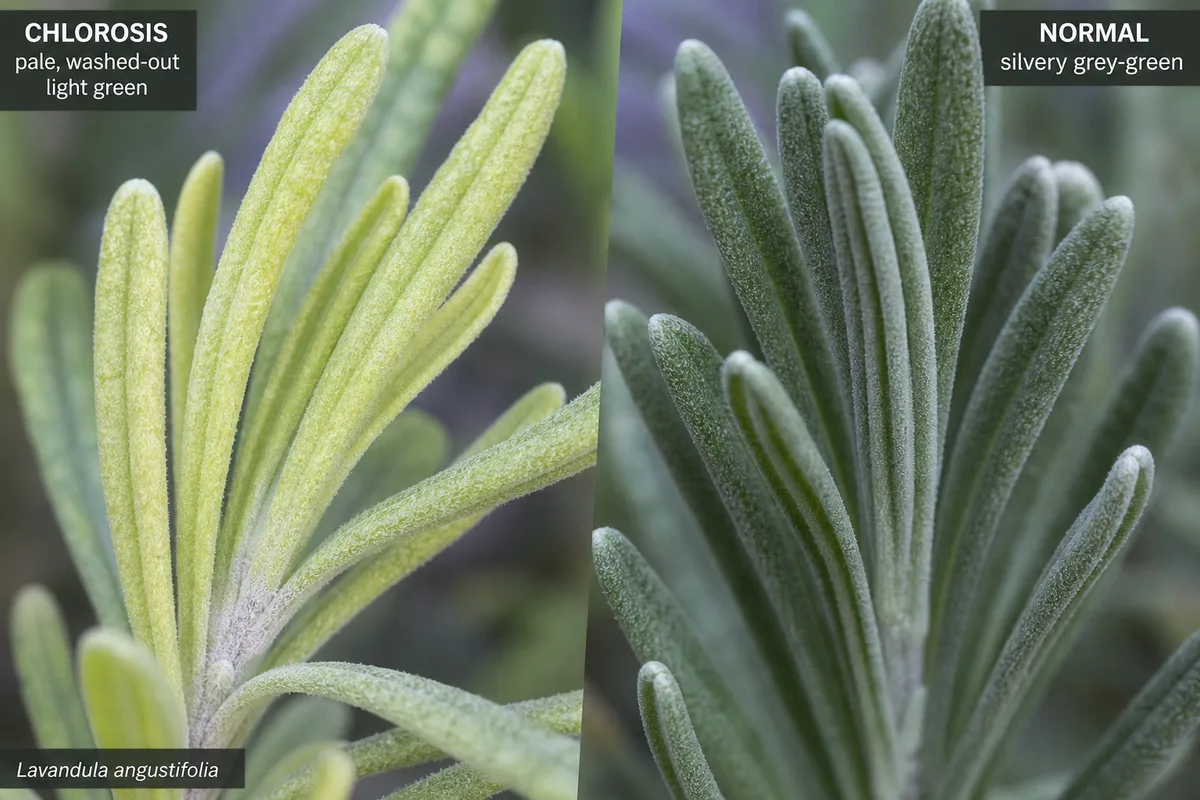
Pale Leaves symptoms on Lavender - compare with healthy tissue on the same plant.
Shade-pale stretch
Partial sun on a balcony or indoor overwinter spot washes pigment and wax. Stems reach toward the brightest window with longer internodes; foliage stays firm but thin, not mushy. Inner lower leaves may stay slightly greyer while outer tips wash out first.
Wet-root soft limp pale
Chronic moisture dulls color before obvious collapse. Leaves feel soft and limp though soil is wet; pot stays heavy; a sour smell may appear on advanced cases. This is the same dampness pathway Illinois Extension warns about: dampness more than cold is responsible for killing lavender.
Nitrogen-soft growth
Heavy feeding or rich potting mix produces lush pale shoots lacking wax. Growth looks tender and bright green-yellow in partial shade-lavender thrives in somewhat low fertility and excess nitrogen worsens soft stretch without restoring silver.
Not pale: spot diseases, mite stippling with webs, or normal inner browning on old woody stems only.
Why lavender leaves turn pale
Mediterranean dryland biology and the silvery wax coat
Lavender evolved on dry, rocky Mediterranean hillsides with intense sun and lean alkaline soil. The silvery appearance comes from dense leaf hairs and a waxy cuticle that limits water loss and reflects UV. In shade or high humidity with wet roots, the plant invests less in that protective layer-foliage looks matte and washed out even before stems collapse.
Shade washes wax and pigment
Lavender requires full sun-eight hours daily per Illinois Extension, with six hours as a practical minimum for compact silver mounds. Less light reduces chlorophyll density and wax production; container plants on north-facing rails or tucked under eaves pale within weeks.
Chronic wet roots dull color before obvious rot
Wet, poorly drained soil reduces root oxygen. Fine roots fail first; the crown may still feel firm while whole-mound color dulls. RHS notes lavender will not thrive in heavy clay or waterlogged soil-container growers see pale foliage as an early warning before wilting and crown rot. Monsoon weeks and winter indoor overwatering (dim light + slow evaporation) are common triggers.
Heavy nitrogen in low light
Feeding pale lavender on wet soil produces soft weak growth without fixing roots. Spring feed on an already shaded plant pushes pale yellow-green tips. Hold fertilizer until sun and drainage are corrected and new tips show silver.
How to confirm the cause
Work through these checks in order:
- Sun hours - Does the pot receive six or more hours of direct sun? Partial morning shade only on a humid balcony often fails.
- Moisture at 7 cm - Probe 7 cm (about 3 inches) deep. Chronic wetness at depth despite a dry surface points to overwatering or poor drain-see lavender watering dry-down rules.
- Feed history - Any recent high-nitrogen liquid or slow-release feed?
- Texture - Soft limp (wet) vs. firm thin stretch (shade)?
- Pot weight and smell - Heavy and sour after modest watering?
- Root firmness - Unpot if mix stays wet for days: cream firm roots vs. brown mush.
- New tip color - Are youngest leaves still pale after two weeks of corrected sun?
Confirmation decision table
| Finding | Points to | First action |
|---|---|---|
| Under 6 h sun, firm stretch | Shade-pale | Move to sunniest spot; harden over a week if from deep shade |
| Wet 7 cm, soft limp, heavy pot | Wet-root pale | Stop water; unpot and trim mush; gritty repot |
| Recent feed + shade | Nitrogen-soft | Stop feed; improve sun only |
| Pale + soft crown + sour soil | Rot overlap | Root rot protocol same day |
| Interveinal yellow old leaves only | Magnesium pattern | Not uniform pale new tips-soil test if suspected |
Full light placement and hour targets live on the lavender light guide.
First fix for lavender
Relocate to the sunniest feasible spot and correct watering to dry-down only-hold all fertilizer until new stem tips regain silver color.
If mix stays wet in terracotta despite careful watering, unpot the same day: trim mushy roots, repot into fresh one-part compost to three-parts grit with open drain holes. Do not bury the woody crown deeper. Prune leggy pale wands after bloom only once culture is fixed-not before sun and drainage improve.
Step-by-step recovery
- Sun and drainage week - Move pot to maximum direct sun; rotate weekly; empty saucers within 30 minutes.
- Stop watering until probe at 7 cm is dry; use pot weight as a backup habit in humid weather.
- Unpot if chronic wet - Rinse roots; cut black slimy tissue; air-dry cuts briefly; repot gritty mix in holed terracotta sized to the root ball.
- Wait two to four weeks - Judge new tip silver, not old pale leaves re-greening.
- Light shaping prune after bloom if new silver shoots confirm recovery.
- Optional single spring feed only if plant stays stunted in perfect sun after pale resolved-most container lavender needs none.
Irreversibility of old pale foliage
Existing pale narrow grey-green leaves rarely return fully silver. The wax bloom does not reliably re-form on mature stressed tissue. Recovery success means firm crown, no sour smell, and silver on new growth-not the whole mound overnight. Shedding or pruning removes old washed-out leaves over time.
Recovery timeline
New silver tips often appear within two to four weeks when shade or mild overwatering was the cause and crown stays firm. Old pale foliage persists until pruned or naturally shed-do not expect overnight re-silvering.
Chronic rot pale may not recover at the base even when upper stems look acceptable; weekly crown checks matter. Advanced failure needs crown rot escalation and semi-ripe cuttings from firm upper stems as backup.
Causes to rule out
- Spider mites - Fine stippling and webbing, not uniform wax loss; see spider mites.
- Nutrient deficiencies - Specific patterns; iron chlorosis on alkaline mix is uncommon; magnesium shows interveinal yellow on old leaves only, not uniform pale new tips.
- Normal inner browning - Lower woody stem leaves only without whole-mound washout.
- Winter dormancy dulling - Slight grey cast on firm roots in cool slow growth-distinct from lime-green summer pale on wet mix.
- French lavender (L. stoechas) - Less cold-hardy, often paler in marginal light; English types are the focus here-species notes on lavender overview.
What not to do
Do not fertilize pale lavender on wet soil-that worsens soft growth without fixing roots. Do not move from deep shade to blistering midday sun in one step; harden over five to seven days. Do not increase watering when leaves pale in an already heavy pot. Do not repot into rich moisture-retentive mix during recovery. Do not confuse pale washout with whiteflies-check wand undersides for flying pests when pale pairs with stickiness.
How to prevent pale leaves next time
Permanent full sun placement per the light guide; well-drained alkaline gritty mix; lean culture with no routine feed; terracotta for faster dry-down; monsoon and rainy-season dry periods where evaporation slows. Annual light shaping keeps compact silver foliage instead of shaded pale wands inside the mound.
Lift pots after watering and learn light vs. heavy weight-in humid climates, weight beats a calendar. Pair culture with nitrogen deficiency awareness only after sun and drainage are proven-deficiency is rare on alkaline grit compared to excess feed.
When to worry - soft crown and sour soil
Escalate immediately when pale pairs with:
- Soft or grey crown at the soil line
- Sour smell while the pot stays heavy
- Wilting on wet mix-the failed-root paradox
- Mushy roots over one-third of the mass on inspection
Slow uniform paleness on a firm crown in a shaded wet pot still needs fixing before the next rainy stretch but carries lower same-day urgency. Chronic wet culture without drain correction leads to overwatering and rot overlap-act before the base collapses.
Related lavender problems
- Faded leaves - Dull grey-green silver loss scope note
- Yellow leaves - Chlorosis and wet-root yellowing
- Not enough light - Stretch and closed-flower shade patterns
- Overwatering - Chronic wet culture without repot detail
- Nitrogen deficiency - Rare true deficiency vs. excess mimic
- Root rot - Mushy roots and sour soil rescue
- Lavender overview - Species, sun, soil, and Mediterranean culture hub
Conclusion
Pale lavender leaves signal shade, wet roots, or overfeeding more than disease. Restore full sun, gritty drainage, and dry-down watering; read recovery on new silver tips, not old washed-out foliage turning back overnight. Prune renewal wood once culture is fixed, and escalate to rot protocols if the crown softens or soil sours.
When to use this page vs other Lavender guides
- Lavender watering guide - Use for routine moisture checks before assuming pale leaves is the main issue.
- Lavender problems hub - Browse all 51 common issues on this species.